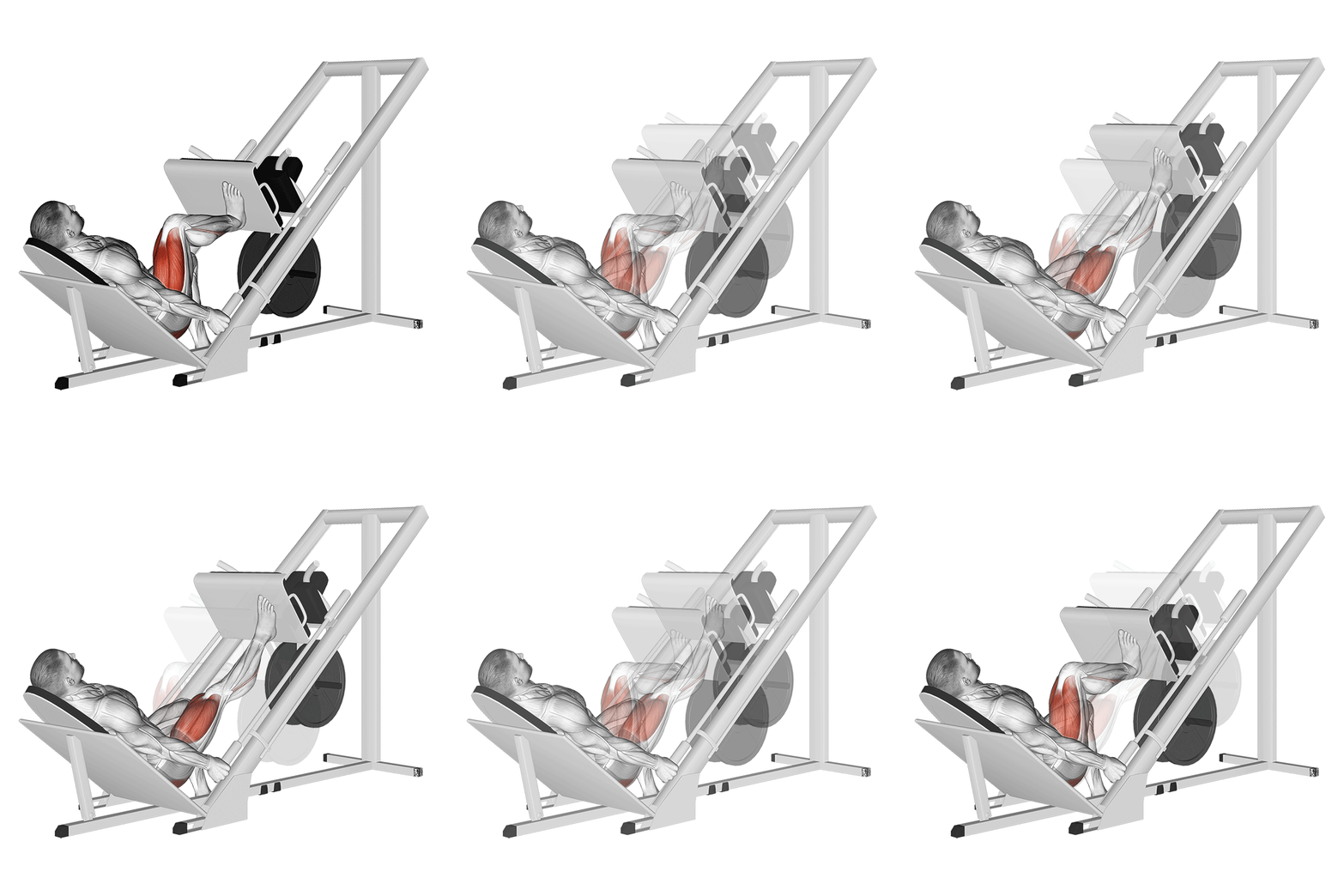
What is the single leg press?
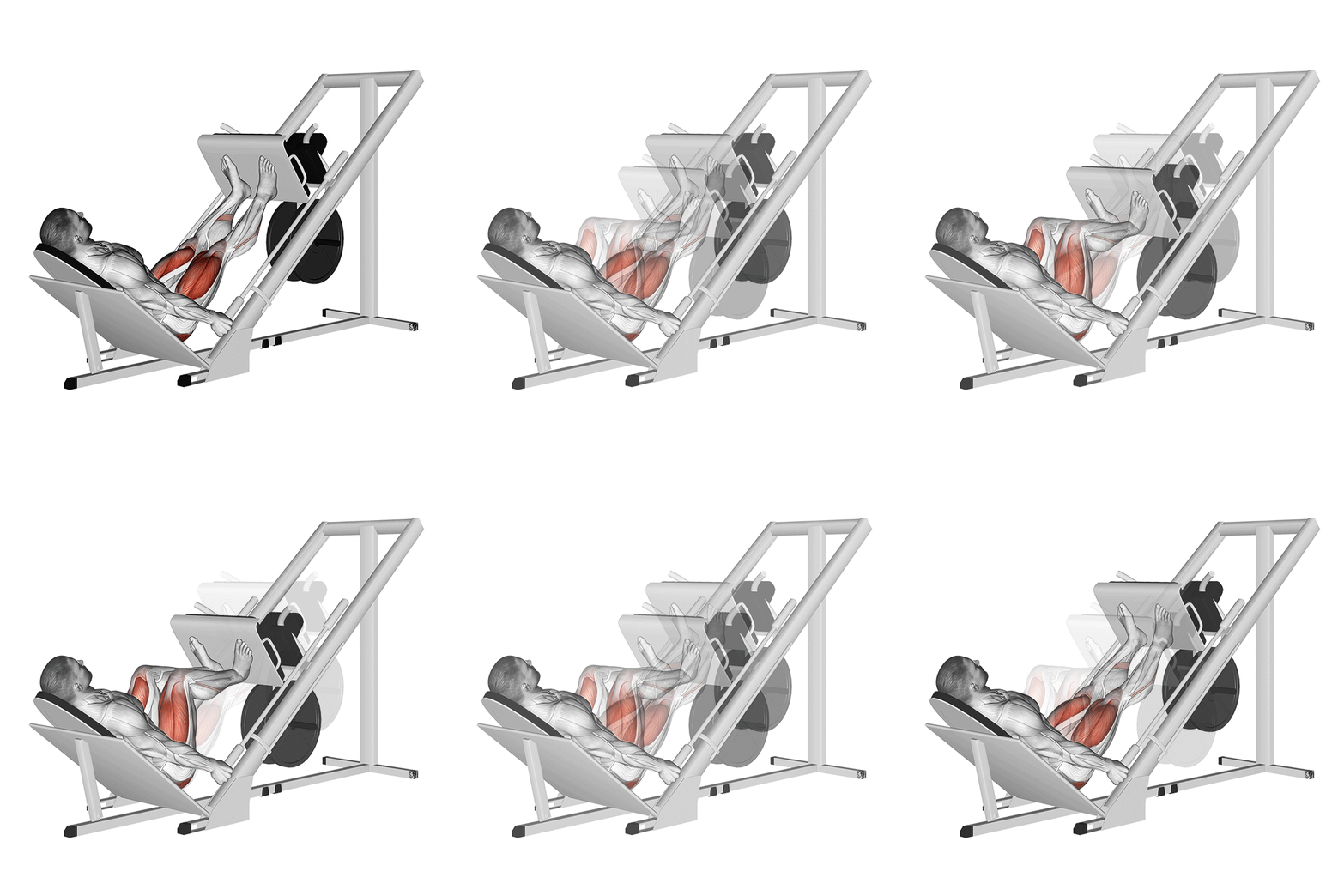
The single-leg press is a unilateral version of the standard leg press: you load the machine and press the sled with one foot at a time. Because the back is supported, you can train each leg to near-failure without the stability limit of a Bulgarian split squat. It exposes side-to-side strength gaps fast, builds quads, glutes and hamstrings, and lets injured or returning athletes load one limb hard while sparing the other. Essential for running and Hyrox imbalances.
How to do the single leg press
- 1
Set the seat and foot position
Sit with hips and back fully against the pad. Place one foot mid-platform, knee tracking over toes. Other foot off to the side or on the floor.
- 2
Unrack and brace
Press the sled up, release the safeties, and brace your core. Keep the lower back flat against the pad throughout.
- 3
Lower to a controlled depth
Bend the knee until the thigh approaches your chest. Stop just before the lower back starts to round off the pad.
- 4
Drive through the whole foot
Press the sled away using heel and mid-foot. Stop short of full knee lock to keep tension on the quad. Reset and repeat.
Pro tip
Always start with your weaker side and match the rep count on the strong side, even if you have more reps in the tank. Stop both legs at the failure point of the weak leg.
Common mistakes
Lower back rounding off the pad.
Going too deep flexes the lumbar under load. Stop the descent before the pelvis tips up.
Locking the knee at the top.
Hard lockout dumps the load on the joint. Stop just shy of straight to stay on the muscle.
Knee caving in.
Valgus collapse means weak glutes. Drive the knee out toward the little toe on every rep.
Foot too low on the platform.
Low foot turns the lift into a quad-only knee-flexion grinder. Mid to upper-mid foot placement is safest.
Variations and progressions
Easier
Tempo single leg press
Light load, 3 s down, 1 s pause, 1 s up. Builds control and exposes asymmetries before adding weight.
Harder
High-foot single leg press
Foot placed high on the platform shifts emphasis to glutes and hamstrings. Brutal for posterior chain.
No machine?
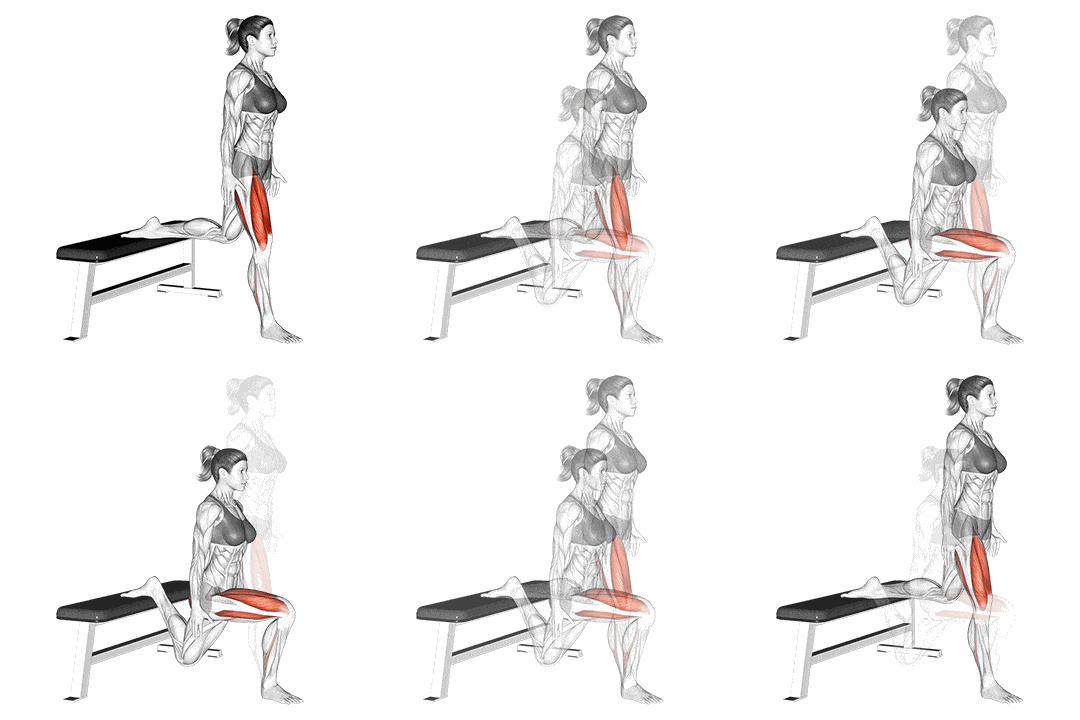
Bulgarian split squat
Rear foot elevated, dumbbells in hand. Same unilateral demand without the seat support.
How to program it
Three protocols by goal. Pick one per cycle and aim for progression on load or distance.
| Goal | Sets × distance | Load | Rest |
|---|---|---|---|
| Strength | 4 × 6 per leg | Heavy, RIR 2 | 2 min |
| Hypertrophy | 3 × 10-12 per leg | Moderate, RIR 1 | 90 s |
| Imbalance fix | 4 × 12 weak leg, 4 × 10 strong | Same load both sides | 75 s |
Single Leg Press FAQ
Is the single-leg press better than the bilateral version?
Not better, complementary. Bilateral leg press lets you load total quad/glute strength heaviest; the single-leg version exposes and fixes side-to-side gaps. Run both: heavy bilateral early in the session, single-leg afterward for 3-4 sets per side.
I'm 20% weaker on my left, what do I do?
Run single-leg work for 6-8 weeks. Start every set with the weak side and cap the strong side at the same reps. Add 1-2 extra sets on the weak leg per session. Most gaps under 25% close in a single block.
Can I use it for ACL or knee rehab?
Yes, with green light from your physio. The supported back and controlled range make it one of the safest ways to load a recovering knee. Start light, focus on full ROM and matching depth left to right. Add load only when symmetry holds.