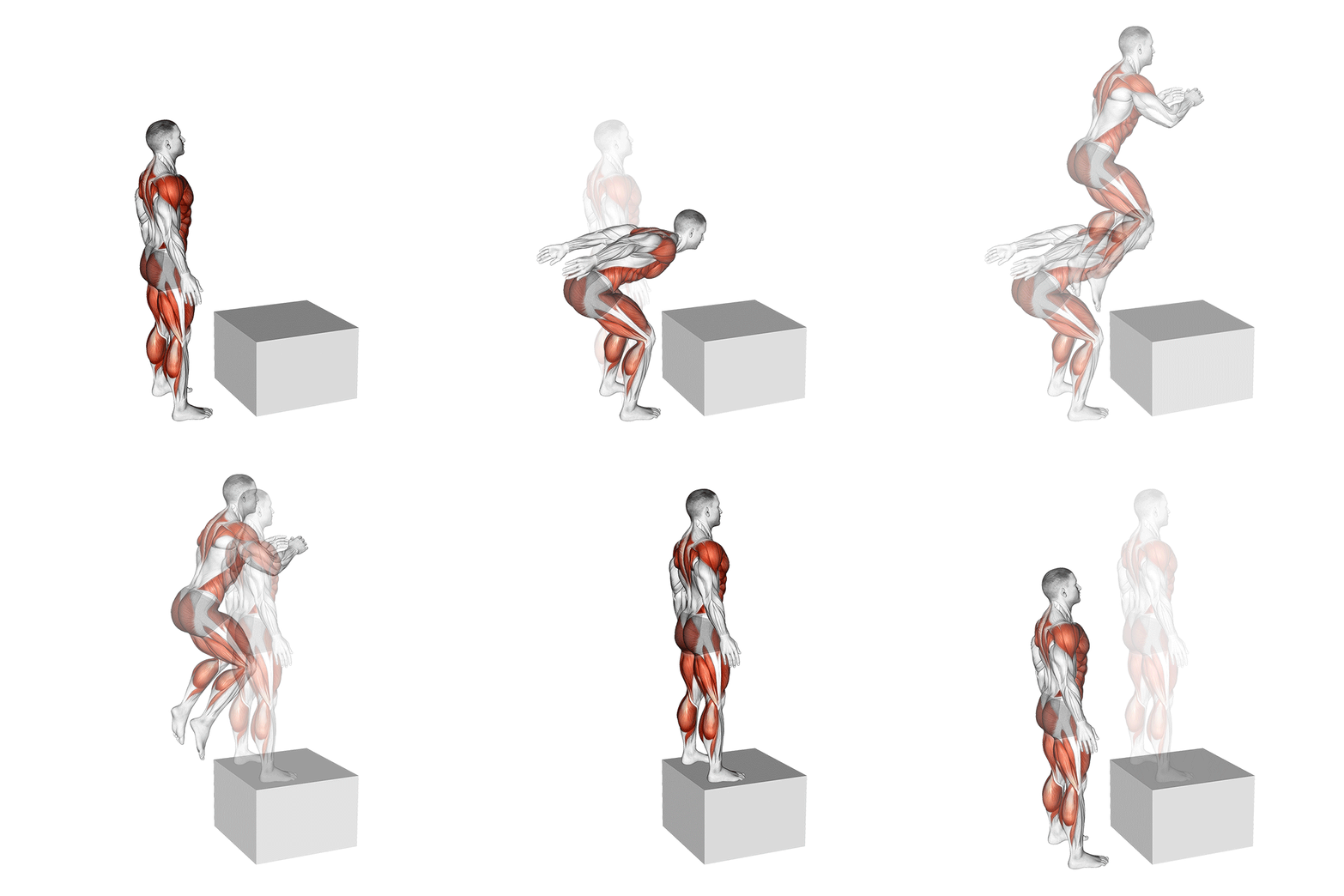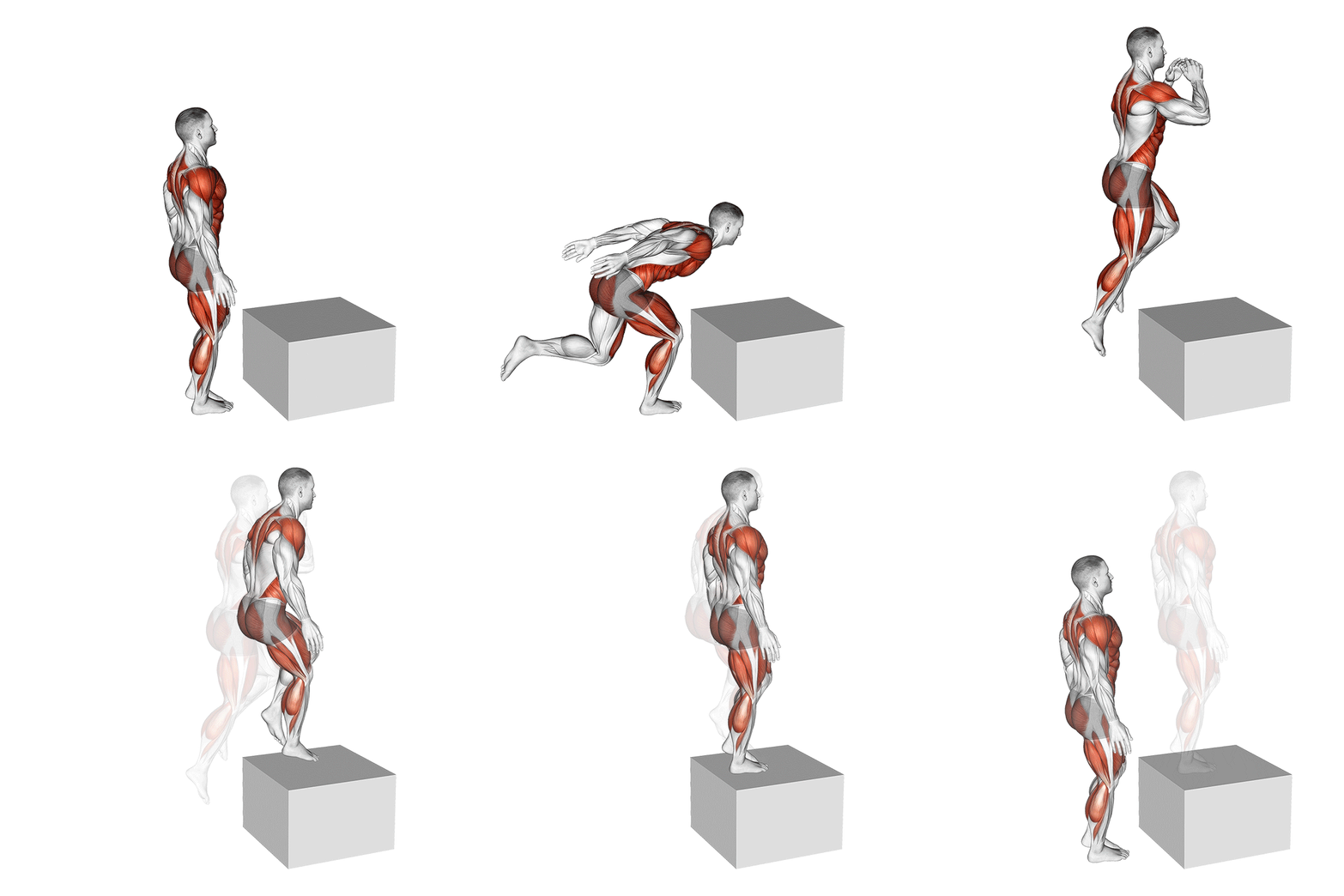
What is the single-leg box jump?
The single-leg box jump is a plyometric drill where you take off from one leg and land on the same leg on top of a box. Because the box meets you partway up, landing forces stay low while takeoff output stays maximal, making it one of the safest ways to train true unilateral power. It targets the quads, glutes and calves of the working leg and exposes any side-to-side power gap that two-legged jumps hide. It belongs in the toolbox of sprinters, team-sport athletes and hybrid racers, after double-leg box jumps and single-leg landing mechanics are mastered.
How to do the single-leg box jump
- 1
Pick a low box
Start at 30-40 cm, whatever your two-leg box jump PR says. One leg produces far less force and, more importantly, must absorb the landing alone.
- 2
Load the jump
Stand on one leg facing the box, hinge slightly at the hips, swing the arms back. Knee tracks over the toes, foot gripping the floor.
- 3
Explode and drive
Swing the arms forward, punch the free knee up and extend hip, knee and ankle completely. Full triple extension, every rep: that is the power you came for.
- 4
Stick it, then step down
Land softly on the same leg, mid-box, knee bent, hips back, and hold for 1-2 s. Then step down with both feet. Never jump back down.
Pro tip
Step down every single rep. The jump up builds power; the jump down off one leg just builds patellar tendon problems. Save your landing work for drills you program on purpose, fresh and counted.
Common mistakes
Box too high.
A high box turns the drill into a hip-tuck contest: you yank the knee to your chest instead of extending. Lower box, full extension, real power.
Knee caving inward.
Valgus collapse at takeoff or landing is the red flag on one leg. If the knee dives in, drop the height and build single-leg strength first.
Jumping down off the box.
A single-leg drop from box height is a bigger landing load than the jump itself, repeated dozens of times. Step down, always.
Training them tired.
Plyometrics are a nervous-system quality. Jumping on one leg at the end of a leg session is where reps get ugly and tendons pay. Fresh, early, low volume.
Variations and progressions
Easier
One-leg takeoff, two-leg landing
Jump off one leg but land on both feet on the box. You keep the unilateral power stimulus while halving the landing demand.
Harder
Lateral single-leg box jump
Take off sideways onto the box. The frontal-plane demand mirrors cutting and skating actions, with the glute med earning its keep.
No box?
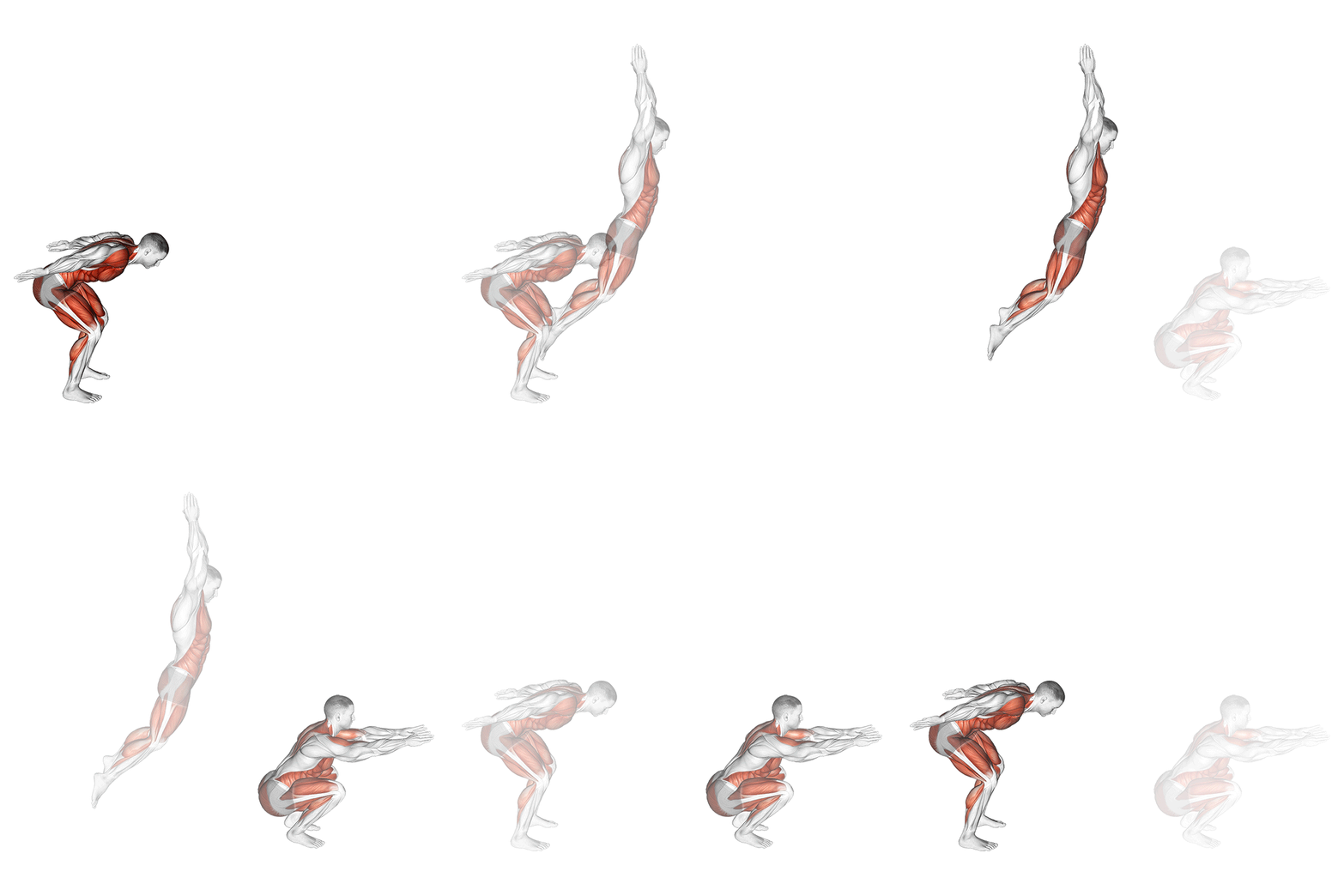
Single-leg broad jump or bounding
A single-leg broad jump with a stuck landing, or alternating bounds, trains the same horizontal power with nothing but floor.
How to program it
Three protocols by goal. Pick one per cycle and aim for progression on load or distance.
| Goal | Sets × distance | Load | Rest |
|---|---|---|---|
| Power | 4 × 3 per leg | Bodyweight, box at ~70% of single-leg max | 2-3 min |
| Technique entry | 3 × 5 per leg | Low box, 30-40 cm, stuck landings | 90 s-2 min |
| In-season maintenance | 2 × 3 per leg, 1-2 × per week | Moderate box, crisp reps only | 2 min |
Single-Leg Box Jump FAQ
What box height should I use for single-leg jumps?
Much lower than your ego wants: most athletes do their best work between 30 and 50 cm. The box height is not the goal, it is just a soft place to land. Judge a rep by full hip extension at takeoff and a quiet, balanced landing, not by centimetres. If you need to tuck your knee to your chest to make it, the box is too high.
Should I land on the same leg or both feet?
Same leg is the full version: it trains single-leg stability and absorbs force exactly the way sprinting and cutting demand. But it is also the hardest part, so earn it. Start with one-leg takeoff and two-foot landings for a few weeks, then progress to same-leg landings on a lower box than you jump onto with two feet. Never switch legs mid-air to cheat the landing.
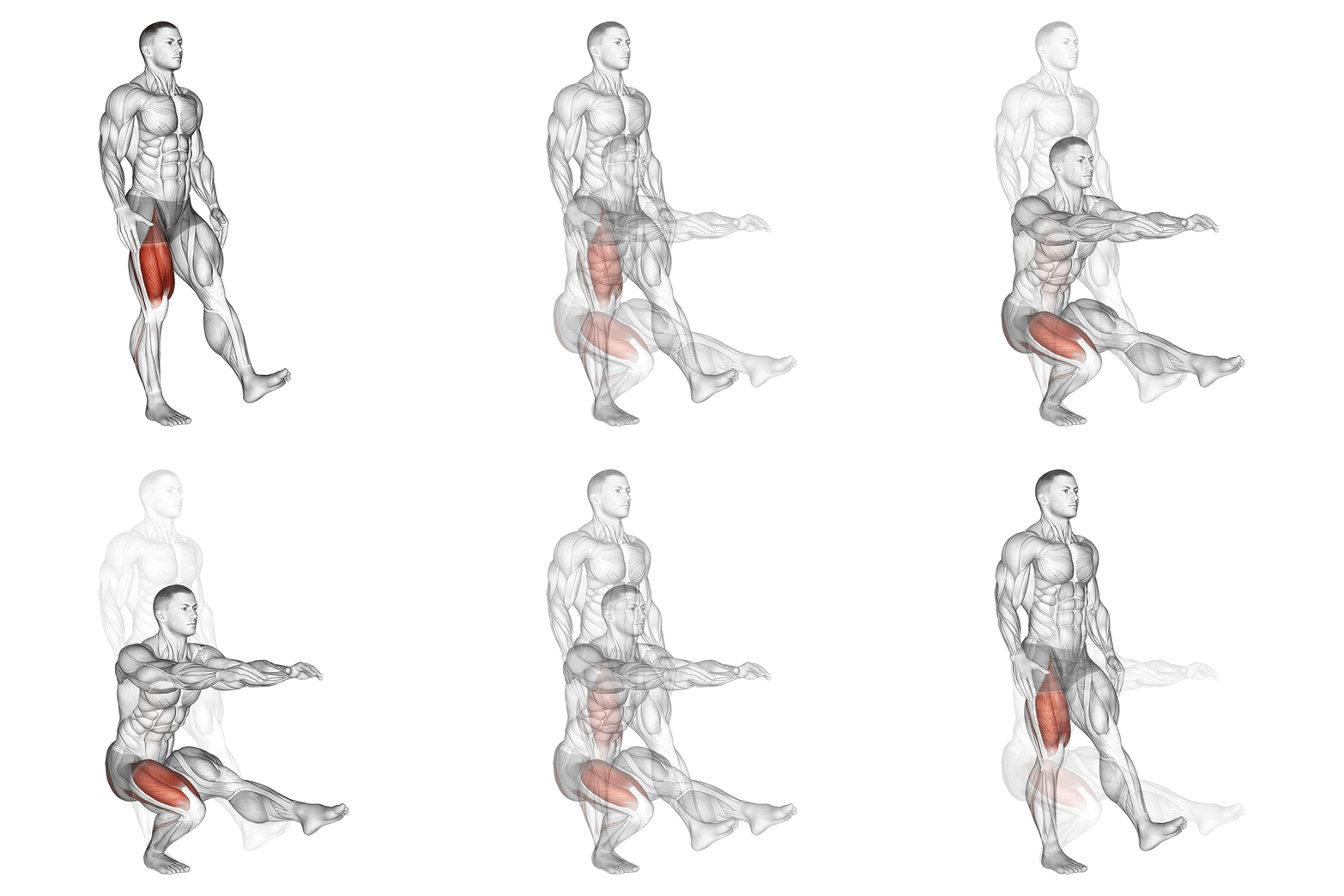
Single-leg box jumps or pistol squats for one-leg strength?
They answer different questions. The pistol builds slow strength and control through a full range; the single-leg box jump converts that strength into explosive output in a fraction of a second. An athlete needs both, in that order: if you cannot control a deep single-leg squat, you have no business producing and absorbing force on one leg at speed. Strength first, then power.