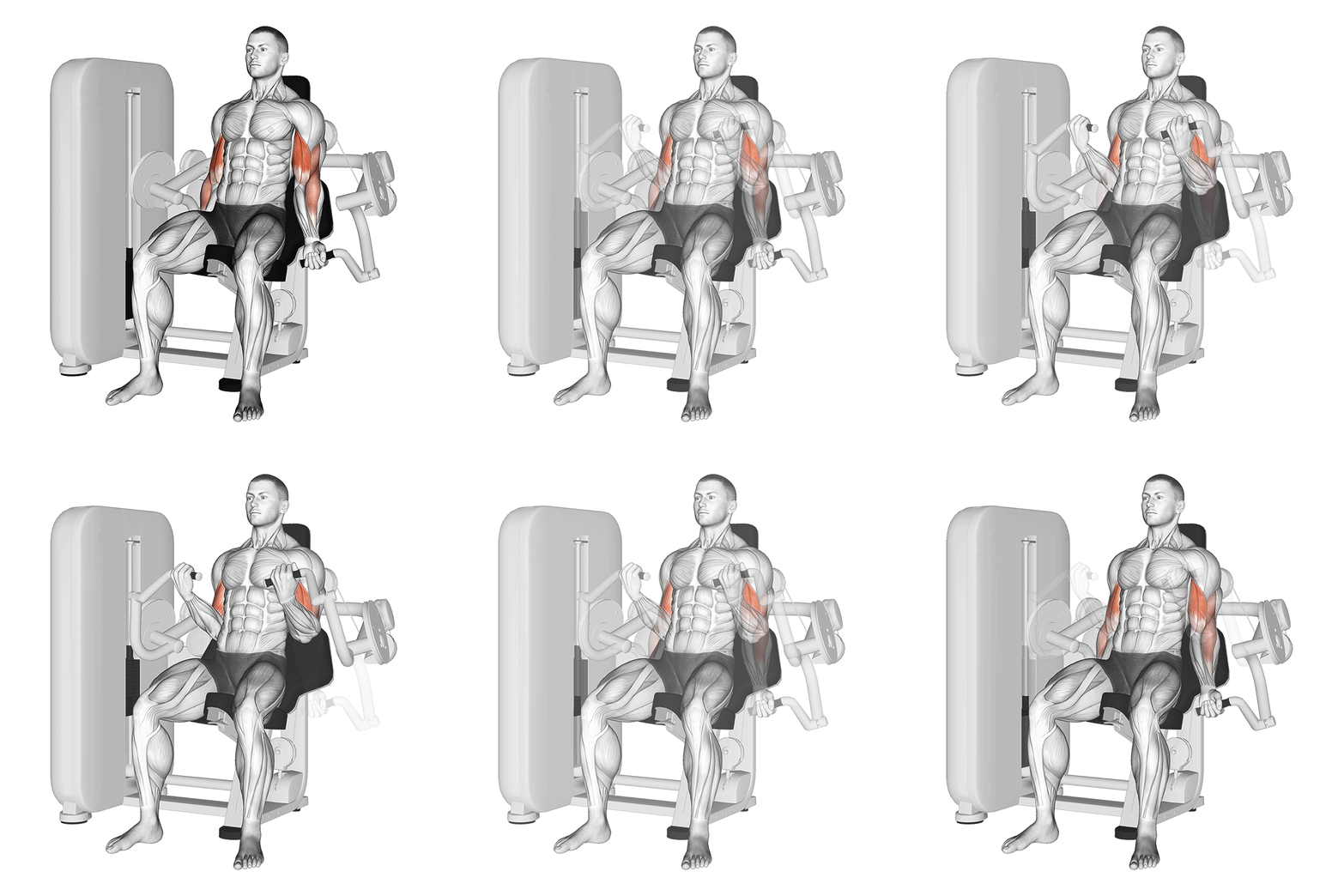
What is the machine bicep curl?
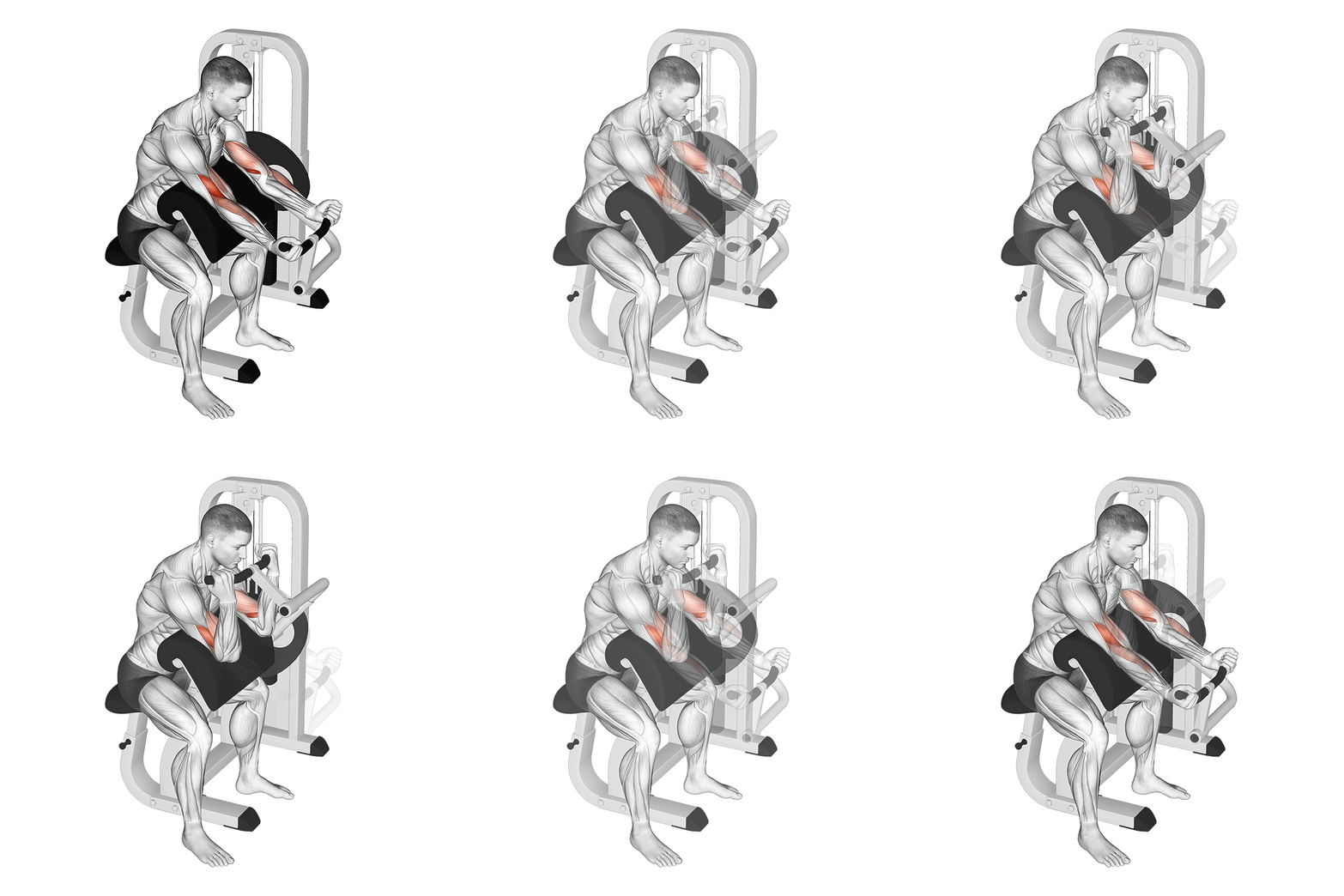
The machine bicep curl is a seated, selectorized curl where your upper arms rest on a pad and your hands drive two handles around a fixed arc. A cam adjusts the resistance through the range, so the load feels even in spots where a free weight would go light or heavy. Nothing needs stabilizing, which is exactly the point: you can take every set close to failure, add drop sets in seconds by moving the pin, and never worry about form collapsing. It is the easiest biceps exercise to learn and one of the best places in the gym to practise pushing genuinely hard.
How to do the machine bicep curl
- 1
Align your elbows with the pivot
Adjust the seat so your elbows sit level with the machine's rotation axis, usually marked with a dot, and your upper arms lie flat on the pad.
- 2
Settle in before rep one
Chest against the pad, feet flat, a relaxed grip on the handles. Pick a weight you can move through the full arc without shrugging.
- 3
Curl to full contraction
Drive the handles around the arc until the biceps are fully shortened, then pause for one second. The machine still resists at the top, use it.
- 4
Lower slow, stop before the stack
Take a full two seconds down to nearly straight arms, then reverse just before the plates touch so the muscle never fully unloads.
Pro tip
Hold the handles like you're holding a bird, then pull with the pinky side of your hand. A crushing grip wakes up the forearms first; a soft grip with pinky pressure keeps the work in the biceps.
Common mistakes
Wrong seat height.
Elbows above or below the machine's axis distort the resistance curve and dump stress into the shoulders and wrists. Take ten seconds to line the joint up with the pivot before loading.
Cutting the stretch.
Stopping the descent halfway keeps the biceps short and wastes the machine's even resistance. Lower until the arms are nearly straight on every rep.
Shrugging and leaning back.
When the pin goes too deep, the chest peels off the pad and the shoulders finish the rep. If your torso moves, the number on the stack doesn't count.
Letting the stack yank your arms down.
The lowering half is half the stimulus. If the plates clang on every rep, you're doing half the exercise.
Variations and progressions
Easier
Band biceps curl
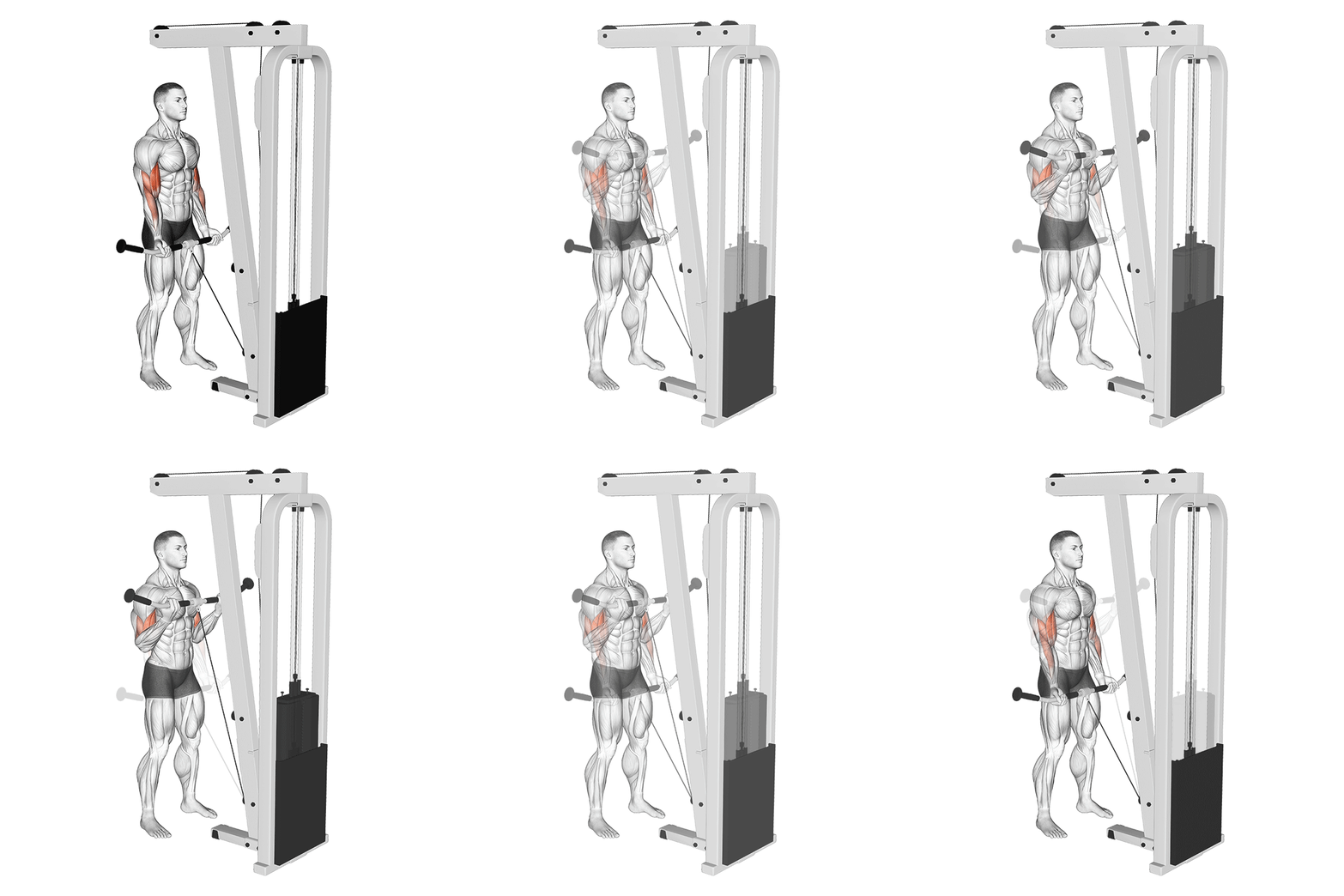
A band's resistance starts near zero at the bottom and builds gradually, gentle on cranky elbows and perfect for the first weeks of training or rehab work.
Harder
Drop-set machine curl
Hit failure, pull the pin up two plates, go again, repeat twice. The machine's stability makes this brutal technique safe in a way free weights never quite are.
Alternative
Barbell curl
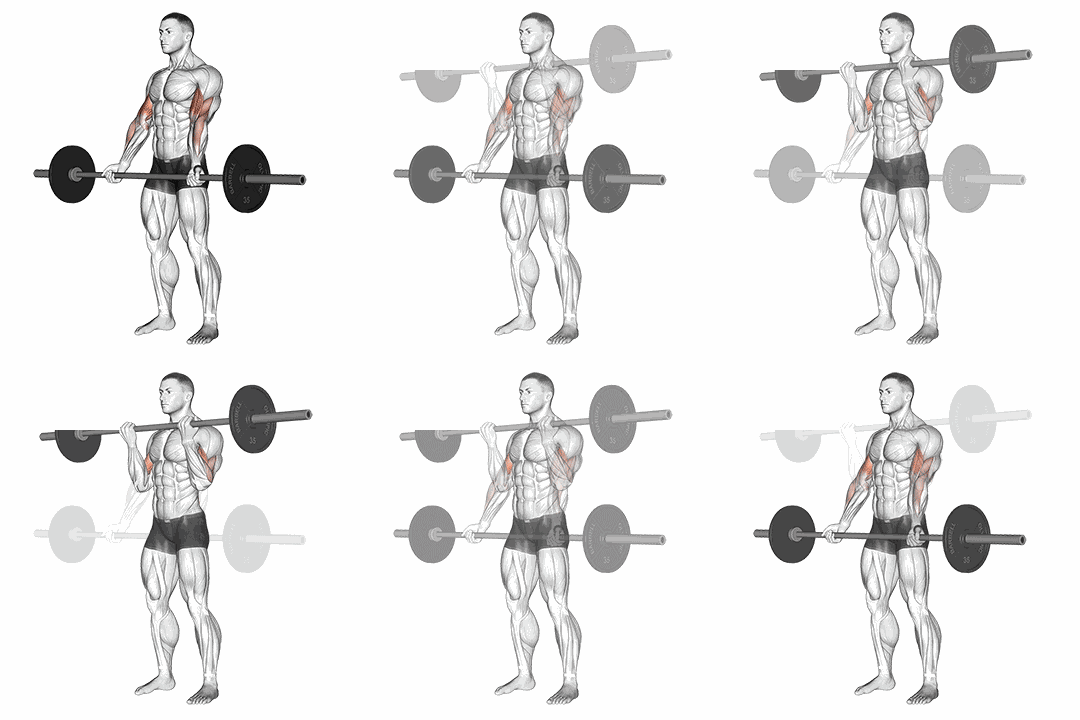
The free-weight classic. More load, more stabilization demand, more skill: the natural next step once machine sets feel routine.
How to program it
Three protocols by goal. Pick one per cycle and aim for progression on load or distance.
| Goal | Sets × distance | Load | Rest |
|---|---|---|---|
| Hypertrophy | 4 × 8-12 | Moderate | 90 s |
| Drop-set finisher | 2 × 10 + 2 drops | Moderate to light | 90 s |
| High-rep volume | 3 × 15-20 | Light | 45-60 s |
Machine Bicep Curl FAQ
Are machine curls as effective as free-weight curls?
For growing the biceps, yes. The muscle responds to tension taken close to failure, and a machine delivers that at least as reliably as a bar because nothing else limits the set. Free weights add stabilization skill and loadability, worth keeping in the program, but neither option is magic. Use the machine for safe hard sets and free weights for overload.
Why do I feel it in my forearms instead of my biceps?
Two usual causes: crushing the handles, which pre-fatigues the forearm flexors, and curling the wrists toward you during the rep. Soften the grip, keep the wrists in line with the forearms, and slow the first three reps right down to feel the biceps take over.
Where does the machine curl fit in a workout?
Near the end. Put rows, pull-ups or presses first while you're fresh, then use the machine to take the biceps to true failure without needing a spotter or perfect technique. It also pairs well in a superset with a triceps machine.
Machine curl or machine preacher curl?
Often the same station: most biceps machines use a preacher-style pad. If your gym has both, the preacher version braces the arms more and bites harder in the stretch, while an upright curl machine feels closer to a standing curl. Pick whichever lets you align your elbow with the pivot best.