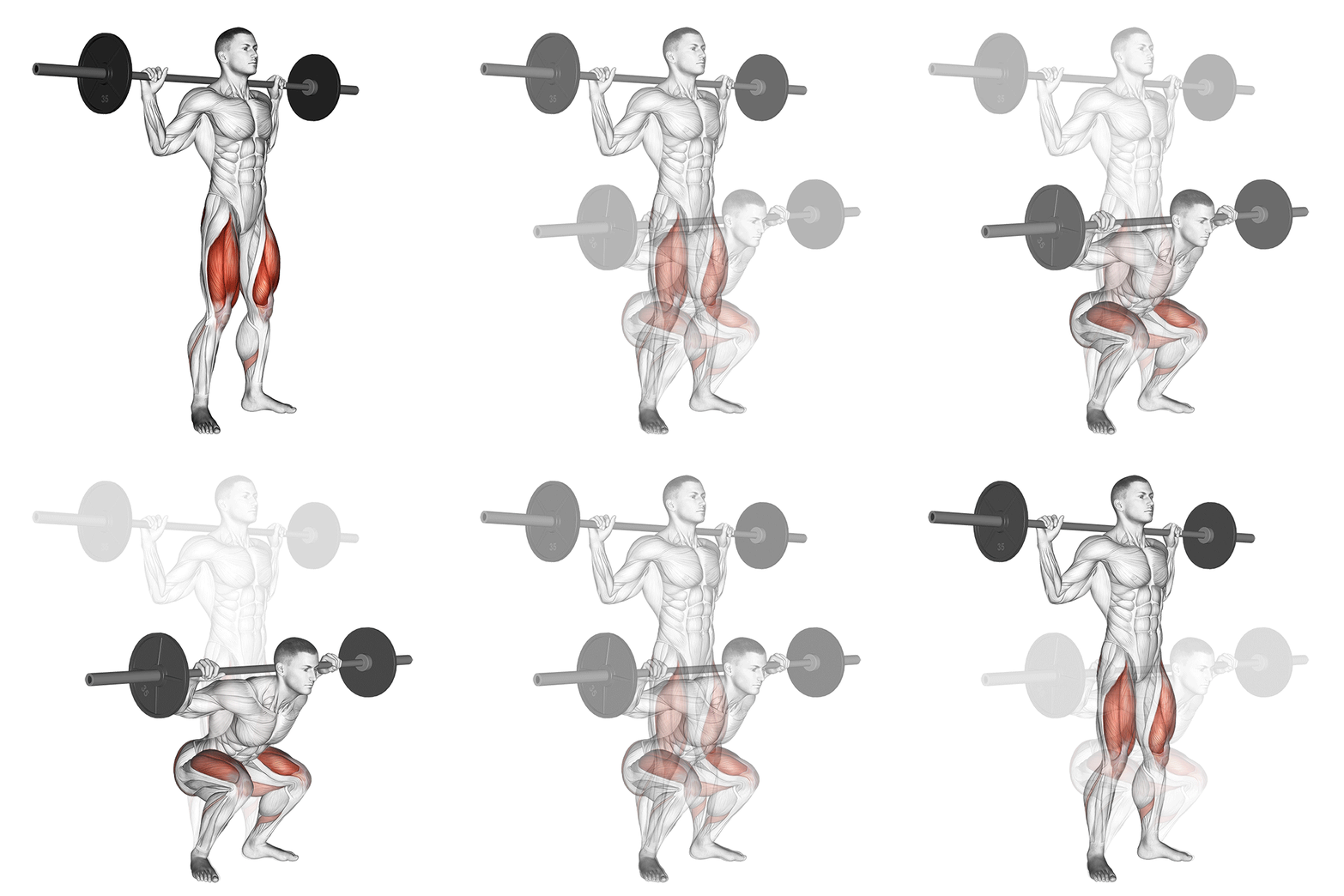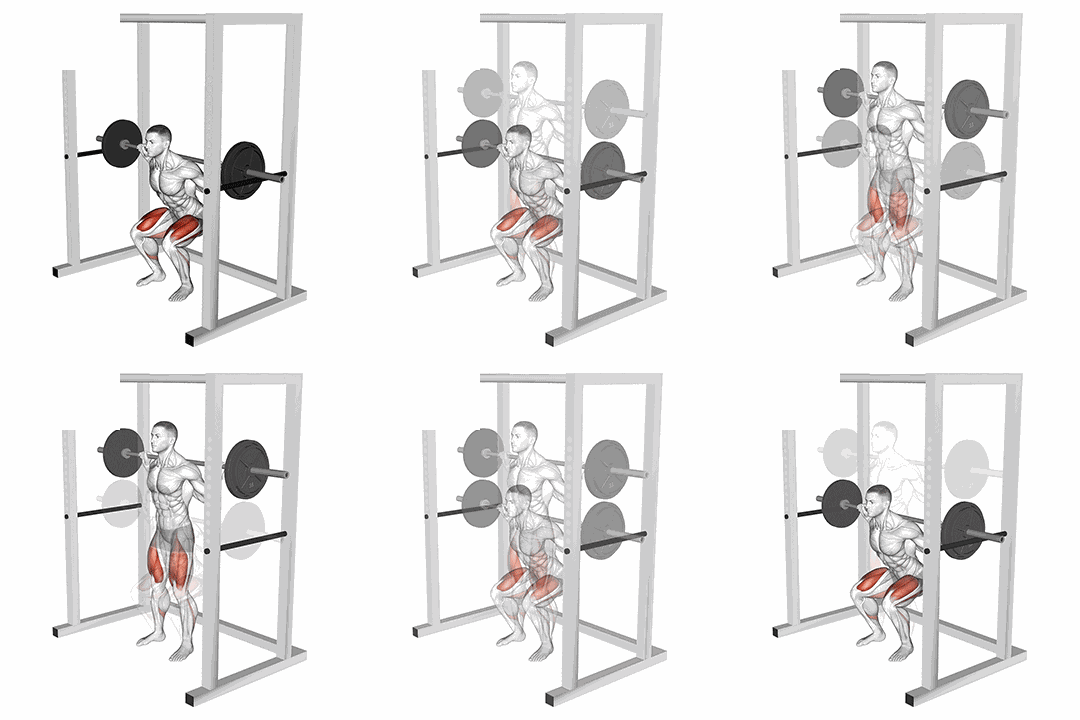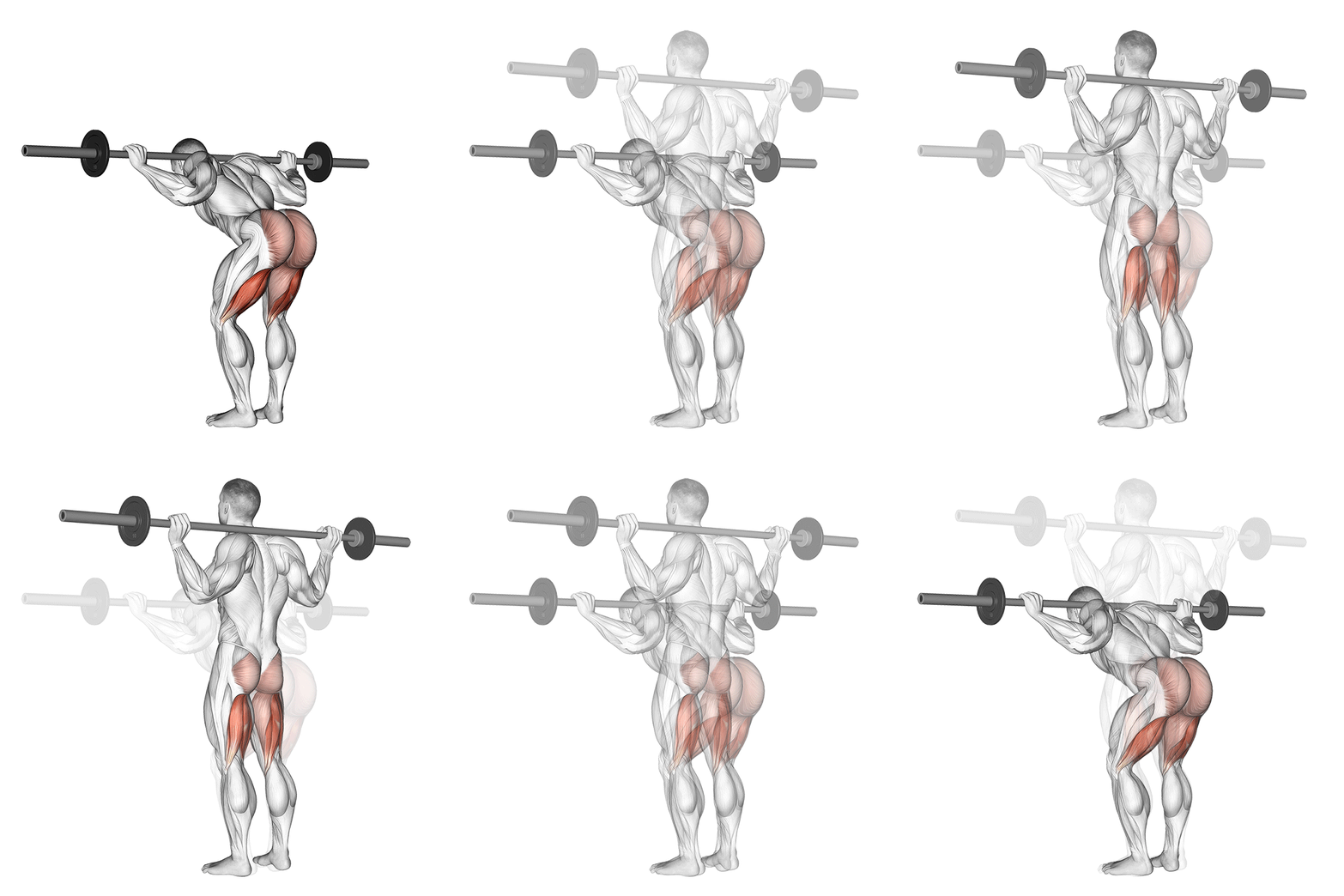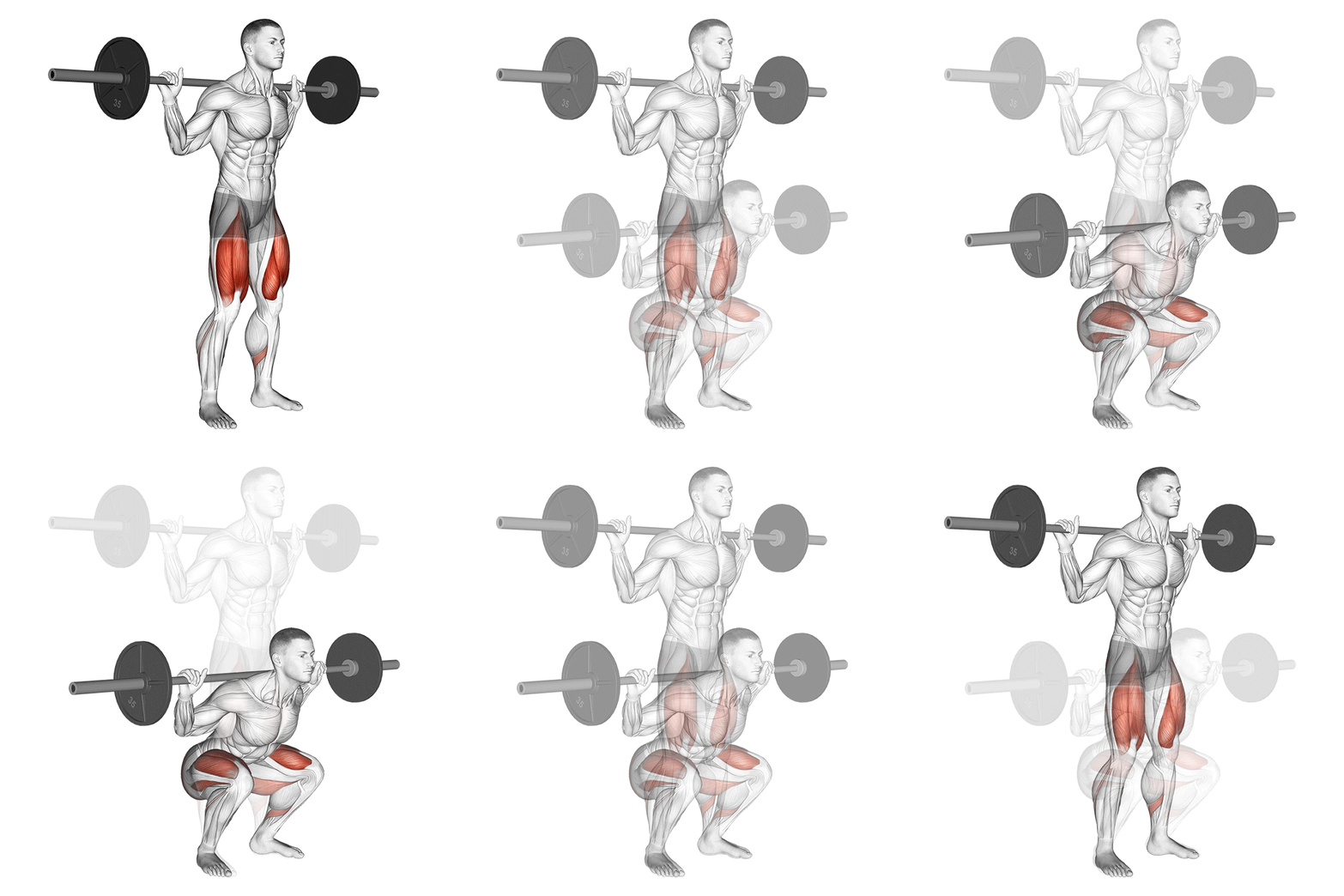
What is the low-bar squat?
The low-bar squat sets the barbell across the spine of the scapula and the rear delts, 5 to 8 cm lower than high-bar. To keep that lower bar balanced over your midfoot you lean the torso forward and push the hips back, which shortens the lever at the knee and lengthens it at the hip: glutes, adductors and spinal erectors pick up the work the quads shed. The payoff is load, which is why it rules competitive powerlifting. The price is a real shoulder-mobility demand and a pattern that sits further from running and jumping mechanics than its high-bar sibling.
How to do the low-bar squat
- 1
Pin the bar to the shelf
Grip wider than for high-bar, pull your shoulder blades together hard, and set the bar in the groove just below the ridge of your shoulder blades, on the rear delts. Wrists stay straight: your hands cage the bar, your back carries it.
- 2
Walk out and set a wider stance
Step back, plant the feet a touch wider than shoulder width with toes out around 30 degrees. Big breath into the belt line, brace hard: the forward lean will test your trunk more than any high-bar set.
- 3
Reach back with the hips
Break the hips and knees together, then let the hips travel back as the chest tips forward. The bar must stay over your midfoot: your torso angle is whatever keeps it there. Stop just below parallel with the hamstrings loaded like springs.
- 4
Drive the traps into the bar
Out of the hole, push your upper back into the bar while the hips extend, so shoulders and hips rise at the same rate. Squeeze the glutes through to a full, tall lockout.
Pro tip
Elbow or wrist pain means the bar is hanging from your hands, not sitting on your back. Widen the grip two finger-widths, squeeze the blades harder before you unrack, and stretch the pecs and lats between sessions: the shelf, not the arms, holds the weight.
Common mistakes
Setting the bar too low.
Below the rear delts there's no shelf, so the bar slides mid-set and the arms fight to hold it, straining the biceps tendons. The spot is a groove, not a zone: just under the ridge of the shoulder blades.
Good-morning squat.
Hips shoot up first, the chest dives, and the lift ends with your back. Slow the eccentric, lighten the bar, and drill the cue "chest and hips rise together" until it holds at max weights.
Fighting the lean.
Trying to stay upright like a high-bar squat pushes the bar forward of your midfoot and tips you onto your toes. Low-bar needs the forward torso: accept it, brace for it, and balance returns.
Letting the upper back go soft.
If the shoulder blades release mid-set, the shelf collapses and the bar rolls. Re-squeeze at the top of every rep, and treat the squeeze as part of the lift, not part of the setup.
Variations and progressions
Easier
Box squat
Sit back to a box set just below parallel. It teaches the exact hips-back reach low-bar lives on, standardizes depth, and lets you practice the lean with a safety net.
Harder
Pin squat
Squat down to pins set at your sticking point, let the bar settle dead, then drive up. No stretch reflex, no bounce: pure concentric strength from the position where low-bar squats fail.
Alternative
Safety bar squat
The cambered bar with handles removes the shoulder-mobility demand entirely while keeping heavy axial loading. The go-to when elbows, wrists or shoulders won't tolerate the low-bar rack position.
How to program it
Three protocols by goal. Pick one per cycle and aim for progression on load or distance.
| Goal | Sets × distance | Load | Rest |
|---|---|---|---|
| Max strength | 5 × 3 @ 85-90 % 1RM | Very heavy | 3-5 min |
| Strength base | 4 × 6 @ 75-80 % 1RM | Heavy | 3 min |
| Hypertrophy | 3 × 8-10 @ 65-70 % 1RM | Moderate | 2 min |
Low-Bar Squat FAQ
How much more can I lift low-bar than high-bar?
Around 5 to 10% for most lifters once the technique is learned. The gain comes from leverage, not from suddenly stronger muscles: the shorter knee lever lets the hips, the strongest extensors you own, contribute more. That's why low-bar is worth learning if your sport is measured in kilos on the bar.
Why do my shoulders and elbows hurt when I squat low-bar?
Because the position demands external rotation and pec and lat flexibility most lifters don't have yet. In the meantime the bar hangs from the hands, and the elbows pay. Widen the grip, use a thumbless hold, work pec and lat stretches daily, and film the rack position: pain fades as the shelf improves.
Is low-bar squatting bad for your back?
No, but it is more demanding on it. The forward lean puts more work through the spinal erectors, so the back is often the limiter before the legs. With a hard brace, sensible load jumps and a torso angle that stays constant through the rep, it builds a famously strong lower back rather than breaking one.
Should a hybrid athlete squat low-bar?
Use it as a tool, not a default. In a dedicated max-strength block, the extra load drives total-body strength fast. But the hip-dominant lean transfers less to running, jumping and sled work than an upright squat, so most hybrid athletes keep high-bar as the main lift and visit low-bar a few weeks per year.