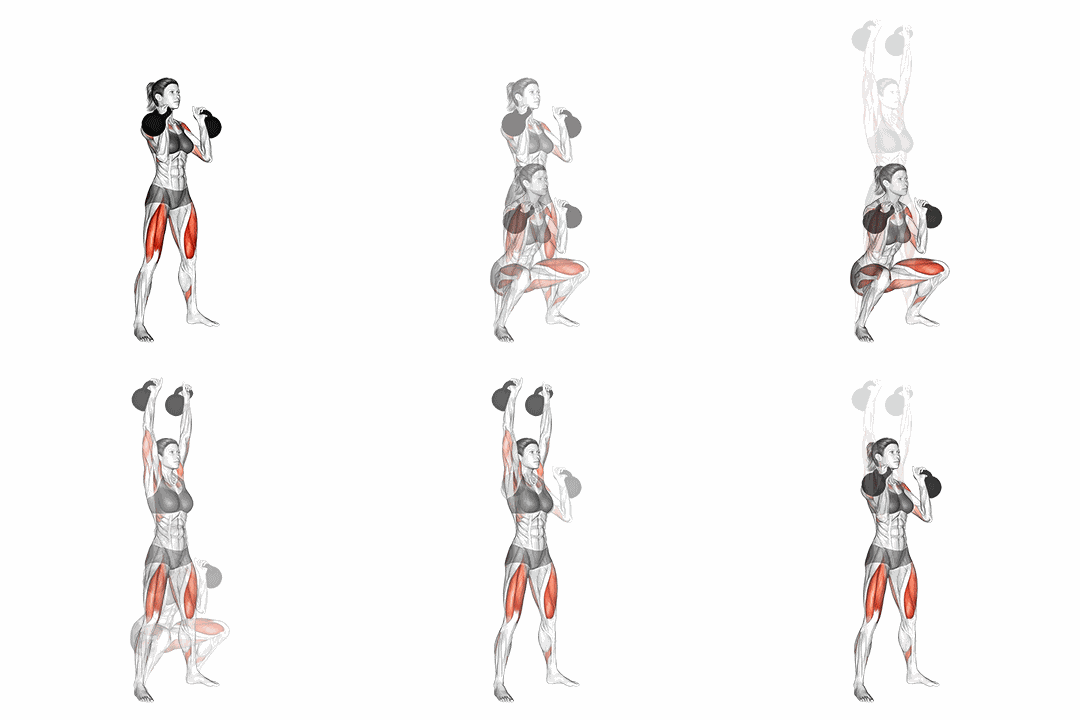
What is the kettlebell thruster?
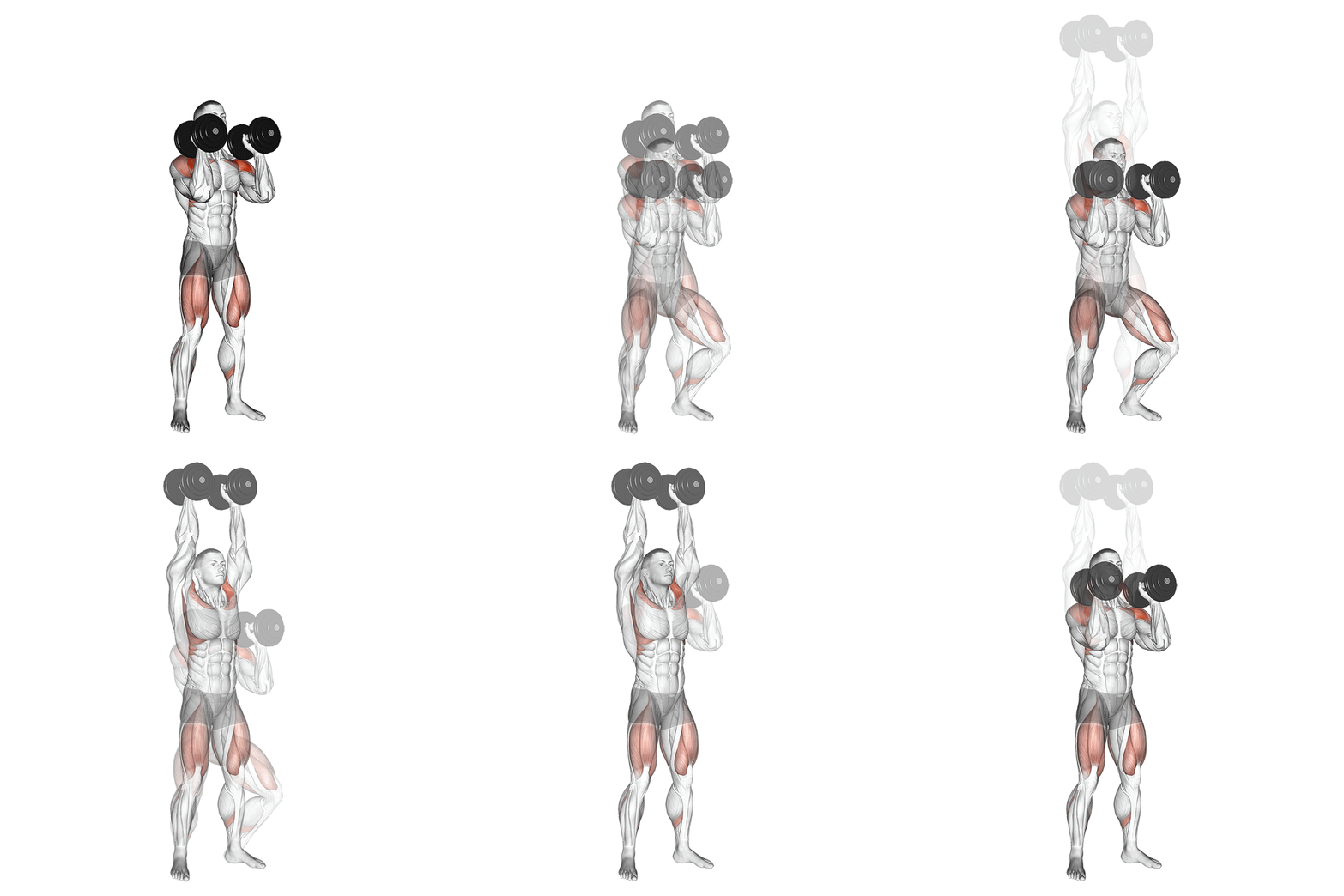
The kettlebell thruster chains a front squat straight into an overhead press: you squat with one or two kettlebells in the front rack, then use the drive out of the hole to launch the bells to lockout. Compared with the barbell version, the bells rest on your forearms instead of your shoulders, each arm works independently, and there is no bar to steer around your chin, so the movement flows and the single-bell option is always there. Nearly every large muscle you own fires in sequence, which is why thrusters are a staple of Hyrox and hybrid conditioning: few movements buy more heart rate per rep.
How to do the kettlebell thruster
- 1
Clean the bells to the rack
Clean one or two kettlebells into the front rack: elbows tucked to the ribs, wrists straight, each bell resting on the forearm and chest, not hanging from your grip.
- 2
Squat tall
Sit into a full-depth front squat with the torso vertical and the elbows glued down. Heels stay heavy; the rack must not budge on the way down.
- 3
Drive and punch
Stand up like you mean to jump. As the hips snap through, the bells go weightless: punch them overhead to a full lockout, biceps beside your ears.
- 4
Ride them back down
Lower the bells to the rack, absorbing with soft knees, and melt straight into the next squat. Breathe at lockout and in the rack, nowhere else.
Pro tip
The press starts at your feet: if your shoulders feel like they are doing the lifting, you paused between squat and press and let the leg drive die. One continuous motion, and punch while the bells are still floating.
Common mistakes
Squatting, stopping, then pressing.
A pause at the shoulders throws away the free energy from your legs and turns every rep into a strict press. The stand-up and the press are one single gesture.
Elbows drifting off the ribs.
When the elbows float, the bells tip forward and drag your torso with them. Keep them tucked through the squat so the bells stay parked on the forearms.
Locking out in front of the head.
A forward finish arches the lower back and exhausts the shoulders. End with the bells stacked over shoulders and mid-foot, head pushed through the arms.
Death-gripping the handles.
The bells should rest on your forearms; white knuckles torch your grip and stiffen the whole movement. Hold the handles loosely and let the rack carry the load.
Variations and progressions
Easier
Single kettlebell thruster
One bell in the rack, free arm out for balance. Half the load, the same timing, and a sneaky anti-lean core challenge; switch sides every set.
Harder
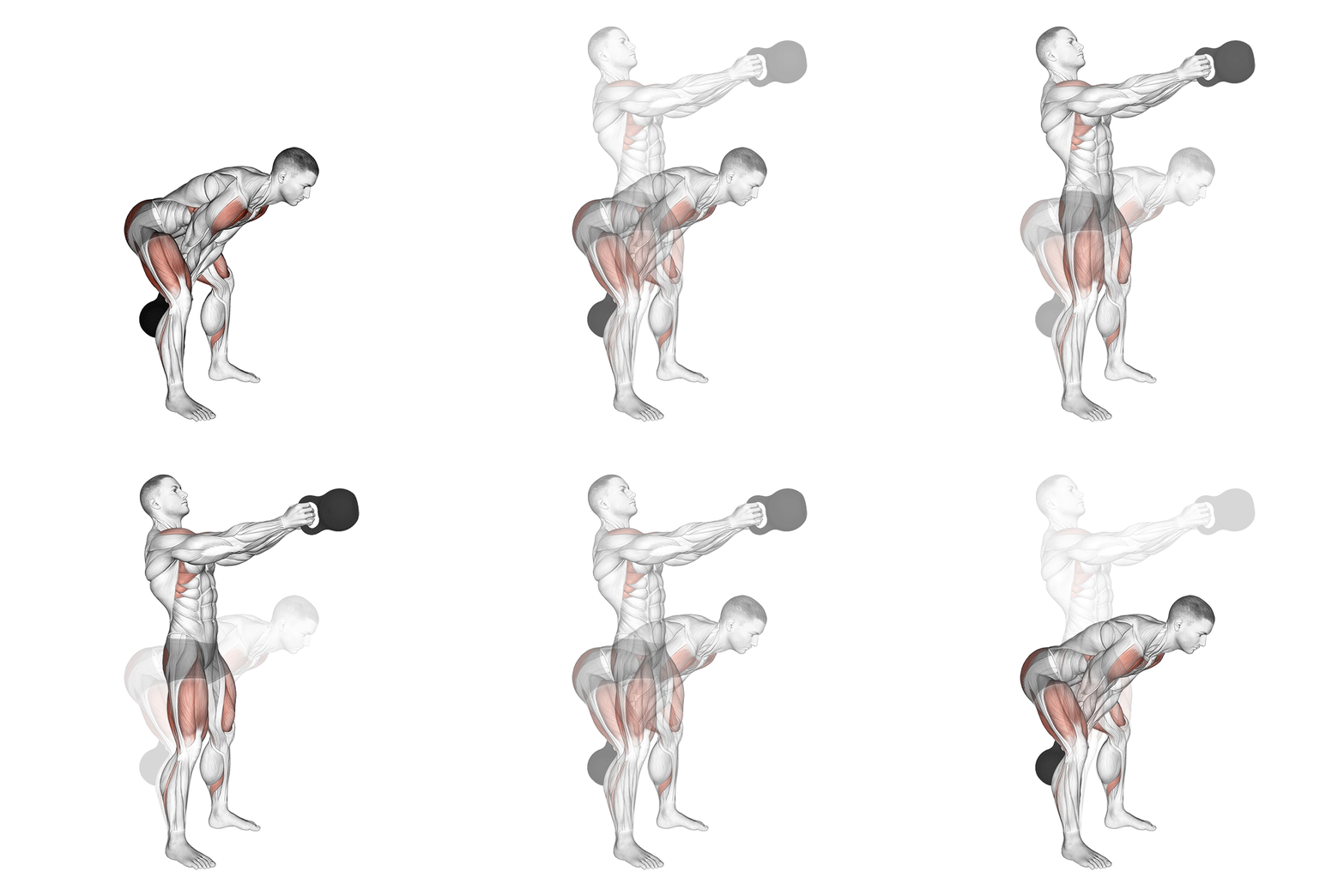
Kettlebell cluster
Add a squat clean before every thruster, with the bells returning to the floor each rep. The extra pull recruits the posterior chain and sends the heart rate into another postal code.
No kettlebells?
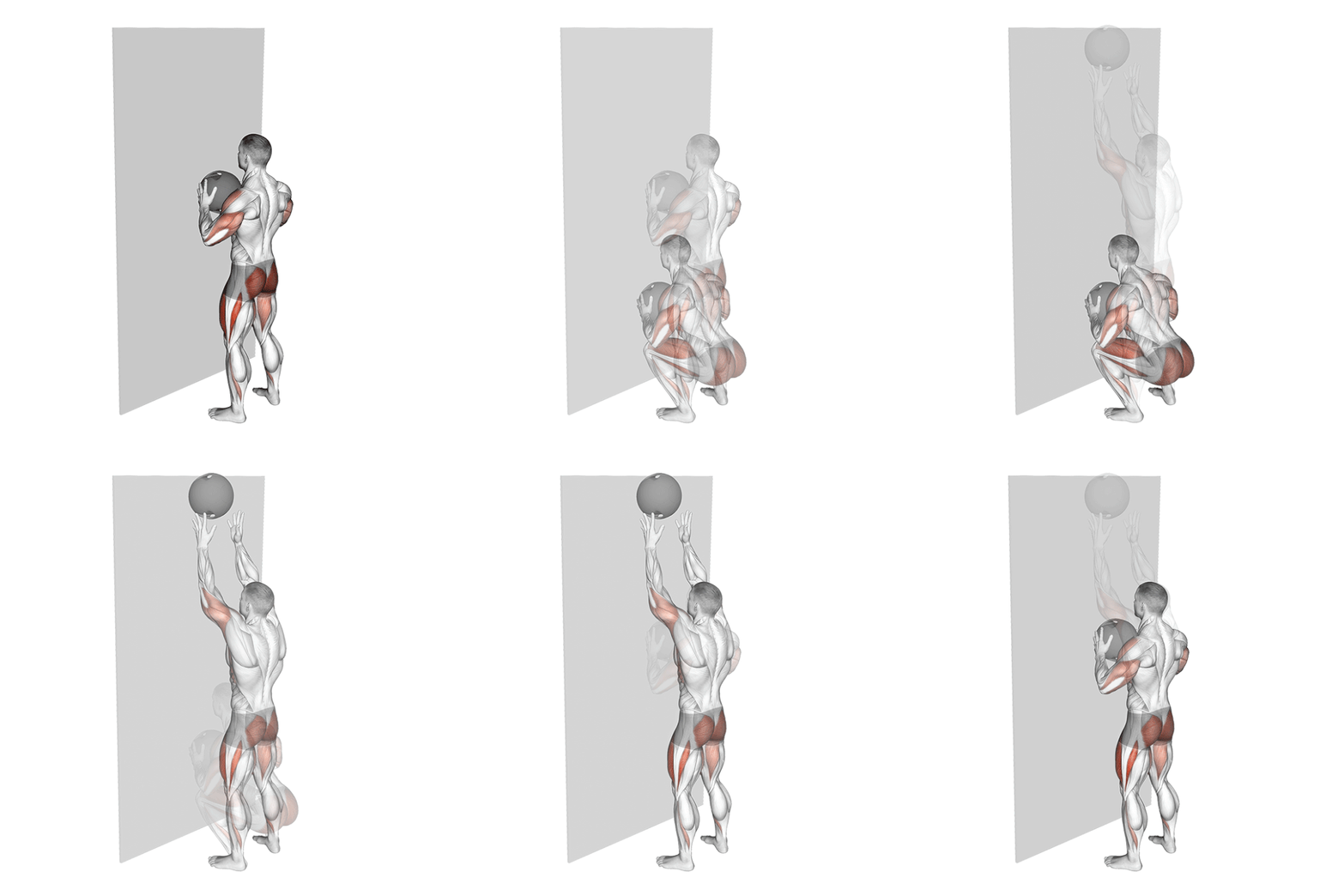
Wall balls
Same squat-and-drive pattern, with the load thrown at a target instead of pressed. It is the Hyrox station this movement prepares you for.
How to program it
Three protocols by goal. Pick one per cycle and aim for progression on load or distance.
| Goal | Sets × distance | Load | Rest |
|---|---|---|---|
| Strength and power | 5 × 5 | Heavy pair, RPE 8 | 2 min |
| Conditioning | EMOM 10-12 min: 8-10 reps | Moderate, unbroken | Remainder of the minute |
| Hyrox prep | 3-4 × 15 into a 400 m run | Light, breathing is the limiter | 2 min between rounds |
Kettlebell Thruster FAQ
Kettlebell or barbell thruster?
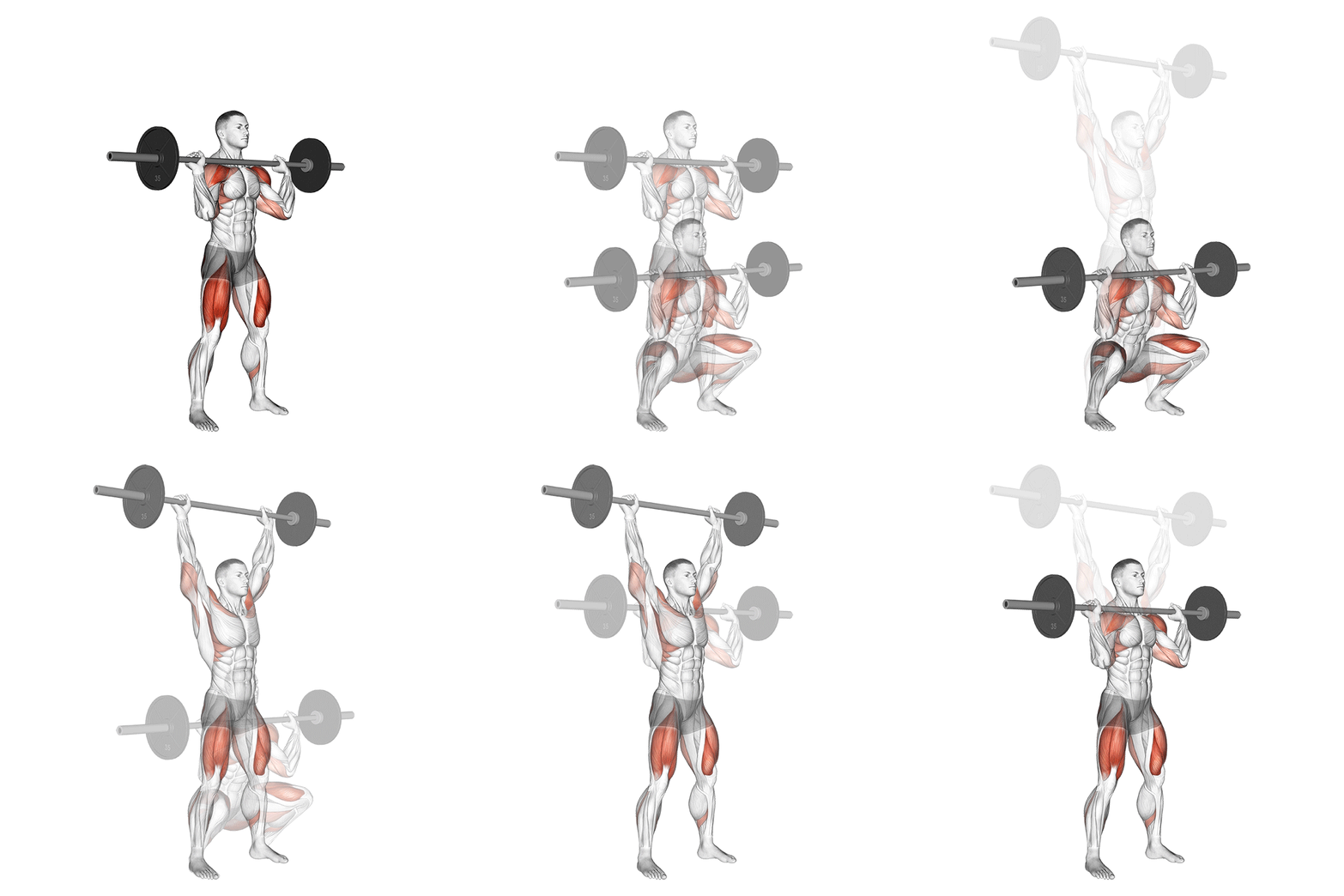
The bar loads heavier and is the right call for pure strength numbers. The bells win almost everywhere else: each arm works alone so a strong side cannot cover for a weak one, there is no bar path to clear around your chin, and a single bell turns it into a unilateral or light-equipment option. For conditioning volume, most athletes flow better with kettlebells.
What muscles do kettlebell thrusters work?
Nearly all of the big ones, in sequence: quads and glutes drive the squat, the core transfers the force, and the shoulders and triceps finish the job overhead while the upper back stabilizes the rack. That chain is exactly why the thruster doubles as cardio: moving that much muscle through that much range pushes your heart rate up faster than almost any single exercise.
How heavy should kettlebell thrusters be?
Pick bells you could strict press for 5-6 reps; the leg drive will stretch that into long thruster sets. For conditioning work that often means 8-16 kg per hand for women and 12-24 kg for men, kept unbroken. The set should end because your lungs quit, not because the press starts stalling overhead: when it does, go lighter.