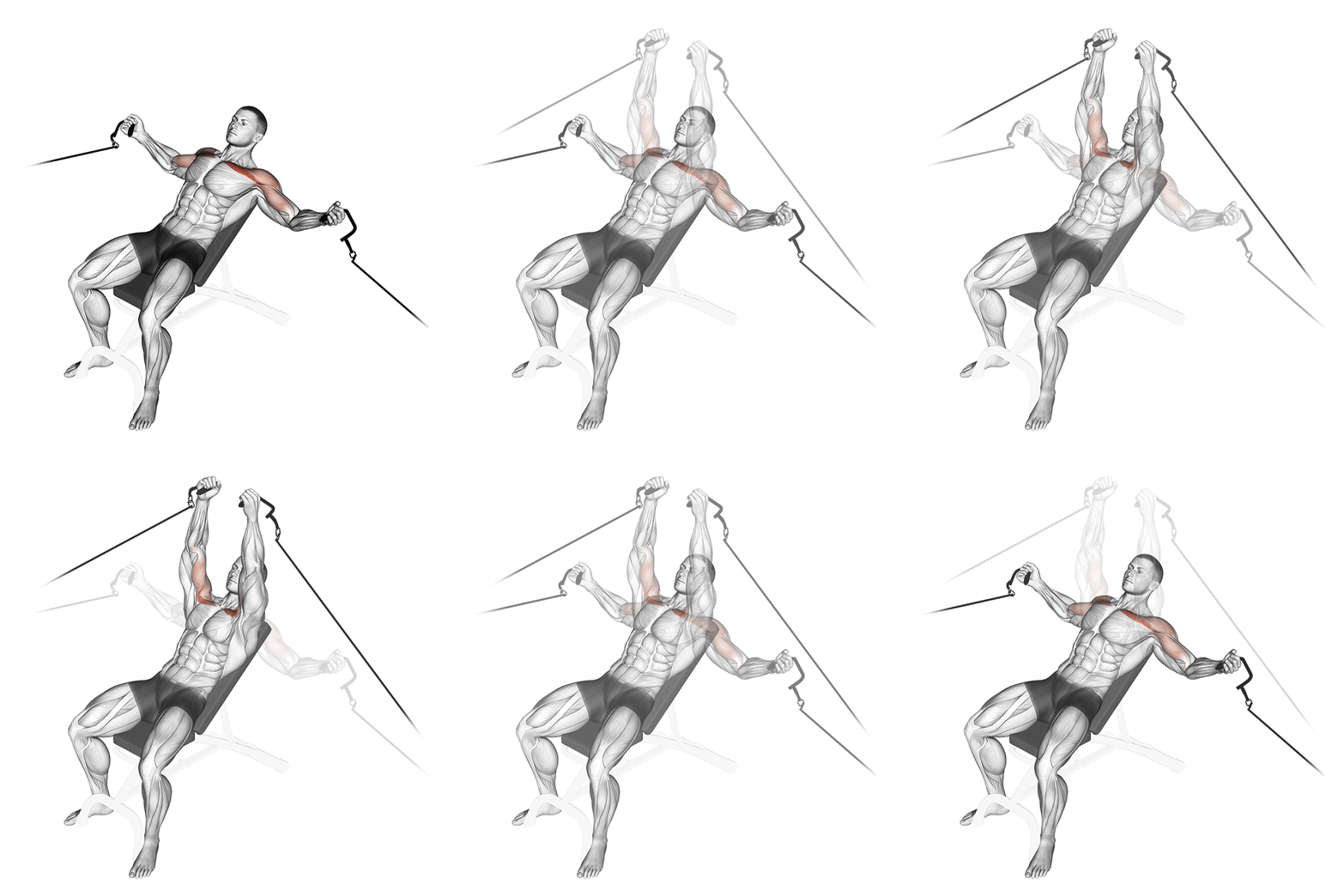
What is the incline cable fly?
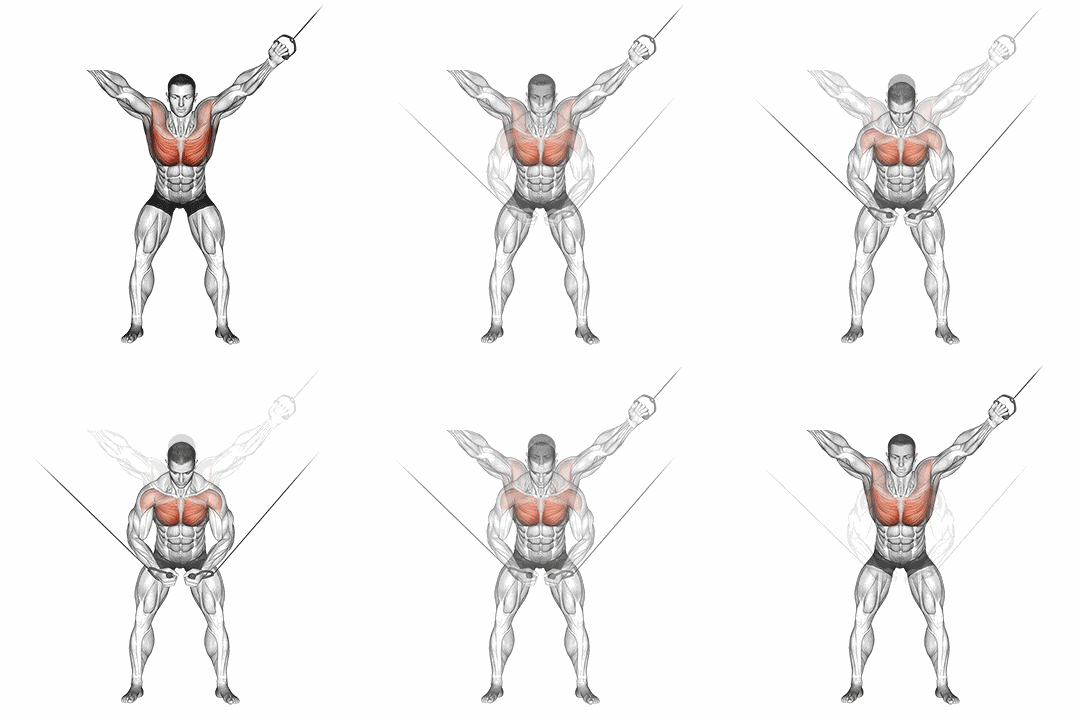
The incline cable fly is a single-joint chest exercise done lying on a bench set to about 30 degrees between the two low pulleys of a cable station. The cables pull your arms down and out, so the clavicular fibres of the upper chest stay loaded from the deep stretch all the way to the squeeze, exactly where dumbbells go slack. Compared with the standing low-to-high cable fly, the bench takes legs and balance out of the equation: nothing to stabilise, no leaning, just a fixed shoulder angle and strict pec work that is far easier to progress week to week. It suits anyone whose upper chest lags behind their pressing.
How to do the incline cable fly
- 1
Build the station
Set both pulleys to their lowest position with D-handles and place an incline bench at about 30 degrees, dead centre between the columns.
- 2
Get into position
Grab one handle, then the other (or have them handed to you), lie back with feet flat and shoulder blades pinned back and down. Arms open wide, elbows bent about 15 degrees.
- 3
Arc up and in
Draw the handles up and inward until they meet above your upper chest, elbow angle frozen. Squeeze the pecs hard for one second.
- 4
Lower into the stretch
Open the arms over 3 seconds until you feel a deep stretch across the upper pec, hands around shoulder height. No bouncing out of the bottom.
Pro tip
Slide the bench half a step forward of the pulley line instead of dead level with it. With your shoulders just ahead of the cables, the pull comes from behind you at the bottom, so the stretch lands on the upper pec instead of yanking on the front of the shoulder.
Common mistakes
Setting the bench too steep.
Past 45 degrees the front delt takes over and the exercise becomes a bad shoulder raise. Stay around 30 degrees: enough to bias the upper fibres, not enough to hand the rep to the delts.
Flattening the arc.
If the elbows open and close during the rep, you are half pressing and the triceps steal the work. Pick an elbow bend at the start and carry it through every centimetre.
Diving into the stretch.
The cables pull hardest at the bottom, and a fast drop there is how fly injuries happen. Lower over 3 full seconds and stop where you still own the position.
Chasing the squeeze with the shoulders.
Letting the shoulder blades peel off the bench at the top feels like extra contraction but only rolls the shoulders forward. Keep the blades pinned and finish the squeeze with the pecs alone.
Variations and progressions
Easier
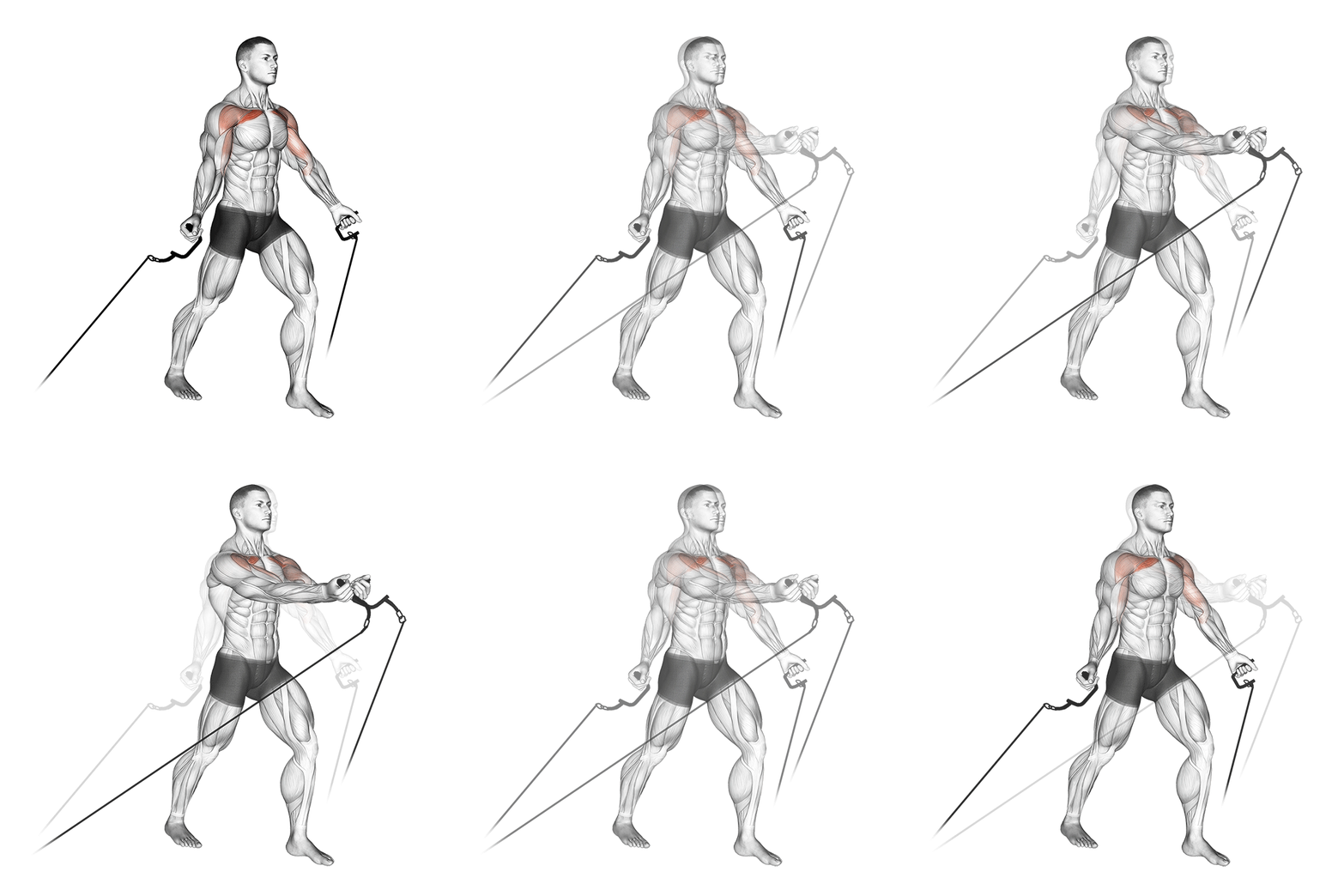
Standing low-to-high cable fly
Same upper-chest line without dragging a bench into the station. Quicker to set up and a good way to learn the arc before lying down.
Harder
Single-arm incline cable fly
One handle at a time, crossing past the midline at the top for extra range. The offset pull also forces the trunk to resist twisting on the bench.
Alternative
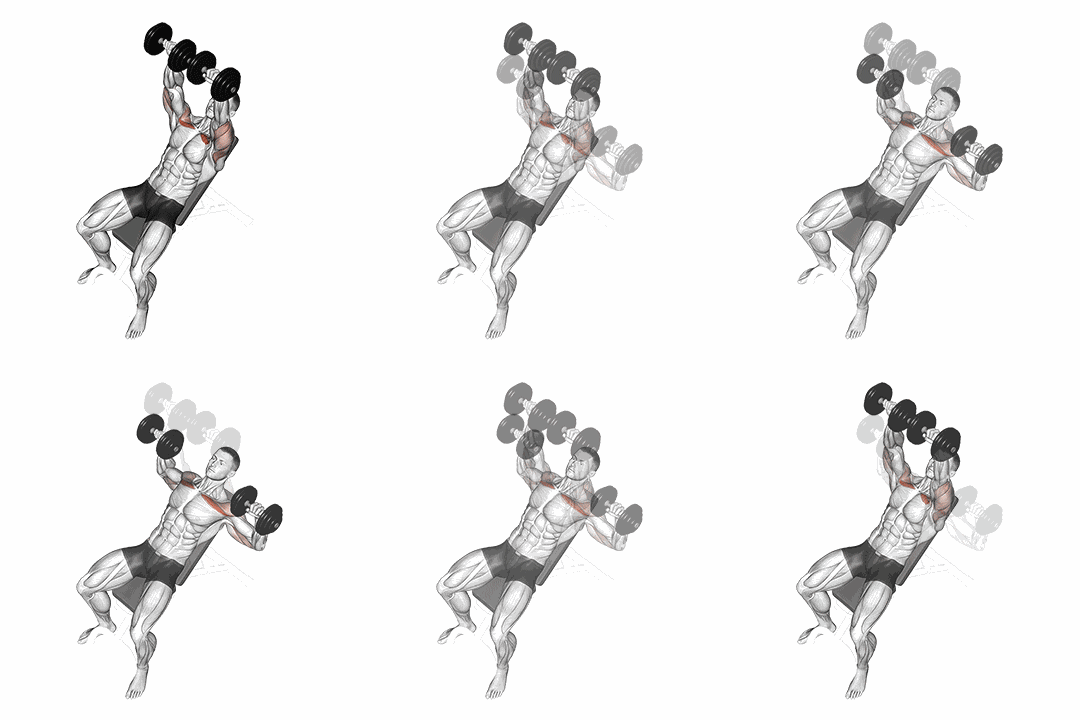
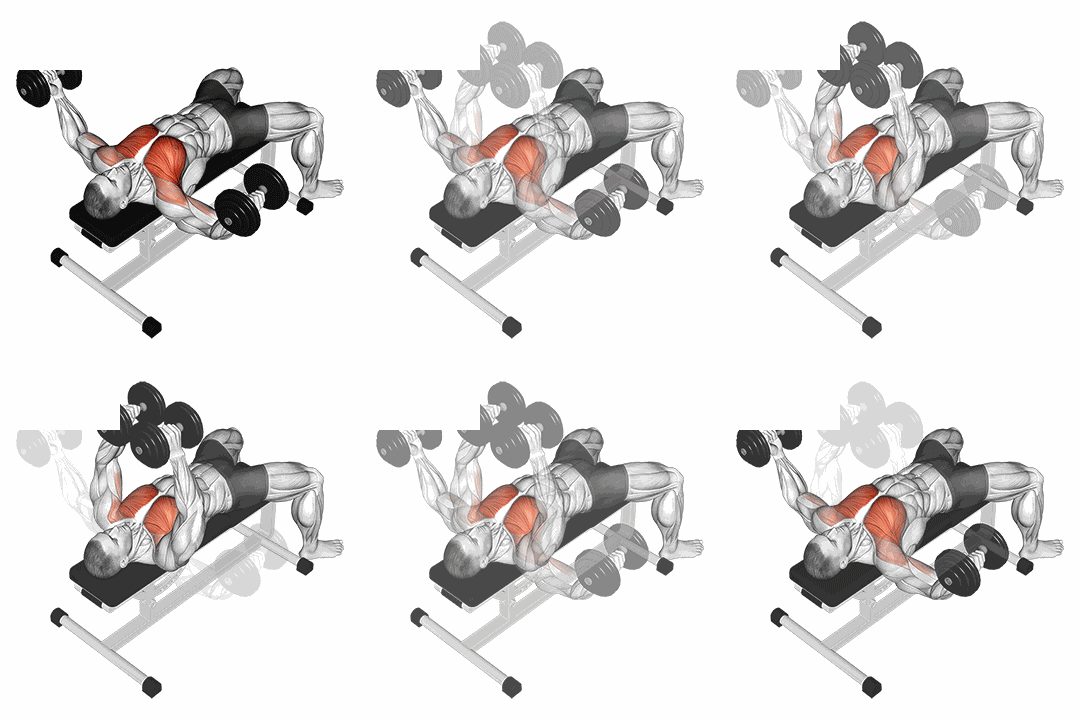
Incline dumbbell fly
No cable station needed, and a brutal loaded stretch at the bottom. The top of the rep is unloaded, so add a deliberate 1-second squeeze to earn it back.
How to program it
Three protocols by goal. Pick one per cycle and aim for progression on load or distance.
| Goal | Sets × distance | Load | Rest |
|---|---|---|---|
| Technique | 2-3 × 12-15 | Light, RPE 5-6 | 60 s |
| Hypertrophy | 4 × 10-12 | RPE 8 | 90 s |
| Upper-chest finisher | 2 × 12 + 8 partials in the stretch | RPE 9 | 90 s |
Incline Cable Fly FAQ
Incline cable fly or incline dumbbell fly for upper chest?
Both target the clavicular fibres; the resistance profile is the real difference. Dumbbells overload the stretch and vanish at the top, cables stay heavy through the squeeze and are kinder to the shoulder. If the station is free, take the cables; otherwise dumbbells with a pause in the stretch do the job fine.
What angle should the bench be?
Around 30 degrees. Anywhere between 15 and 30 shifts the emphasis up the chest while the pec still does the lifting; from 45 upward the front delt gradually takes over. If your bench only offers big jumps, choose the lower notch.
Why do I feel it in my shoulders and not my chest?
Usually a stack of small errors: bench too steep, elbows too straight, shoulder blades loose, weight too heavy. Drop the load, re-pin the blades, soften the elbows to about 15 degrees and finish each rep above the upper chest with a deliberate squeeze. The pecs take over within a set or two.
Can it replace the incline press?
No. The fly is an isolation that adds upper-pec volume without piling more fatigue on the shoulders and triceps; the press is the heavy driver of upper-body strength. Press first while fresh, fly after, and let each do its own job.