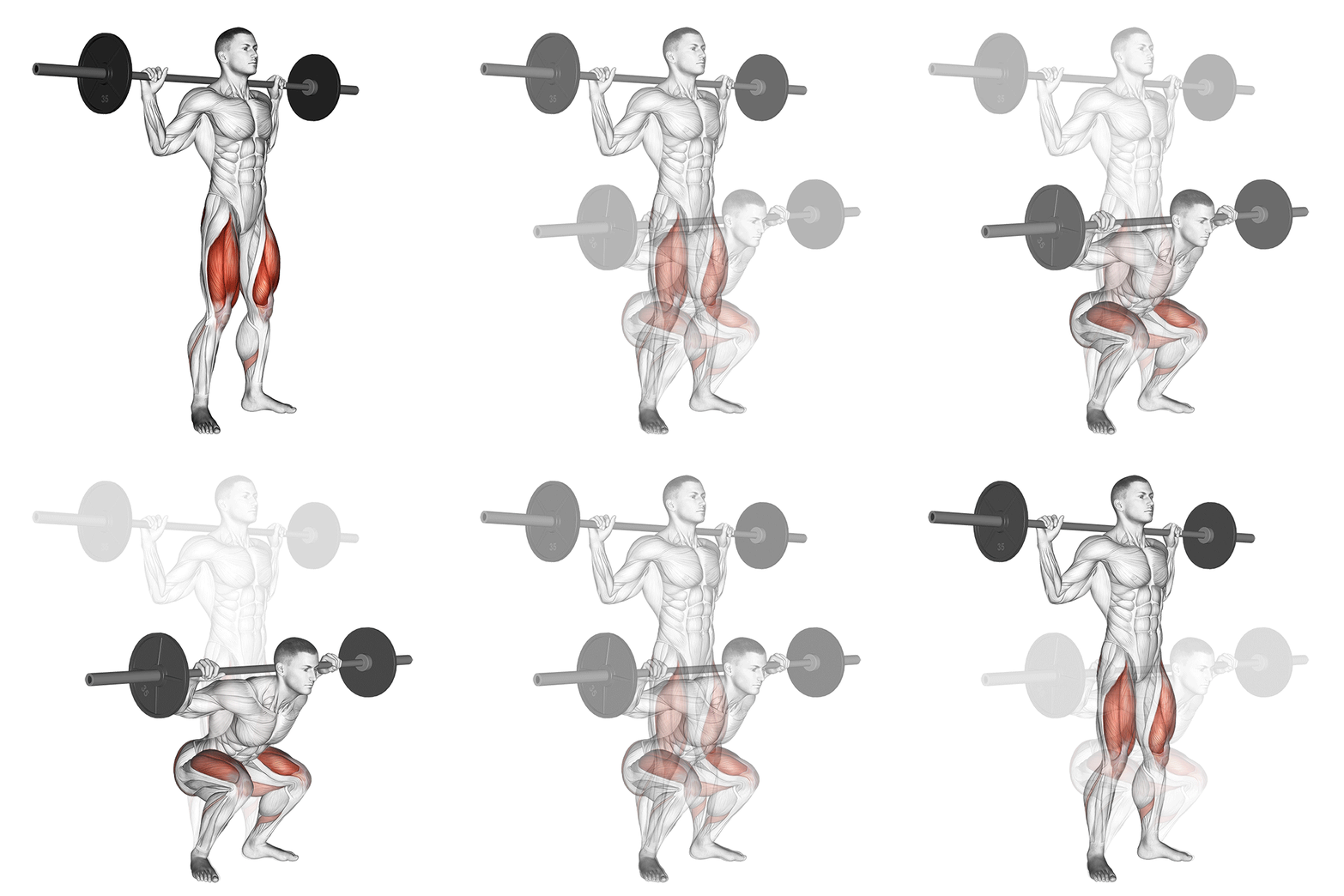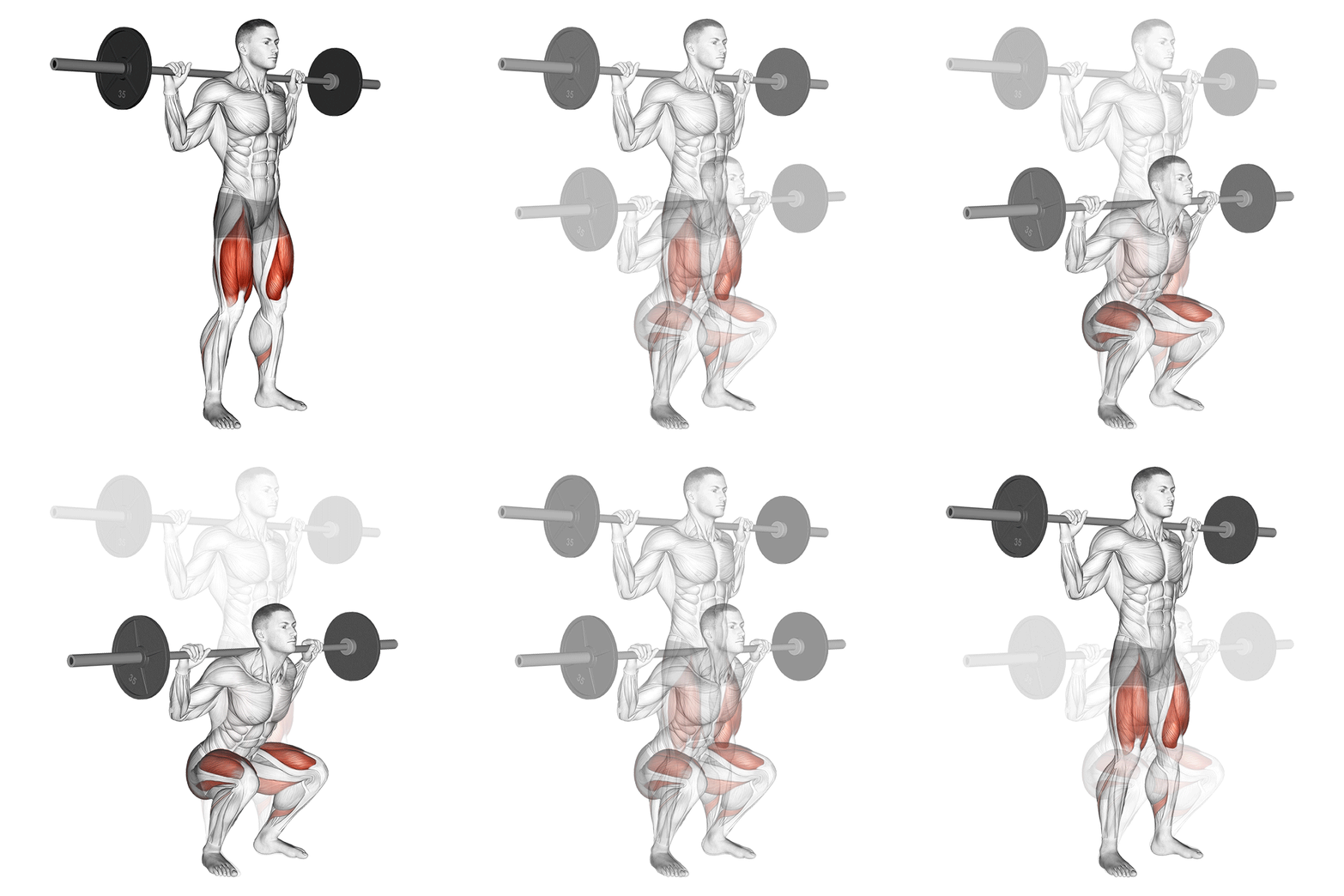
What is the high-bar squat?
In a high-bar squat the barbell rests on top of your trapezius, just below the bony bump of C7 at the base of your neck. That placement lets you keep the bar over your midfoot with a nearly vertical torso, so your knees travel further forward and your quads handle more of the load than in a low-bar squat, where the bar rides 5 to 8 cm lower and the hips take over. It is the default squat of Olympic weightlifters and field athletes, and the smart pick for hybrid athletes: the upright, deep-knee pattern mirrors the positions you hit when you jump, sprint or catch a clean.
How to do the high-bar squat
- 1
Build the shelf
Grip the bar just outside your shoulders, duck under, and squeeze your shoulder blades together so the upper traps bunch into a pad. Set the bar on that muscle, not on your neck bones, and pull your elbows down toward your ribs.
- 2
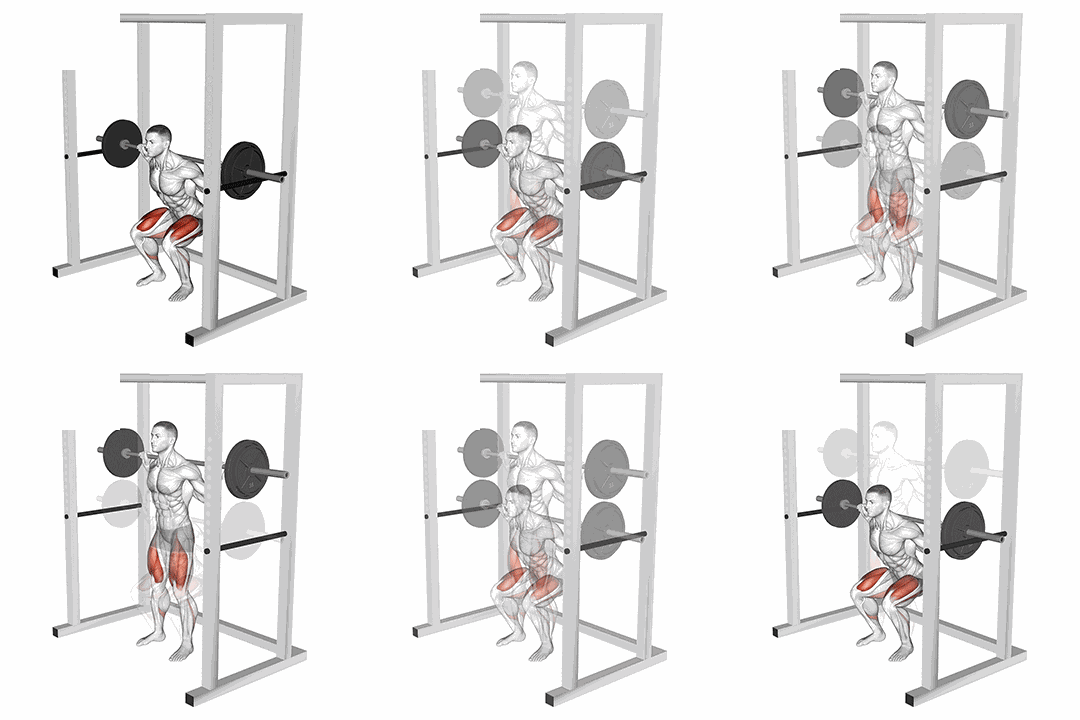
Stand it up and step out
Extend both legs to lift the bar off the hooks, take two controlled steps back and plant your feet at shoulder width, toes out slightly. Fill your belly with air and lock your ribs down over your pelvis before the first rep.
- 3
Sit straight down
Bend the knees and hips at the same time and let your knees glide forward over your toes while your torso stays tall. Ride the bar straight down over your midfoot until your hip crease passes below your kneecap.
- 4
Push the bar back into the rack path
Drive your whole foot into the floor and push your upper back into the bar so hips and shoulders rise at the same speed. Finish fully upright, exhale, and re-brace before the next rep.
Pro tip
Your grip width controls the shelf. Before you unrack, walk your hands in as close as your shoulder mobility allows: a narrower grip bunches the traps into a thicker pad, pins the bar in place, and stops the slow slide down your back that wrecks heavy sets.
Common mistakes
Bar on the neck.
If the bar sits on C7 it hurts, tips you forward and bruises bone. Shrug your traps up into the bar during setup and set it one notch lower, on muscle.
Turning it into a low-bar squat under fatigue.
When the set gets hard, the hips drift back, the chest drops and the quads check out. Keep your knees forward and your chest proud; if you can't, the load is too heavy for the pattern you're trying to train.
Heels peeling off the floor.
Limited ankle dorsiflexion pushes your weight onto your toes at depth. Squat in weightlifting shoes or with small plates under your heels while you work on calf and ankle mobility.
Elbows flaring behind the bar.
Elbows drifting up and back lever the bar down your spine and strain the wrists. Point them at the floor and keep the forearms close to vertical.
Variations and progressions
Easier
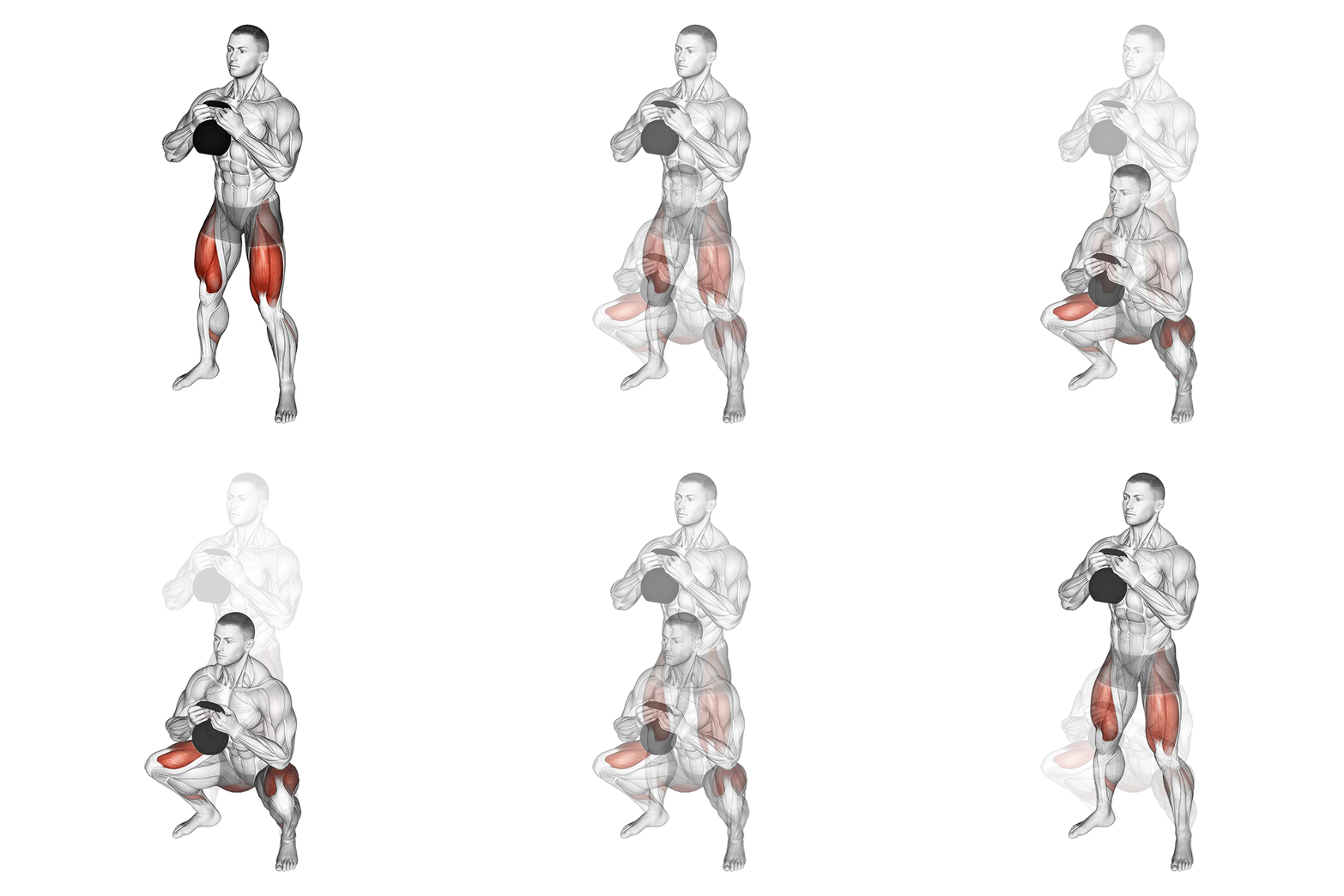
Heels-elevated goblet squat
A dumbbell at the chest and a wedge under the heels reproduce the upright torso and forward knee travel with a fraction of the load. Perfect for grooving the pattern before the bar.
Harder
Tempo high-bar squat
Take 3 full seconds to descend, then stand at normal speed. The slow eccentric multiplies time under tension, polices your positions, and makes 70% feel like a max.
Alternative
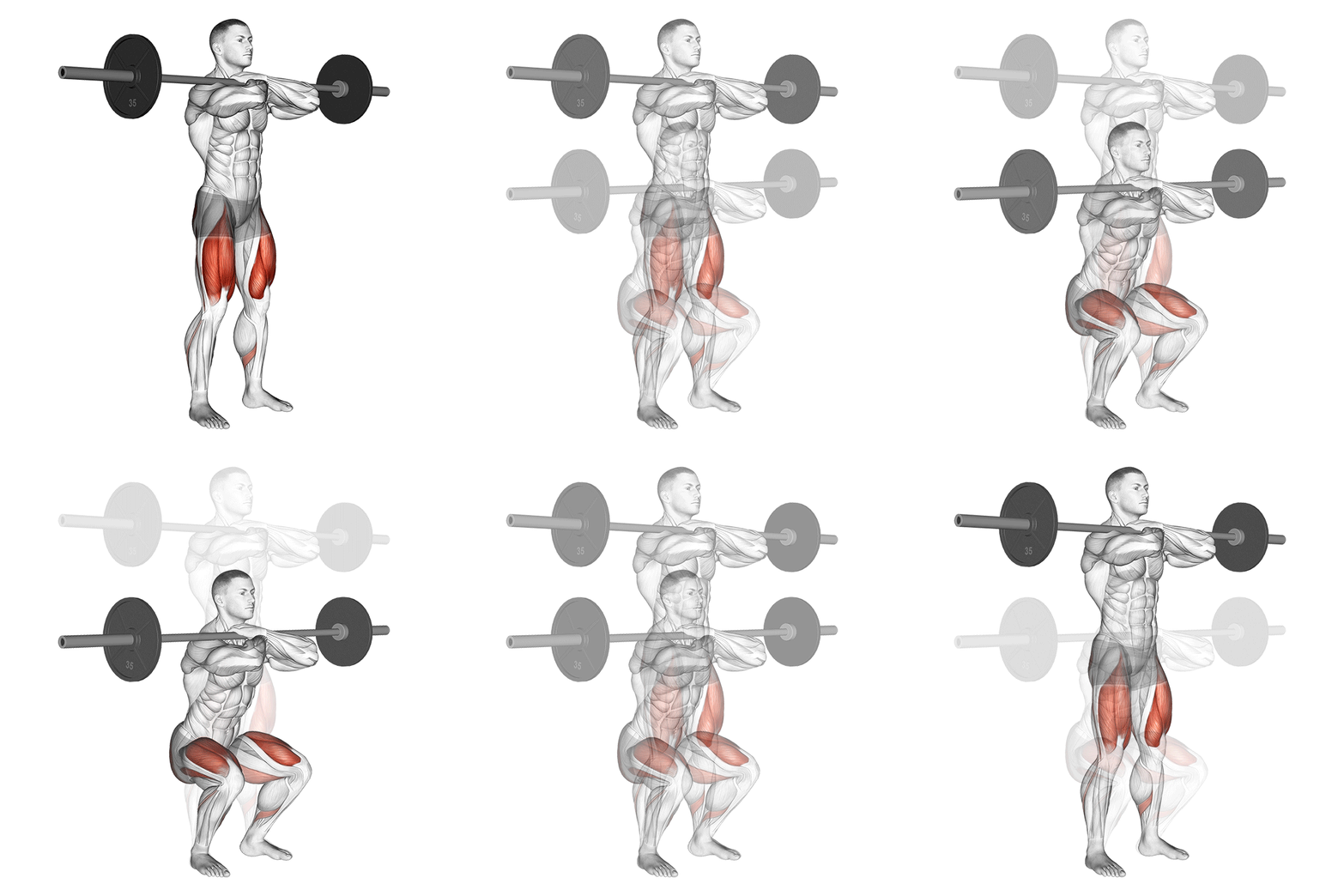
Front squat
Move the bar to the front rack and the torso gets even more vertical, with the upper back as the limiter. A strong swap if high-bar still bothers your neck or you want direct carryover to cleans.
How to program it
Three protocols by goal. Pick one per cycle and aim for progression on load or distance.
| Goal | Sets × distance | Load | Rest |
|---|---|---|---|
| Strength | 5 × 4 @ 80-85 % 1RM | Heavy | 3 min |
| Hypertrophy | 4 × 8 @ 70-75 % 1RM | Moderate | 2 min |
| Power | 6 × 3 @ 60 % 1RM, max bar speed | Light-moderate | 2 min |
High-Bar Squat FAQ
Where exactly should the bar sit for high-bar?
On the shelf of muscle at the top of your traps, directly below the bony bump at the base of your neck (C7). If you feel bar on bone, or your neck aches after squatting, you're racked too high: squeeze your shoulder blades harder and set the bar one finger-width lower.
Why is my high-bar squat weaker than my low-bar?
Expect roughly 5 to 10% less on the bar. The upright torso puts a longer lever on the knee, so the quads carry work the hips would otherwise share. That's not a flaw: it's exactly the stimulus you chose high-bar for. Track the two lifts as separate numbers and never judge one by the other.
Do I need weightlifting shoes for high-bar squats?
Not required, but they help more here than in any other squat style. The raised heel buys you extra ankle range, which is what lets the knees travel forward and the torso stay vertical. If your heels lift or your torso pitches at depth, lifters (or plates under the heels) fix it instantly while you build real ankle mobility.
Is high-bar really better for the quads?
Relative to low-bar, yes: the deeper knee flexion and vertical torso keep the quads under load through a longer range. Both styles grow legs, but if your goal is quad size, knee-drive for running, or carryover to cleans and wall balls, high-bar earns its spot as your main squat.