What is the dumbbell thruster?
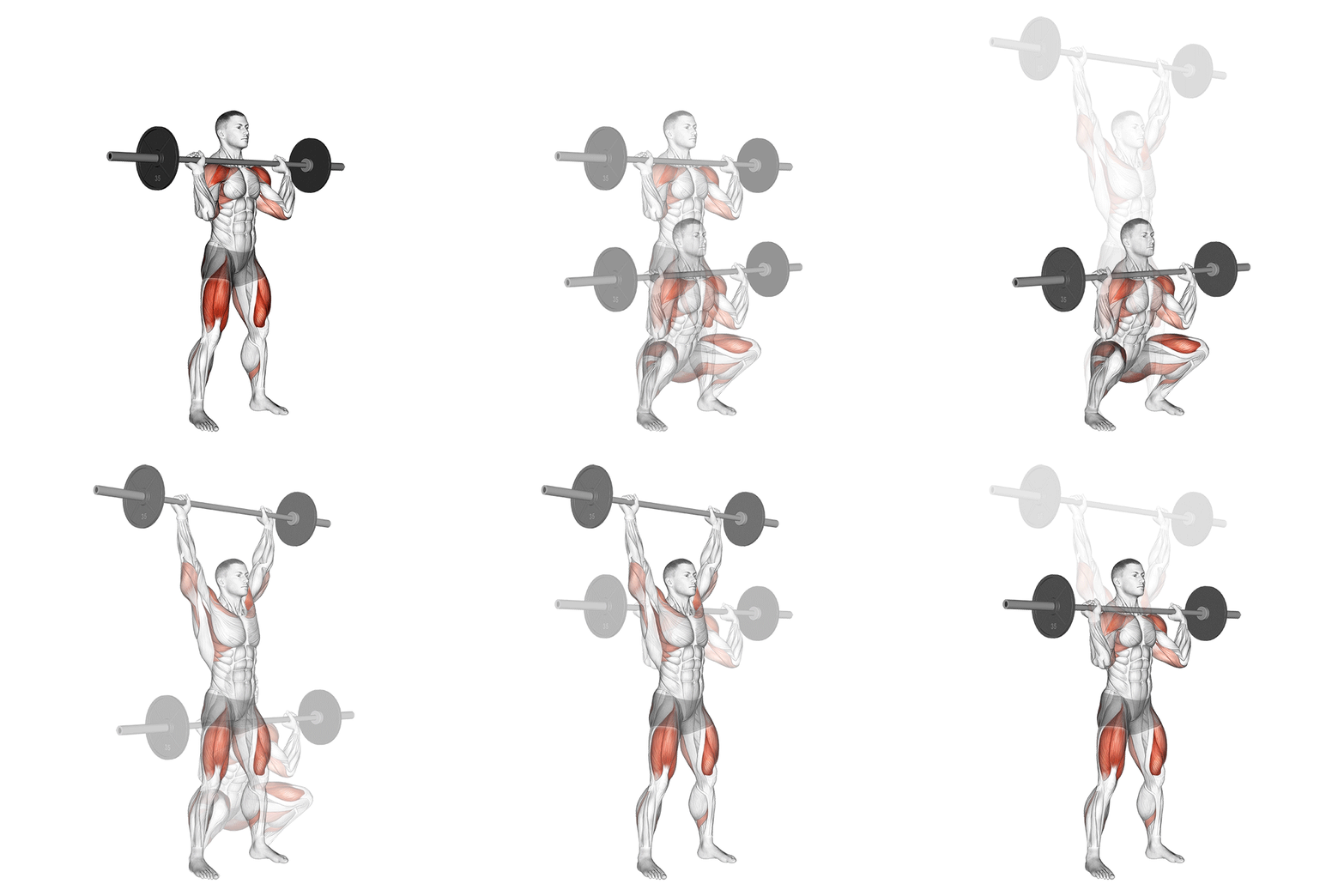
The dumbbell thruster chains a front squat and a push press into one continuous movement: dumbbells racked on the shoulders, squat below parallel, then a drive so aggressive the leg momentum carries the bells overhead. Against the barbell version, dumbbells ask for more stabilization, keep the wrists neutral, and expose the side-to-side gaps a bar hides; they also need no rack, which is why they show up everywhere from garage gyms to competition floors. It is less a strength lift than a conditioning weapon: huge muscle mass, long range of motion, and zero rest between squat and press make every rep expensive.
How to do the dumbbell thruster
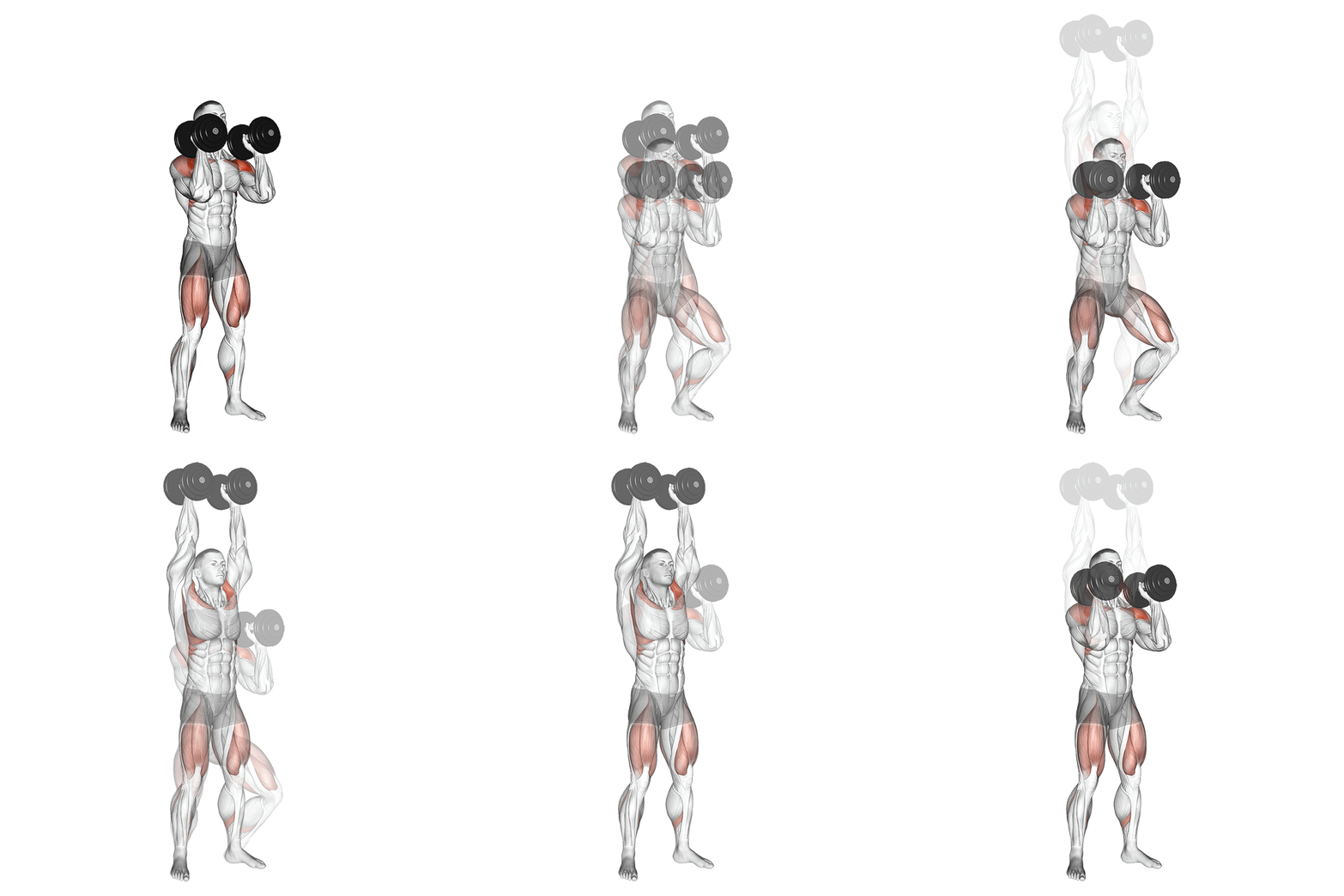
- 1
Rack the bells on your shoulders
Clean the dumbbells up and let one head of each bell rest on a shoulder, palms facing each other, elbows slightly in front of the trunk. Feet shoulder-width, heels down.
- 2
Squat below parallel
Sit into a full front squat with the torso tall and the bells glued to your shoulders. Letting them hover away from the body wastes shoulder strength you'll need later in the set.
- 3
Drive and punch
Stand up hard, and as the hips snap open let that momentum flow straight into the press. Punch the bells to lockout overhead, biceps beside the ears, knuckles to the ceiling.
- 4
Cycle down in one piece
Lower the bells back to the shoulders under control and melt straight into the next squat as they land. Breathe at the top: lockout is the only calm moment in the rep.
Pro tip
The press starts before the squat ends. The instant your hips open, the bells should already be leaving your shoulders; pause standing before you press and you've cut one movement into two and thrown away the free leg drive. On long sets that timing is worth more than any extra kilo on the bells.
Common mistakes
Squat, stand, then press.
Three phases means you're doing a front squat plus a strict press, and your shoulders burn out in half the reps. Rehearse the timing with empty hands until the drive and the press blur into one motion.
Bells drifting off the shoulders.
Carrying the dumbbells in front of the body between reps is a silent front-delt burner. Let them physically rest on the shoulders every rep; your arms are couriers, not shelves.
Depth fading as fatigue builds.
Rep 1 is below parallel, rep 15 is a quarter squat. Set a standard before the workout and break the set early instead of shrinking it: short reps rob the legs and teach a pattern you'll regret.
Leaning back at lockout.
Flared ribs and an arched lower back mean the core gave up before the shoulders did. Squeeze the glutes and tuck the ribs at the top so the load stacks over hips and heels.
Variations and progressions
Easier
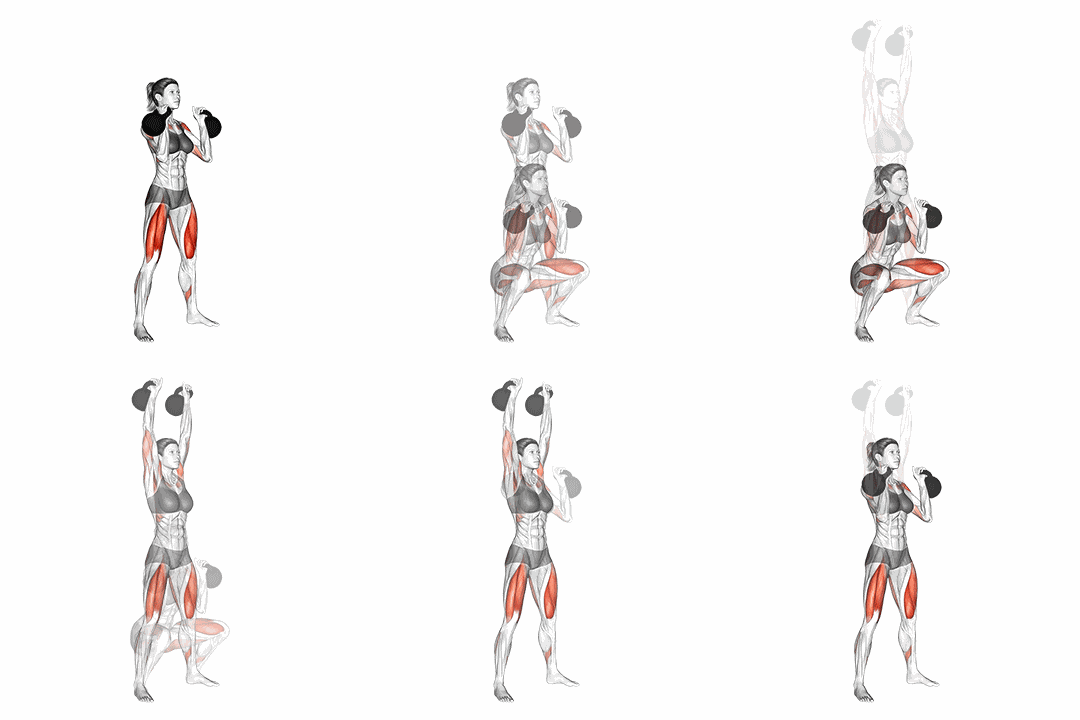
Single-dumbbell goblet thruster
Hold one bell at the chest, squat, then press it overhead with both hands. Half the coordination, half the load, same squat-to-press rhythm.
Harder
Devil press
Add a burpee over the bells, then swing them from the floor straight to overhead. Every rep starts from a dead stop on the ground, and the heart rate goes somewhere thrusters never reach.
Alternative
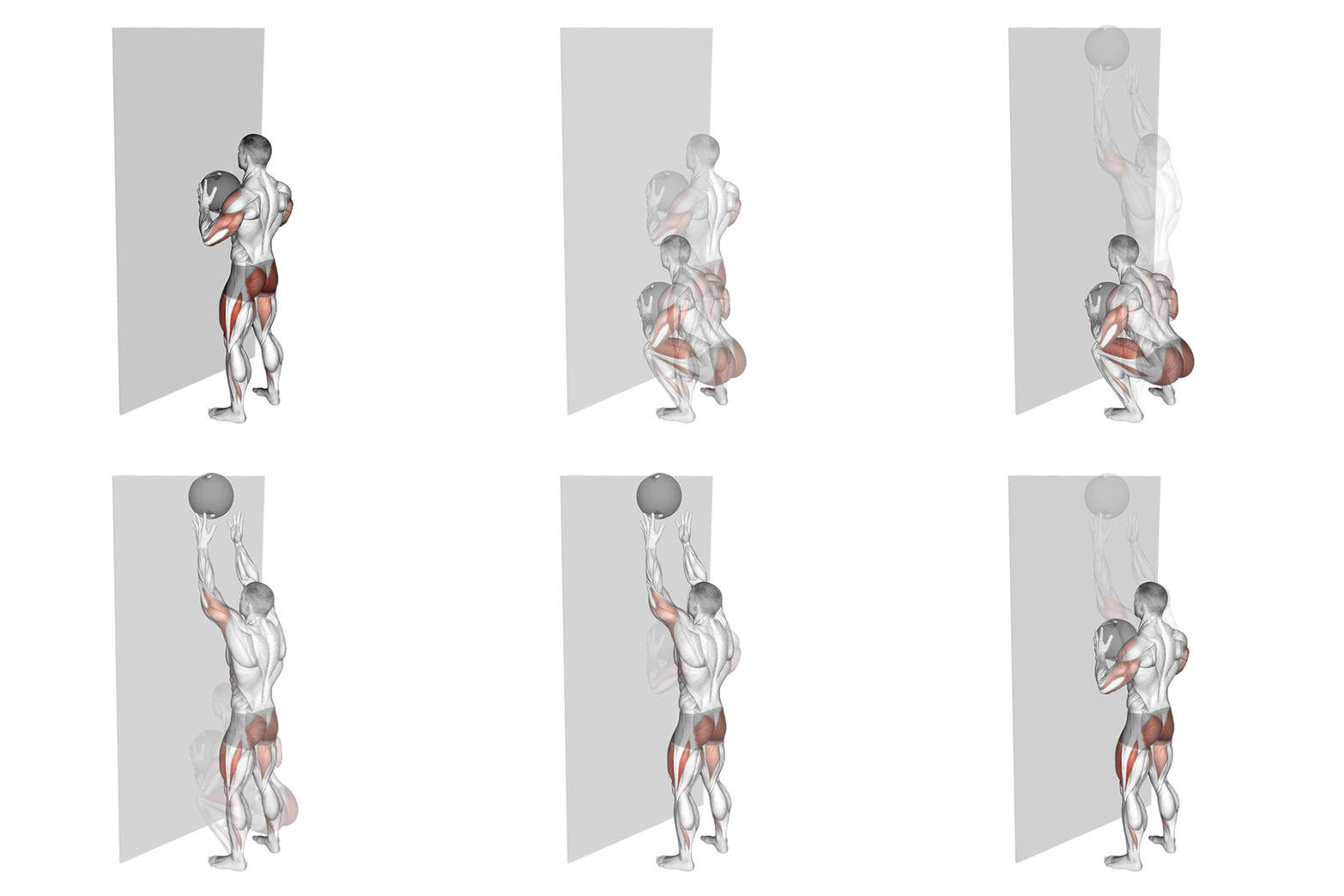
Wall balls
Same squat-and-drive engine, but you throw a medicine ball to a target instead of pressing to lockout. Lighter, higher rep, and the Hyrox-specific cousin of the thruster.
How to program it
Three protocols by goal. Pick one per cycle and aim for progression on load or distance.
| Goal | Sets × distance | Load | Rest |
|---|---|---|---|
| Conditioning | EMOM 10 min: 8-10 reps | Light (2 × 10-15 kg) | Rest of the minute |
| Strength endurance | 5 × 12 | Moderate (2 × 15-22.5 kg) | 90 s |
| Capacity | 3 × 15-20 unbroken | Light-moderate | 2-3 min |
Dumbbell Thruster FAQ
What weight should I use for dumbbell thrusters?
The common competition standard is a pair of 22.5 kg dumbbells for men and 15 kg for women (50/35 lb). Start well below that: a weight you can press strictly for 10 easy reps is about right for your first thruster workouts, because fatigue arrives much faster than it does on squats or presses taken separately.
Dumbbell or barbell thruster: which should I train?
Both, for different jobs. The barbell lets you go heavier and rest the bar in a solid front rack, so it wins for loaded strength work. Dumbbells travel further, demand more stabilization, keep the wrists neutral and fix left-right imbalances, and they're what most home gyms and dumbbell-based workouts prescribe. If shoulders or wrists complain on the bar, dumbbells usually feel better immediately.
What muscles do dumbbell thrusters work?
Nearly everything, in sequence: quads and glutes drive the squat, the shoulders and triceps finish the press, and the core transfers force between the two while keeping the ribs stacked. That total-body chain is why a moderate pair of dumbbells can push your heart rate near its max within a minute.
Why do thrusters gas me so quickly?
Because there is no cheap part of the rep: big muscle groups work through a long range with no rest point, and even the lockout costs you while the bells are overhead. Manage it by breathing at lockout, keeping the bells racked on the shoulders rather than carried, and breaking sets before your form does.