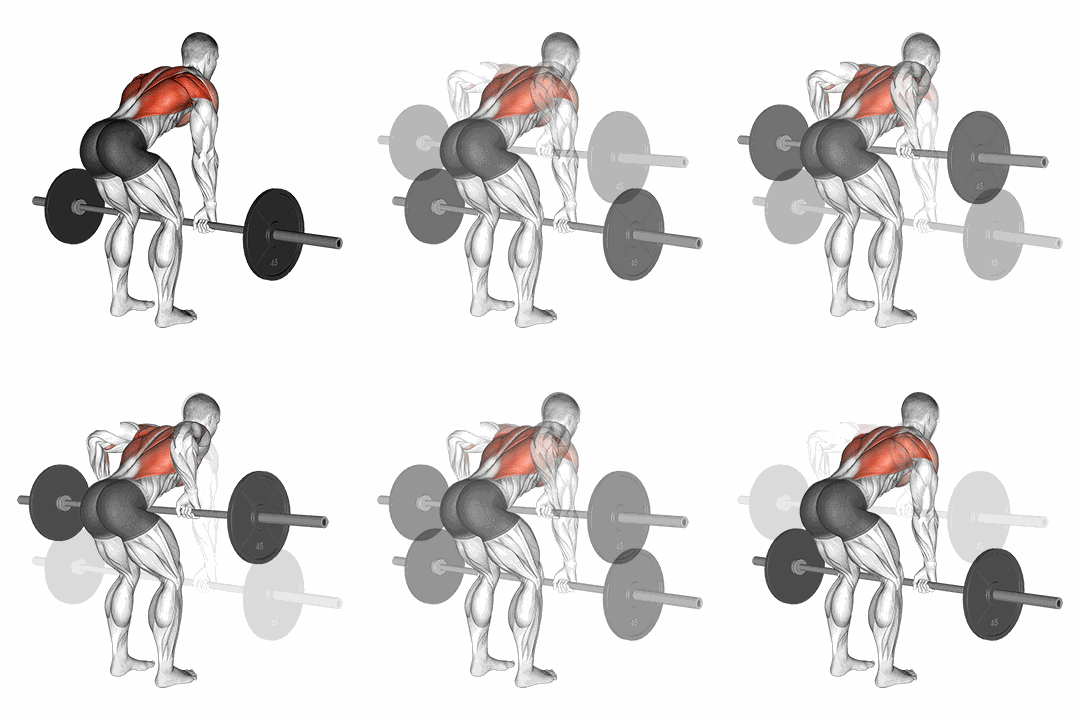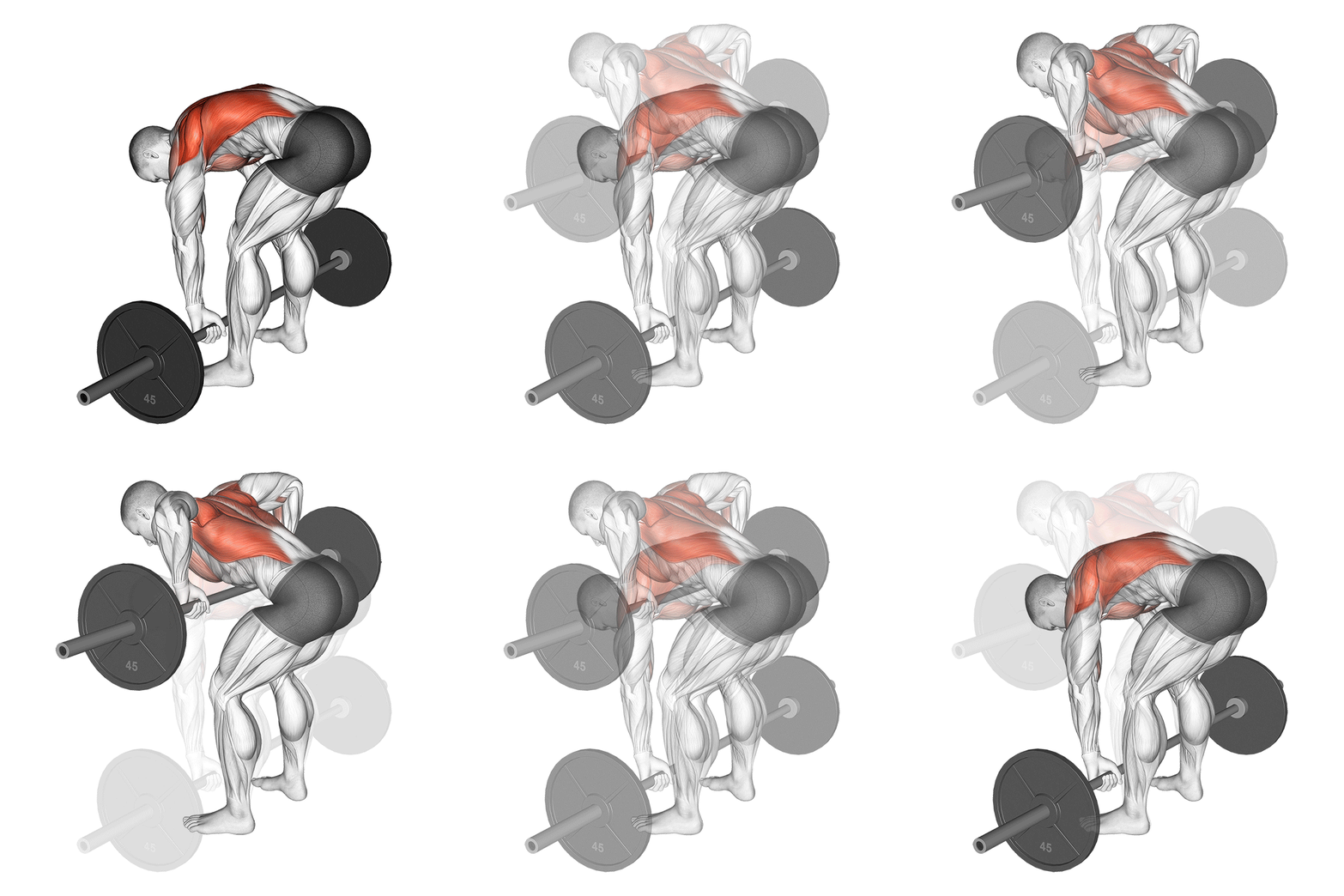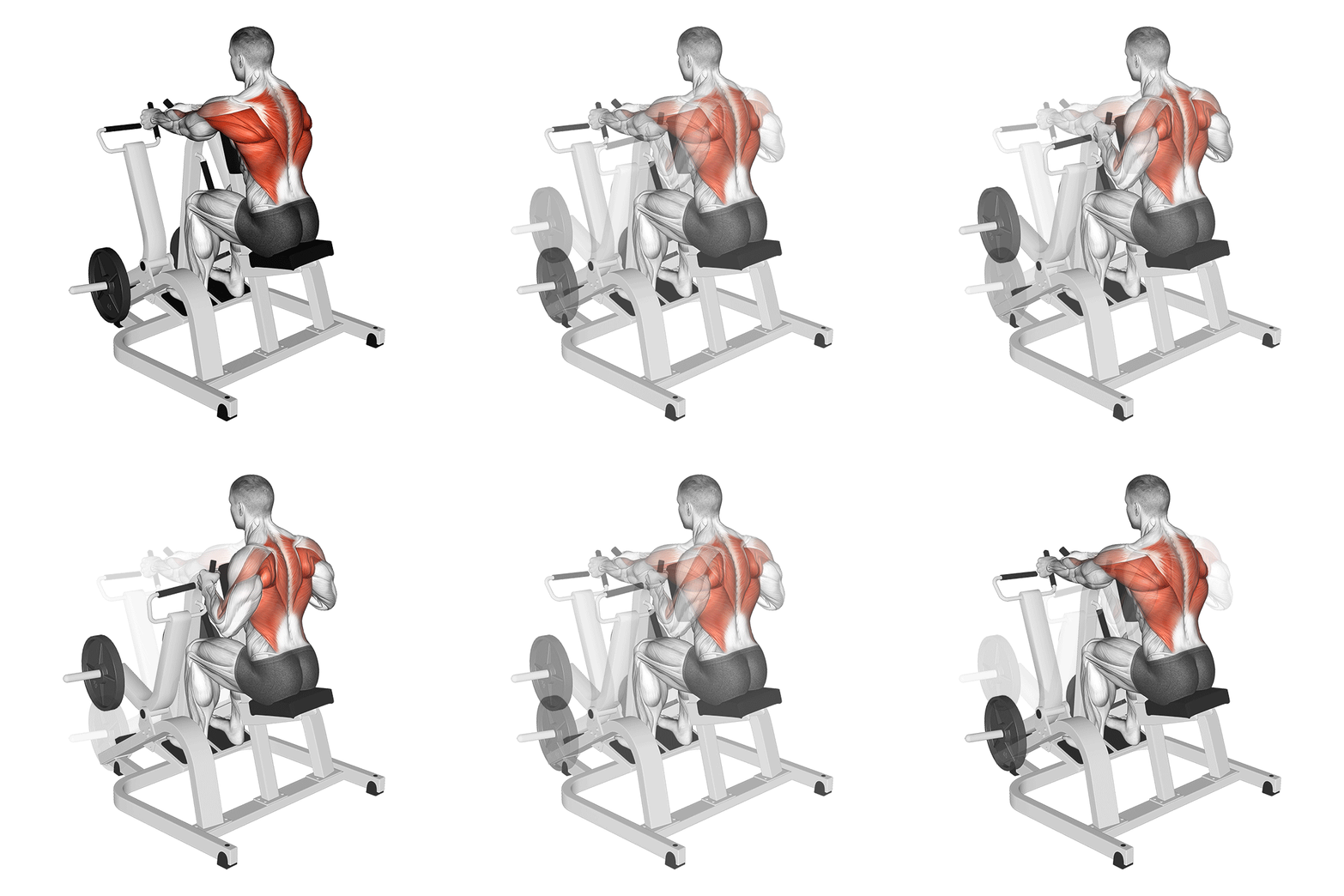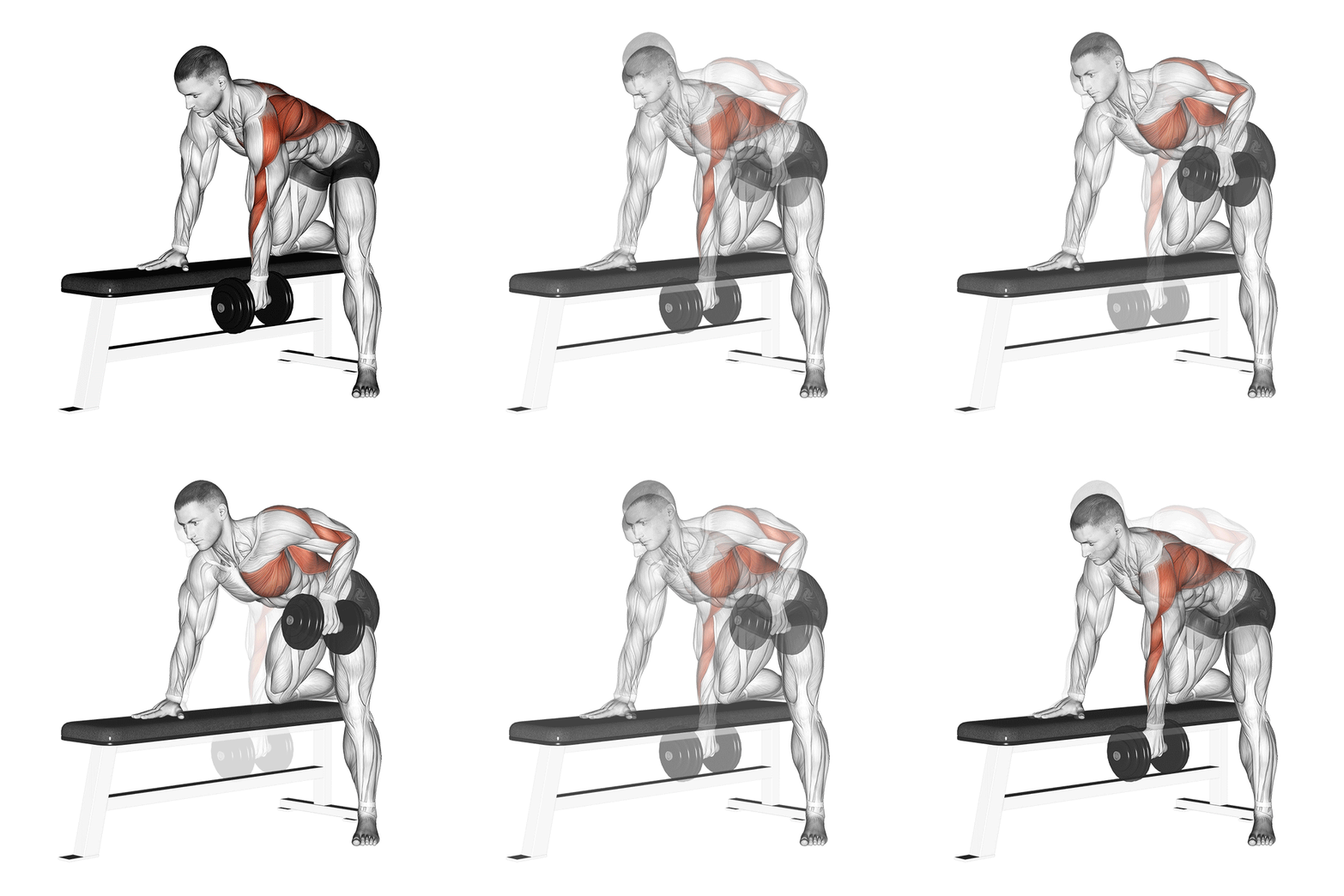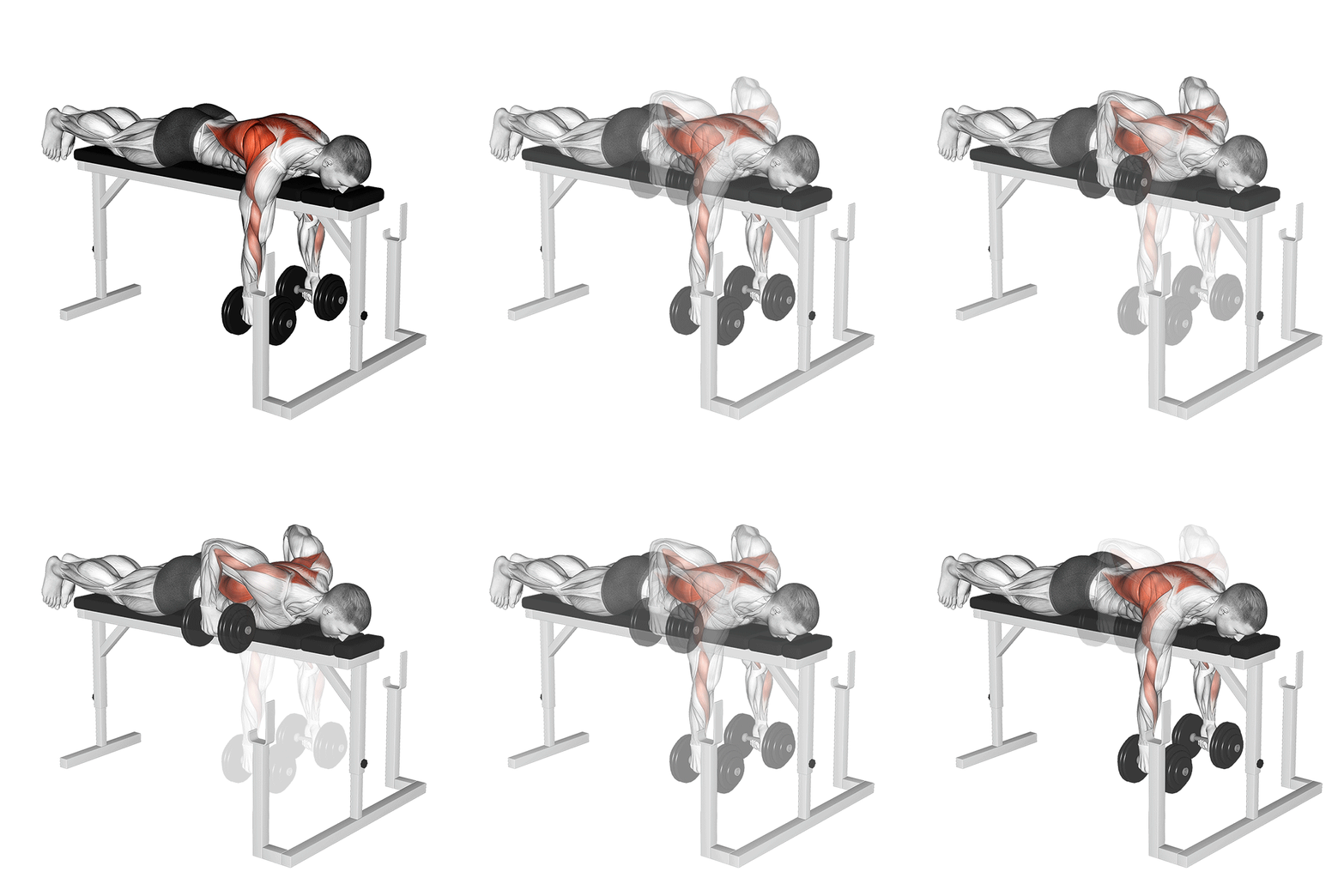
What is the dumbbell seal row?
The dumbbell seal row is a horizontal pull performed lying chest-down on a flat bench raised on blocks or plates, high enough that the dumbbells clear the floor at full arm extension. Because the bench carries your bodyweight, your hips, legs and spinal erectors are out of the lift: every kilo is moved by the upper back alone. It hammers the lats, rhomboids and middle traps without the lower-back fatigue of a bent-over row, and unlike the barbell version you can row with a neutral grip through a longer range. Pick it on heavy deadlift weeks, or when cheat reps have crept into your rowing.
How to do the dumbbell seal row
- 1
Build the platform
Raise a flat bench 20-30 cm on solid blocks or bumper plates, enough for your arms to hang fully extended. Place the dumbbells underneath where you can reach them once you're lying down.
- 2
Lie prone, grab neutral
Lie chest-down with your chin just past the end of the bench, legs straight or ankles crossed. Grab the dumbbells in a neutral grip and let them hang, shoulder blades spread.
- 3
Row to the lower ribs
Drive the elbows up and back at about 45° until the dumbbells reach your lower ribs. Squeeze the shoulder blades together for a full second, chest glued to the pad. Exhale as you pull.
- 4
Lower to a dead stop
Take 2-3 s down until your elbows are fully extended and the shoulder blades spread again. Each rep starts from this dead stop: no swinging the dumbbells backward to cheat the next one.
Pro tip
The bench is a built-in lie detector. The moment your chest peels off the pad to meet the dumbbells, the load is too heavy: drop 10 % and let the mid-back do all the talking.
Common mistakes
Chest peeling off the bench.
Arching up to meet the dumbbells re-introduces the momentum the bench exists to remove. Keep your sternum welded down for the whole set.
Bench too low.
If the dumbbells rest on the floor between reps, tension dies and the stretch disappears. Raise the bench until your arms hang fully extended with the weights in the air.
Rowing to the armpits.
Flared elbows and a high pull shift the work to upper traps and rear delts. Drive the elbows back at about 45° and aim the dumbbells at your lower ribs to keep the lats loaded.
Cutting the bottom short.
Stopping before full extension skips the stretched position where the mid-back grows most. Let your shoulder blades spread completely at the bottom of every rep.
Variations and progressions
Easier
Chest-supported incline row
Set an incline bench to 30-45° and row with your feet on the floor: same support idea, zero setup hassle, and easier to dose light.
Harder
Paused seal row
Hold each rep for 2 s with the dumbbells at your ribs. The pause exposes every bit of stolen range and doubles the mid-back contraction time.
No risers?
Chest-supported machine row
A chest-supported machine gives the same strict, spine-sparing rowing without balancing a bench on blocks.
How to program it
Three protocols by goal. Pick one per cycle and aim for progression on load or distance.
| Goal | Sets × distance | Load | Rest |
|---|---|---|---|
| Strength | 4 × 6-8 | Heavy, RPE 8 | 2 min |
| Hypertrophy | 4 × 8-12 | Moderate, RPE 8 | 90 s |
| Volume, zero lower back | 3 × 12-15 | Light-moderate, RPE 7 | 60-75 s |
Dumbbell Seal Row FAQ
Seal row or chest-supported incline row?
The seal row is the stricter of the two: a horizontal torso and feet off the floor remove every trace of leg drive, so the upper back is fully isolated. The incline version lets you brace through the feet, so loads run heavier but a little body english sneaks back in. Use the seal row as your strict hypertrophy tool and the incline row to push heavier pulling volume.
How high should I raise the bench?
High enough that your arms hang fully extended with the biggest dumbbells you'll use still off the floor: for most people that's 20-30 cm of blocks or bumper plates under each bench foot. Check stability before lying down; the bench must not rock. If your gym has a purpose-built seal row bench, use it.
Why am I so much weaker than on a bent-over row?
Because the bench just confiscated your hips. On a bent-over row, hip extension and a little torso swing contribute real force; lying prone, the lats and scapular retractors work alone. Expect to row clearly less weight, and judge progress against your own seal row log, not your bent-over numbers.