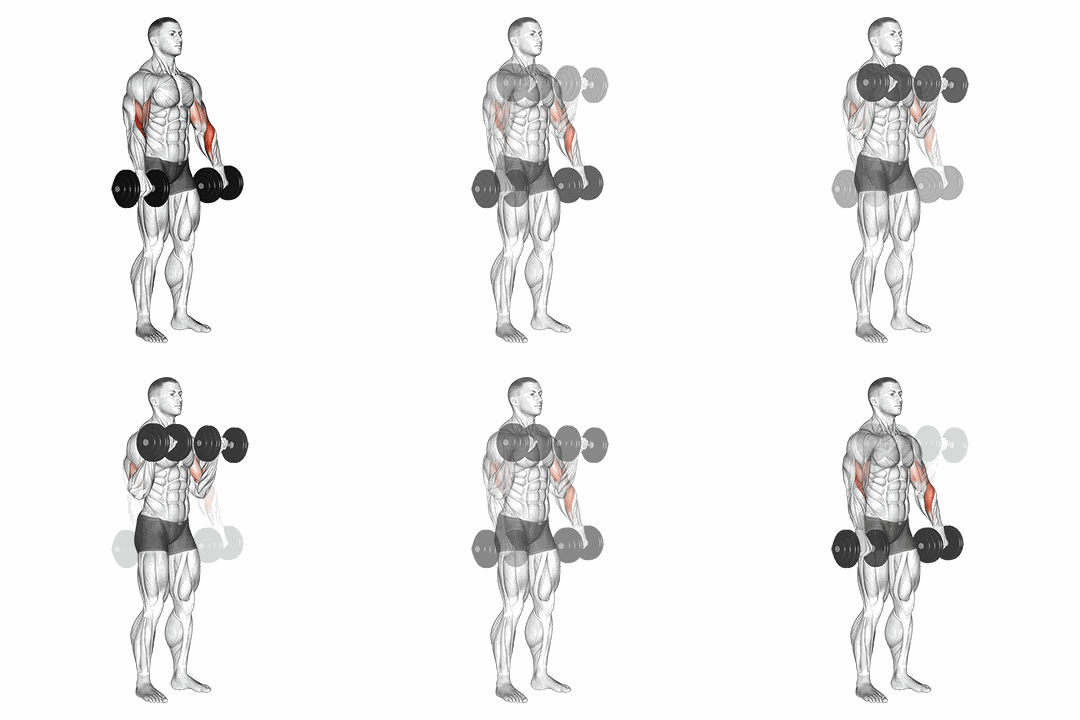
What is the dumbbell reverse curl?
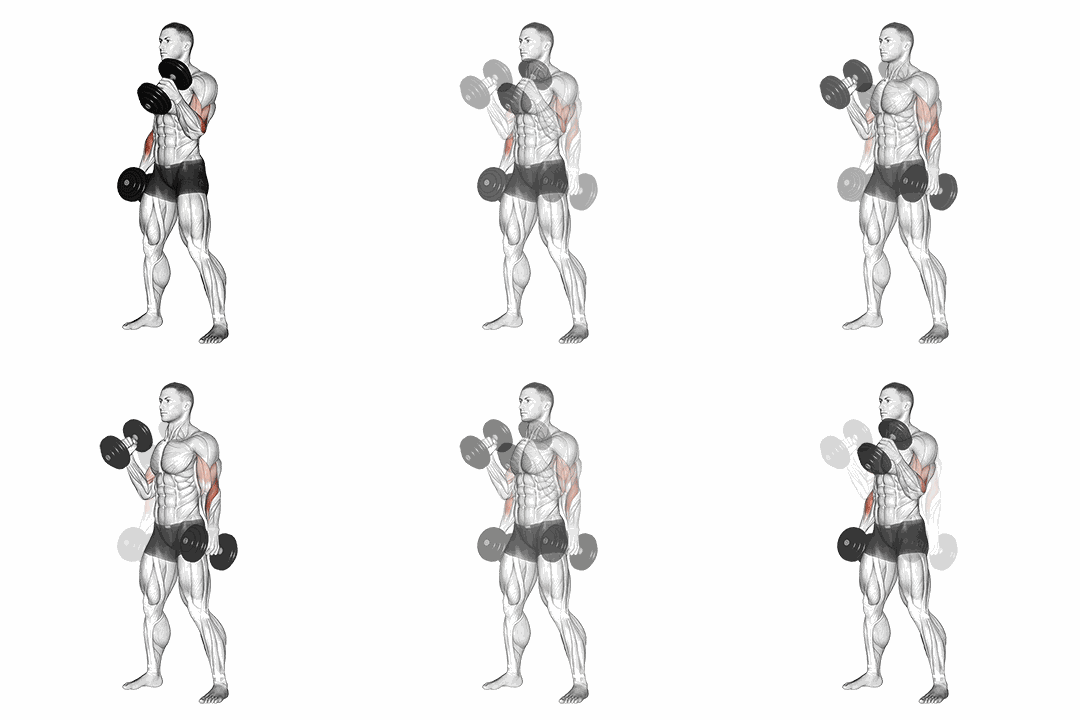
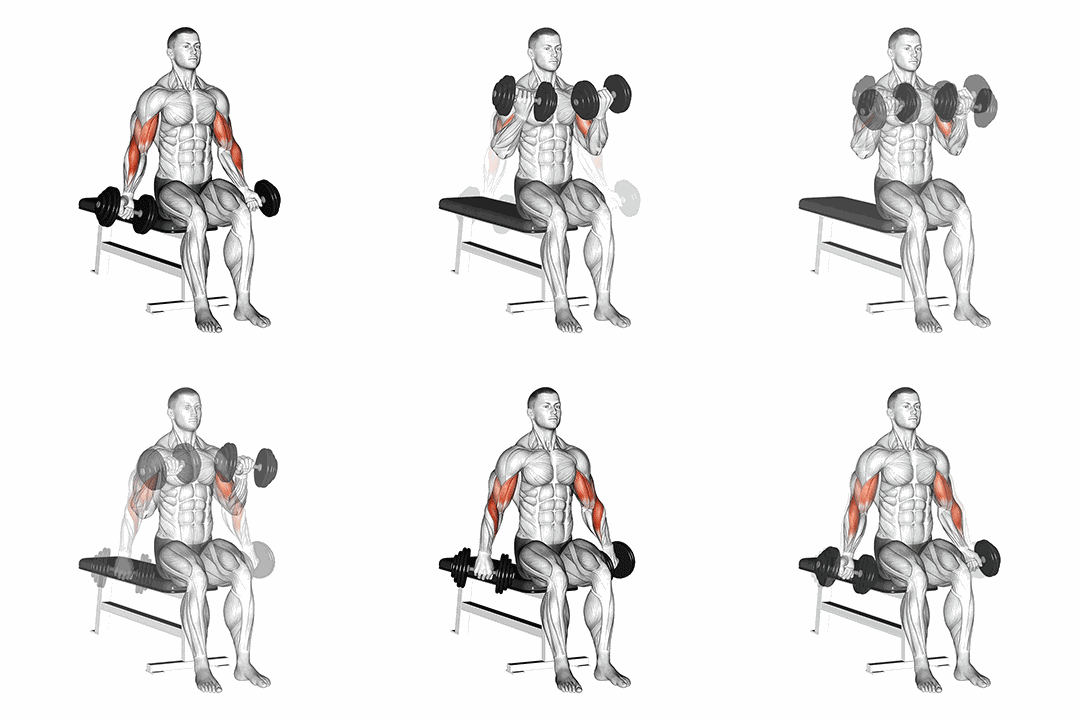
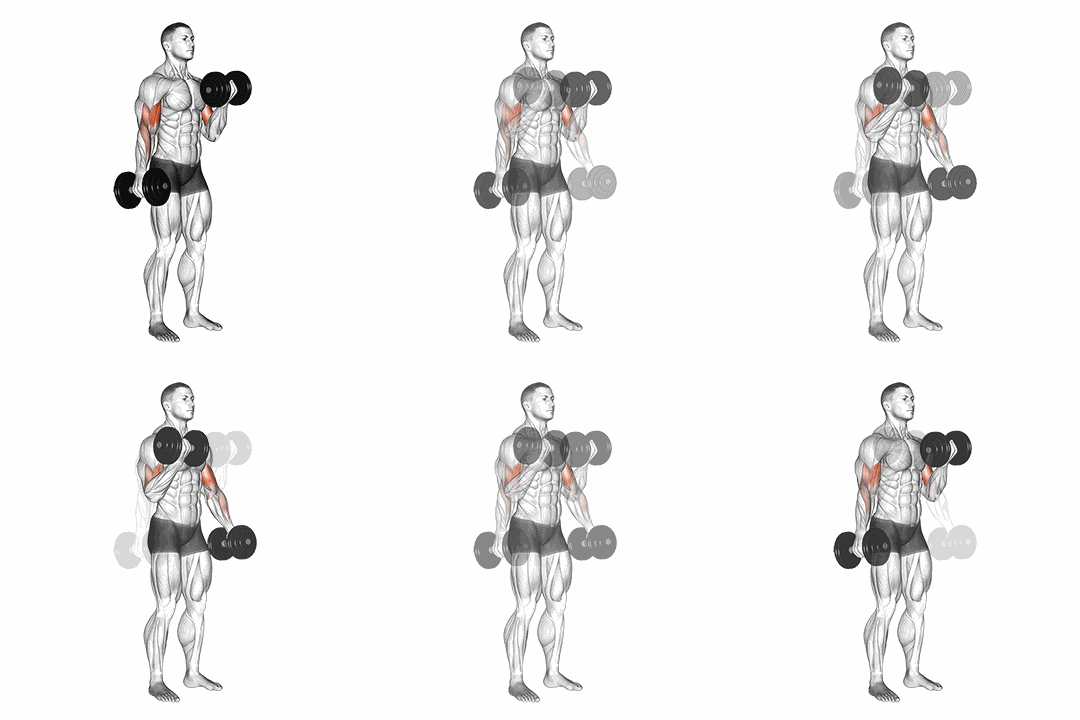
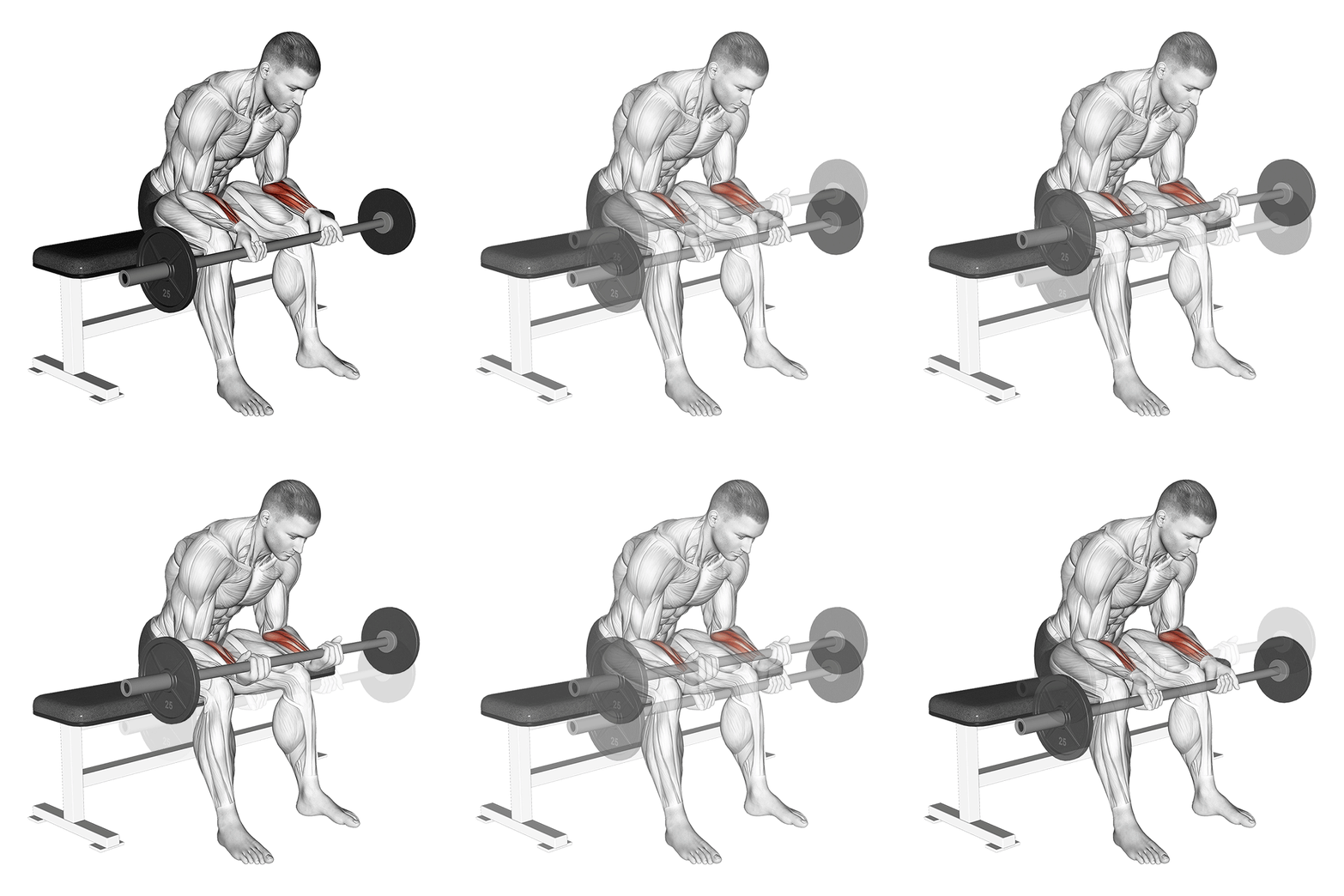
The dumbbell reverse curl is an elbow flexion exercise performed with a pronated grip, palms facing down. Turning the hands over robs the biceps of its strongest line of pull and hands the work to the brachialis, the deep muscle under the biceps, and the brachioradialis, the thick muscle along the top of the forearm, while the wrist extensors fight isometrically to keep the knuckles up. Standing with dumbbells at your thighs, you curl without rotating the hands. You will lift noticeably less than in a standard curl; that is the point, not a problem. It thickens the forearm and elbow region that supinated curls leave behind.
How to do the dumbbell reverse curl
- 1
Set a pronated grip
Stand tall, a dumbbell in each hand at your thighs, palms facing behind you. Grip hard: crushing the handle helps lock the wrist for the whole set.
- 2
Curl with the knuckles up
Bend the elbows and curl both dumbbells toward your shoulders without rotating the hands. Elbows stay at your sides, knuckles pointing at the ceiling at the top.
- 3
Hold the wrist line
Keep each wrist dead straight, a rigid line from knuckles to elbow. The second the wrist breaks backward, the set is over for the muscles you came for.
- 4
Lower in 2-3 s
Control the descent back to straight arms without letting the wrists uncock. If the dumbbells speed up on the way down, they are too heavy.
Pro tip
Pick your load off your hammer curl, not your biceps curl, then go lighter still. Full pronation is the weakest curling grip you own; the lifters who grow from reverse curls are the ones who accept that on day one.
Common mistakes
Wrists breaking backward.
When the wrist extensors give out, the dumbbell hangs off the joint instead of the muscles and the elbows start complaining. Straight wrists or lighter dumbbells, no third option.
Using your biceps-curl weight.
Pronation strips the biceps of leverage, so the same dumbbells force swinging and half reps. Drop the load and let the forearm muscles do their own lifting.
Elbows drifting forward.
Letting the elbows ride up brings the shoulders into the lift and shortens the tension on the elbow flexors. Pin them to your sides from first rep to last.
Rotating to a hammer grip mid-rep.
Sneaking the thumbs up makes the rep easier by handing the work back to the stronger grip. If you need to rotate to finish the set, the set is finished.
Variations and progressions
Easier
Hammer curl
The neutral, thumbs-up grip keeps the brachioradialis working but gives you back leverage and load. The natural stepping stone before full pronation.
Harder
Zottman curl
Curl up palms up, rotate at the top, lower palms down. You lift with your strongest grip and lower with your weakest: the eccentric-overload version of this exercise.
No dumbbells?
EZ-bar reverse curl
The angled EZ grip takes the strain off the wrists while keeping the pronated work, and the bar lets you creep the load up in small steps.
How to program it
Three protocols by goal. Pick one per cycle and aim for progression on load or distance.
| Goal | Sets × distance | Load | Rest |
|---|---|---|---|
| Hypertrophy | 3 × 10-12 | RPE 8 | 90 s |
| Forearm emphasis | 3 × 12-15 | Light, 3 s eccentric | 60 s |
| Strength base | 4 × 6-8 | Moderate, strict wrists | 2 min |
Dumbbell Reverse Curl FAQ
Reverse curl or hammer curl: which should I do?
Both hit the brachialis and brachioradialis, but they split the roles. The hammer curl's neutral grip is stronger, so it is your loading tool. The reverse curl's full pronation disadvantages the biceps the most and adds isometric wrist extensor work, so it is your targeting tool: lighter, stricter, more forearm. Most arms grow best with hammer curls for weight and reverse curls for detail.
Why is my reverse curl so weak?
Because it is supposed to be. Pronating the hand puts the biceps at its worst mechanical angle, so the smaller brachialis and brachioradialis have to lead the lift. A big drop from your supinated curl is normal and expected. The good news: beginners' numbers on this lift climb quickly once the wrist extensors learn to hold the line.
What do reverse curls work that normal curls don't?
Two things. The pronated grip shifts the emphasis onto the brachioradialis, the muscle that gives the top of the forearm its thickness near the elbow. And the wrist extensors work isometrically the whole set just to keep the wrist straight, an area that gets almost nothing from supinated curling and heavy pulling. That is why a small dose of reverse curls visibly changes forearms that curls alone never touched.