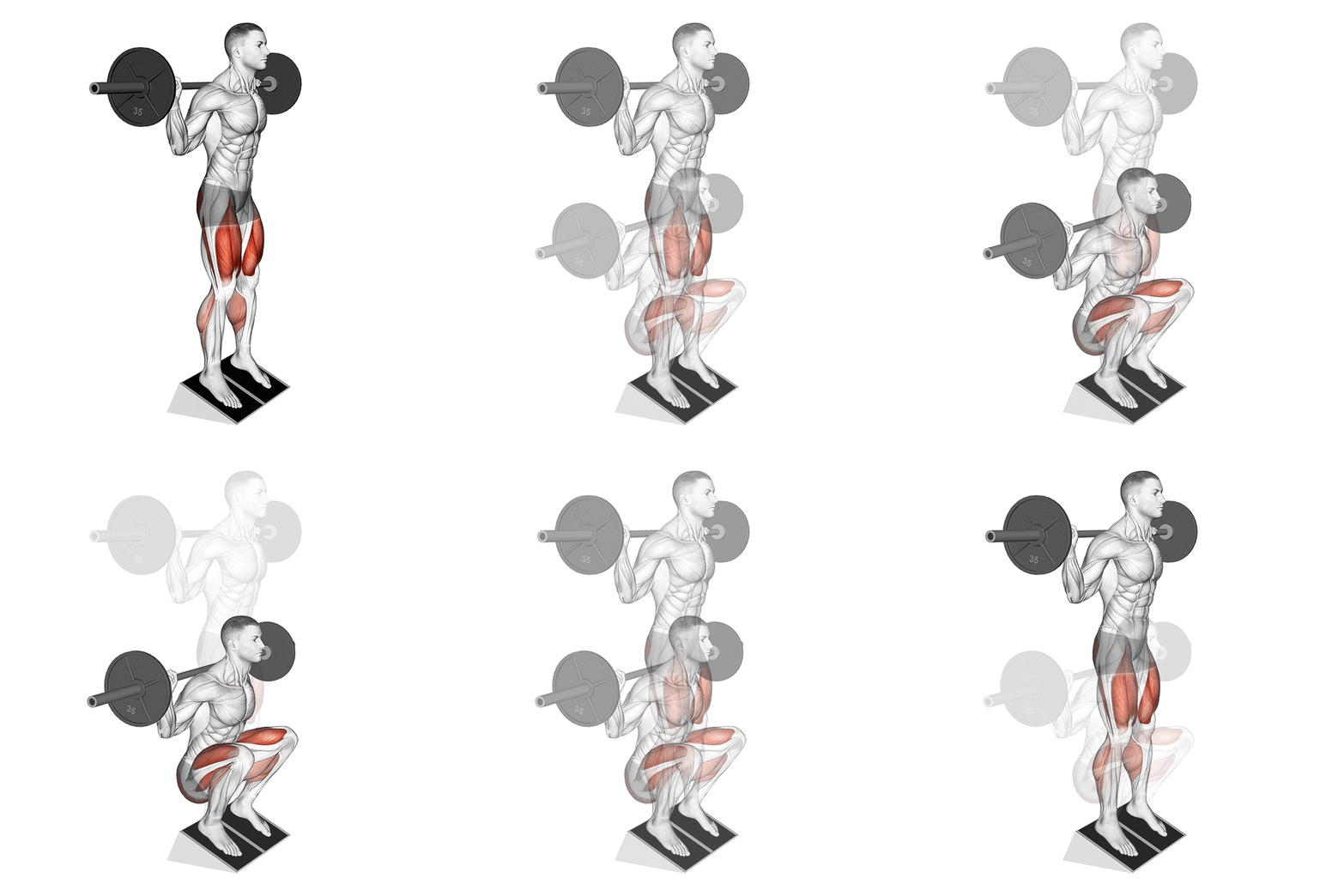
What is the cyclist squat?
The cyclist squat is a squat performed with the heels elevated on a slant board or plates and the feet set close together, roughly 10-15 cm apart. The raised heels and narrow base let the knees travel far past the toes while the torso stays upright, so the quads move through their longest possible range while the glutes and lower back contribute far less than in a back squat. The name nods to the oversized thighs of track cyclists. Start with bodyweight or a goblet hold: it humbles strong squatters, and it is the go-to fix when hips and back keep stealing the work from your quads.
How to do the cyclist squat
- 1
Build the heel elevation
Stand on a slant board, or stack plates 5-10 cm high under your heels. Feet 10-15 cm apart, toes pointing forward or barely out.
- 2
Stack the torso
Hold a dumbbell at the chest or stretch the arms out front as a counterweight. Ribs over pelvis, gaze ahead: the torso should stay as vertical as a wall for the whole rep.
- 3
Ride the knees forward
Bend the knees and push them straight forward over the toes while the hips drop straight down between the heels. Lower under control until the hamstrings rest on the calves.
- 4
Stand up without sitting back
Press the whole foot into the board and stand tall. The hips rise straight up, never backward, and you stop just short of locking the knees to keep tension on the quads.
Pro tip
Picture your hips sliding straight down a pole fixed just behind your heels. The moment they drift backward off that pole, you've turned the movement into an ordinary squat and given your quads a rest.
Common mistakes
Hips shooting back out of the hole.
That is your strongest pattern taking over to escape the quad work. Lighten the load, slow the first third of the ascent, and keep the chest stacked over the mid-foot.
Stance creeping wide.
Every centimetre of width recruits more hip and less quad. Check your feet against a line on the board: 10-15 cm apart, every set.
Bouncing out of the bottom.
Full knee flexion is safe when you control it and risky when you crash into it. Take 2-3 seconds down and reverse smoothly, with a brief pause if the knees complain.
Chasing load over depth.
The value lives in the deepest third of the rep. If adding weight costs you full depth or a vertical torso, you've traded the exercise for a worse front squat.
Variations and progressions
Easier
Heels-elevated goblet squat
Keep the heel wedge but widen the feet to shoulder width. You get most of the quad bias with a far more stable base while you build ankle and knee range.
Harder
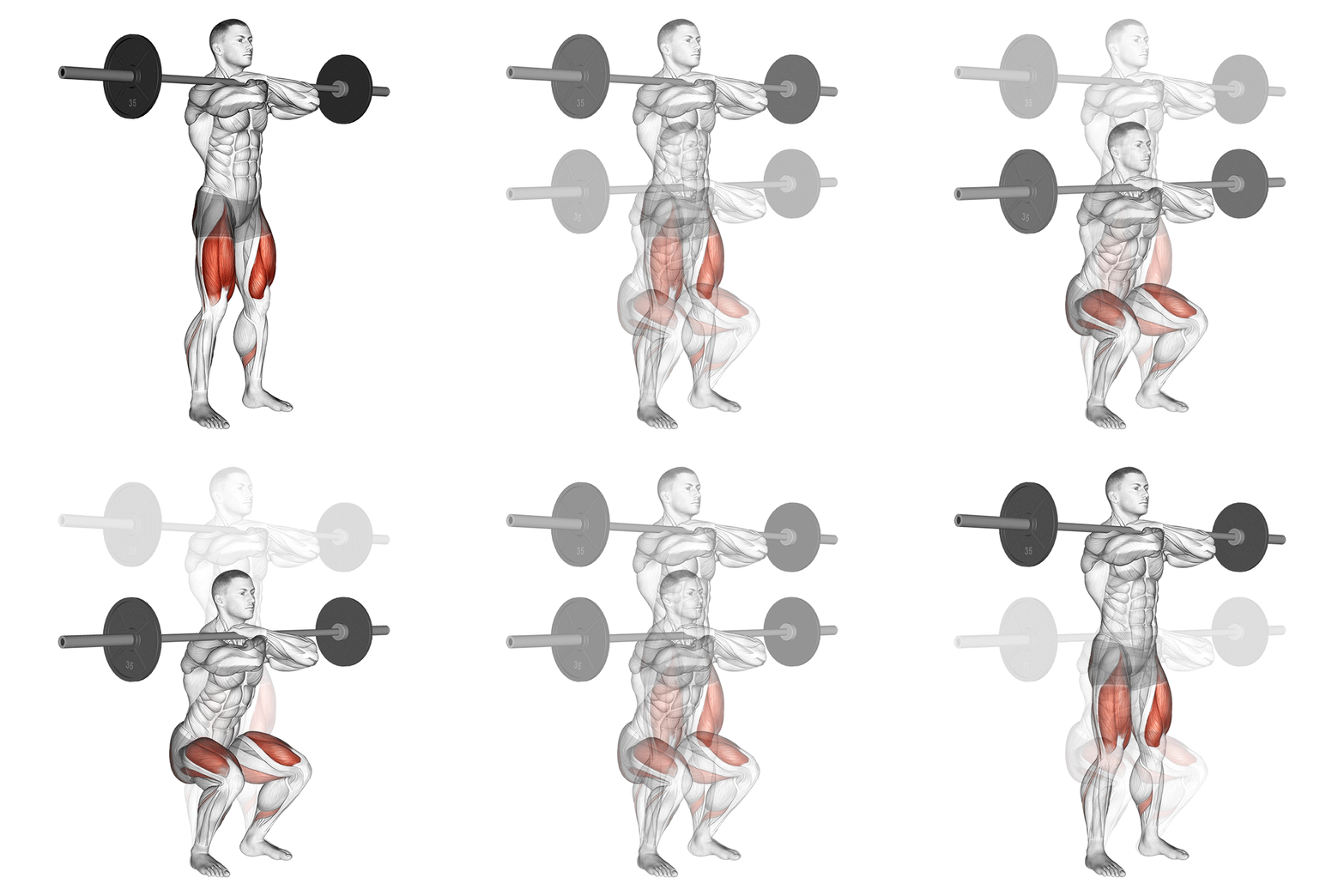
Barbell cyclist squat
Same setup with the bar in a front or back rack. Progress the load slowly and add a 2 s pause in the bottom for a brutal long-range quad stimulus.
Alternative
Sissy squat
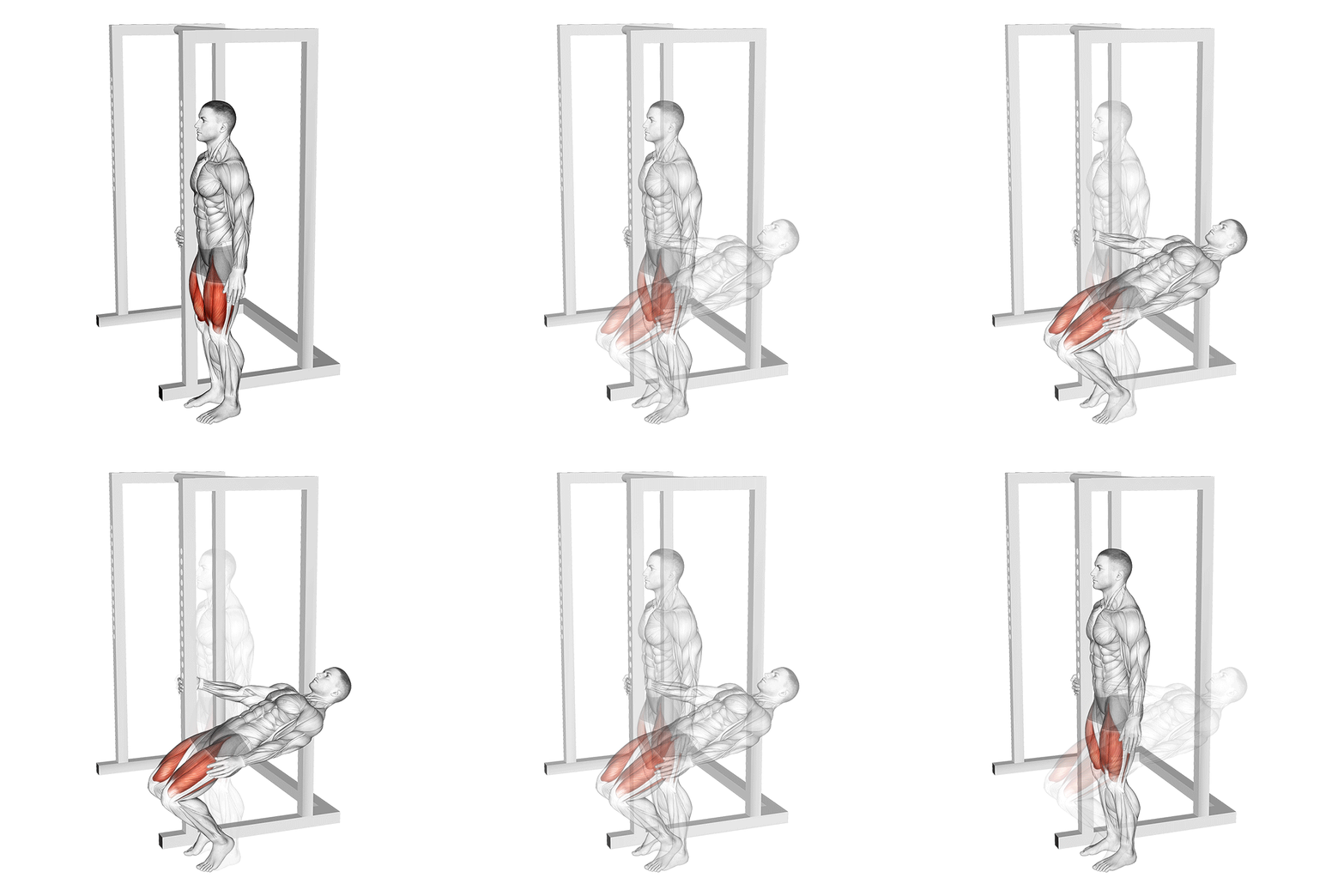
Takes the knees-forward idea to its extreme by locking the hips out of the movement entirely. Harder on the knees and purely bodyweight-leverage, but unmatched for the rectus femoris.
How to program it
Three protocols by goal. Pick one per cycle and aim for progression on load or distance.
| Goal | Sets × distance | Load | Rest |
|---|---|---|---|
| Learn the pattern | 3 × 12-15 | Bodyweight | 60 s |
| Hypertrophy | 4 × 10-12 | Goblet, 12-24 kg | 90 s |
| Loaded strength | 4 × 6-8 | Barbell, 40-50% squat 1RM | 2-3 min |
Cyclist Squat FAQ
Isn't it bad for the knees to go past the toes?
No. Knees past toes is a normal position your joints handle every time you walk downstairs or get out of a chair. Forward knee travel does increase load on the quad tendon, and that load is precisely the stimulus that builds stronger knees over time. Progress gradually; if you have an active patellar tendon issue, manage volume and depth with your physio.
What should I put under my heels?
A slant board around 15-30 degrees is ideal: stable, full-foot contact, consistent angle. Stacked plates work in any gym, around 5-10 cm under the heels. Weightlifting shoes alone usually don't lift the heel enough to produce the full cyclist effect; combine them with a small wedge if that's all you have.
Cyclist squat or sissy squat?
The cyclist squat keeps a real squat pattern, so you can load it with dumbbells or a bar and progress it for years. The sissy squat removes the hips entirely and leans the body backward on the knees as a lever: a fantastic finisher, but harder to load and rougher on sensitive knees. Build your base with cyclist squats, sprinkle in sissy squats on top.
Will it actually grow my quads?
Yes, and that's its whole job. Deep knee flexion with an upright torso loads the quads at long muscle lengths, a condition strongly associated with hypertrophy, and the narrow heel-raised setup stops the glutes and back from taking over. It also teaches squatters whose hips shoot up early what a quad-driven ascent should feel like.