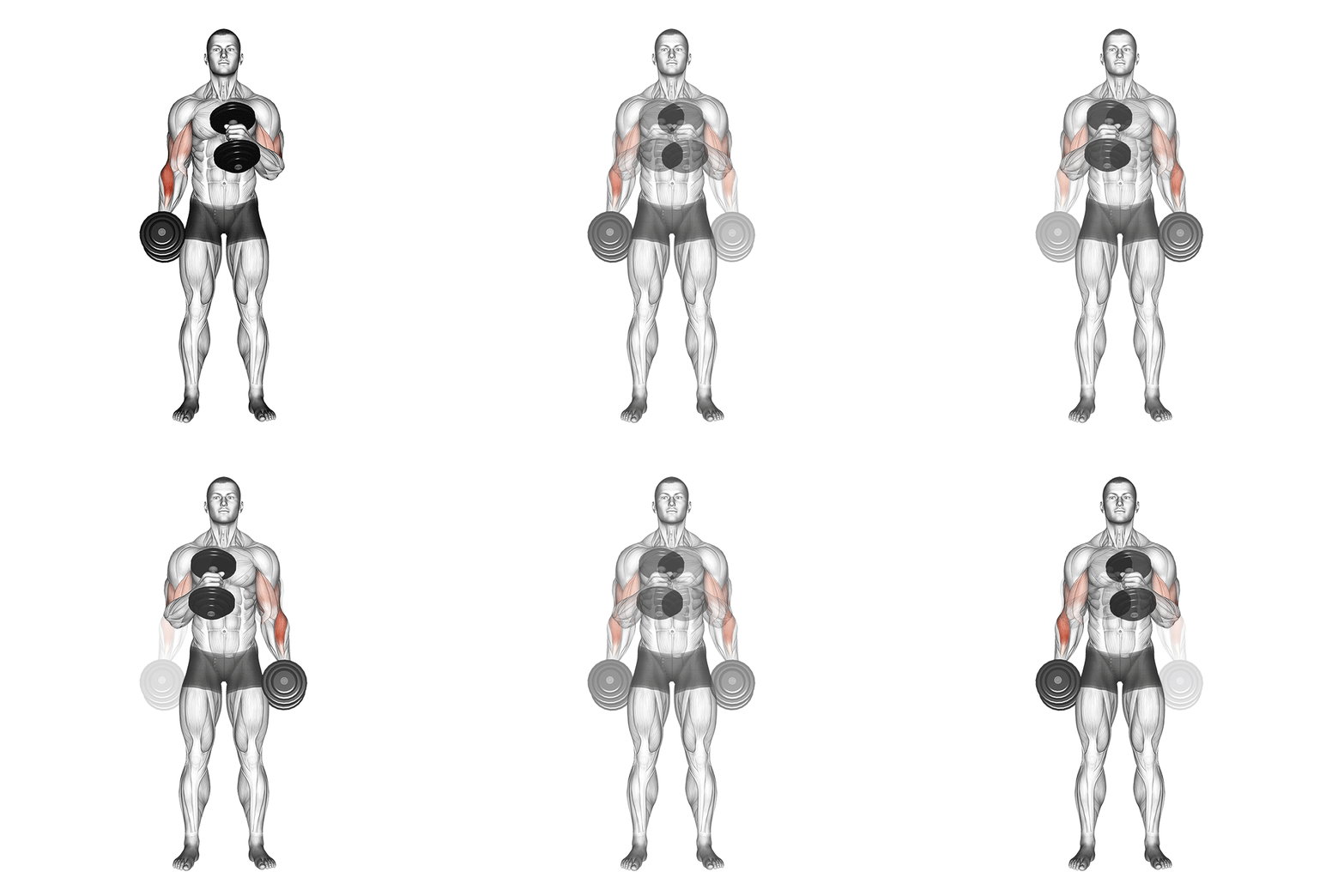
What is the cross-body hammer curl?
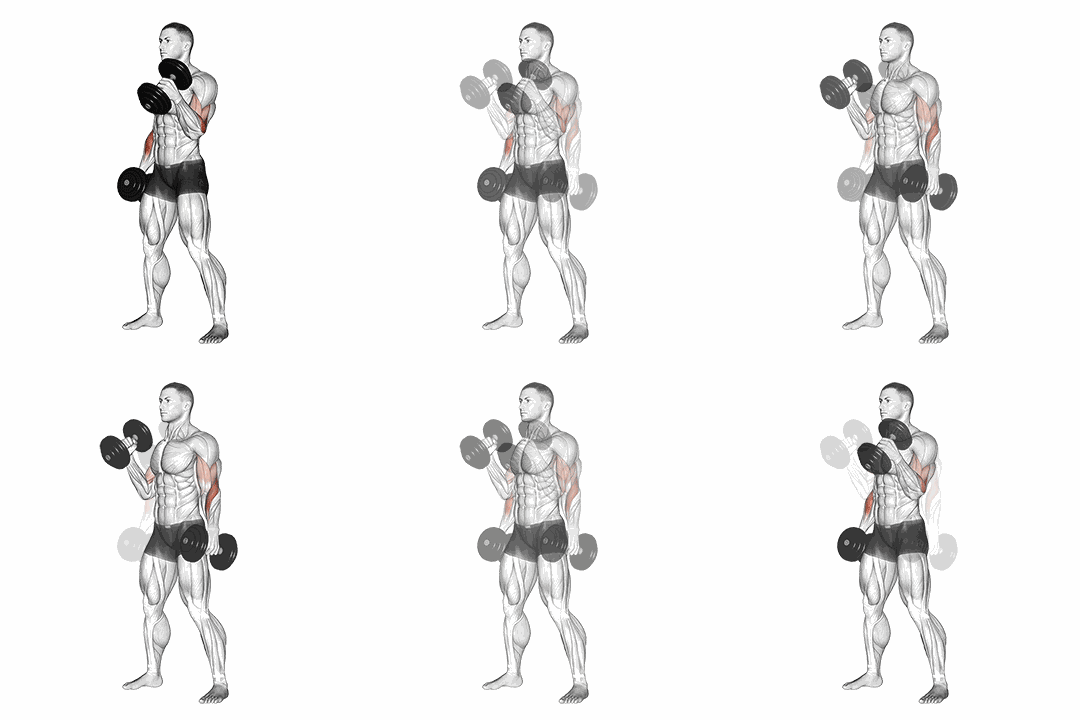
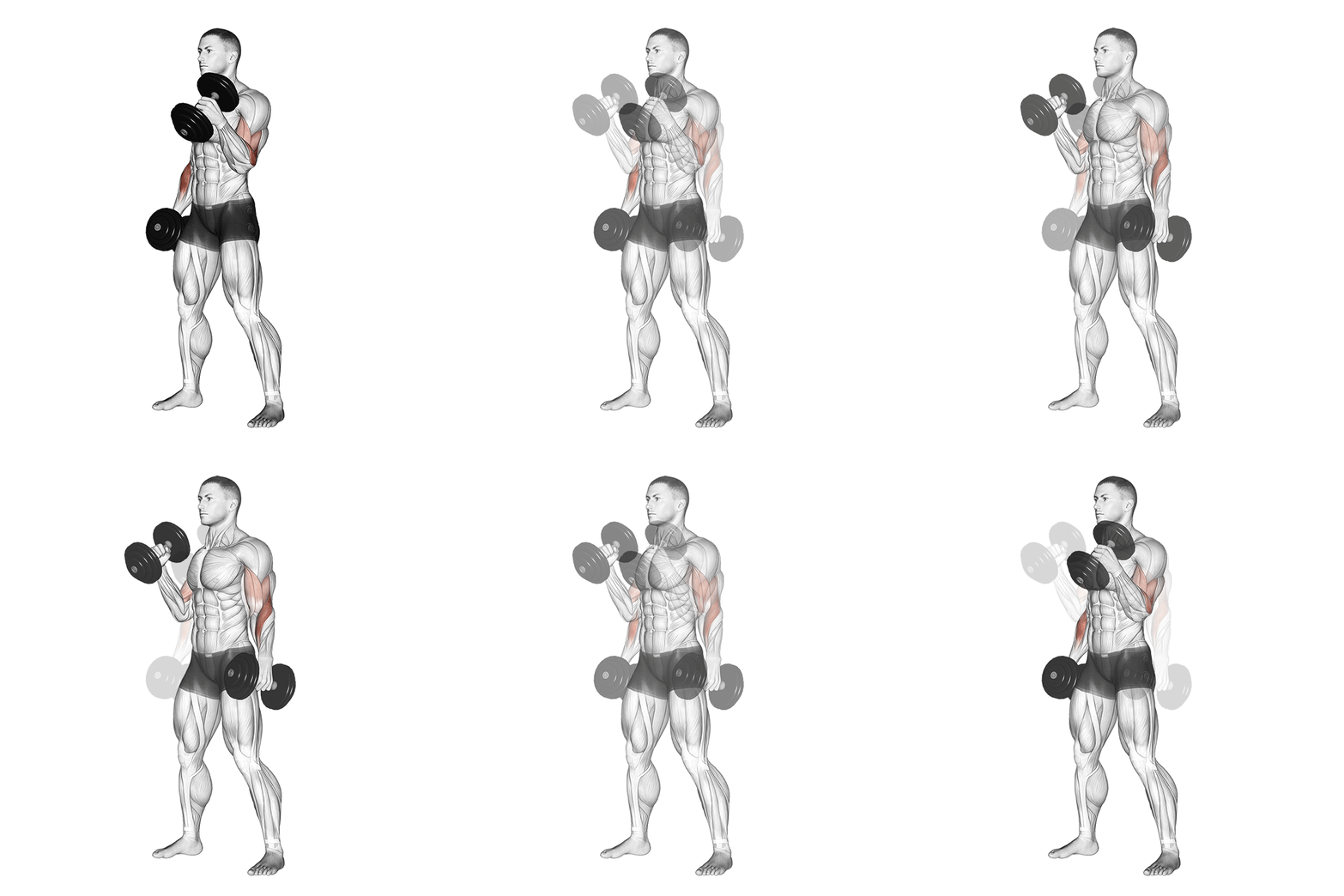
The cross-body hammer curl, often called the pinwheel curl, is a standing dumbbell curl with a neutral, thumbs-up grip in which the dumbbell travels diagonally across your torso toward the opposite shoulder. The neutral grip takes the biceps out of its strong supinated position, so the brachialis (the muscle under the biceps that pushes it up) and the brachioradialis (the thick forearm muscle) do most of the lifting. Next to a standard hammer curl, only the path changes: diagonal instead of vertical, which pins the elbow against your ribs and makes swinging harder. Pick it when your arms look big from the front and flat from the side.
How to do the cross-body hammer curl
- 1
Set your stance
Stand with a dumbbell in each hand at your sides, palms facing your thighs, knees soft, shoulders pulled back. Brace the trunk lightly before the first rep.
- 2
Curl across the body
Keeping the thumb up, curl one dumbbell diagonally toward the opposite shoulder, letting it brush your torso on the way. The elbow stays pinned against your ribs.
- 3
Squeeze near the opposite shoulder
Stop when the head of the dumbbell reaches the opposite pec and squeeze for a second. The upper arm should still point at the floor, not at the wall in front of you.
- 4
Lower on the same diagonal
Take 2 to 3 seconds to retrace the path and finish with the arm fully straight. Then curl the other side with the same control.
Pro tip
Use your shirt as the coach: the dumbbell should graze it from hip to opposite pec on every rep. The instant it floats away from your body, the front delt is doing the lifting and the brachialis has clocked off.
Common mistakes
Rocking the hips to start the rep.
Alternating curls invite a swing rhythm where the body throws each dumbbell up. Pause a beat at full extension between reps; if you cannot, the weight is running the show.
Elbow drifting forward.
Once the elbow leaves your ribs and swings forward, the top of the rep becomes a front raise. Keep the upper arm vertical; only the forearm travels.
Rotating the wrist on the way up.
Supinating mid-rep hands the lift back to the biceps and defeats the point of the neutral grip. The thumb points up from the first centimetre to the last.
Dropping the eccentric.
Letting the dumbbell fall back down throws away the half of the rep the brachialis responds to best. Lower in 2 to 3 seconds along the same diagonal you came up.
Variations and progressions
Easier
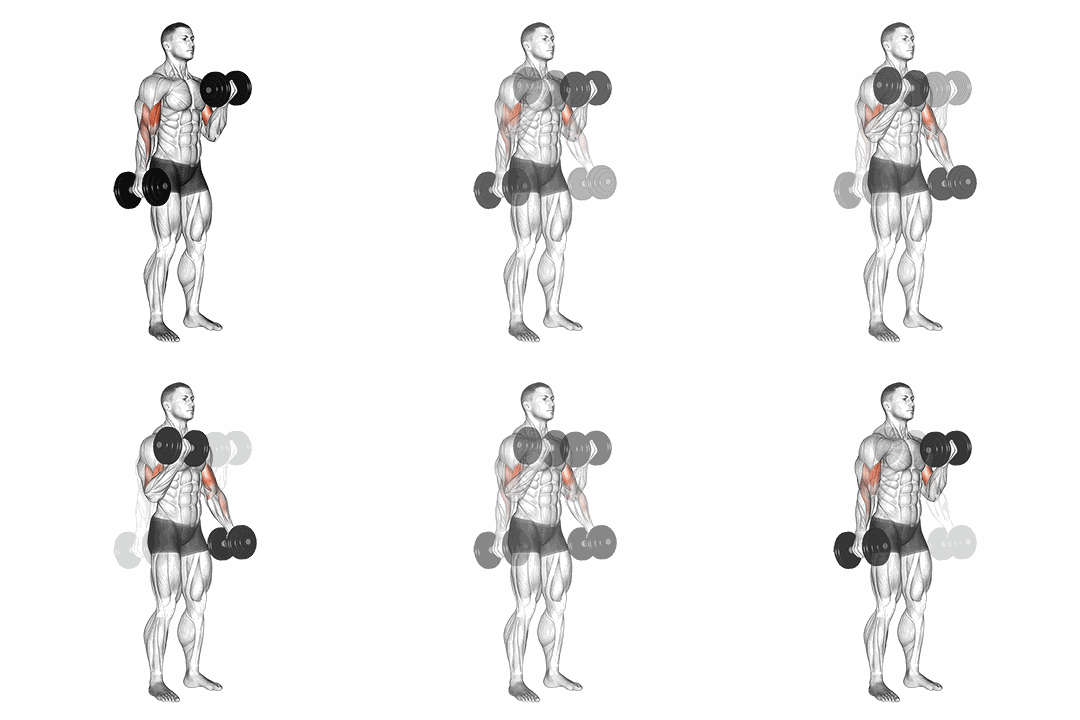
Standard hammer curl
The straight vertical version is the simpler groove to learn first. Build a strict neutral-grip curl there before adding the cross-body line.
Harder
Seated cross-body curl, slow eccentrics
Sitting kills the hip assist, and a 3-second lowering doubles the honest work per rep. Expect to drop a dumbbell size or two.
Alternative
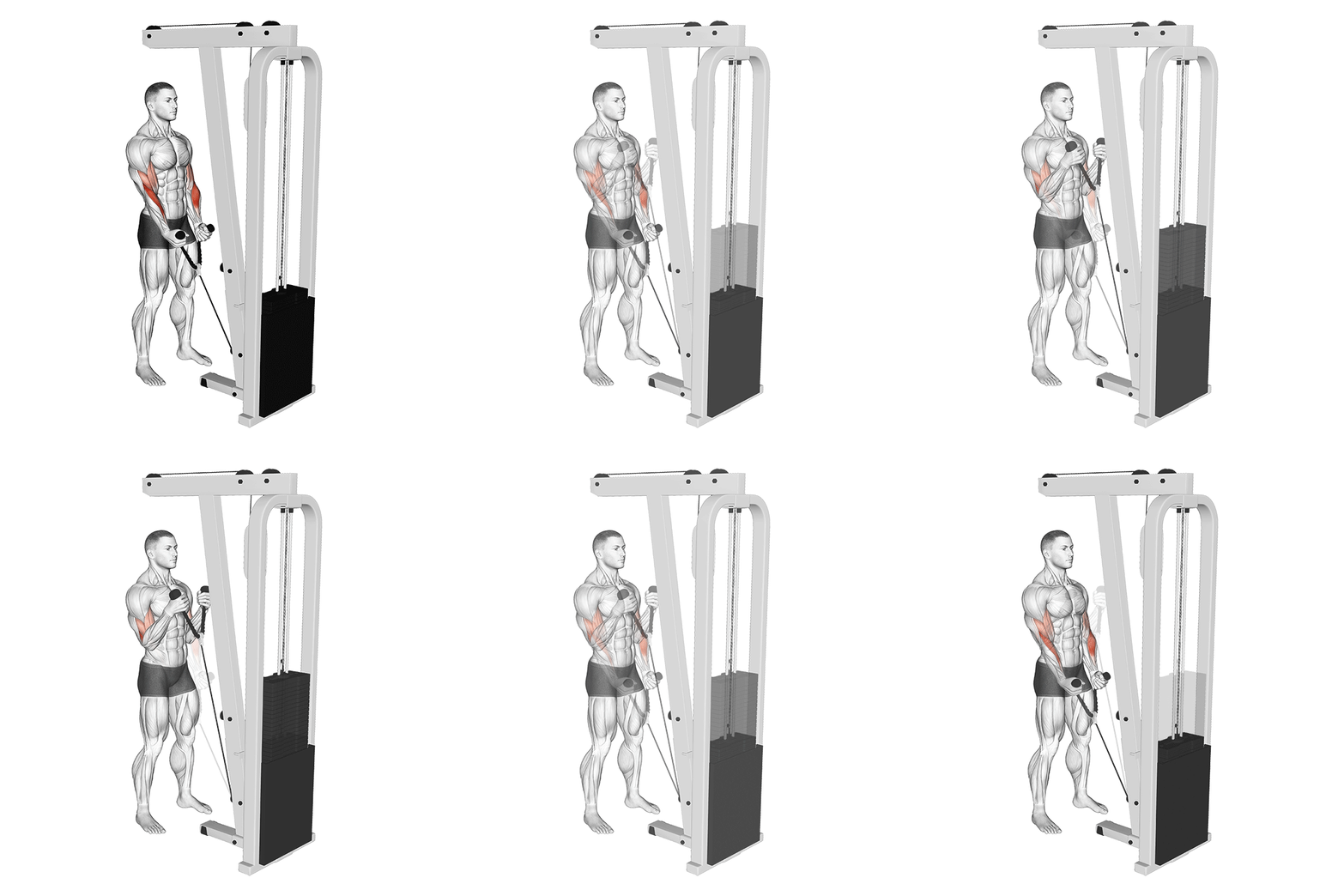
Cable rope hammer curl
A rope on the low pulley keeps the same neutral grip with tension that never disappears at the bottom. A good swap for high-rep arm days.
How to program it
Three protocols by goal. Pick one per cycle and aim for progression on load or distance.
| Goal | Sets × distance | Load | Rest |
|---|---|---|---|
| Technique | 2 × 12-15 per arm | Light, RPE 6 | 60 s |
| Hypertrophy | 3 × 10-12 per arm | RPE 8 | 75 s |
| Arm-day finisher | 2 × 15 per arm | RPE 9 | 45 s |
Cross-Body Hammer Curl FAQ
Cross-body or regular hammer curl: what actually changes?
Only the path. The diagonal pins the elbow to the ribs, which makes cheating harder and keeps tension on the brachialis and brachioradialis a little longer. The difference is modest, not magic: rotate both versions across training blocks instead of crowning one forever.
Which muscles does the cross-body hammer curl work?
Mainly the brachialis, strongly the brachioradialis, with the biceps assisting and the grip working isometrically. The brachialis sits underneath the biceps, so as it grows it pushes the whole arm outward: that is where the thicker side profile comes from.
Should I alternate arms or finish one side first?
Both work. Alternating gives each arm a micro-rest, so you can hold slightly heavier dumbbells; one side at a time keeps tension continuous and makes the set harder at the same weight. Alternating invites more swinging, so if your form drifts, finish one arm first.
Why do my forearms give out before my arms?
Normal at first: the neutral grip loads the brachioradialis and the grip muscles far more than a supinated curl does. Hold the dumbbell firmly but skip the death grip, keep the wrist straight rather than curled, and the forearms catch up within a few weeks.