What is the clap push-up?
The clap push-up is a plyometric push-up: you drop fast, then press so violently that both hands leave the floor with enough airtime to clap before you catch yourself. Where a regular push-up trains how much force you can produce, the clap version trains how fast you can produce it, which is what punching, throwing, tackling and sprint arm drive actually demand. The landing also teaches the shoulders, elbows and wrists to absorb impact. It belongs in the program of any athlete with a solid push-up base who wants explosive pressing power without a barbell or a medicine ball.
How to do the clap push-up
- 1
Set up slightly wide
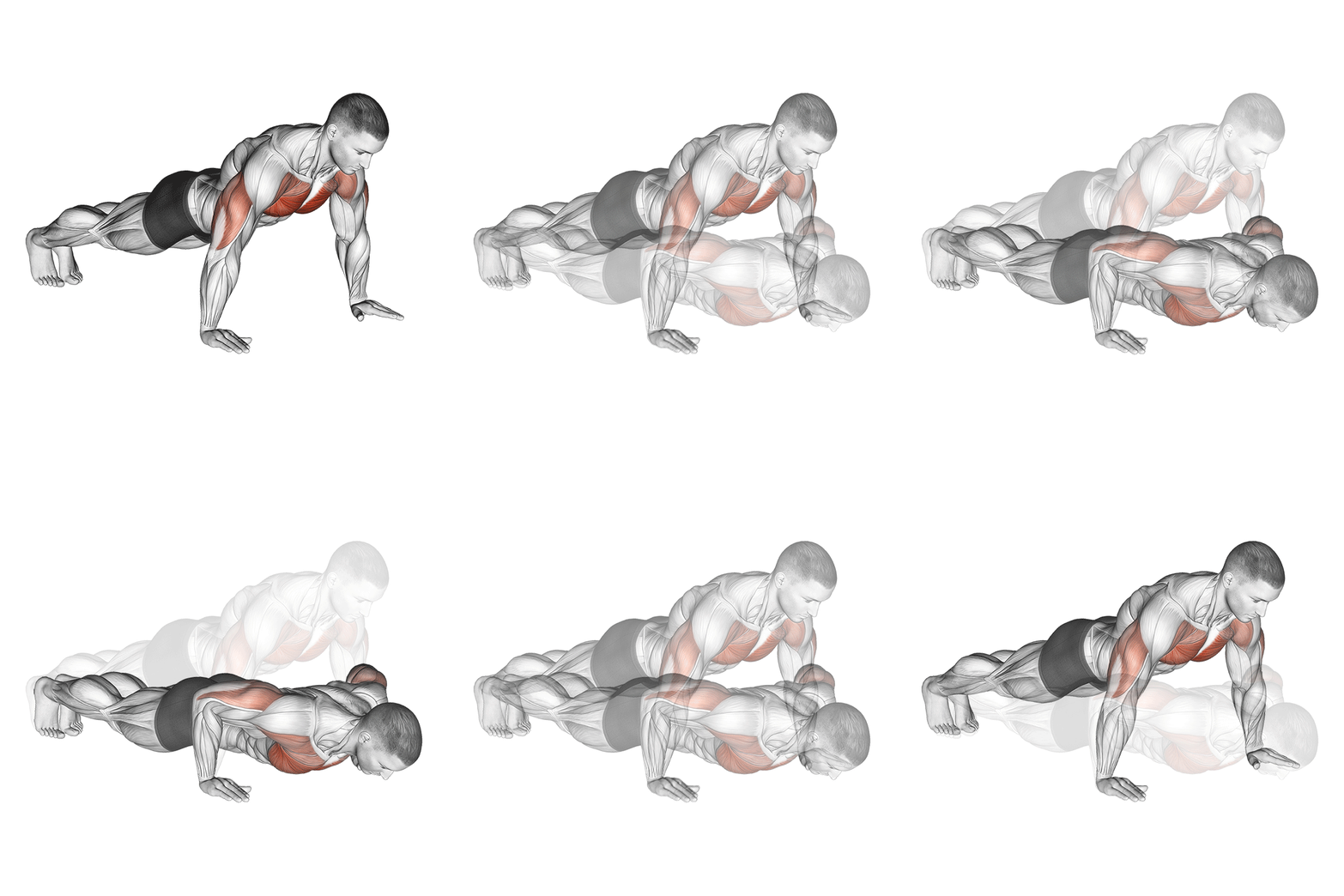
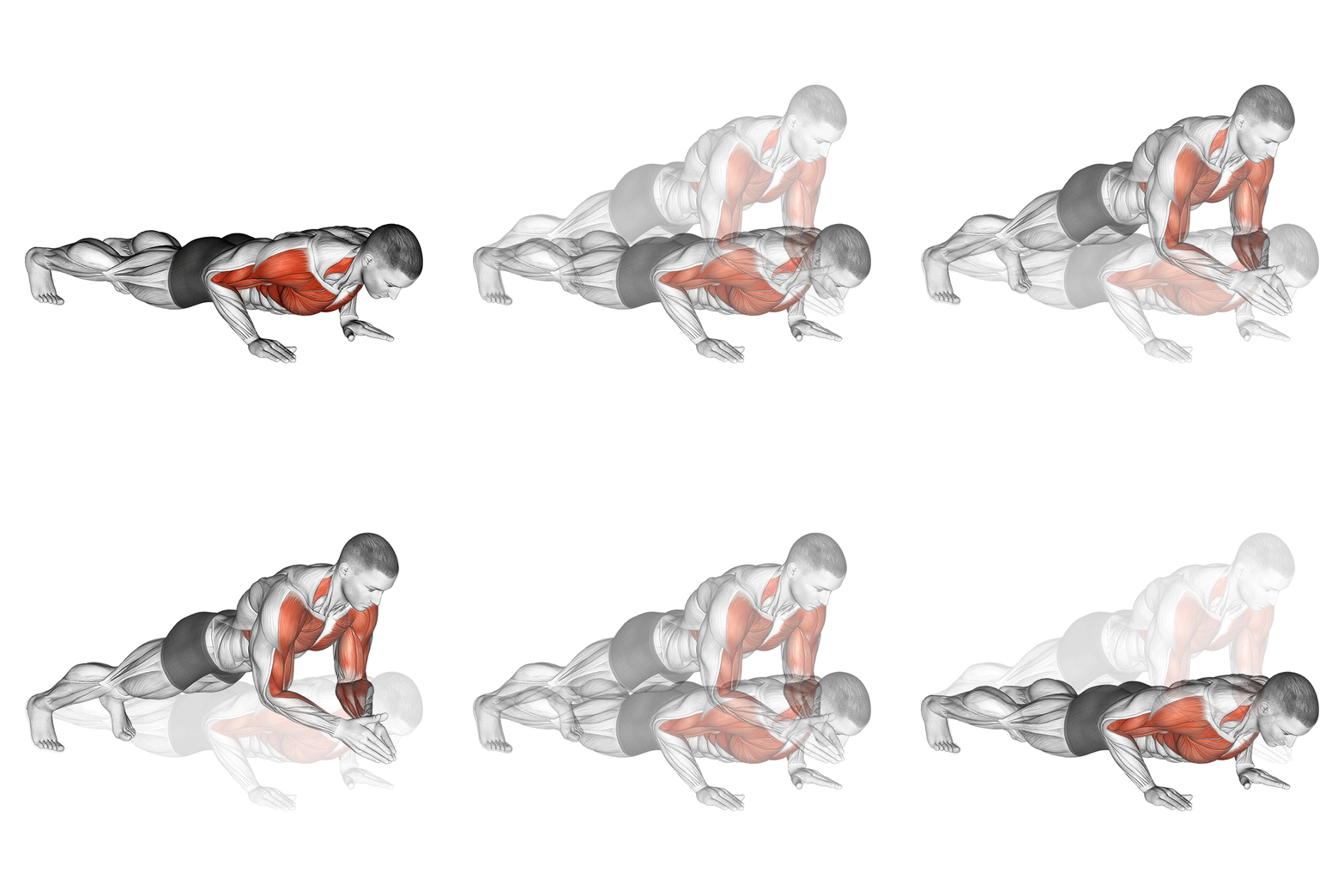
Take a push-up position with the hands just outside shoulder width: a slightly wider base gives you a stable launch pad and a bigger target to land on. Brace the whole body like a plank.
- 2
Drop fast, stay tight
Lower quickly but under control until the chest is near the floor. The fast descent loads the stretch reflex that powers the jump; a slow grind down kills it.
- 3
Explode and clap
Reverse instantly and push the floor away with maximum intent, so hard that both hands leave the ground. Snap a quick clap under the chest while airborne.
- 4
Land soft, reset
Catch the floor with fingers spread and elbows slightly bent, absorbing the impact into the next descent. If your body line broke in the air, reset completely before the next rep.
Pro tip
Power dies with fatigue: the set is over the moment your hands barely clear the floor. Six crisp triples beat one sloppy set of fifteen, every single time.
Common mistakes
Landing on locked elbows.
A straight-arm landing sends the impact straight into the wrists and elbows. Touch down with soft elbows and let them bend immediately, like a shock absorber.
Hips breaking the line.
If the hips sag or pike during the jump, force leaks out and the landing gets dangerous. Squeeze glutes and abs so the body travels as one rigid plate.
Rushing the clap.
If your hands barely leave the ground, you don’t have the airtime yet and the clap will cost you a face plant. Build height first with push-off push-ups, no clap, or on an incline.
Treating it as conditioning.
Grinding out high-rep clap push-ups while gassed trains slow, ugly reps and invites injury. This is a power exercise: do it fresh, in low reps, early in the session.
Variations and progressions
Easier
Push-off push-up
Explode so the hands just leave the floor, no clap, or do the full movement with hands on a bench. Both build the launch and the soft landing with less airtime needed.
Harder
Behind-the-back clap push-up
Clap behind your lower back, or chain a chest-and-back double clap. Each version demands noticeably more height and much faster hands, so earn 10 clean standard claps first.
Alternative
Medicine ball chest pass
Throw a med ball hard against a wall from a chest-pass position. You get the same explosive pressing quality with zero landing impact, useful when wrists complain.
How to program it
Three protocols by goal. Pick one per cycle and aim for progression on load or distance.
| Goal | Sets × distance | Load | Rest |
|---|---|---|---|
| Max power | 6 × 3 | Bodyweight, max intent every rep | 2-3 min |
| Contrast training | 3 × (3 heavy bench + 5 claps) | Bench at 80-85 %, then bodyweight | 3 min between pairs |
| Power endurance | EMOM 8 × 4 | Bodyweight | Rest of the minute |
Clap Push-Up FAQ
How many push-ups should I do before trying clap push-ups?
Around 15-20 strict push-ups is a reasonable floor. Below that you won’t generate the airtime, and the landing will punish you. Bridge the gap with push-off push-ups and incline plyo push-ups first.
Do clap push-ups build muscle?
A little, but that’s not their job. The reps are too few and too nervous-system driven to be a hypertrophy tool. Use them for explosiveness, and keep bench press, dips or high-rep push-ups in the plan for size.
Are clap push-ups bad for your wrists?
Not if you land properly: fingers spread, elbows soft, low total volume, done fresh. Warm the wrists up beforehand. If they still complain, swap in medicine ball chest passes, which keep the power work and remove the impact.
Do clap push-ups improve punching power?
They train the chest, shoulders and triceps to produce force fast, which is one ingredient of a hard punch, and they are a staple in boxing conditioning for that reason. The punch itself still comes mostly from the hips, rotation and technique.