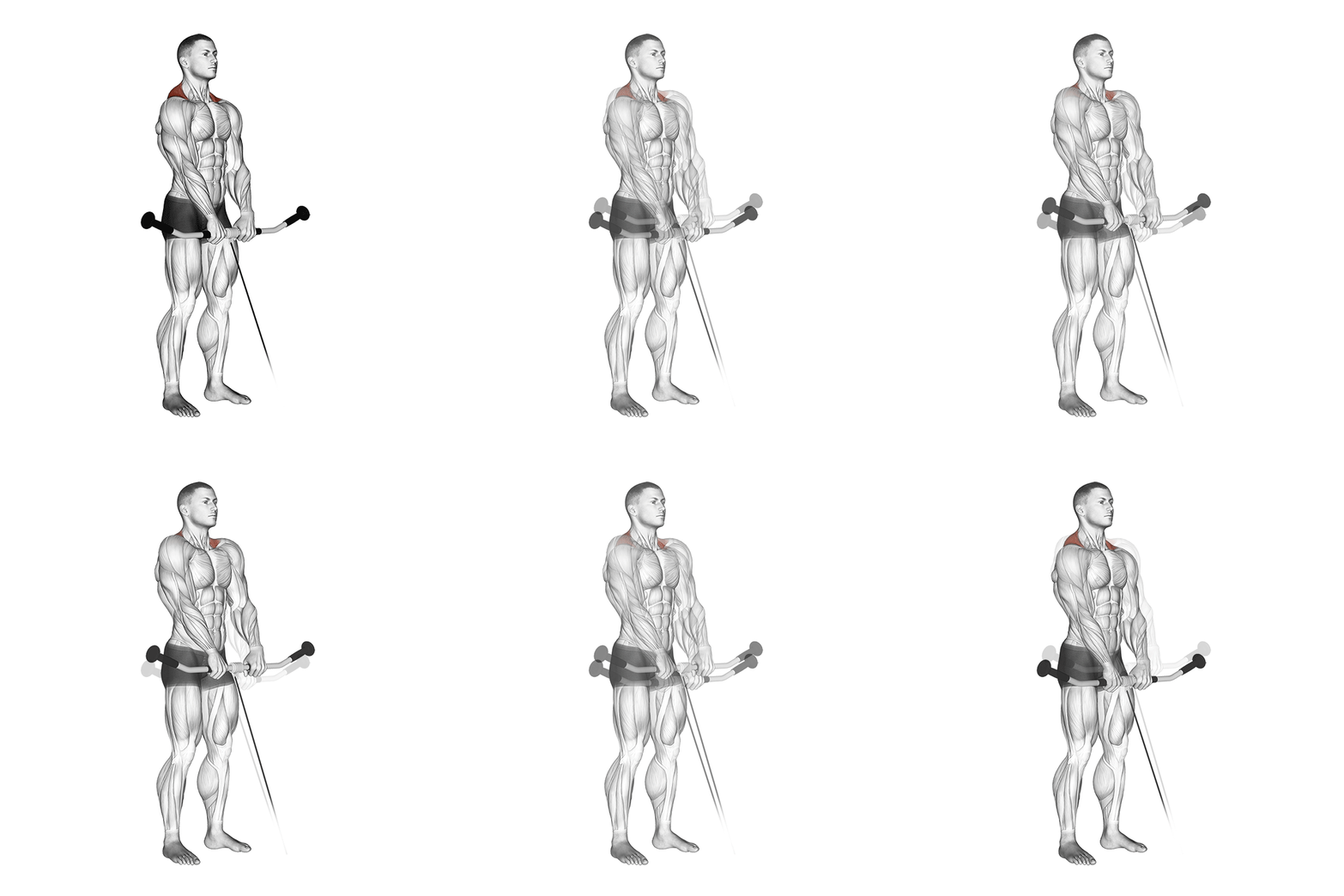
What is the cable shrug?
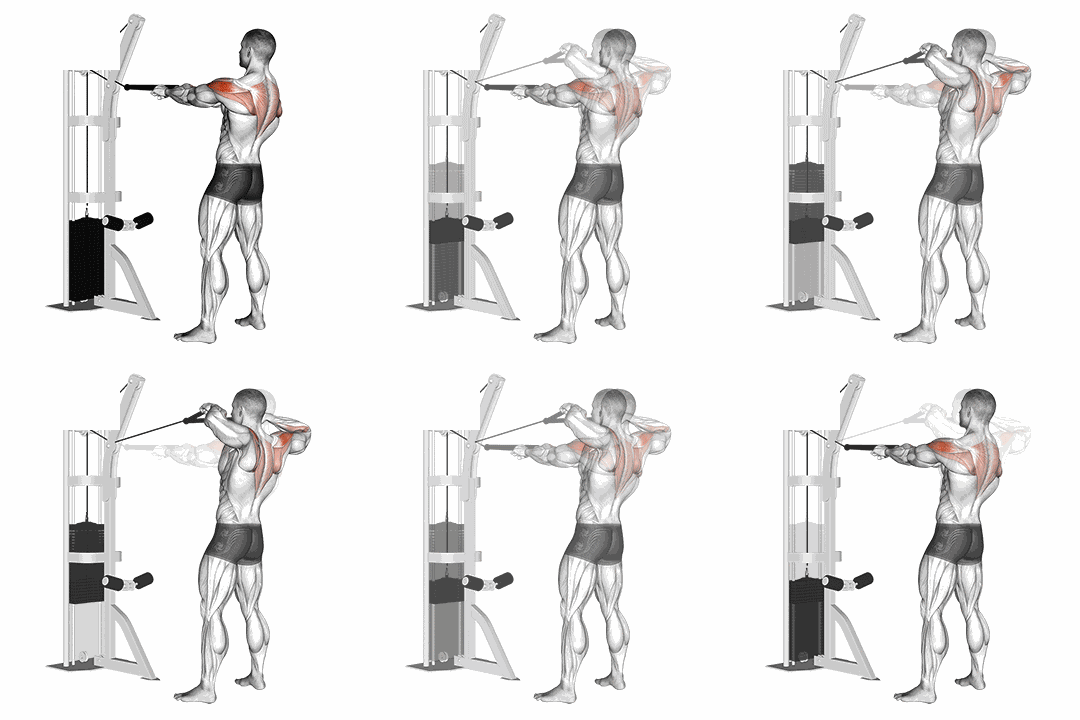
The cable shrug trains scapular elevation against a low pulley, either standing between two stacks with a handle in each hand or facing a single column with a straight bar. Because the cable pulls from below and slightly in front of you, the upper traps stay loaded through the whole arc, and the bottom stretch becomes a working position instead of a rest stop. The resistance is smooth, the joints are happy, and long squeezes feel natural, which makes this the shrug built for high-rep, high-tension work. Its limit is absolute load: most stacks run out of plates long before strong traps run out of force.
How to do the cable shrug
- 1
Set up low
Drop the pulley (or both pulleys) to the lowest notch. Between two stacks, clip a single handle on each side and stand centred; on one stack, attach a straight bar and face the column.
- 2
Step back and load the hang
Grab the handles, stand up tall, and take a half step back until the plates lift off the stack with your arms hanging straight. Feet hip width, knees soft, ribs stacked: the set starts under tension.
- 3
Shrug and hold the squeeze
Pull your shoulders straight up toward your ears and hold the top for one to two full seconds. On a cable that squeeze pays more than anywhere else, because the tension never dips on the way up.
- 4
Lower into a loaded stretch
Take two seconds down and let the cable draw your shoulders into a deep stretch, pausing briefly at the bottom. That stretched, still-loaded position is the reason you chose this machine.
Pro tip
Stand half a step further from the pulley than feels natural. That small offset angles the cable so the bottom of every rep stays heavy, and it keeps the plates from touching down between reps, which is exactly the constant tension you came for.
Common mistakes
Standing on top of the stack.
Stand right against the column and the cable goes slack at the bottom, deleting the loaded stretch that justifies the exercise. Back up until there is real tension with your arms at full hang.
Flicking the elbows.
When the stack gets heavy, the arms twitch upward to help it move and the lift drifts toward a half upright row. If your elbows bend at all, lighten the stack by a plate and let the traps do all of it.
Pumping fast half reps.
The smooth stack makes quick bouncy reps feel productive; they aren't. Constant tension rewards the opposite style: full range, a deliberate second at the top, two seconds down.
Getting folded forward.
A low cable pulls down and forward, and as the set burns it will try to round your upper back into a slump. Keep the chest tall and the brace on; if your posture folds, the angle the traps work at changes with it.
Variations and progressions
Easier
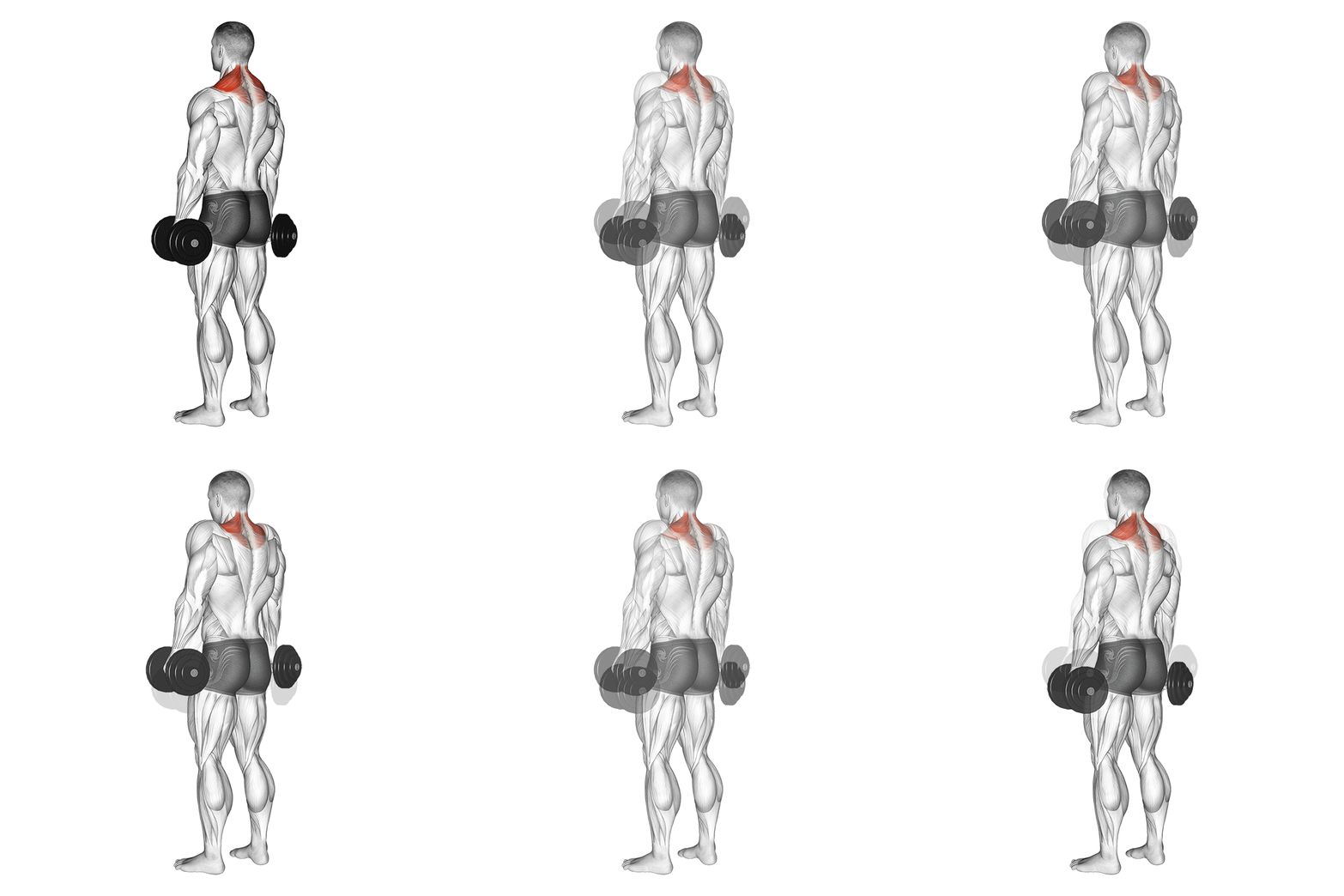
Dumbbell shrug
No pulleys, no setup: pick up two dumbbells and practise pure vertical elevation. The honest place to build the pattern before adding cable-specific tension tricks.
Harder
Single-arm cable shrug
One handle, one side at a time. The offset load tries to bend you sideways, the range grows, and any left-right gap in trap strength gets exposed and fixed.
Alternative
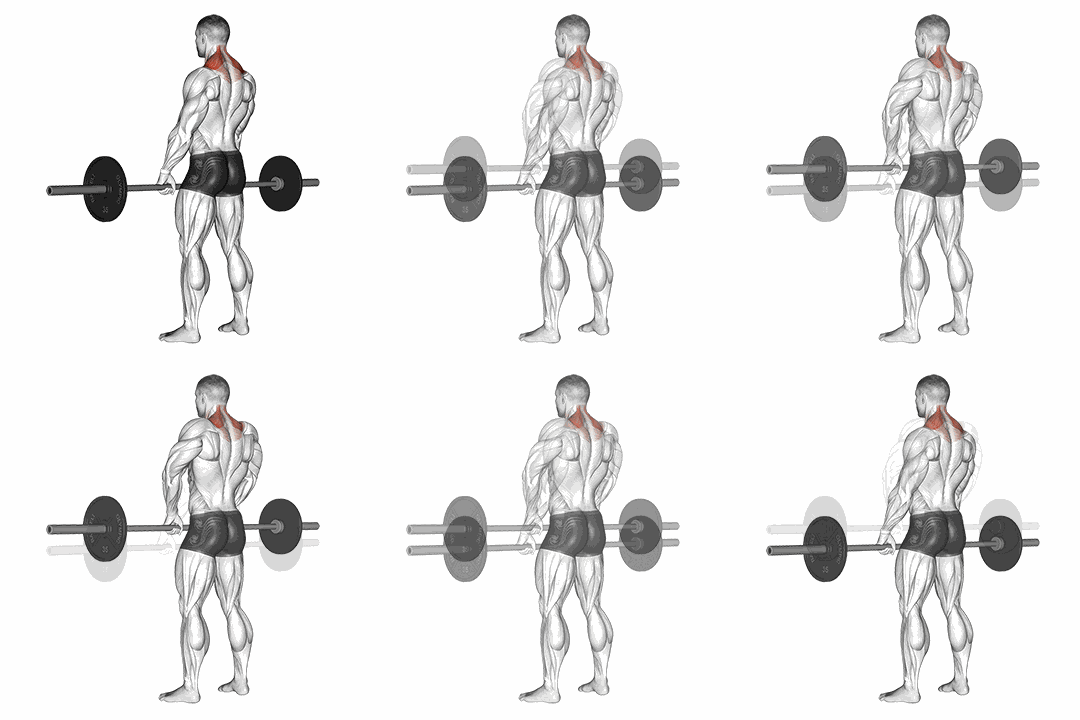
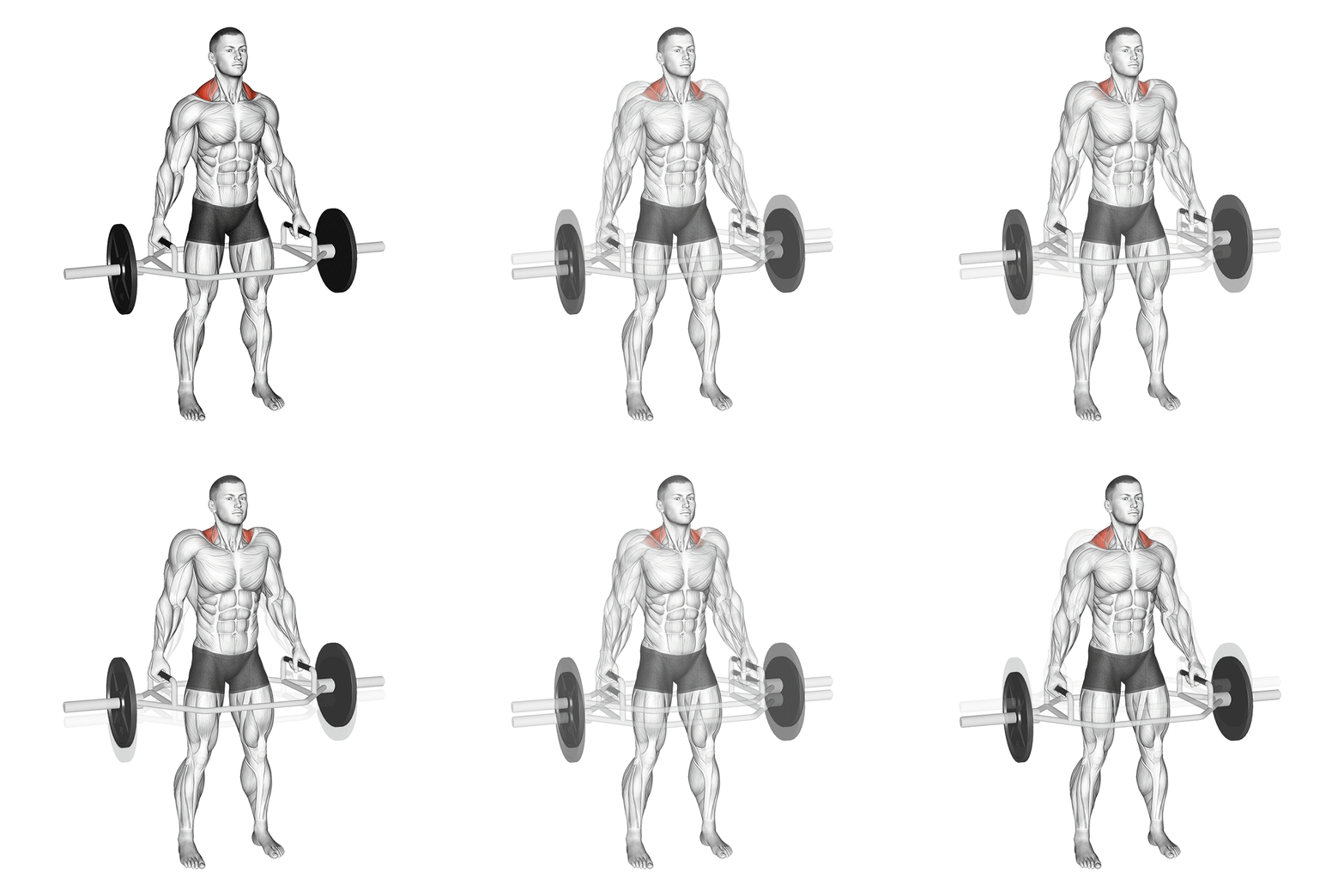
Trap bar shrug
When the stack maxes out, step inside a trap bar: neutral grips at your sides and room for all the plates your traps can handle.
How to program it
Three protocols by goal. Pick one per cycle and aim for progression on load or distance.
| Goal | Sets × distance | Load | Rest |
|---|---|---|---|
| Hypertrophy | 4 × 12-15 | RPE 8, 1-2 s hold at the top | 60-90 s |
| Stretch emphasis | 3 × 10-12 | Moderate, 2 s pause in the bottom stretch | 90 s |
| Burnout | 2 × 20-25 | Light, plates never touch the stack | 45-60 s |
Cable Shrug FAQ
What do cable shrugs do that dumbbell or barbell shrugs don't?
Tension that never disappears. With free weights, fast reps let momentum unload the traps mid-range and the bottom easily becomes a rest. A low cable follows you through the whole arc and its slight forward angle keeps the stretched position working. The traps collect more time under tension per set, at loads your joints barely notice.
One stack with a bar or two stacks with handles?
Both earn their place. Two low pulleys put a handle at each side on a natural line, nothing in front of your thighs, and the freest shoulder motion: best for strict, high-quality reps. A single stack with a straight bar is faster to set up and lets you pull more total weight, with a slightly stronger forward pull to resist. Start with whichever your gym makes easy.
Why can't I go as heavy on cable shrugs as on a barbell?
By design. Most stacks top out around 100 kg, and that is fine, because this variation's job is tension and reps, not maximal load. Chase progress here through pauses, tempo, and extra reps; when you want raw loading, that is what barbell and trap bar shrugs are for.