What is the cable hip adduction?
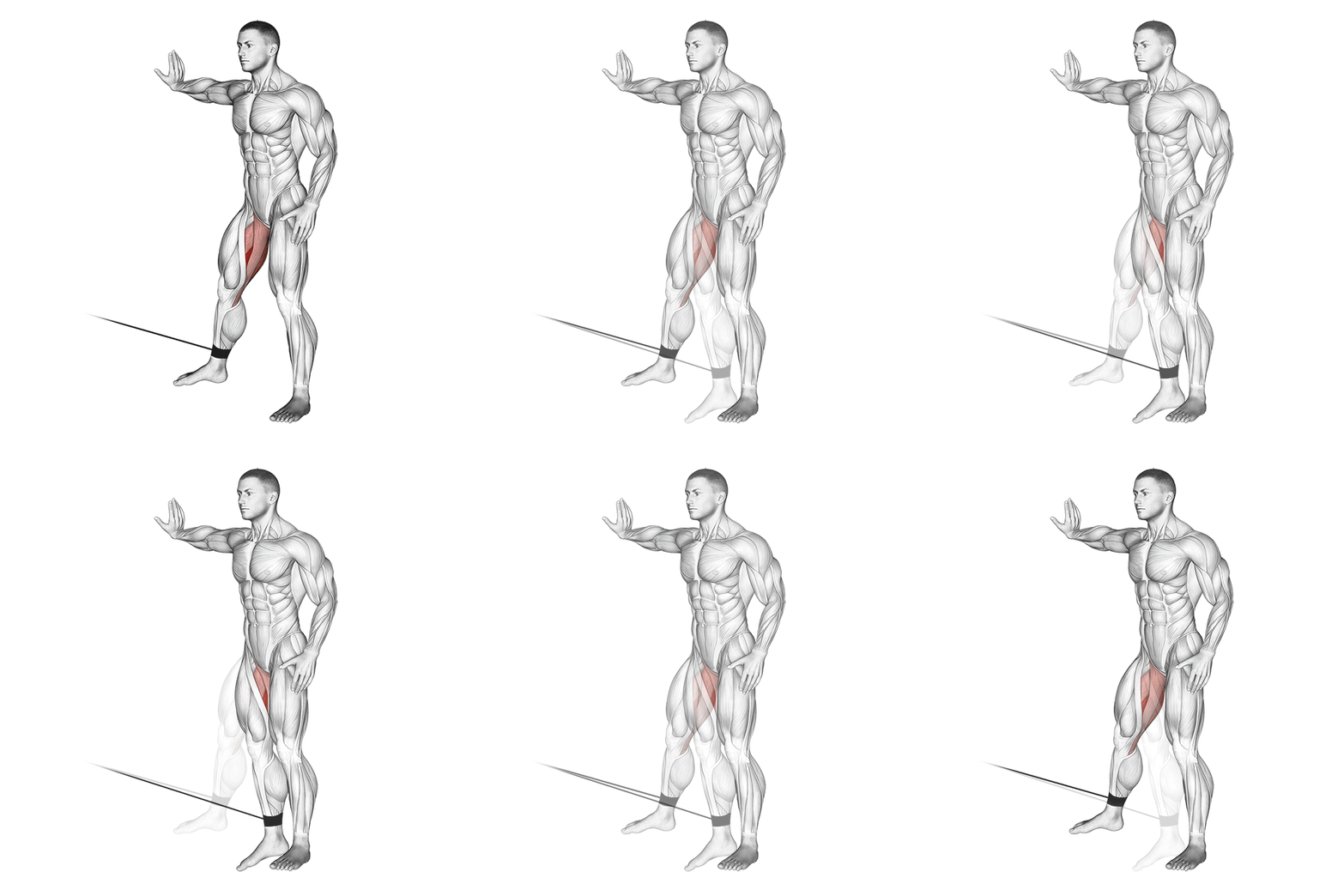
Cable hip adduction trains the inner thigh in its pure function: standing side-on to a low pulley with a cuff around your ankle, you sweep the working leg across your midline against the cable's pull, then resist it on the way back. The adductors are the forgotten muscles of leg day, yet they work hard in sprinting, kicking and changing direction, which is why groin strains plague footballers, hockey players and fast runners. The cable version loads them through a long range at a precise, adjustable resistance, making it equally at home as a bodybuilding finisher, a prevention drill or an early step back from a groin injury.
How to do the cable hip adduction
- 1
Cuff up and stand side-on
Strap the cuff to the ankle closer to the machine and clip it to the low pulley. Step one stride away from the stack, stand tall on the outside leg and rest the near hand on the frame for balance.
- 2
Let the cable open the hip
Allow the working leg to drift toward the machine until you feel a clear stretch along the inner thigh. Pelvis level, toes pointing forward, standing knee softly bent: this stretched position is your start line.
- 3
Sweep across the midline
Pull the leg across your body in a smooth arc until it crosses in front of the standing leg, and squeeze the inner thigh for a second. The leg swings from the hip like a gate; the torso does not move a centimetre.
- 4
Resist the way back
Take 2-3 s to let the leg travel back to the stretched position, fighting the cable the whole way. The slow return is where the adductors build the resilience you came for; finish the set, then switch the cuff to the other ankle.
Pro tip
Your pelvis is the anchor, the leg is the gate. If you have to lean away from the stack or hike a hip to finish a rep, the obliques have taken over from the adductors: drop a plate, re-level the pelvis and make the inner thigh do the sweeping.
Common mistakes
Leaning instead of sweeping.
Side-bending the torso away from the machine moves the stack without moving the hip. Lock your trunk upright against the frame and accept the smaller weight the adductors can actually pull.
Skipping the stretched half.
Short pumps around the midline avoid the lengthened position where the adductors are weakest and strains actually happen. Let the leg travel wide at the start of each rep: that outer third is the most valuable part of the arc.
Swinging with momentum.
A kicked, bouncy rep lets the cable yank the leg back and turns tension into whiplash. Two seconds across, a squeeze, three seconds back: boring tempo, growing adductors.
Pelvis chasing extra range.
Hiking the hip or rotating the pelvis fakes a longer sweep while unloading the target muscle. Range ends where your pelvis starts moving; stop the rep there, even if it looks shorter than you hoped.
Variations and progressions
Easier
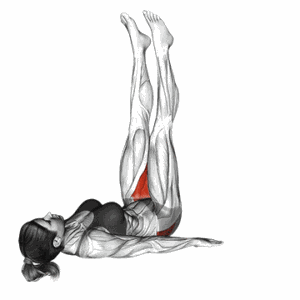
Side-lying adduction raise
Lie on your side, cross the top leg over and lift the bottom leg against gravity. Tiny range, zero equipment, and a perfect first step for a deconditioned or freshly healed groin.
Harder
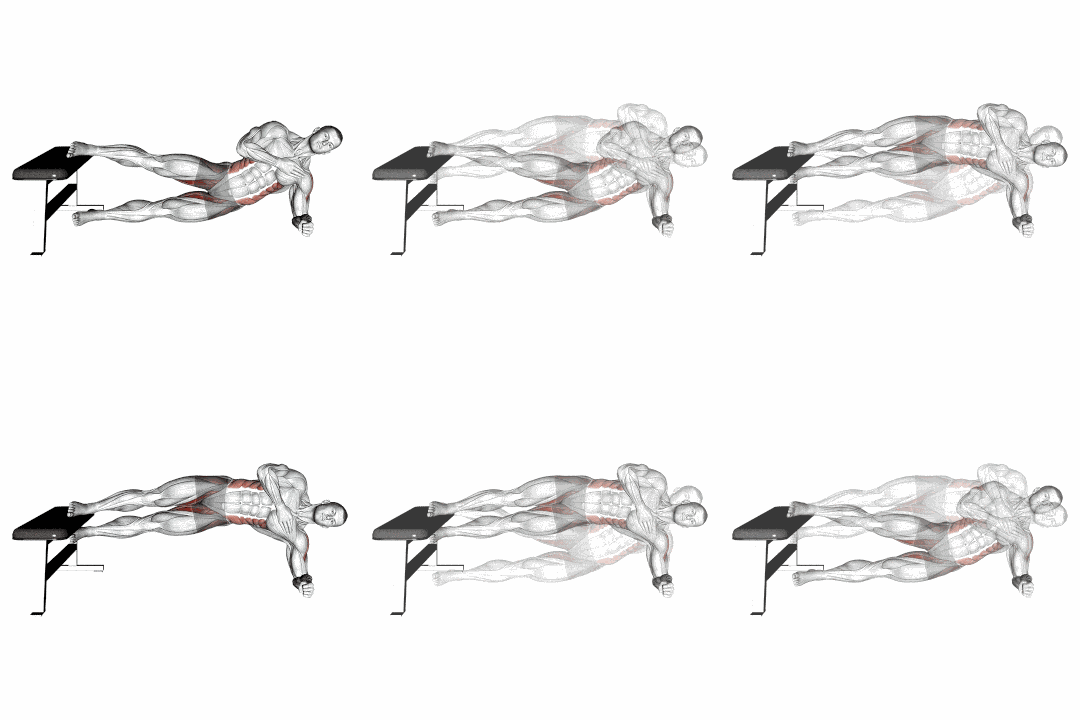
Copenhagen adduction
A side plank with the top leg on a bench, bottom leg lifting your whole body. The reference adductor exercise in football injury prevention, and dramatically harder than any cable stack.
No cable?
Banded hip adduction
Anchor a band low on a rack upright, loop it around your ankle and sweep the same arc. The band loads the squeeze more than the stretch, the reverse of the cable, so make the slow return your priority.
How to program it
Three protocols by goal. Pick one per cycle and aim for progression on load or distance.
| Goal | Sets × distance | Load | Rest |
|---|---|---|---|
| Strength and size | 3 × 10-12 per leg | RPE 8 | 60-90 s |
| Groin injury prevention | 2-3 × 12-15 per leg | Moderate, 3 s returns | 60 s |
| Warm-up activation | 2 × 15 per leg | Very light, crisp tempo | 30-45 s |
Cable Hip Adduction FAQ
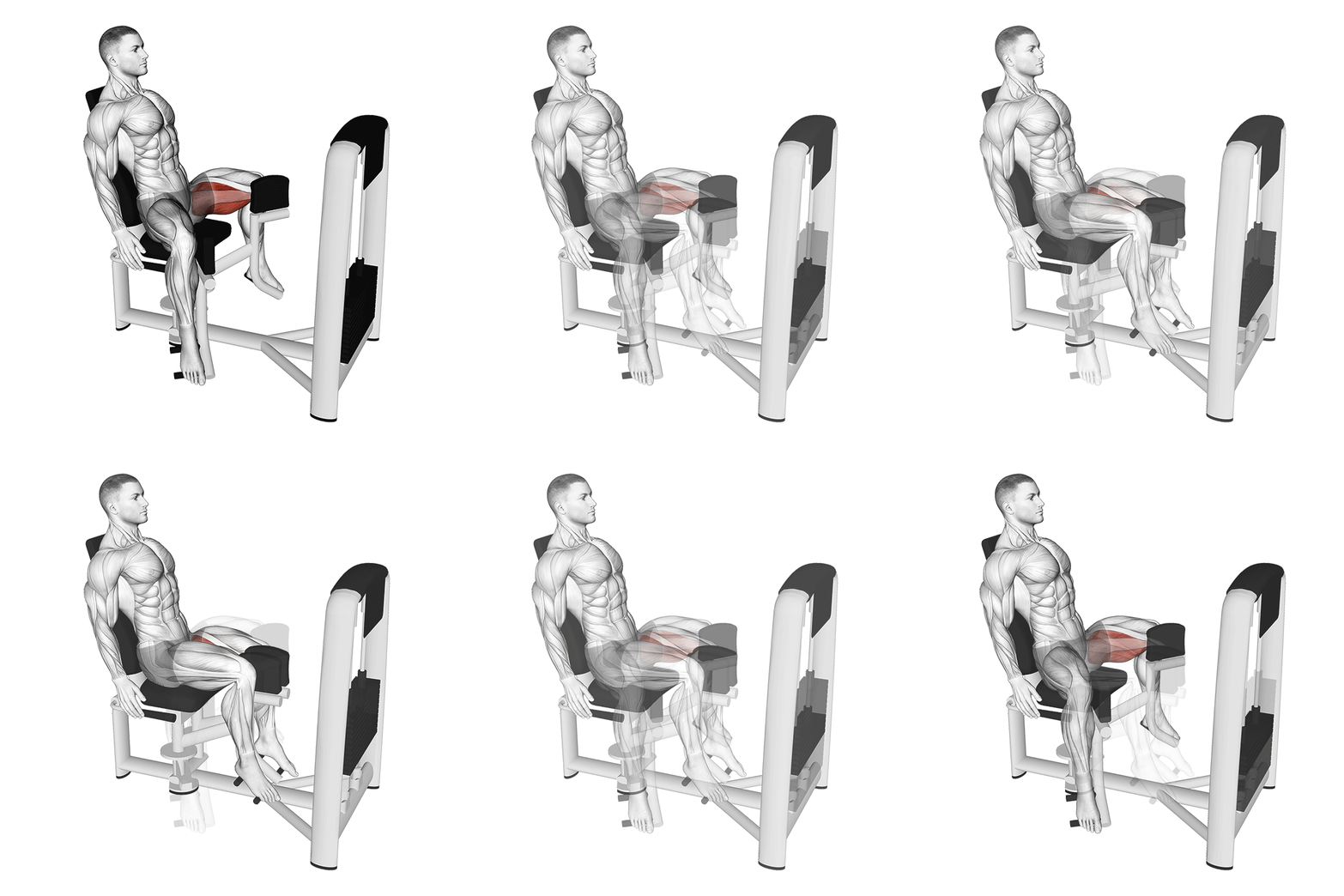
Cable hip adduction or the seated adduction machine?
The machine wins for simple loading: both legs at once, heavy stacks, no balance demand, ideal for pure hypertrophy. The cable wins for everything athletic: you stand on one leg while the other sweeps, so the standing hip stabilizes exactly as it does in running and cutting, and you can match range and load to each leg separately. Many lifters use the machine for size and keep the cable for prevention work and imbalances.
What muscles does cable hip adduction work?
The adductor group of the inner thigh: adductor longus, magnus and brevis, with the gracilis and pectineus assisting the sweep. Less obviously, the leg you are standing on works too: its gluteus medius and deep hip stabilizers fight to keep the pelvis level against the cable's pull, which is a bonus you do not get from the seated machine.
Can this prevent groin strains?
Strength work for the adductors is one of the best-supported ways to reduce groin injury risk in sports built on sprinting, kicking and skating. Research in football teams has repeatedly linked stronger adductors with fewer groin problems. Cable adduction builds that strength through a long range with a controlled eccentric; pair it with Copenhagen adductions in your prevention block and keep both going in season rather than only after something twinges.