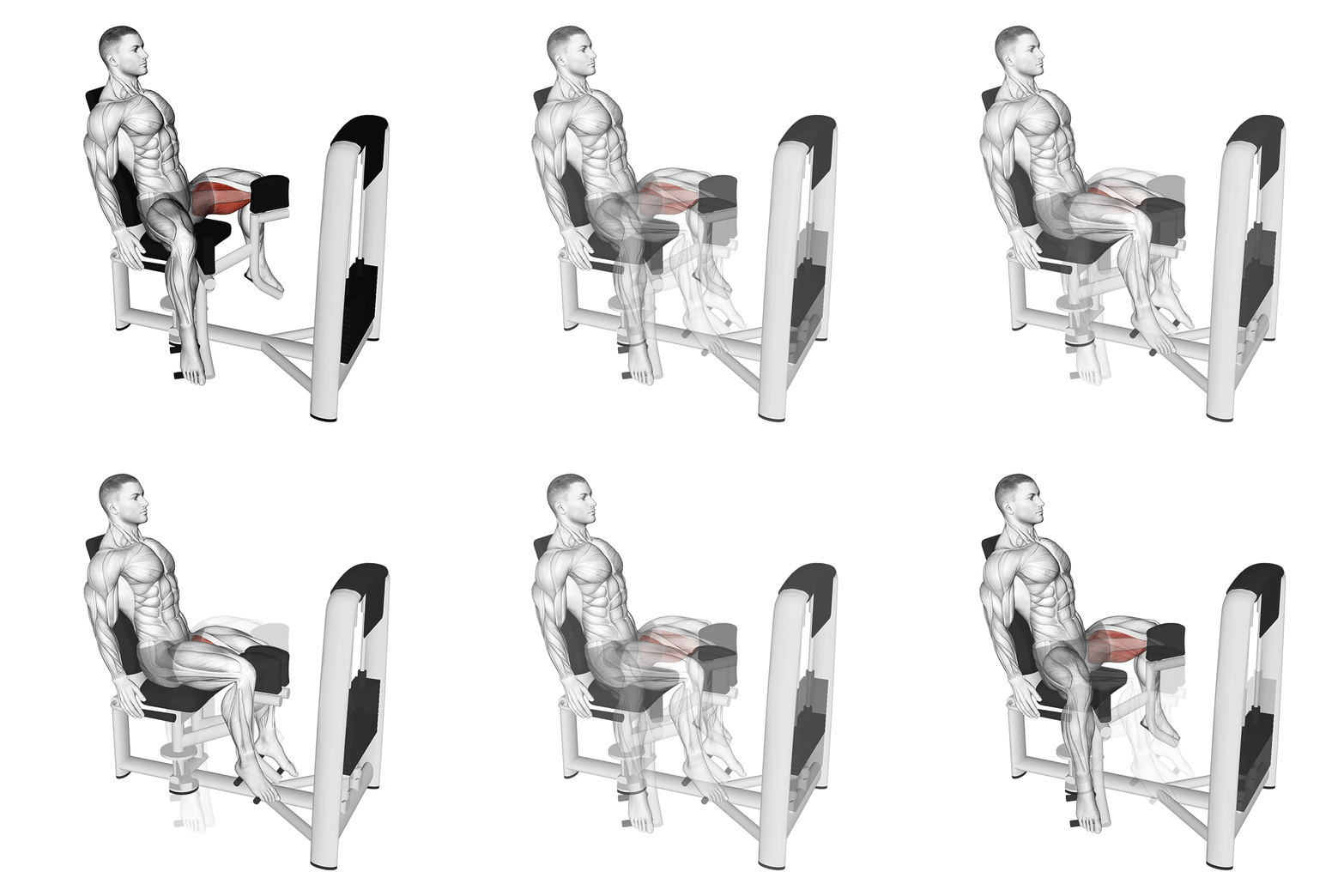
What is the seated hip adduction?
The seated hip adduction is a machine isolation movement targeting the adductor group. You sit upright, place your knees against the pads spread wide apart, then squeeze them together against resistance. It's a small-range, high-tension exercise that builds the often-neglected inner thigh, improves hip stability, and supports heavier squats and split-stance work. Useful as accessory volume for lifters with weak adductors, athletes with groin tightness, or anyone rehabbing a strain.
How to do the seated hip adduction
- 1
Set the start width
Pick a starting width that gives a comfortable stretch without pinching the groin. Beginners stay narrow, advanced lifters open wider over time.
- 2
Sit tall and brace
Push your back into the pad, brace the abs, and place your feet flat on the footrest. Hands on the side handles for stability.
- 3
Squeeze knees together
Drive the knees toward each other under control, two seconds in. Don't let the lower back round or the hips slide forward.
- 4
Resist the opening
Lower back to the start over three seconds, fighting the stack the whole way. The eccentric is where the muscle grows.
Pro tip
Don't chase huge weight here. Adductors respond best to slow tempo and a real stretch at the bottom. Two seconds up, three seconds down.
Common mistakes
Bouncing the reps.
Momentum makes the weight move but skips the muscle. Control every centimetre.
Starting too wide.
An aggressive stretch on cold adductors is a fast track to a groin strain. Open gradually over weeks.
Rounding the lower back.
If the back rolls, the load shifts off the adductors. Keep the lumbar pressed into the pad.
Holding the breath.
Breathe out on the squeeze, in on the open. Apnea spikes blood pressure for no benefit on a small isolation lift.
Variations and progressions
Easier
Ball squeeze
Sit on a bench, squeeze a small ball or rolled towel between the knees for 5 × 30 s holds. Builds neural drive with zero equipment.
Harder
Copenhagen plank
Side plank with the top leg on a bench, bottom leg lifted off the ground. Brutal adductor isometric loaded by bodyweight.
No machine?
Cable adduction
Ankle strap on a low cable, stand sideways and pull the working leg across the body. Same job, more setup time.
How to program it
Three protocols by goal. Pick one per cycle and aim for progression on load or distance.
| Goal | Sets × distance | Load | Rest |
|---|---|---|---|
| Activation | 2 × 15 | Light, slow tempo | 45 s |
| Hypertrophy | 4 × 12 | RPE 8 | 60-90 s |
| Endurance / rehab | 3 × 20 | Light | 45 s |
Seated Hip Adduction FAQ
Will this slim my inner thighs?
No. Spot reduction is a myth, you can't shrink one area by training it. Adductor work builds the muscle underneath the fat. To change the shape of your thighs, combine strength training with an overall caloric deficit and patience.
Is this safe after a groin strain?
Once cleared by a physio, yes, and it's often prescribed. Start with very light loads, short range, and a slow tempo. Progress over four to six weeks. Never train through sharp pain, a deep ache during the set is normal, a stab is not.
How often should I train adductors?
Twice a week is plenty for most lifters: one heavier session at 4 × 12 and one accessory finisher at 2 × 20. The adductors already get hammered by squats, lunges and split work, so direct isolation is a top-up, not the main course.