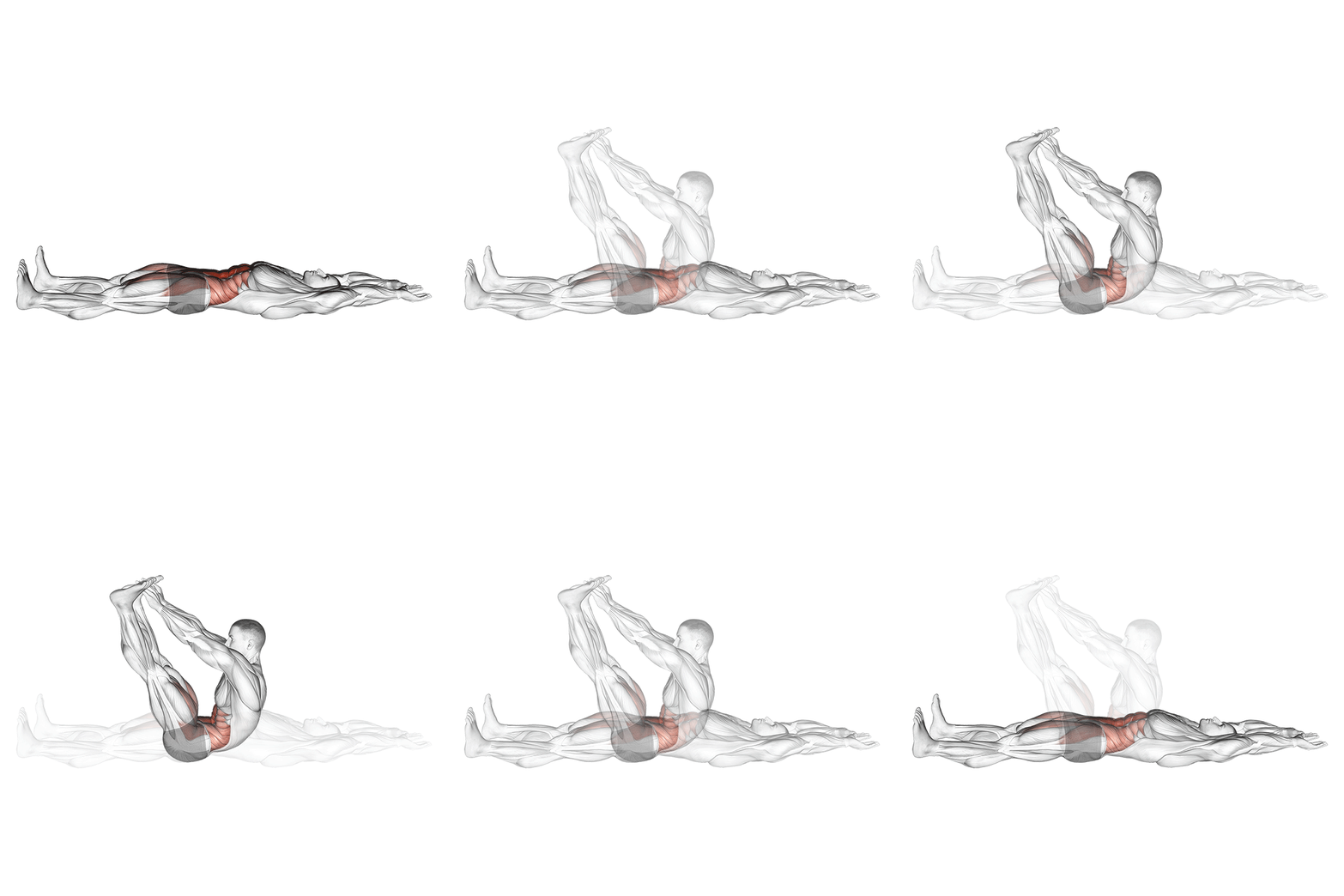
What is the v-up?
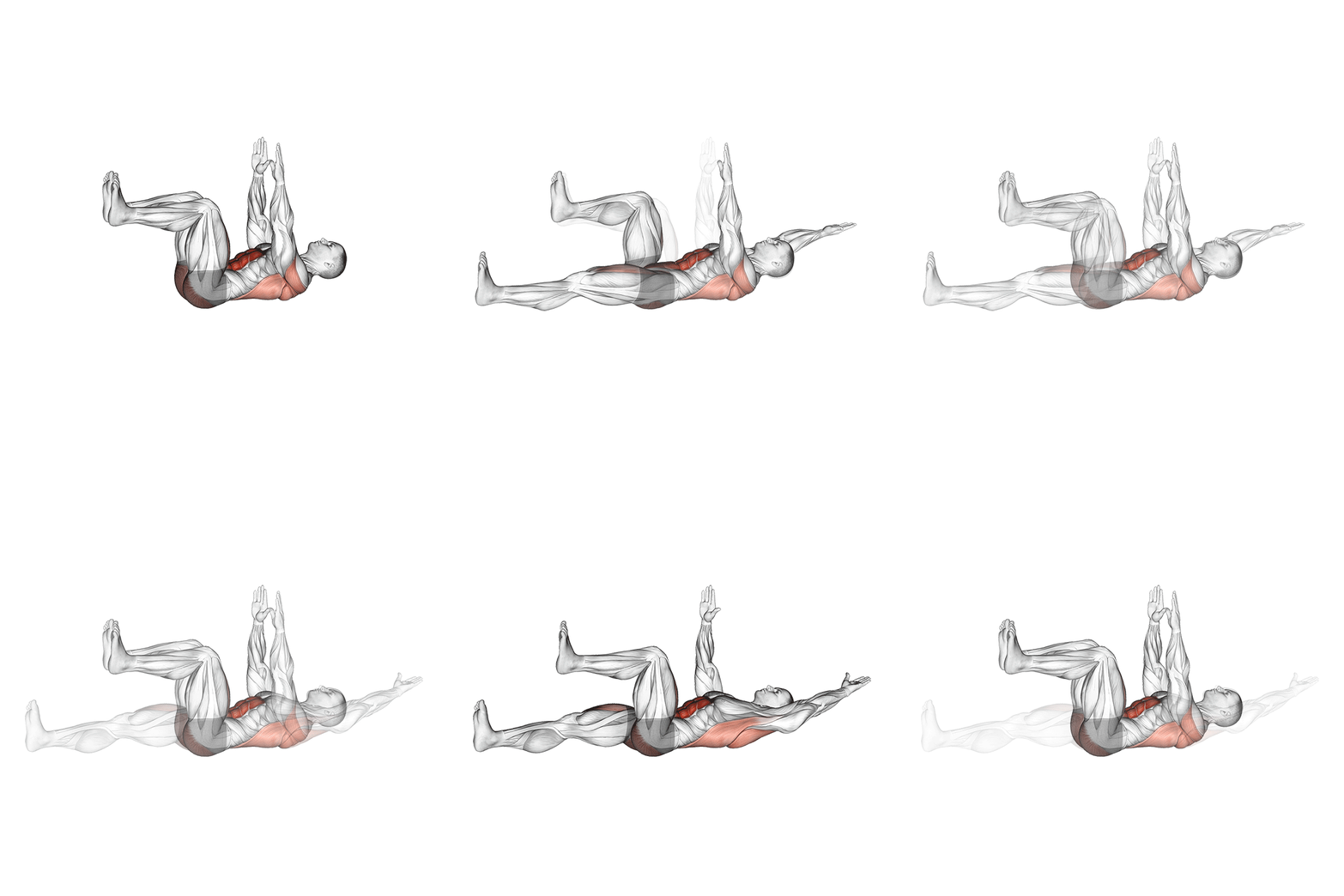
The V-up is a dynamic core exercise where you start lying flat with arms overhead and legs extended, then simultaneously lift the upper body and the legs to meet in a V shape, touching hands to feet (or shins) above the hips. It hits the entire rectus abdominis and the hip flexors in a single explosive contraction, then trains eccentric control on the way down. It's a staple in CrossFit benchmarks, AMRAP finishers and Hyrox-style ab circuits because it's brutal, scalable, and needs zero equipment.
How to do the v-up
- 1
Start position
Lie flat on your back, arms extended overhead, legs straight and pressed together, ankles touching. Lower back lightly in contact with the floor.
- 2
Brace and crunch up
Brace the core hard, exhale sharply, and simultaneously lift arms and legs off the floor. Reach the hands toward the toes as the legs come up to ~45-60°.
- 3
Meet at the top
At the peak, your body forms a V balanced on your sit-bones. Fingers reach for the toes (or shins if you can't reach yet). Hold a beat, abs fully crunched.
- 4
Lower with control
Lower arms and legs back to the starting position at the same rate. Don't slam, don't bend the knees. Touch lightly and explode into the next rep.
Pro tip
Most lifters cheat with momentum from the lower back. If you feel a 'snap' in your lumbar at the bottom, you're not bracing. Slow the lower phase to 2 seconds and your form rebuilds itself.
Common mistakes
Bent knees.
Bending knees shortens the lever and makes it easier, but if you can hold straight legs you should. Mark scaled vs full versions honestly.
Yanking with the neck.
Pulling the head up to gain inches strains the cervical spine. Long neck, eyes on the toes, lift comes from the abs.
Slamming the legs down.
Letting legs crash kills the eccentric phase, which is where most of the abs growth happens. Lower with control.
Arched low back at the start.
An arched lumbar means weak abs and a loaded spine. Tuck the pelvis slightly before each rep, ribs down.
Variations and progressions
Easier
Tuck V-up
Bend the knees and bring them to the chest while crunching up. Same contraction, shorter lever, much easier on the hip flexors.
Harder
Weighted V-up
Hold a dumbbell or medicine ball in the hands. Even 2-5 kg makes the move dramatically harder and turns it into a serious strength move.
Different angle?
Hollow rocks
Hold the hollow position and rock gently. Same midline tension, no rep-counting, builds isometric ab strength that transfers to gymnastics.
How to program it
Three protocols by goal. Pick one per cycle and aim for progression on load or distance.
| Goal | Sets × distance | Load | Rest |
|---|---|---|---|
| Activation | 3 × 10 | Bodyweight | 45 s |
| Hypertrophy | 4 × 15 | Bodyweight or 2-3 kg | 60 s |
| Conditioning finisher | 3 × max reps in 40 s | Bodyweight | 20 s |
V-Up FAQ
V-ups or sit-ups?
V-ups load both ends of the body and add eccentric leg control, which standard sit-ups don't. Sit-ups isolate the upper abs and tend to over-recruit the hip flexors. For most lifters, V-ups deliver more ab stimulus per rep, but they demand more skill. If your sit-up is sloppy, master that first.
Should I touch my toes every rep?
Touch is the gold standard but not mandatory. If you reach mid-shin with a flat back and controlled descent, that's a stronger rep than a sloppy toe-touch with a hunched spine. Range is earned through hamstring mobility and abs strength, not faked with momentum.
Why do my hip flexors burn before my abs?
Either your hip flexors are weak (common with desk-bound lifters) or you're not bracing the abs to start the rep, letting the hip flexors initiate. Tuck the pelvis, exhale hard before the lift, and feel the lower abs engage before the legs move. Add hanging leg raises to strengthen hip-flexor coordination.