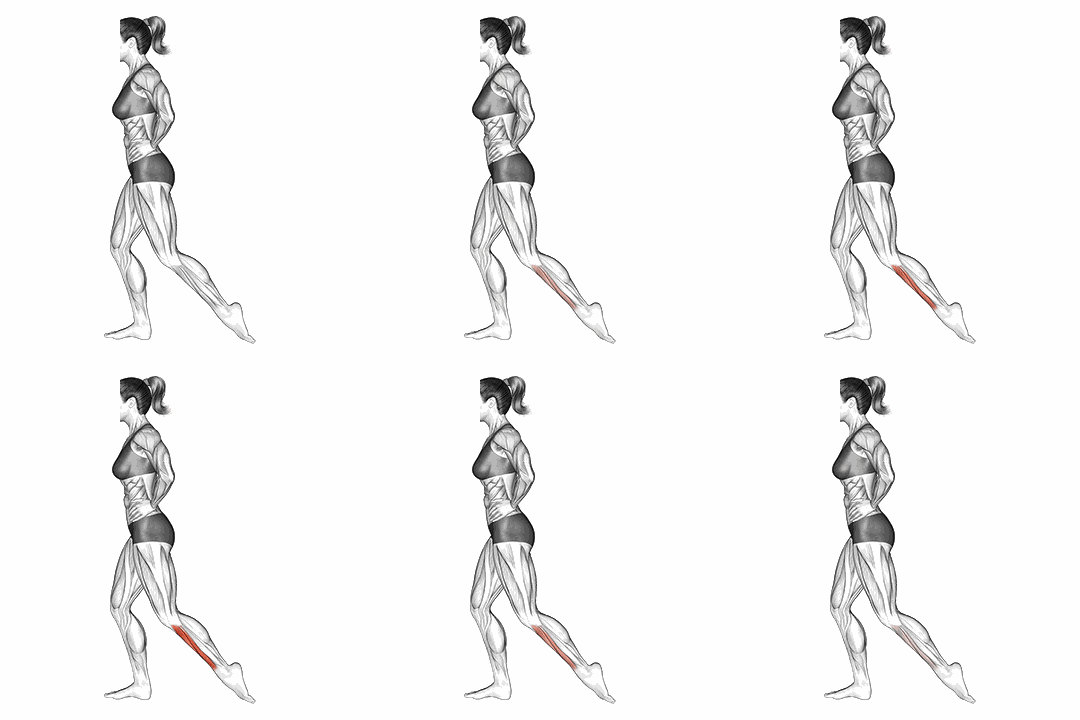
What is the toe stretch?
The toe stretch is a kneeling hold that lengthens the toe flexors and loads the plantar fascia through full toe extension. You kneel with your toes tucked under and gradually sit back toward your heels, letting bodyweight dose the stretch. Years in cushioned, stiff-soled shoes leave most people shocked by how intense this position is, yet your big toe needs roughly 60° of extension on every single stride when you run. Runners, Hyrox athletes and anyone battling plantar fascia tightness get outsized returns from 60 seconds a day of this humble, slightly brutal drill.
How to do the toe stretch
- 1
Kneel and tuck all ten toes
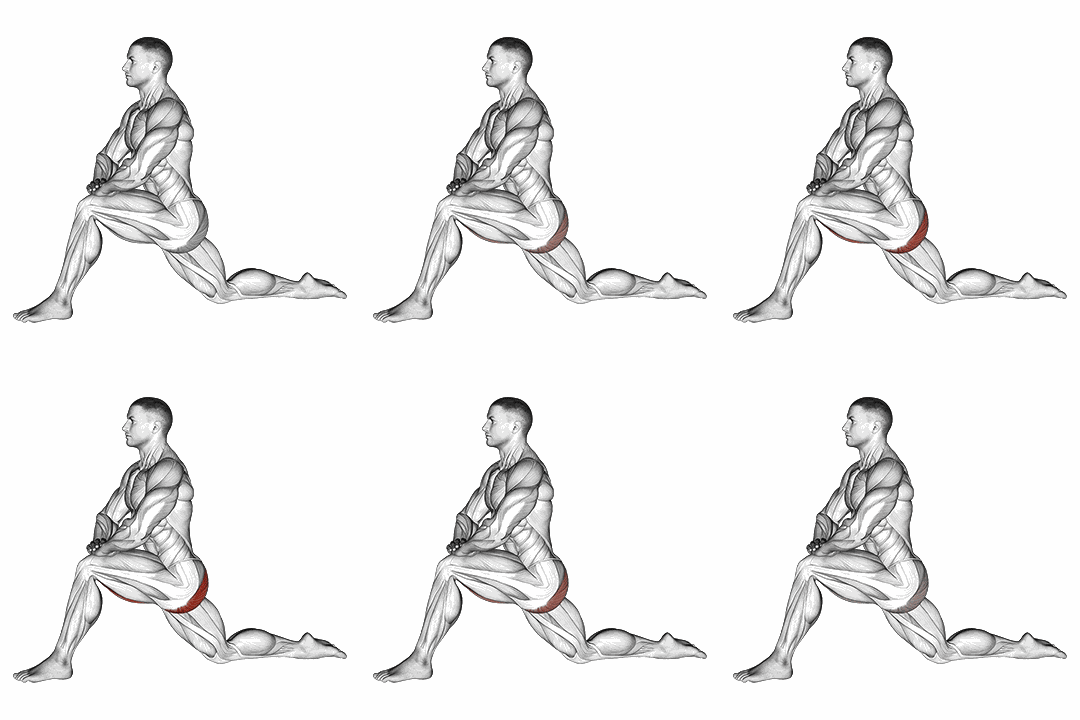
Kneel on a mat and tuck your toes under so the pads press into the floor. Check the pinky toes: they love to escape sideways.
- 2
Start with hands on the floor
Keep your hands on the floor in front of you, carrying most of your weight. This is where beginners should stay for the first week or two.
- 3
Sit back toward your heels
Shift weight gradually onto your heels as your torso rises upright. Stop at a 4 out of 10 stretch along the sole and toes; breathe for 20-30 s.
- 4
Counter-stretch the other way
Untuck, place the tops of your feet flat on the floor and sit back for 15 s. This resets the ankles and keeps the stretch balanced.
Pro tip
Treat intensity like a dimmer, not a switch. Hands take half your weight on day one; over three or four weeks you earn the upright hold. Sharp or electric pain under the heel means back off, not push through.
Common mistakes
Pinky toes slipping out.
If the small toes fold sideways instead of extending, the outer foot gets nothing. Reset them by hand before you load the stretch.
Full bodyweight on day one.
This stretch humbles everyone. Sitting fully upright immediately risks days of angry feet; progress the load over weeks like any other training.
Bouncing to go deeper.
The plantar fascia responds to slow, patient tension, not rapid yanks. Sink in over five breaths and let the tissue adapt.
Variations and progressions
Easier
Toes-on-wall stretch
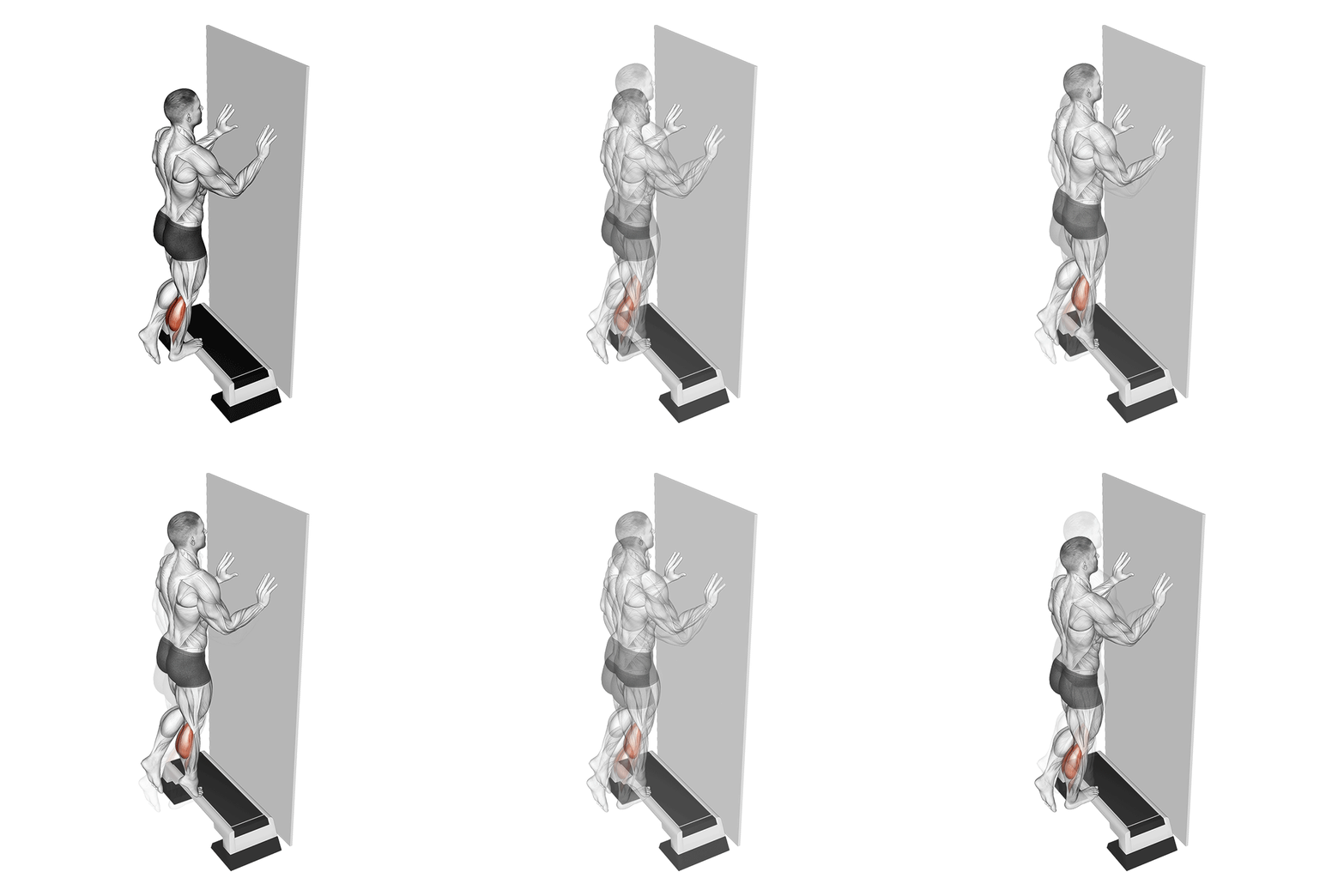
Standing, place your toes up against a wall or plate with the heel on the floor and lean in gently. Far less load, same tissues.
Harder
Upright hold with gentle rocking
Sit fully upright on your heels, hands off the floor, and add small forward and back rocks. 45-60 s builds serious toe extension capacity.
Knees complain?
Seated manual toe stretch
Sit, cross one ankle over the opposite knee and pull the toes back with your hand for 30 s per foot. No kneeling required.
How to program it
Three protocols by goal. Pick one per cycle and aim for progression on load or distance.
| Goal | Sets × distance | Load | Rest |
|---|---|---|---|
| Runner's maintenance | 2 × 30 s daily | Gentle, 3-4/10 | None |
| Pre-run prep | 1 × 20 s + 10 toe curls | Light, 2-3/10 | None |
| Plantar fascia care | 3 × 30 s after runs | Gentle, never sharp | 30 s |
Toe Stretch FAQ
Why does this hurt so much?
Because your toes have probably not reached full extension in years. Cushioned, stiff-soled shoes do the job your toe flexors should, so the tissue shortens and the first weeks of stretching feel savage. That intensity is a measurement, not a punishment: it tells you exactly how much range you've lost. Keep the dose small and daily, and the position that felt brutal in week one becomes comfortable by week four.
Can it help plantar fasciitis?
It's a useful piece, not a cure. Gentle toe extension stretching features in most rehab protocols, but the strongest evidence points to combining it with calf stretching and heavy, slow calf raises to rebuild the tissue's load capacity. If morning heel pain has lasted more than a few weeks, stretch gently, strengthen the calves, review your recent mileage jump, and see a professional rather than self-treating indefinitely.
Do runners really need toe mobility?
Yes, more than almost anyone. Every stride ends with the big toe extending to roughly 60° as the heel lifts, thousands of times per run. When that range is missing, the foot compensates by rolling outward or shortening the stride, and the bill lands on the plantar fascia, the achilles or the knee. Sixty seconds of this stretch a day is one of the cheapest insurance policies in running.