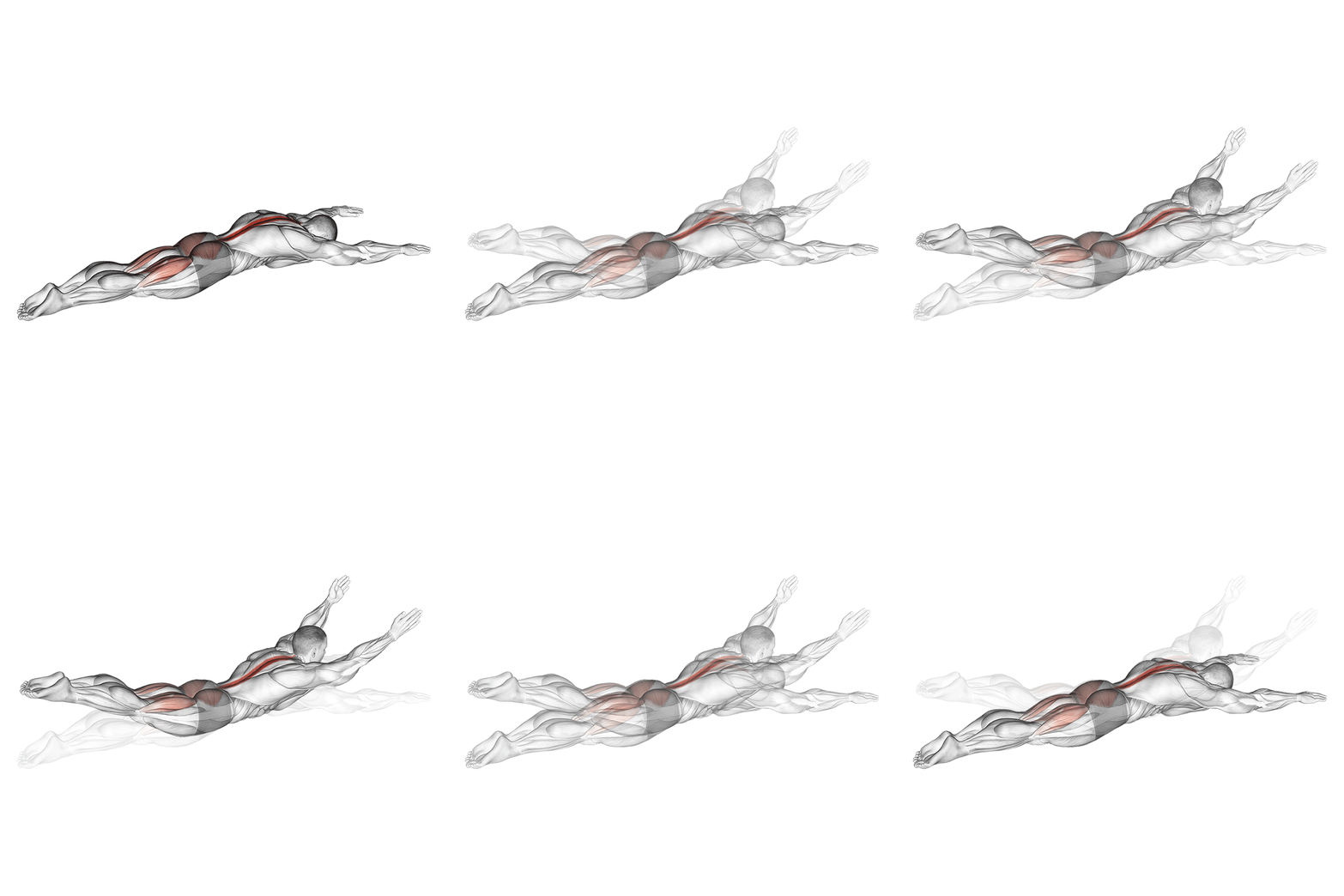
What is the superman?
The superman is performed face-down on the floor, arms extended overhead, legs straight. You lift arms, chest and legs off the ground simultaneously, hold for time, then lower. It targets the spinal erectors, glutes, hamstrings, mid-traps and rear delts. It is one of the few exercises that strengthens the entire posterior chain without any equipment, ideal as a warm-up, a finisher, or a desk-worker corrective.
How to do the superman
- 1
Lie face-down, fully extended
Belly on the floor, arms reaching overhead, legs straight behind you. Forehead lightly resting on the mat.
- 2
Lift everything together
Squeeze glutes and lift arms, chest, and legs about 10 to 20 cm off the floor simultaneously. Belly button stays on the mat.
- 3
Reach long, do not crank high
Imagine being pulled long in opposite directions. Range comes from elongation, not from hyperextending the lower back.
- 4
Hold and breathe
Hold 2 to 5 seconds at the top, breathing shallow but continuous. Lower with control, then repeat. No bouncing off the floor.
Pro tip
Cue squeeze your glutes first; the lift will come from the right muscle. If your lower back does all the work, you are jamming your lumbar instead of extending your hips.
Common mistakes
Hyperextending the neck.
Looking straight up crunches the cervical spine. Gaze stays just ahead of the hands on the floor.
Lifting hips off the floor.
If the belly button rises, you are arching from the lumbar. Keep the navel anchored, lift only the limbs and chest.
Bouncing the reps.
Slamming arms and legs into the floor between reps trades quality for speed. Each rep is a controlled hold.
Holding breath.
Apnea blunts the postural work. Keep shallow, steady breathing throughout the hold.
Variations and progressions
Easier
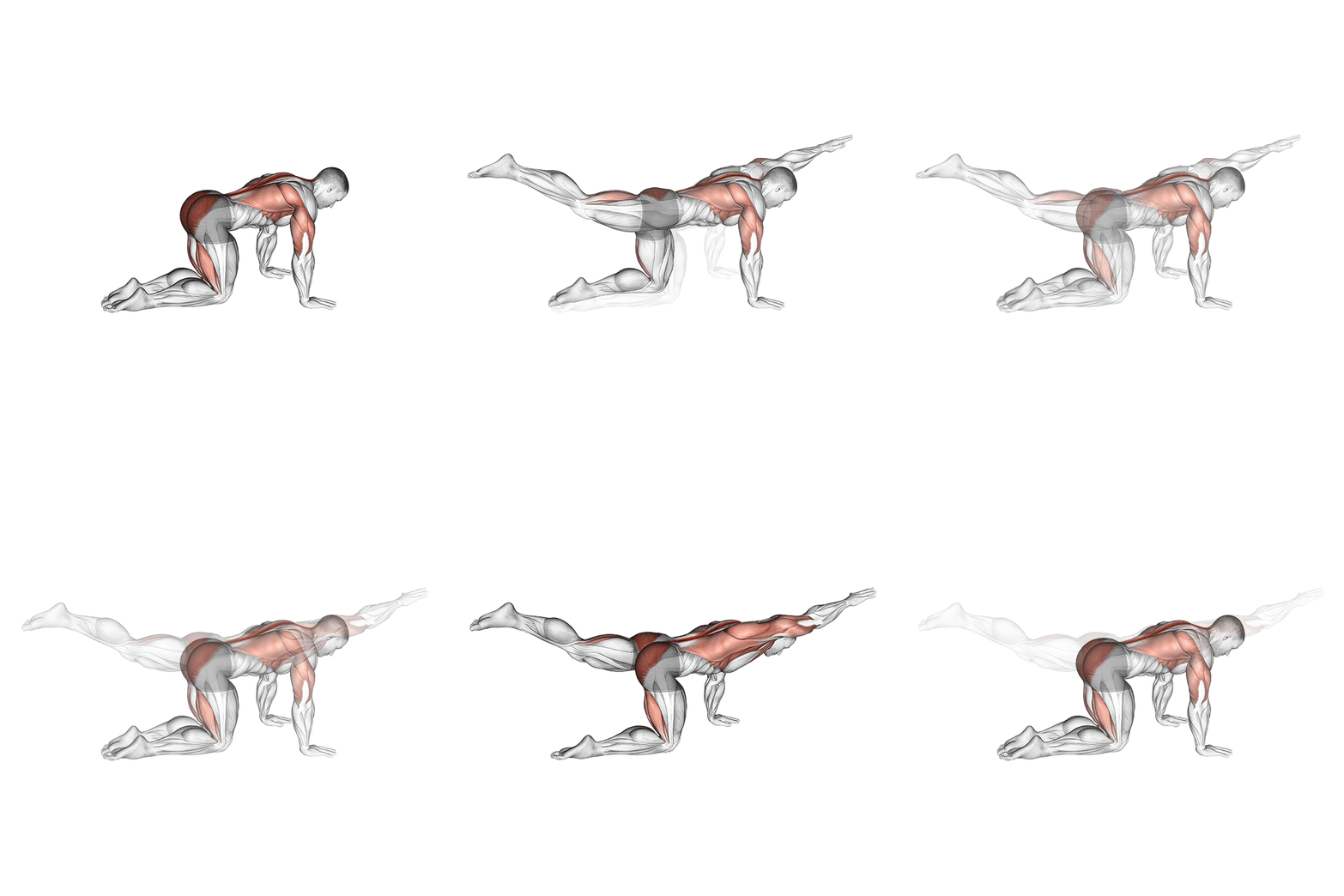
Alternating superman
Lift opposite arm and leg only at a time. Reduces lever load and easier on lower back.
Harder
Weighted superman
Hold a 1-2 kg plate or dumbbell in extended arms. Small load, massive demand increase.
Loaded version
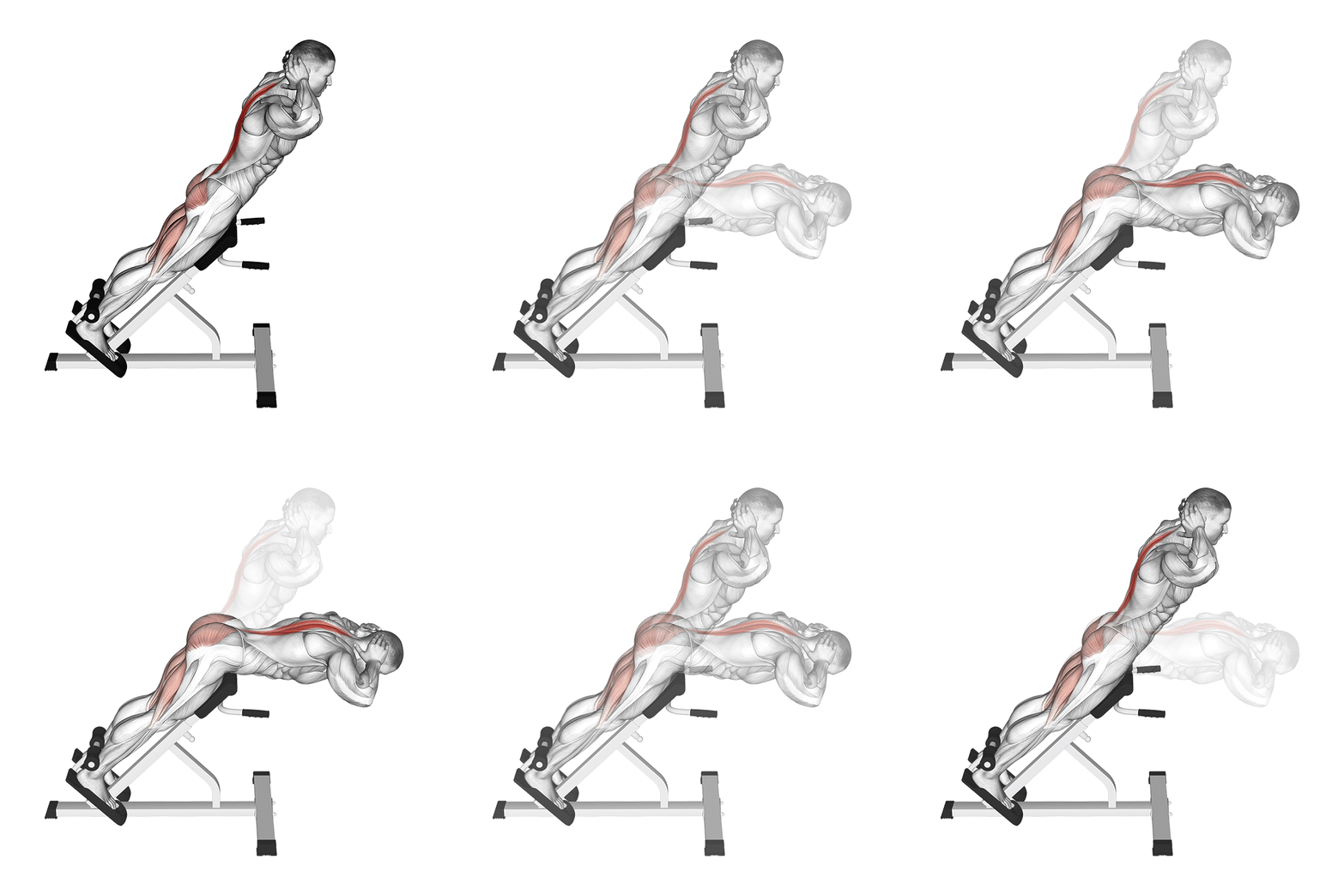
Back extension
Hyperextension bench gives loaded posterior chain work with the same intent and full range.
How to program it
Three protocols by goal. Pick one per cycle and aim for progression on load or distance.
| Goal | Sets × distance | Load | Rest |
|---|---|---|---|
| Warm-up activation | 2 × 10 reps × 2 s hold | Bodyweight | 30 s |
| Endurance / postural | 3 × 30 s hold | Bodyweight | 45 s |
| Strength quality | 4 × 8 with 5 s hold | Bodyweight or +1-2 kg plate | 60 s |
Superman FAQ
Is the superman bad for my back?
Done with glute drive and shallow range, it strengthens the lower back. Done with maximal hyperextension and no glute engagement, it can aggravate facet joints. Cue glute squeeze first, lift modestly (10 to 20 cm), and avoid cranking for height.
How often should I do it?
Two to four times a week, either as warm-up activation or part of an end-of-session core circuit. It recovers fast and has very low injury risk at moderate volume, making it one of the easiest daily-driver patterns for desk workers and lifters alike.
Does it actually build muscle?
Mostly no for the glutes and hamstrings; the load is too light to be a primary hypertrophy driver. Yes for the spinal erectors and rhomboids of untrained or sedentary populations. Use it as an activation and postural insurance, not a substitute for back extensions or deadlifts.