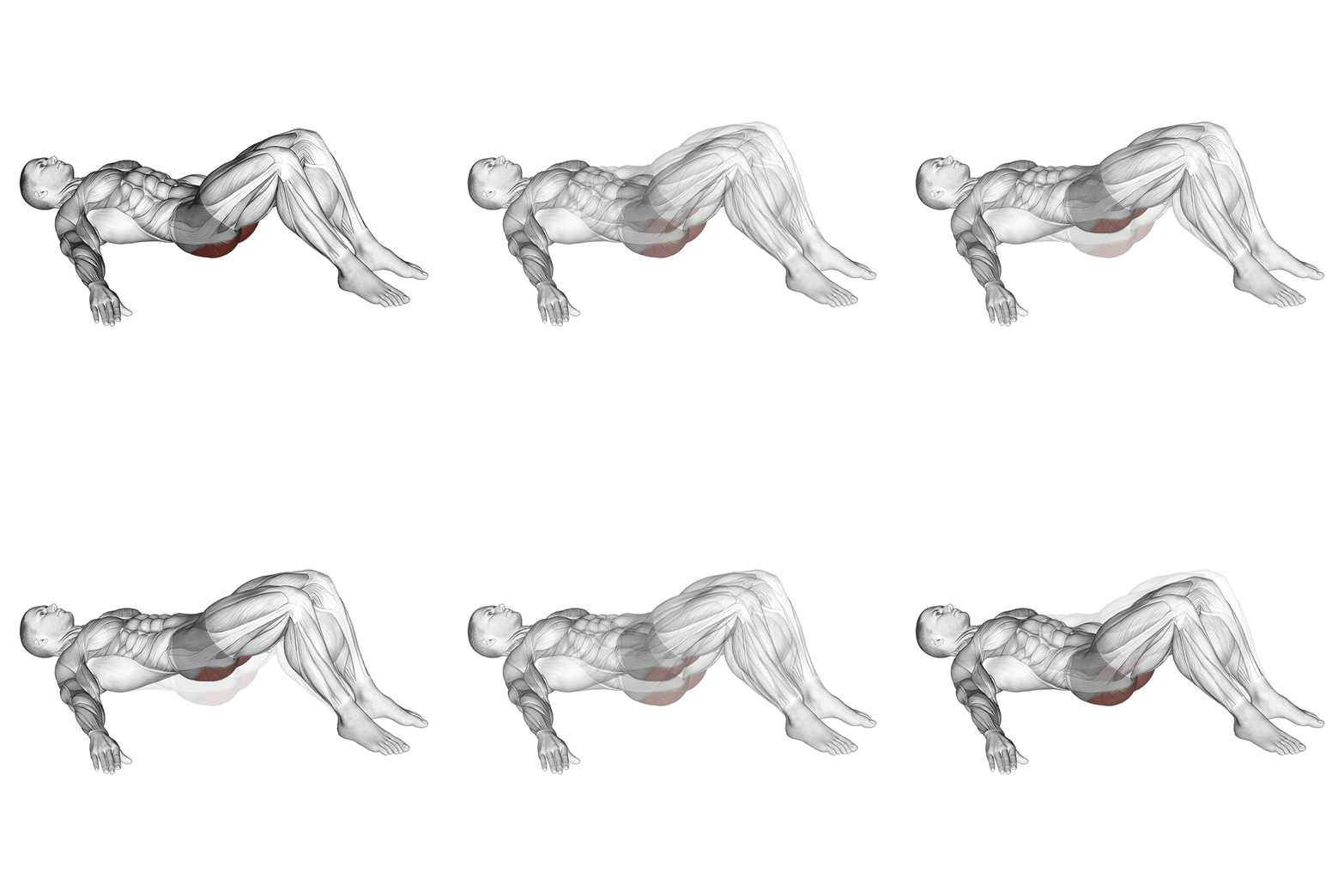
What is the glute bridge?
The glute bridge is a floor-based hip extension where you lie on your back, knees bent, feet flat, and drive your hips up by squeezing your glutes. It's the foundation movement that teaches you to extend the hip without arching the lower back, the same pattern that powers deadlifts, sprints and hip thrusts. It's used in physio rehab, warm-ups, and as a teaching tool for athletes who can't fire their glutes after years of sitting.
How to do the glute bridge
- 1
Set up on the floor
Lie on your back, knees bent at 90°, feet flat and hip-width apart, heels close to your glutes. Arms relaxed by your sides.
- 2
Tuck the pelvis
Before you lift, tilt your pelvis slightly toward your ribs to flatten your lower back into the floor. This pre-tension protects the spine.
- 3
Drive through the heels
Squeeze your glutes hard and push your hips up until your knees, hips and shoulders form a straight line. Heels stay planted, not toes.
- 4
Hold and lower with control
Pause 1-2 s at the top with glutes maximally contracted, then lower your hips down to just above the floor. Touch and go, or fully reset between reps.
Pro tip
If you feel it more in your hamstrings or lower back than your glutes, your feet are too far away or your pelvis is anteriorly tilted. Walk your heels closer and tuck.
Common mistakes
Overextending the lower back.
If your ribs flare and you arch at the top, your back is doing the work, not your glutes. Tuck the pelvis and stop at neutral.
Pushing through the toes.
Toes-driven bridges shift the load to the quads and calves. Push the floor away through the heels.
Feet too far from glutes.
Feet far away turns the bridge into a hamstring exercise. Heels just under or slightly past your knees at the top.
Knees caving in.
Knees falling toward each other kills glute activation. Push them out actively to engage the glute medius.
Variations and progressions
Easier
Double-leg bridge with band
Loop a mini-band around the knees and push out as you bridge. Forces glute medius to fire, ideal for beginners.
Harder
Single-leg glute bridge
Lift one foot off the floor and bridge with the other. Doubles the load, exposes left-right asymmetries.
Want more load?
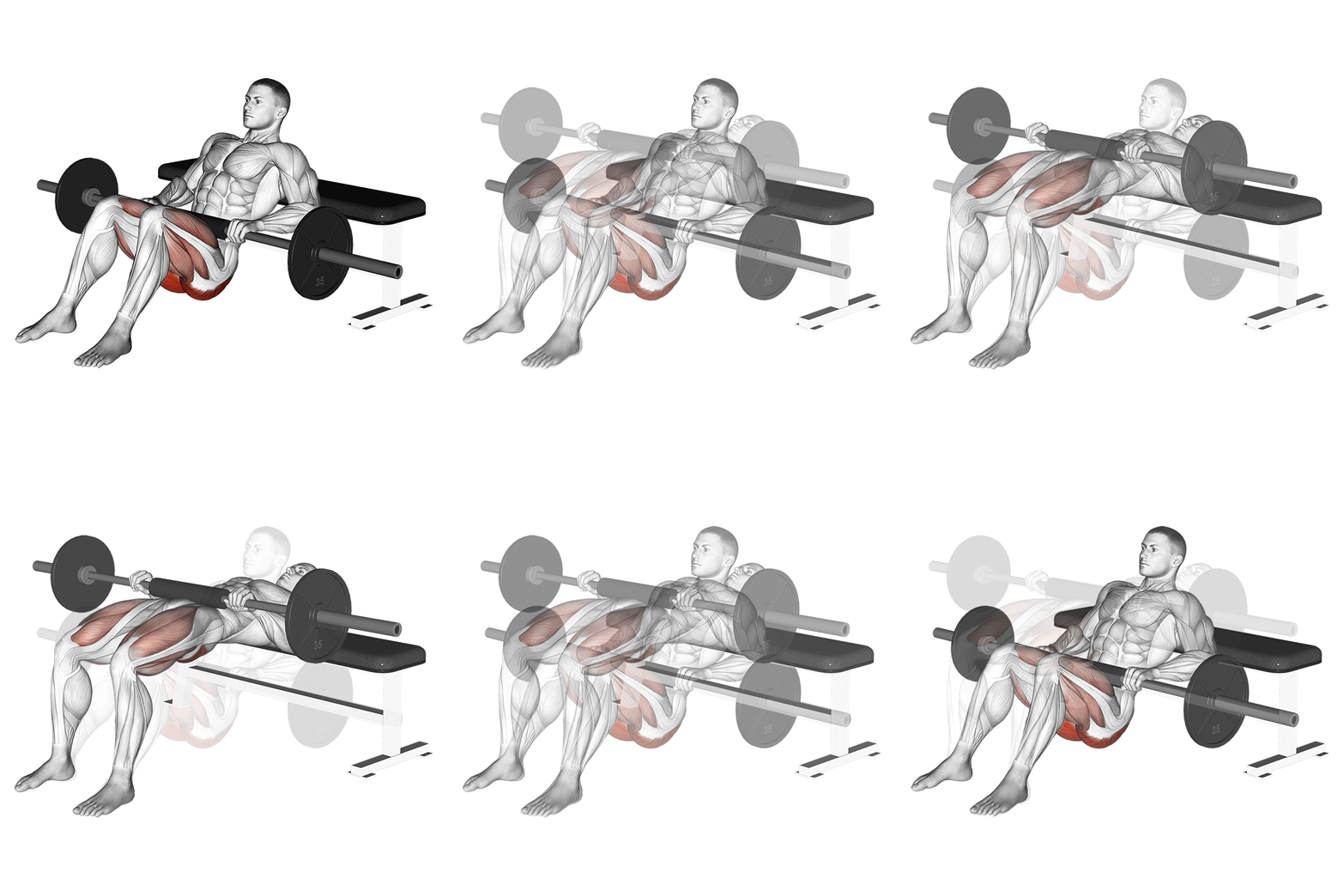
Hip thrust
Shoulders on a bench, barbell across the hips. Same pattern, much greater range and load. The graduation lift.
How to program it
Three protocols by goal. Pick one per cycle and aim for progression on load or distance.
| Goal | Sets × distance | Load | Rest |
|---|---|---|---|
| Activation / warm-up | 2 × 15 | Bodyweight | 30 s |
| Hypertrophy | 3 × 20 | BW + 1-2 s hold | 45-60 s |
| Strength (loaded) | 4 × 8 | 20-40 kg on hips | 90 s |
Glute Bridge FAQ
Glute bridge or hip thrust?
Bridge for activation and beginners, hip thrust for serious loading. The bridge teaches the pattern and primes the glutes pre-session. The hip thrust is where you actually build strength and size. Use the bridge as your warm-up, the hip thrust as your main lift.
Why do I feel it in my lower back?
Almost always one of three things: ribs flaring at the top, anterior pelvic tilt, or weak glutes letting the spinal erectors take over. Tuck the pelvis before each rep, stop at neutral hip extension (don't overshoot), and squeeze the glutes hard. If pain persists, see a physio.
How many reps for visible glute growth?
Bodyweight bridges max out fast. For real growth, you need progressive overload: add a hold, a band, then a plate or dumbbell on the hips. 3-4 sets of 15-20 with added load, twice a week, plus one hip thrust session. Expect visible change in 8-12 weeks.