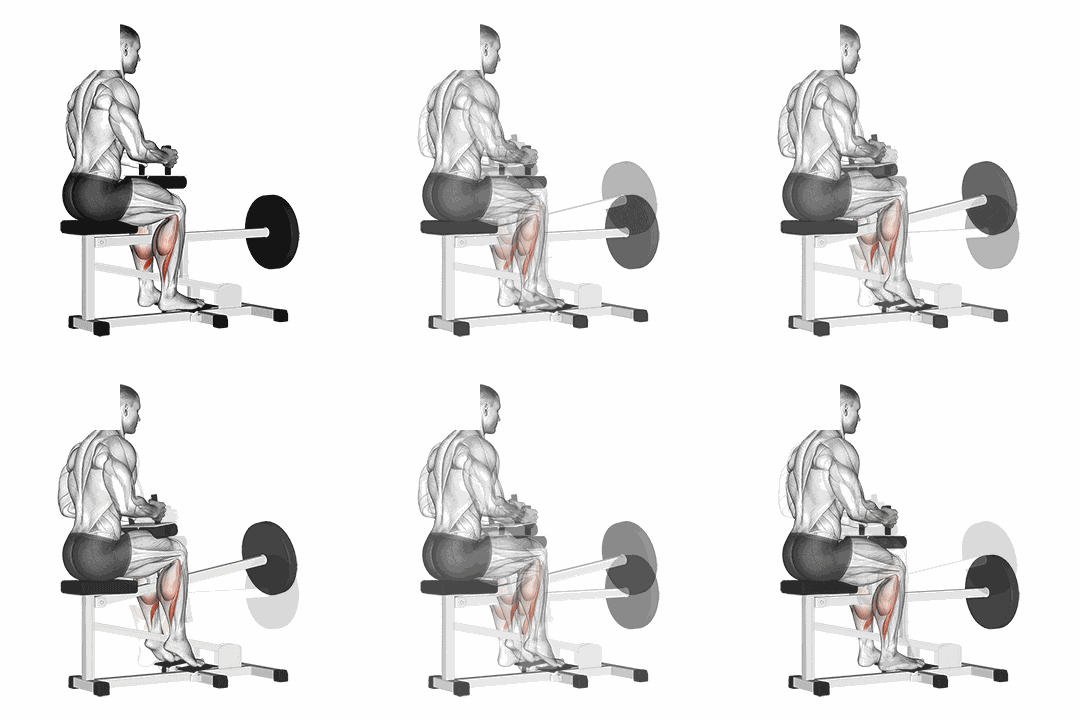
What is the seated calf raise machine?
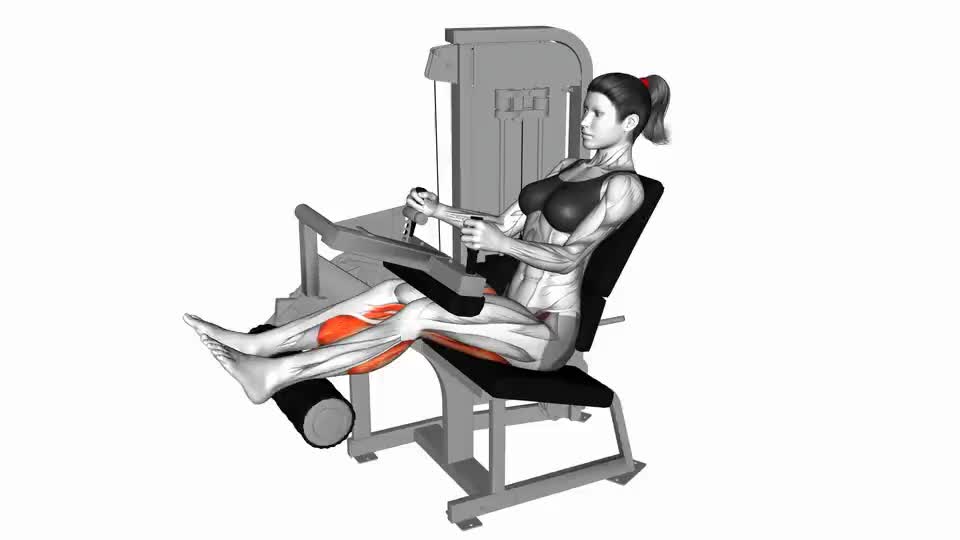
The seated calf raise machine is a soleus-focused isolation exercise. You sit with the balls of your feet on a platform, knees bent at roughly 90° under a padded weight arm, and press up onto the toes through full ankle plantarflexion. The bent-knee position takes the gastrocnemius (which crosses the knee) out of the lift and forces the soleus to do almost all the work. The soleus is the deep, slow-twitch calf muscle that gives the lower leg fullness and supports every step you take, and it responds best to high-rep, high-frequency training.
How to do the seated calf raise machine
- 1
Set the seat
Adjust the seat so your knees sit at 90° with the pad firmly across the lower quads, not the kneecap.
- 2
Place the feet
Balls of the feet on the platform, heels hanging off. Feet hip-width, toes pointing straight forward.
- 3
Lower into the stretch
Drop the heels as far as the machine allows, holding the stretch for a half-second at the bottom of every rep.
- 4
Press onto the toes
Drive up through the balls of the feet to full plantarflexion, hold the contraction for 1-2 seconds. Don't bounce out of the bottom.
Pro tip
Calves grow on time under tension, not heavy lifts. Slow eccentric, full stretch, hard squeeze. Anything else is just wasting plates.
Common mistakes
Bouncing reps.
Using the achilles tendon recoil skips the muscular work. Pause and press, don't bounce.
Half range.
Short stop-start reps waste the machine's whole purpose. Full stretch, full contraction.
Going too heavy.
Heavy load with short range looks impressive but builds nothing. Halve the weight and double the time under tension.
Toes pointed out.
Flared toes shift work to the wrong fibres. Keep toes pointed straight forward.
Variations and progressions
Easier
Bodyweight seated raise
Sit on a bench with a plate or two on your knees. Same pattern, much lighter, perfect for daily soleus work.
Harder
Tempo + drop set
3 s eccentric, 2 s pause stretch, 1 s contraction. Strip 30% and rep to failure twice. Lethal.
No machine?
Seated DB calf raise
Sit on a bench, balls of feet on a plate, hold a dumbbell on each knee. Replicates the machine pattern at home.
How to program it
Three protocols by goal. Pick one per cycle and aim for progression on load or distance.
| Goal | Sets × distance | Load | Rest |
|---|---|---|---|
| Hypertrophy | 4 × 15-20 | Moderate, full ROM | 45-60 s |
| Time under tension | 3 × 12 (3-2-1 tempo) | Light-moderate | 60 s |
| High frequency | 5 × 20 daily | Light | 30 s |
Seated Calf Raise Machine FAQ
Why seated and not standing?
The two hit different muscles. Standing raises with locked legs load the gastrocnemius (the visible 'diamond' calf). Seated raises with bent knees load the soleus underneath. Most lifters do plenty of standing raises and skip seated, then wonder why their calves look flat. You need both.
How often should I train calves?
Three to six times a week. Calves recover faster than almost any muscle because they're worked every step you take. Daily light volume plus two harder sessions per week is a solid template. The classic 'once a week leg day' rarely gets results for the lower leg.
Do calves really respond to high reps only?
Not only, but mostly. The soleus is over 80% slow-twitch fibres, which means it thrives on long sets and time under tension. The gastrocnemius is more mixed and benefits from heavier 8-12 rep work. A good calf program rotates 8-12 standing and 15-25 seated across the week.