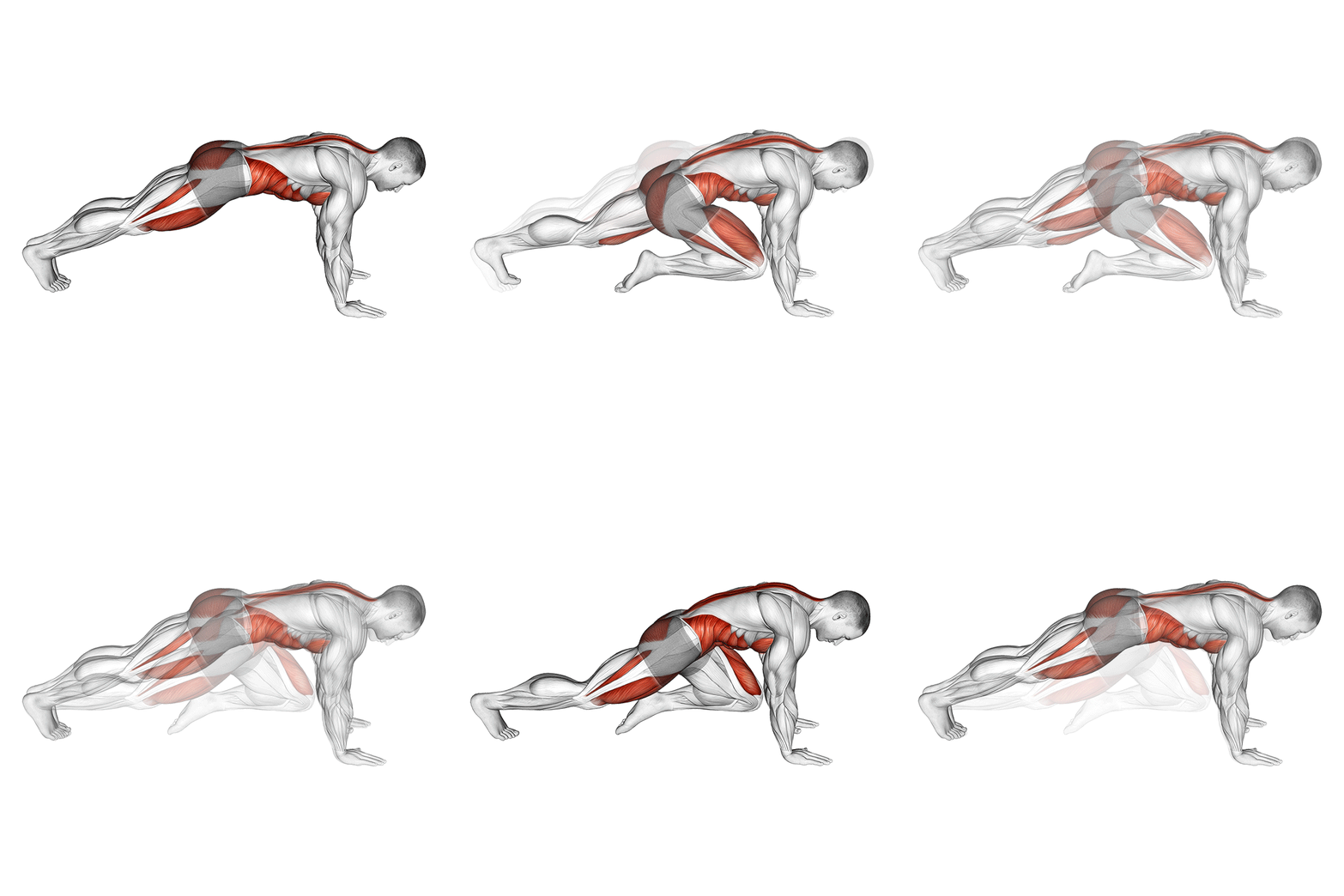
What is the mountain climber?
The mountain climber is a dynamic core drill performed in a high plank: hands under shoulders, you drive one knee toward your chest, then switch legs in a running rhythm while hips and shoulders stay dead still. It trains the abs as anti-movement stabilizers, builds hip-flexor speed that mimics the sprint knee drive, loads the shoulders isometrically and spikes the heart rate within seconds. Because it scales with tempo, from slow and controlled to all-out sprint, it fits everywhere: warm-ups, HIIT circuits, hybrid-race prep and hotel-room sessions. One of the few beginner moves that still earns a place in advanced programs.
How to do the mountain climber
- 1
Build the plank first
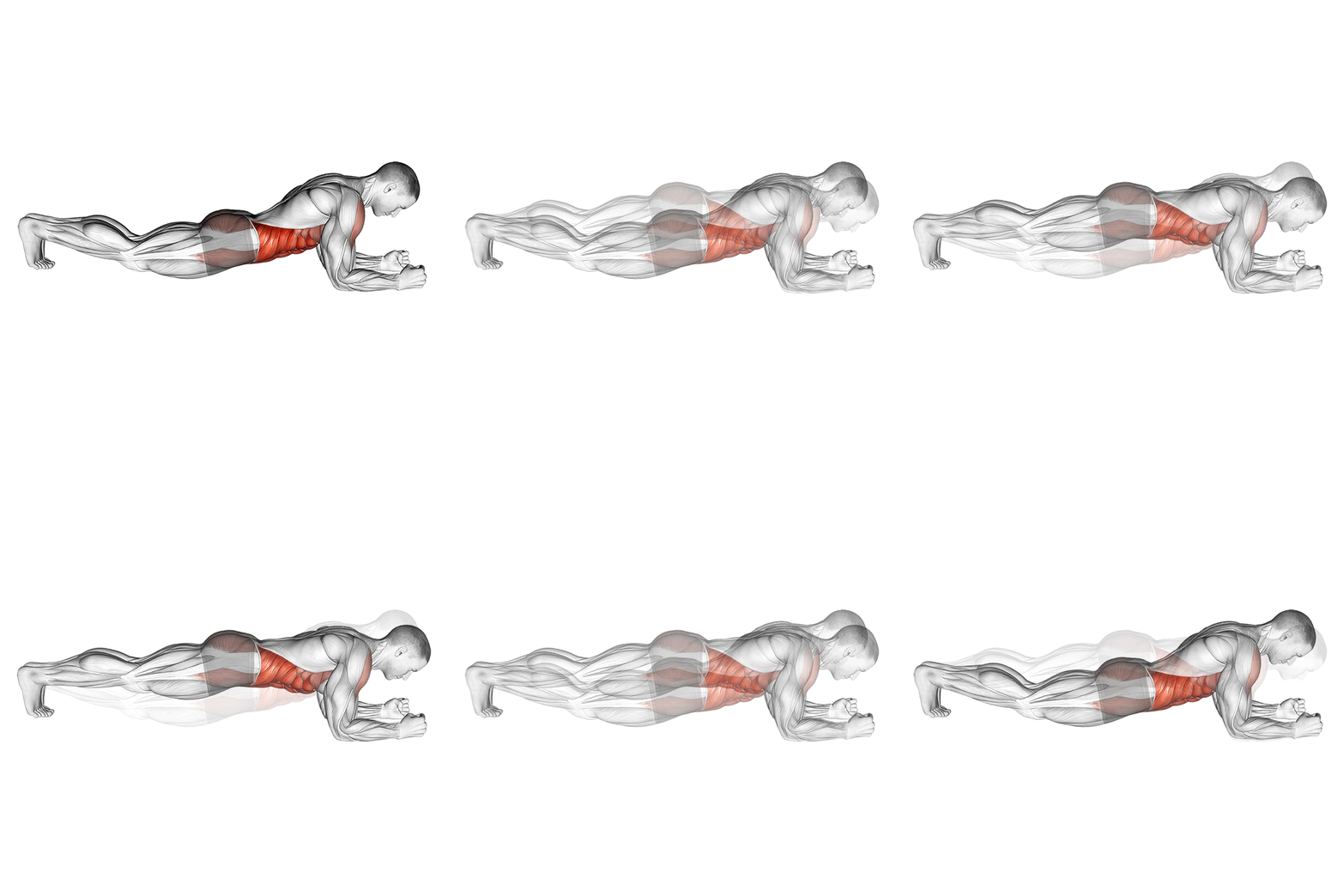
Hands directly under shoulders, fingers spread, legs long. Squeeze the glutes and brace the core: one straight line from head to heels before anything moves.
- 2
Drive one knee in
Pull the knee under your chest without lifting the hips or rounding the back. The trunk is a table; only the leg moves.
- 3
Switch like a runner
Exchange legs in the air with a quick, light rhythm. Shoulders stay stacked over the wrists; push the floor away the whole time.
- 4
Keep the hips quiet
No bouncing, no piking. Pick a pace at which your lower back stays flat and your hips stay level, then hold that rhythm and breathe.
Pro tip
Speed is earned. Master ten slow, silent reps with frozen hips before you ever sprint them: a fast, sloppy mountain climber is just cardio for bad habits.
Common mistakes
Hips piked to the ceiling.
Piking shortens the distance and deletes the core work. Keep the plank line; if you can't, slow down or elevate the hands.
Shoulders drifting backward.
Sitting back behind the wrists unloads the core and strains the shoulders. Stack shoulders over hands and push the floor away.
Half reps at full speed.
Toes tapping a few centimetres forward isn't a rep. The knee reaches under the chest every time, even if the pace drops.
Holding your breath.
Brace and breathe: exhale in rhythm every two or three strides. Breath-holding spikes fatigue long before the legs give out.
Variations and progressions
Easier
Incline mountain climber
Hands on a bench or box. The incline unloads the shoulders and makes the plank line easier to hold; perfect for grooving the rhythm.
Harder
Cross-body mountain climber
Drive the knee toward the opposite elbow. The rotation drags the obliques in and forces an even stiffer plank.
Wrists complaining?
Standing high knees
Same knee drive, same heart-rate spike, zero floor contact for the hands. Swap them in any circuit, rep for rep.
How to program it
Three protocols by goal. Pick one per cycle and aim for progression on load or distance.
| Goal | Sets × distance | Load | Rest |
|---|---|---|---|
| Warm-up | 2 × 30 s | Slow, deliberate pace | 30 s |
| HIIT finisher | 8 × 20 s on / 10 s off | Max pace, form intact | 10 s between rounds |
| Core endurance | 3 × 45-60 s | Steady pace | 60 s |
Mountain Climber FAQ
Do mountain climbers burn belly fat?
Not specifically, because no exercise does. They burn calories at a decent clip and strengthen the abs underneath, but spot reduction is a myth: the fat over your abs responds to your overall calorie balance. Use mountain climbers as conditioning inside a real program, manage your diet, and the midsection follows. Expect the plank strength long before the visible abs.
How fast should I do them?
Exactly as fast as your hips stay level and your back stays flat, and not one stride faster. For most people that's a controlled jogging tempo at first. Speed is a progression, not a starting point: add it in 10 s blocks once slow reps are silent and the knee reaches the chest on every stride.
Are mountain climbers enough for a core workout?
As a complete core program, no: they're anti-extension and hip flexion at speed, nothing else. Pair them with a static hold (plank or side plank), an anti-rotation drill (dead bug or Pallof press) and one loaded flexion movement. As the conditioning piece of that quartet, though, they're hard to beat for the price.