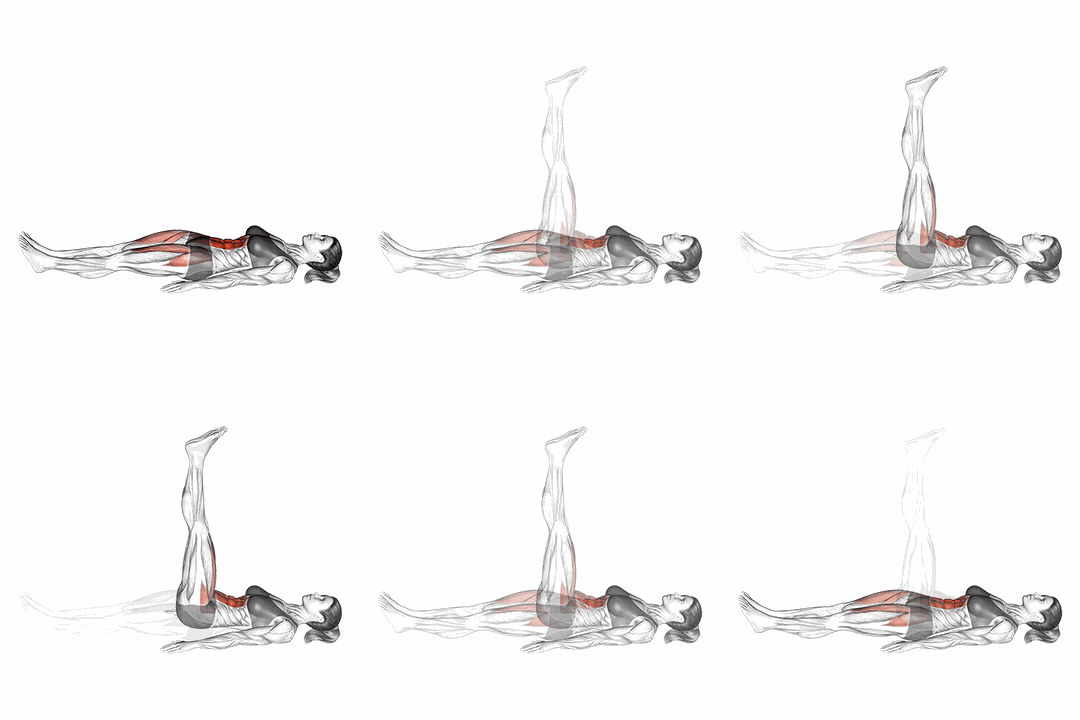
What is the lying leg raise?
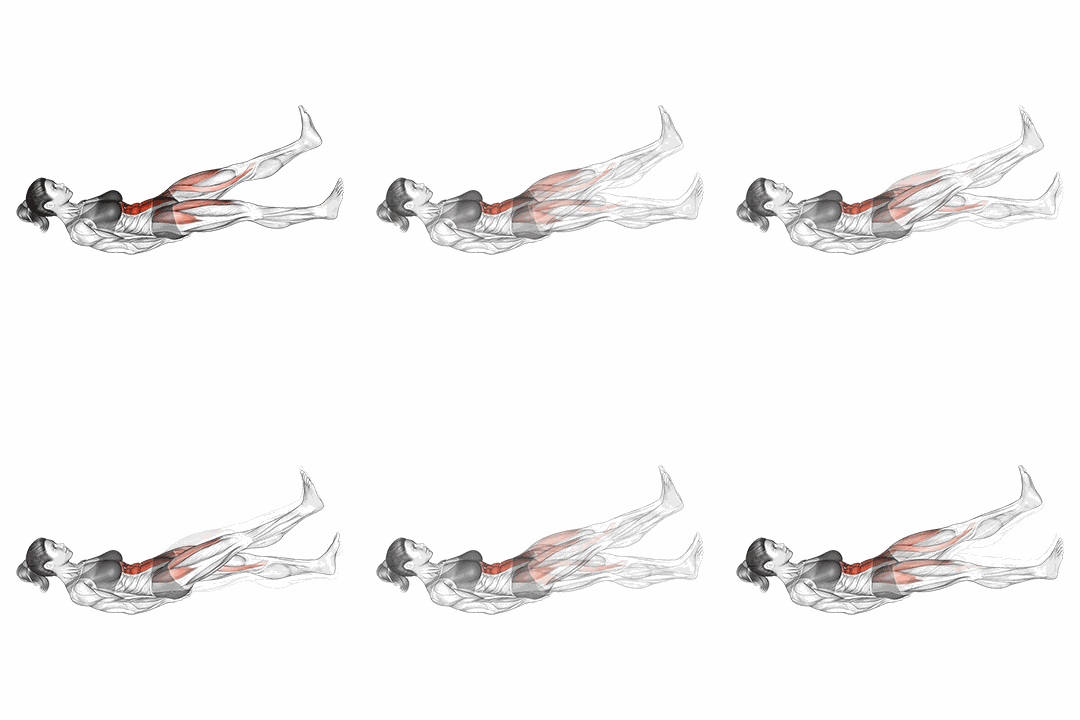
The lying leg raise is a floor core exercise where you raise straight legs from just above the floor up to vertical, then lower them under control. The hip flexors move the legs, while the abs work overtime to hold a posterior pelvic tilt and keep your lower back pressed into the floor, especially during the descent. That anti-extension demand is what makes it valuable: it builds the trunk control that carries over to hanging leg raises, toes-to-bar and heavy barbell lifts. It needs zero equipment, scales instantly by bending the knees, and exposes weak pelvic control within about three reps.
How to do the lying leg raise
- 1
Pin your back to the floor
Lie flat, legs straight, hands by your hips or under your glutes. Press your lower back into the floor and treat keeping it there as rule number one.
- 2
Raise to vertical
Exhale and lift both legs together until they point at the ceiling, knees straight but not forced. Don't throw them up; two seconds up is plenty fast.
- 3
Lower over 2-3 seconds
Lower the legs slowly, resisting gravity the whole way. The instant you feel your lower back start to lift, you've found the bottom of your current range.
- 4
Hover, don't rest
Stop the heels 5-10 cm above the floor, hold a beat, then start the next rep from that dead hover. No touching down, no bouncing.
Pro tip
The rep is won on the way down. Anyone can throw their legs up; lowering them over three slow seconds without your lower back peeling off the floor is the whole exercise.
Common mistakes
The lower-back gap.
As the legs descend, the back arches off the floor and the lumbar spine takes the strain. Shorten the range or slide your hands under your glutes until you own the full descent.
Dropping the legs.
Letting gravity handle the descent throws away the most productive part of the movement. Fight it for 2-3 seconds every rep.
Bouncing off the floor.
Tapping the heels down and bouncing into the next rep is pure momentum. Hover above the floor between reps and keep the tension alive.
Craning the neck to watch your feet.
Lifting the head to track your legs strains the neck and tips the ribcage up. Keep your head down and your eyes on the ceiling.
Variations and progressions
Easier
Bent-knee leg raise
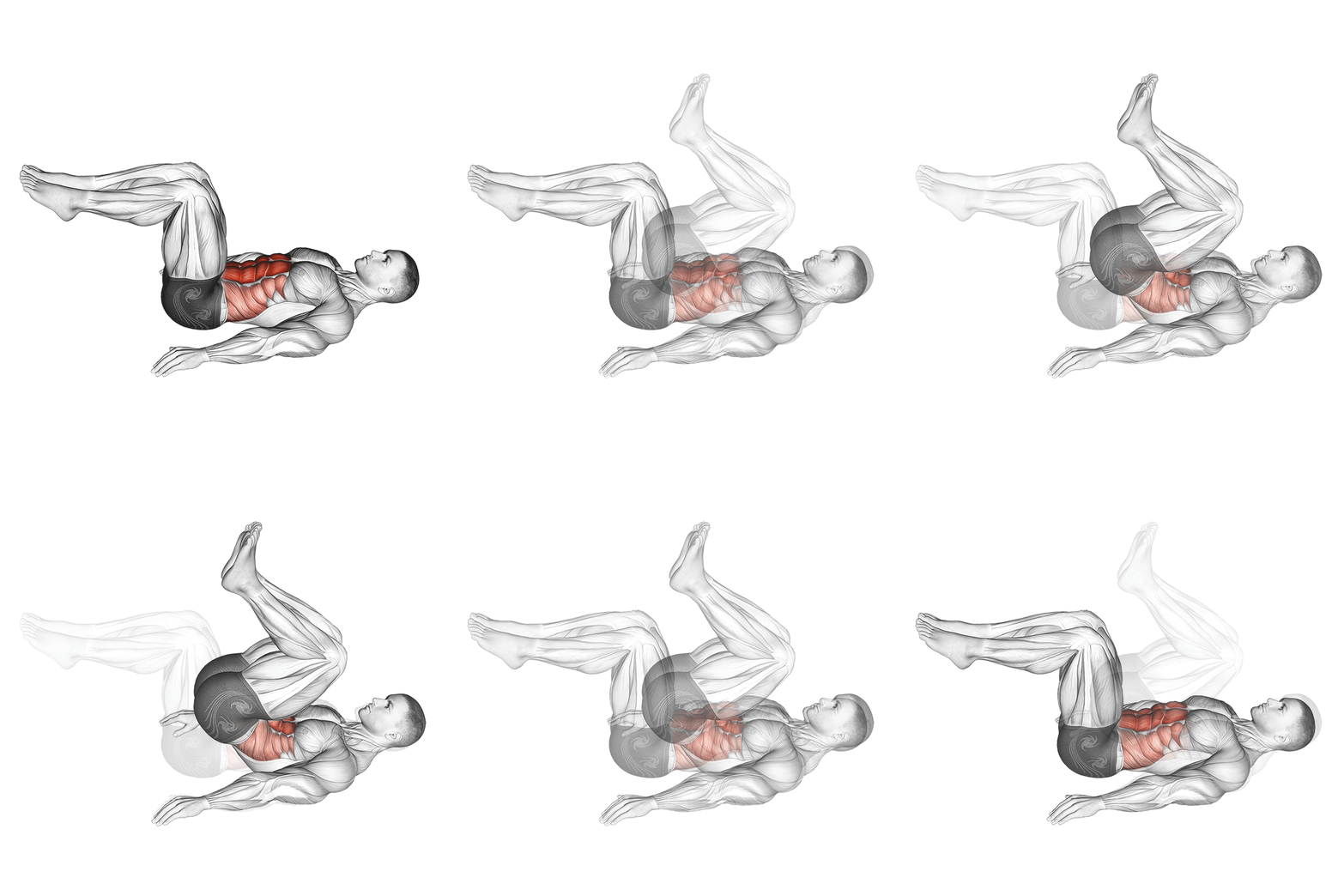
Bend the knees to 90 degrees to shorten the lever dramatically. Same pelvic control, a fraction of the load; straighten the legs gradually as you get stronger.
Harder
Leg raise with hip lift
At the vertical position, drive your toes to the ceiling and lift your hips off the floor, then lower everything in reverse. Adds a loaded pelvic curl to every rep.
Got a pull-up bar?
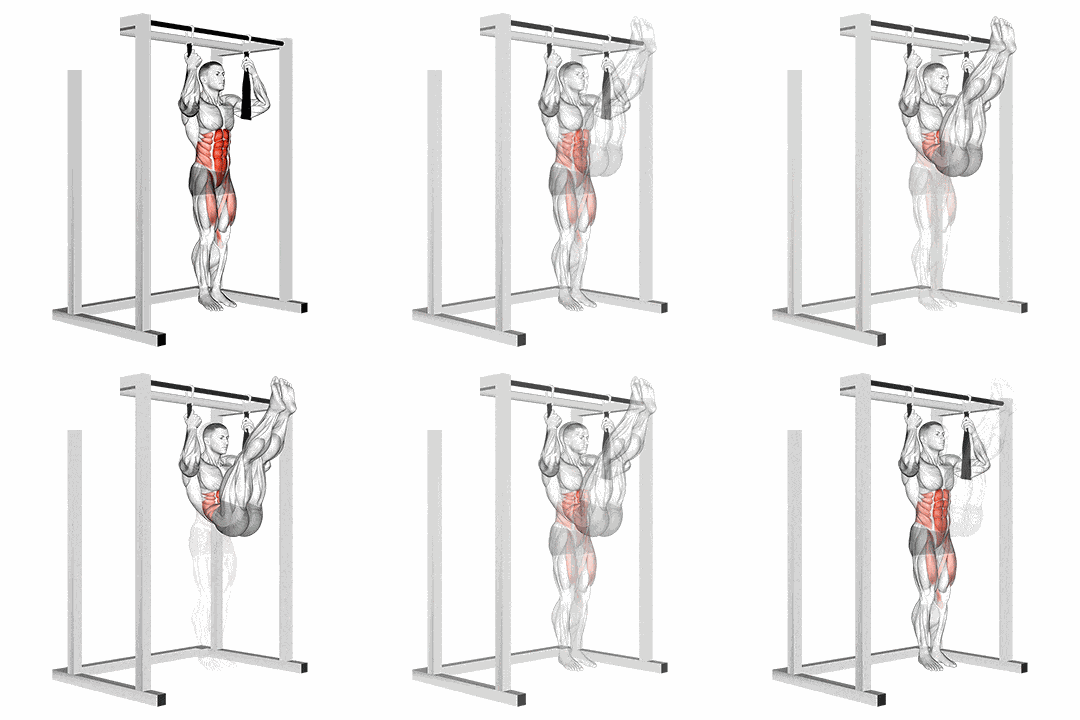
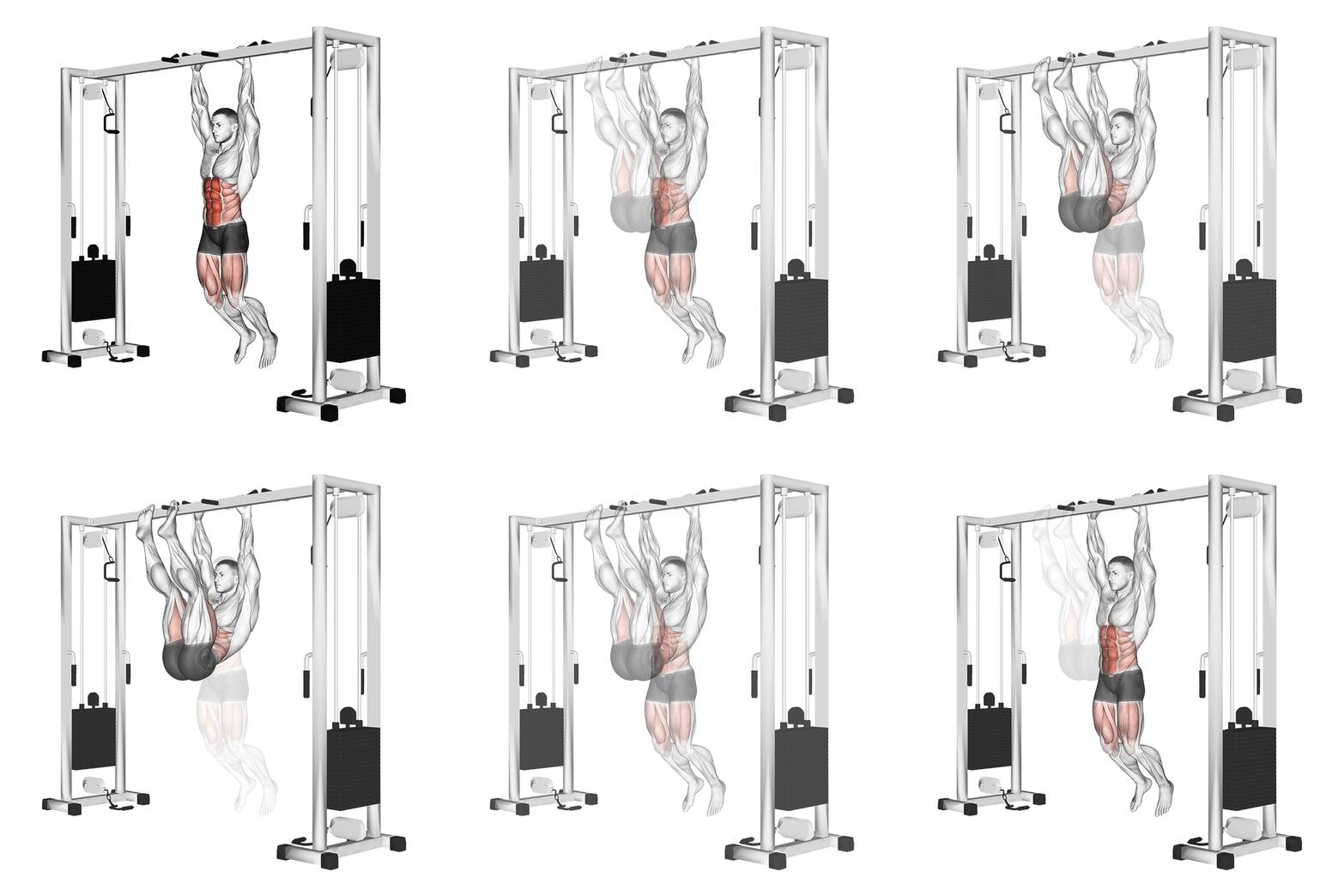
Hanging leg raise
The hanging version adds grip, lat and full-range work, and it's the direct road to toes-to-bar. Earn it by first owning 3 × 12 strict floor reps.
How to program it
Three protocols by goal. Pick one per cycle and aim for progression on load or distance.
| Goal | Sets × distance | Load | Rest |
|---|---|---|---|
| Beginner control | 3 × 8-10 | Bodyweight, knees bent if needed | 60 s |
| Strength | 4 × 10-12 | Strict, 3 s lowering | 90 s |
| Toes-to-bar prep | 3 × 6-8 | With hip lift at the top | 90 s |
Lying Leg Raise FAQ
My lower back arches off the floor. What should I do?
Your abs can't yet control the full lever, so shrink the problem. Hands under your glutes, knees bent, and only lower the legs as far as your back stays pinned, even if that's just 30 degrees. Add a few degrees of range each week and do dead bugs as homework. Forcing full range with an arched back trains nothing but your tolerance for back pain.
Straight legs or bent knees?
Bent knees are the correct starting point, not a lesser version: the shorter lever lets you learn pelvic control with a load you can handle. Straight legs are the goal. A great bridge is raising with straight legs and lowering with bent knees. Move on when you can do 3 × 10 strict reps with a 3-second descent and zero back movement.
Will leg raises burn lower belly fat?
No. Spot reduction is a myth that refuses to die: no ab exercise burns the fat sitting on top of it. Leg raises build the muscle and the pelvic control underneath, which is worth doing anyway. The fat layer responds to a calorie deficit and total training volume, not to which ab exercise you pick.