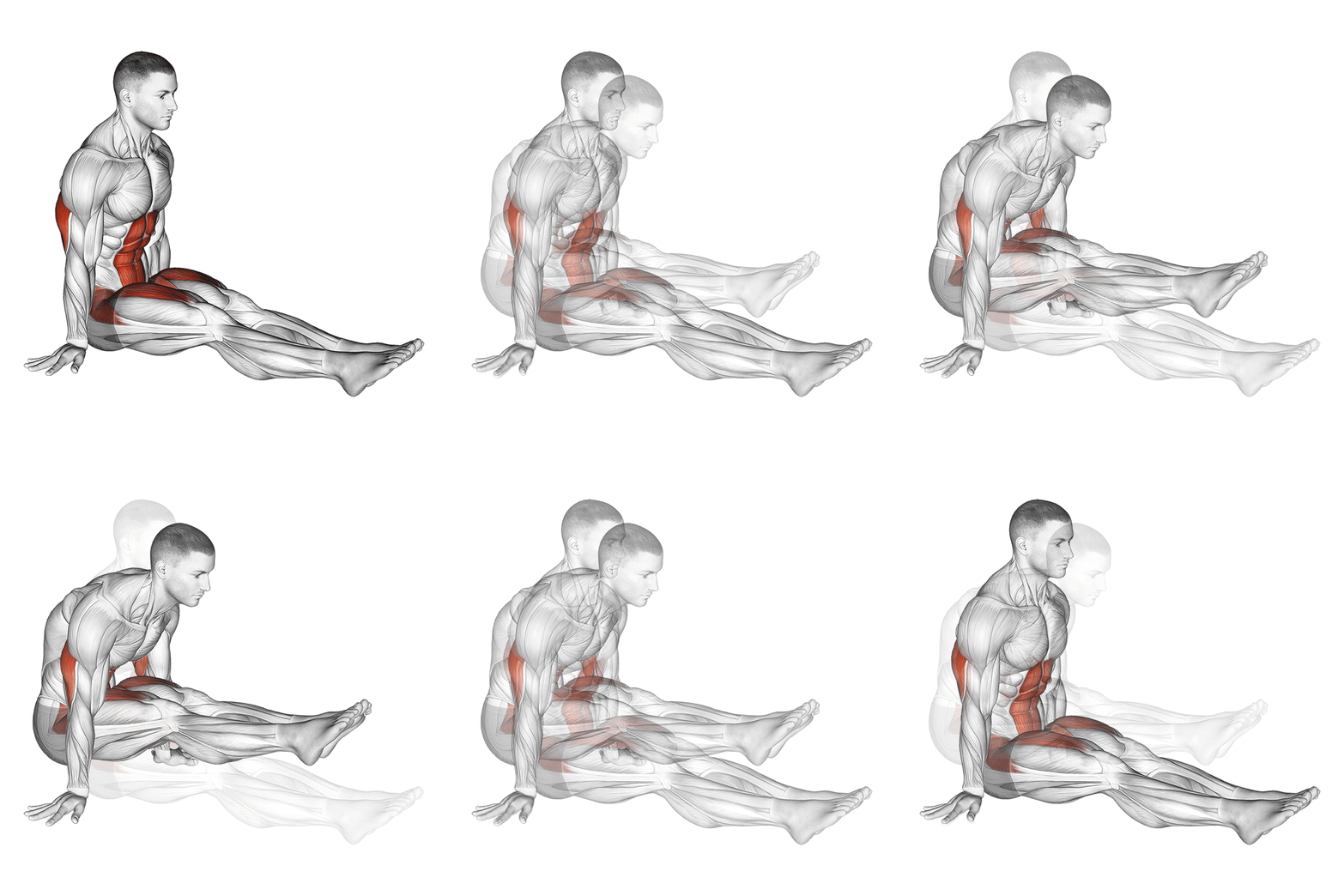
What is the l-sit?
The L-sit is a gymnastic isometric hold where you support your bodyweight on your hands with legs extended straight out, forming an L. It demands brutal compression strength in the hip flexors, deep core engagement, depressed shoulders and locked-out triceps. It's the staircase between basic core work and advanced gymnastics like the manna, the V-sit and the press handstand. Two clean seconds is good; a clean 30-second hold puts you in elite calisthenics territory.
How to do the l-sit
- 1
Set up on parallettes or the floor
Sit between two parallettes (or with hands flat on the floor beside your hips). Grip firmly, arms straight, shoulders pushed down away from the ears.
- 2
Depress and protract
Push the ground away hard. Your hips should lift off the floor before the legs even move. This active scapular position is the foundation of every hold.
- 3
Compress and lift the legs
Brace the core, tuck the pelvis, and lift your legs straight out until they're parallel to the floor. Point the toes, squeeze quads, knees locked.
- 4
Hold and breathe
Maintain shoulders down, ribs tucked, legs locked. Breathe shallow into the upper chest. Lower with control before form breaks, never crash out.
Pro tip
If the legs won't come up, the problem isn't your abs, it's your shoulders. Master a 30-second support hold first (hips off the floor, legs tucked). Compression follows depression.
Common mistakes
Shrugged shoulders.
Shrugging into the ears kills the hold and stresses the neck. Push the ground away, ears clear of the shoulders.
Bent knees.
A tuck sit is the progression, not the goal. If knees bend, you're scaling down, name it honestly.
Hollow back arching.
Anterior pelvic tilt drops the legs and disengages the abs. Tuck the pelvis, ribs down, posterior tilt.
Holding the breath.
Apnea limits hold time and spikes blood pressure. Shallow breaths through the rib cage, core stays tight.
Variations and progressions
Easier
Tuck L-sit
Knees pulled to chest, shins parallel to floor. Same shoulder demand, easier on hip flexors and hamstrings.
Harder
V-sit
Lift the legs above horizontal into a V shape. Adds compression and shoulder protraction, the next true milestone.
No parallettes?
Hanging L-sit
Hang from a pull-up bar and raise legs to 90°. Different shoulder load, same core demand.
How to program it
Three protocols by goal. Pick one per cycle and aim for progression on load or distance.
| Goal | Sets × distance | Load | Rest |
|---|---|---|---|
| Foundation | 5 × 10 s tuck | Bodyweight | 60 s |
| Progression | 5 × 15 s one-leg | Bodyweight | 90 s |
| Mastery | Accumulate 60 s in sets of 10-20 s | Bodyweight | 2-3 min |
L-Sit FAQ
Why can't I lift my legs straight?
Two reasons: tight hamstrings (the legs physically can't extend without rounding the back) and weak hip-flexor compression. Add daily seated pike stretches and weighted hip-flexor raises. Most people unlock a straight-leg L-sit in 8-16 weeks of consistent work.
How long should I be able to hold?
Solid: 10 seconds straight-leg. Strong: 20 seconds. Elite calisthenics: 30+ seconds with feet pointed and toes higher than the hips. Use total time under tension as your progression metric, not your single max hold.
Floor or parallettes?
Parallettes are easier because your legs have more room to clear the floor. Master parallettes first, then work toward the floor version, which demands more shoulder elevation and full leg compression. Most gymnasts test L-sits on parallettes for competition standards.