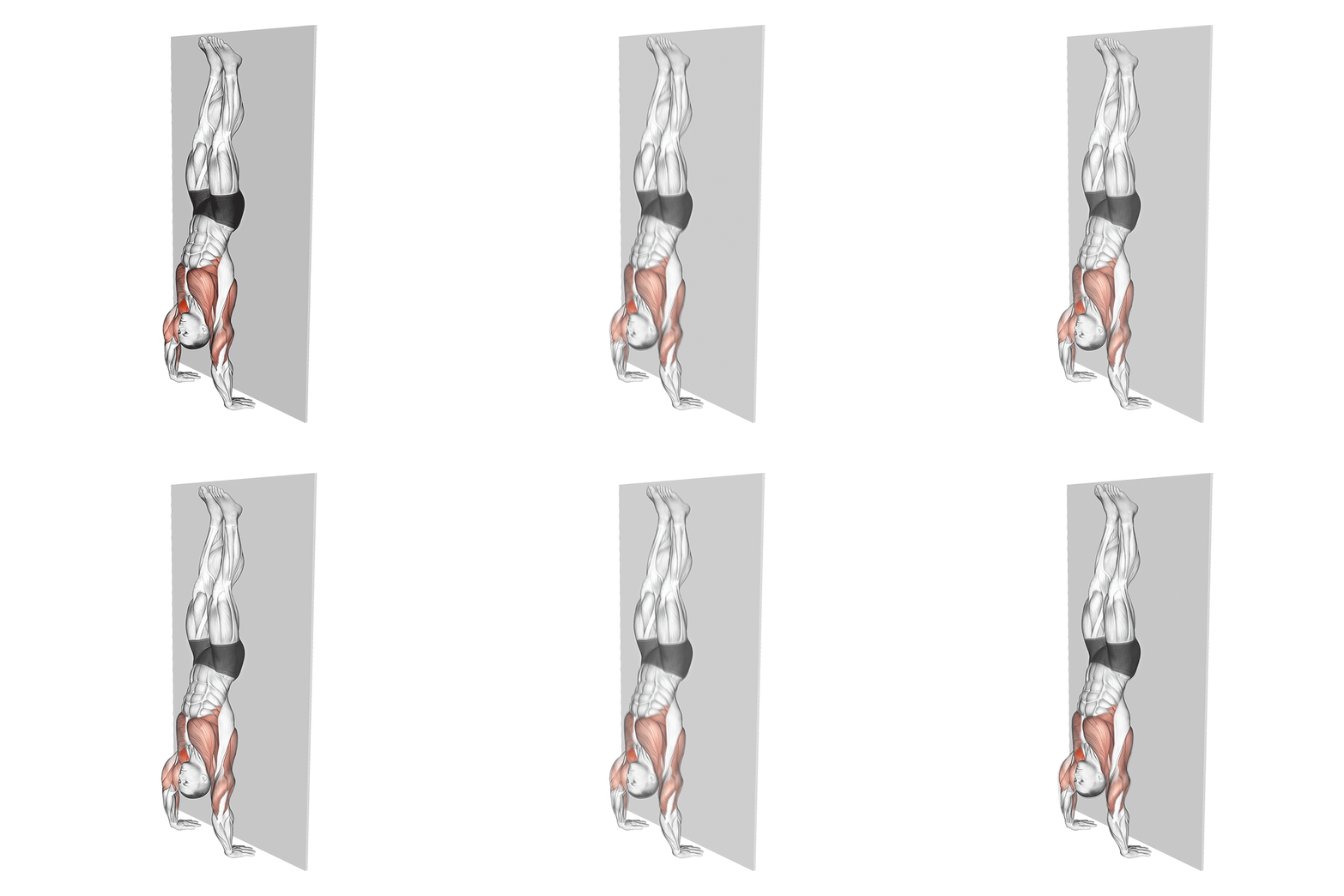
What is the handstand hold?
The handstand hold is a bodyweight inverted isometric where you balance on your hands, body vertical, against a wall or freestanding. The shoulders, triceps and wrists support the full load while the core, glutes and lats stack the body in a straight line. It builds shoulder strength and stability unmatched by any pressing variation, plus the proprioception and confidence that carry into every overhead lift. It's a staple in gymnastics and calisthenics and a brutal carry-over to overhead pressing and handstand push-ups.
How to do the handstand hold
- 1
Set hand position
Hands shoulder-width, fingers spread, fingertips a few centimetres from the wall. Press hard through the fingertips, not just the palms.
- 2
Kick up controlled
One leg drives up, the other follows. Aim for the wall, not past it. Land softly, don't slam your heels.
- 3
Stack the line
Wrists, shoulders, hips and ankles in a vertical stack. Push the floor away, ribs down, glutes squeezed, legs together and pointed.
- 4
Breathe and balance
Small wrist corrections (fingertip press to lean forward, palm press to lean back). Hold for time, exit by stepping or pivoting down, don't crash.
Pro tip
If your wrists scream after 20 s, your line is broken and you're using grip to stay up instead of stack. Fix the line, the grip will follow.
Common mistakes
Arched lower back.
An arched 'banana' handstand puts all the load on the lumbar. Ribs down, glutes on, posterior pelvic tilt.
Shrugged shoulders.
Letting the shoulders collapse near the ears crushes the joint. Actively push the floor away.
Crashing down.
Bailing flat onto the back risks injury. Practice cartwheel exits or controlled step-down before holding longer.
Looking up.
Craning the neck arches the spine. Eyes on the floor between the hands.
Variations and progressions
Easier
Pike hold or wall walk
Build shoulder load with feet on a box (pike) or by walking up a wall. Same demand, less inversion fear.
Harder
Freestanding handstand
Hold away from any wall. Massive jump in balance, coordination and shoulder endurance.
Bad wrists?
Parallette handstand
Use parallettes to keep wrists neutral. Same demand on shoulders, no wrist extension.
How to program it
Three protocols by goal. Pick one per cycle and aim for progression on load or distance.
| Goal | Sets × distance | Load | Rest |
|---|---|---|---|
| Wrist prep | 5 × 10 s wall hold | Bodyweight | 30-45 s |
| Strength-endurance | 5 × 30-45 s | Bodyweight wall | 60-90 s |
| Freestand work | 6 × 20-40 s | Freestanding | 90 s |
Handstand Hold FAQ
How long should it take to hold a handstand?
Three to six months of consistent practice gets most adults to a clean 30-second wall hold. Freestanding takes 12-24 months for most. The variable isn't talent, it's daily frequency. Five minutes a day beats one long session per week every time.
Is the handstand bad for my shoulders?
Only if you train it with a broken line and force range you don't have. Healthy shoulders that can press overhead with full flexion handle handstands fine. If you lack overhead mobility, build it first with thoracic extension drills and overhead pressing before kicking up.
Will it help my overhead press?
Yes, both directions. Handstands teach the locked-out overhead position your barbell press needs, and overhead pressing builds the raw strength that makes handstands feel light. The two reinforce each other, which is why old-school strongmen trained both.