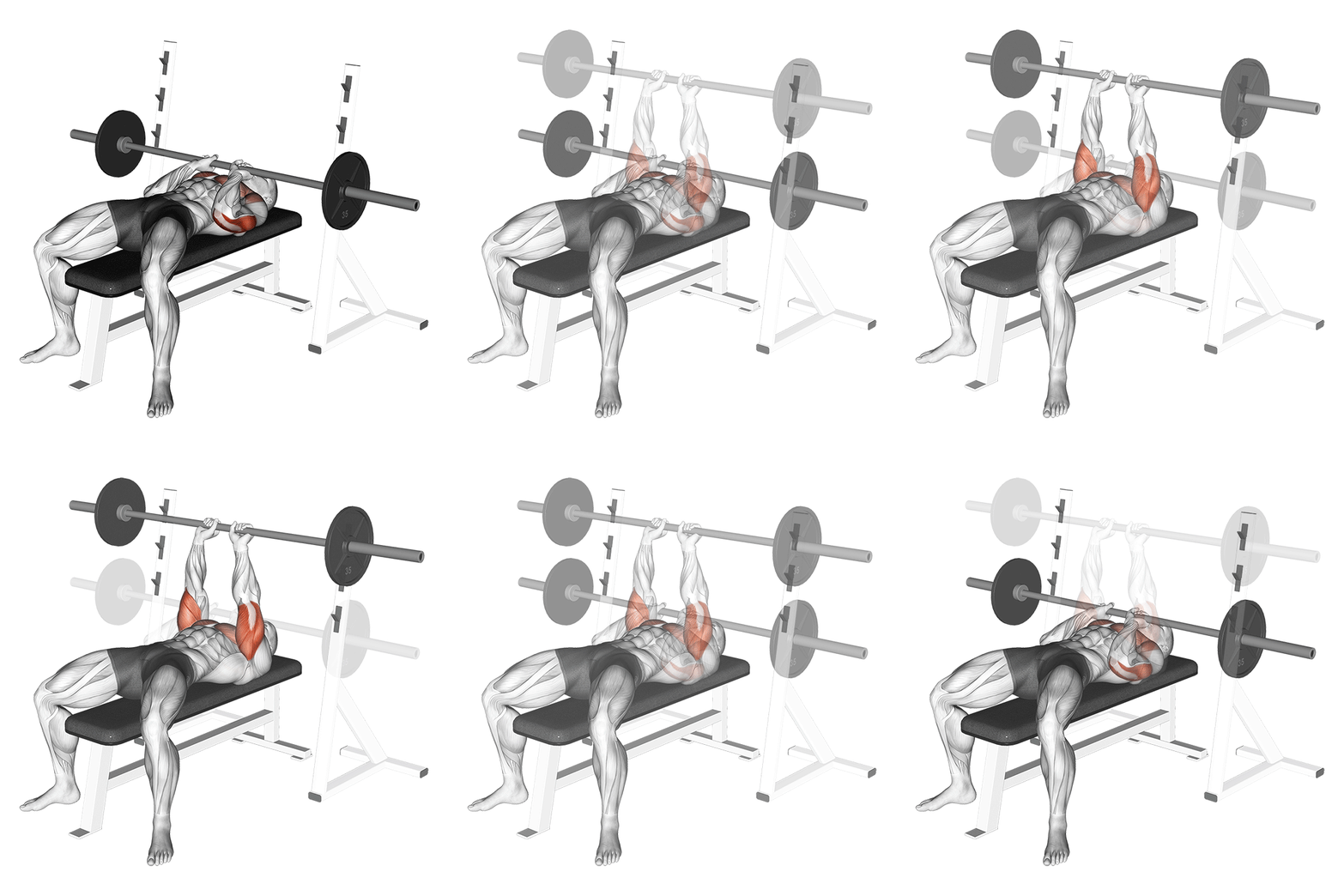
What is the jm press?
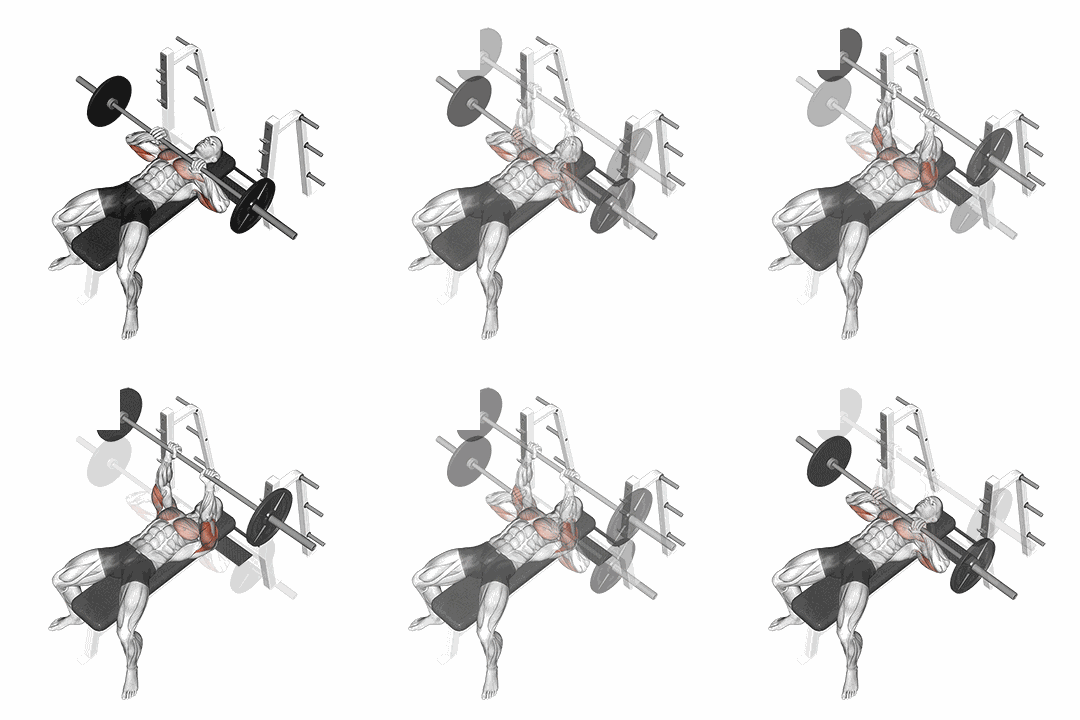
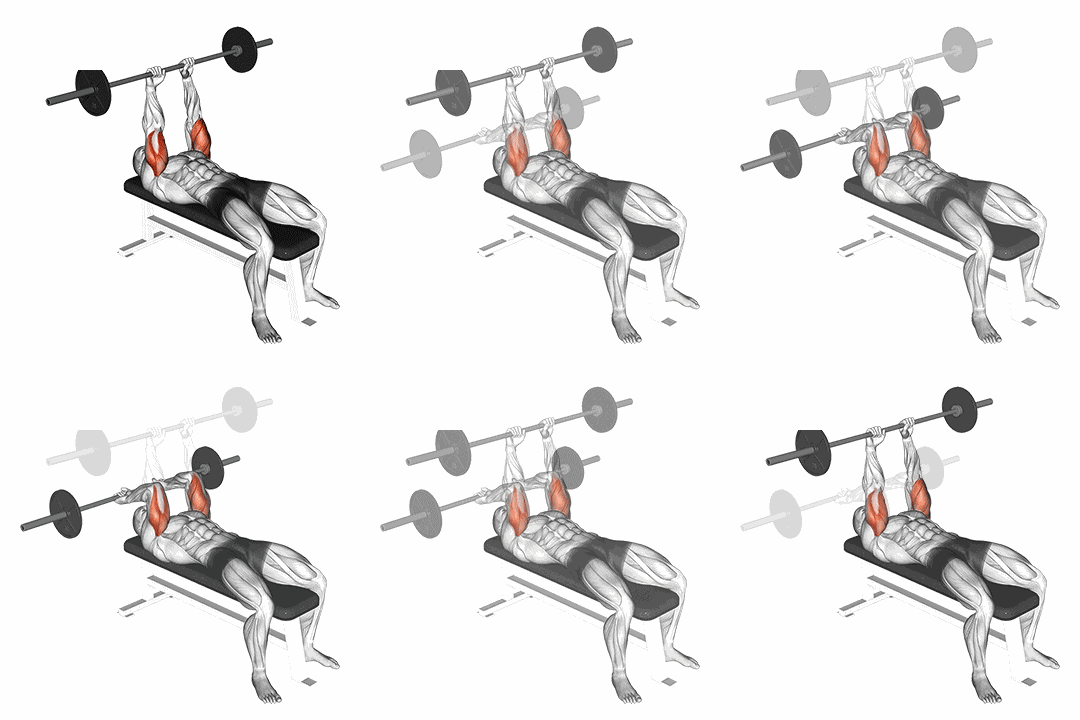
The JM press is a hybrid of the close-grip bench press and the lying triceps extension, named after powerlifter JM Blakley, who built his bench lockout on it. Lying on a flat bench with a shoulder-width grip, you lower the bar toward your chin while keeping the elbows high, let the forearms fold onto the biceps, then press back to lockout. That elbow angle keeps the pecs mostly out of the lift, so the triceps carry heavier loads than any extension allows. It's an advanced accessory: the groove is personal and must be learned light.
How to do the jm press
- 1
Set up like a bench, grip at shoulders
Flat bench, shoulder blades pinched, feet planted. Grip the bar at shoulder width, no narrower, and start locked out over your upper chest.
- 2
Lower toward your chin, elbows high
Break at the elbows only and let the bar drift down and slightly back toward your chin. Keep the upper arms at about 45° from your torso and the elbows high instead of tucking them to your ribs.
- 3
Fold forearms onto biceps
Stop when your forearms touch your biceps, the bar hovering a few centimetres above your chin and throat. Pause for a beat, stay tight.
- 4
Press back to the start
Extend the elbows hard and push the bar up and slightly forward to lockout over your upper chest. The triceps do all of it; if your chest takes over, the bar drifted too low.
Pro tip
Spend your first two weeks with the empty bar hunting for your groove. The JM press lives in a narrow corridor between a close-grip bench and a skull crusher, that corridor is different for every pair of elbows, and loading before you find it is how this lift got its bad reputation.
Common mistakes
Letting it become a close-grip bench.
If the bar touches your chest, you've changed exercises. The bar stops above your chin, forearms on biceps, nowhere lower.
Maxing out on it.
Heavy singles on a JM press buy you elbow pain, not a bigger bench. Stay in the 6-12 rep range and keep reps in reserve.
Bouncing off the biceps.
The forearm-to-biceps contact is a checkpoint, not a springboard. Touch, own the position, press.
Losing the elbow angle.
Tuck them fully and it's a close-grip bench; flare them wide and it's a bad skull crusher. Around 45° with elbows high is the slot that makes the lift work.
Variations and progressions
Easier
Smith machine JM press
The fixed bar path removes the balance problem while you learn where your groove lives. Many strong benchers keep it even after graduating to the barbell.
Harder
Paused JM press
Hold the bottom for 2 s with the forearms glued to the biceps. The dead-start extension is savage on the triceps at loads that stay kind to the elbows.
No barbell?
Rolling dumbbell triceps extension
Let the dumbbells roll back beside your head, then drive them up like a press. Same stretch-and-press hybrid feel with a friendlier neutral grip.
How to program it
Three protocols by goal. Pick one per cycle and aim for progression on load or distance.
| Goal | Sets × distance | Load | Rest |
|---|---|---|---|
| Bench lockout | 4 × 6-8 | 50-60% bench 1RM | 2-3 min |
| Triceps hypertrophy | 3 × 10-12 | 40-50% bench 1RM | 90 s |
| Learning the groove | 3 × 8-10 | Empty bar to 30 kg | 90 s |
JM Press FAQ
JM press or close-grip bench: which builds a bigger bench?
Both, at different jobs. The close-grip bench is a press you can load heavy and long-term; the JM press is a scalpel for the triceps at the exact angle where benches get stuck. Most benchers get further running close-grip as their heavy secondary press and the JM press as a 6-12 rep accessory behind it. If your lockout is the weak link, the JM press earns its slot first.
Is the JM press bad for the elbows?
It's unforgiving, not dangerous. The combination of load and deep elbow flexion stresses the triceps tendon, which is exactly why it works and exactly why ego lifting on it backfires. Learn the groove with an empty bar, progress in small jumps, stay at 6 reps or above, and end a set the moment the movement grinds. Lifters who respect those rules run it for years.
How much weight should I use on the JM press?
Start embarrassingly light: around 30-40% of your bench max for 3 sets of 10 is plenty for the first month. Expect working weights to settle near half your bench max once the groove is in. Anyone JM pressing close to their close-grip numbers is benching it, not JM pressing it.