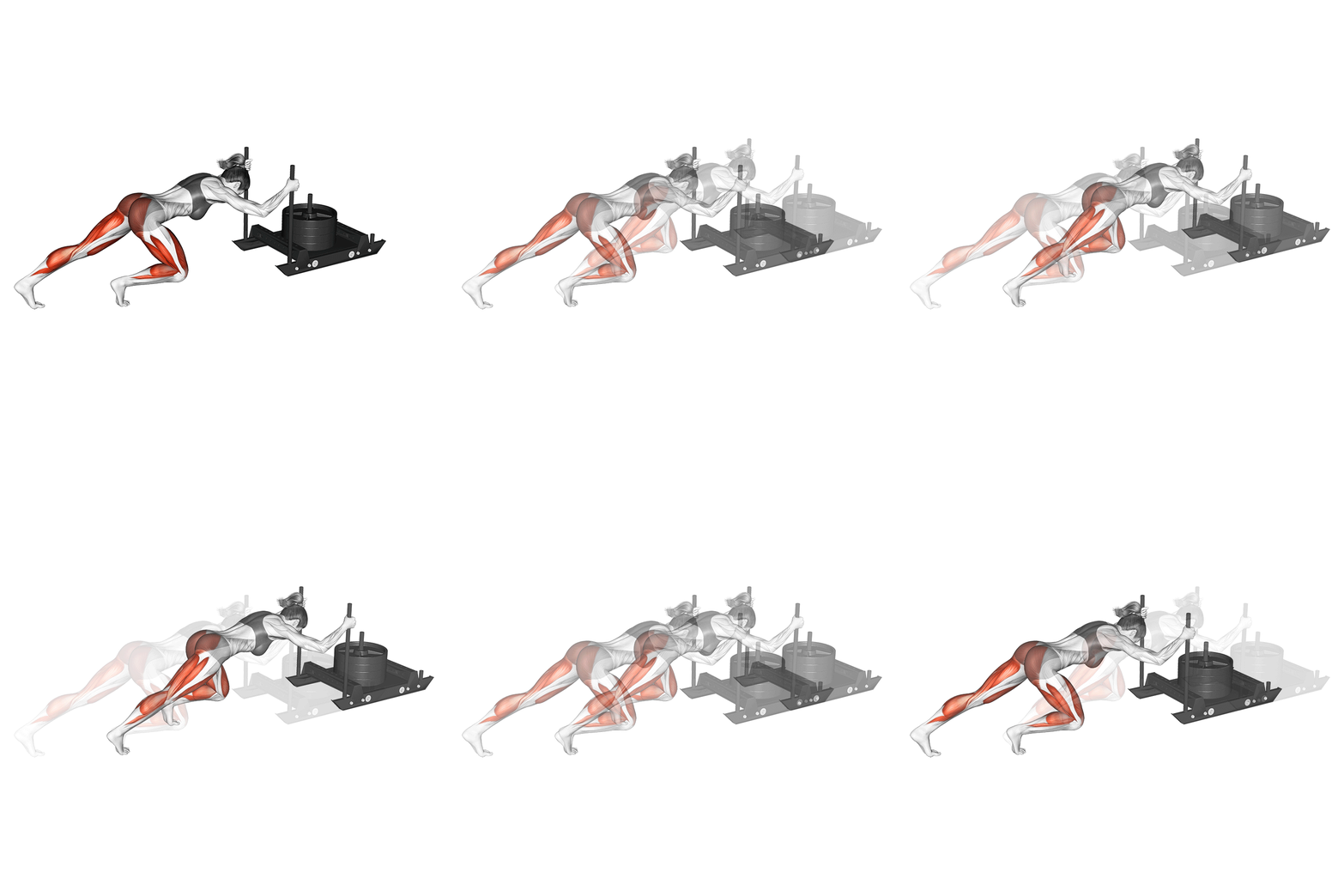
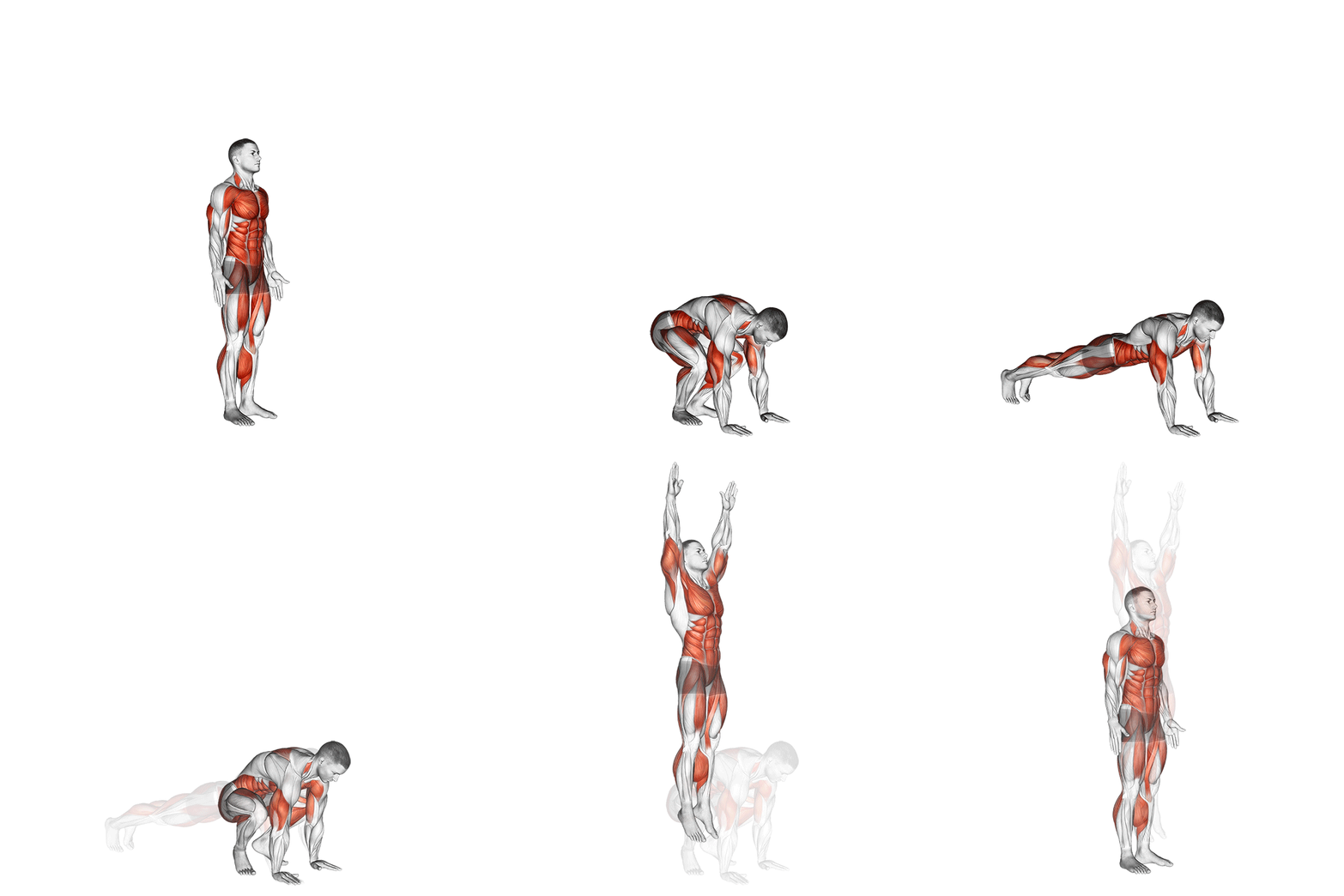
What is the hill sprints?
Hill sprints are 20-40 second maximal efforts up a steep incline (6-10%) with full recovery between reps. The hill enforces good mechanics: forced knee drive, strong arm swing, no overstriding. They build single-leg power, tendon stiffness and stride force without the eccentric pounding of flat sprints. Six to twelve reps is the working range, with 2-3 minutes of walk-down recovery. Used once a week, they raise top-end speed and running economy more efficiently than almost any other tool, with a fraction of the injury risk of flat speed work.
How to do the hill sprints
- 1
Pick the right hill
Look for 6-10% gradient, smooth surface, at least 100 m long. Too steep and form collapses; too flat and you can't reach high power.
- 2
Warm up thoroughly
15 minutes of jogging, dynamic mobility, then 3-4 build-ups on the flat. Tendons must be primed before maximal hill efforts.
- 3
Drive knees and arms
Lean slightly forward from the ankles, punch the knees up and the arms back hard. The hill rewards aggression, not stride length.
- 4
Walk down, then full recovery
Walk slowly back to the start, breathe, wait until your heart rate drops below 110-120. Hill sprints are power work, not lactate work.
Pro tip
If the last rep is slower than the third by more than 10%, you've done enough. Quality drops off a cliff once power leaks, and you stop training power and start training survival.
Common mistakes
Short recovery.
Two minutes is the floor. Cutting rest turns hill sprints into Z4 conditioning and kills the neuromuscular gain.
Picking too steep a hill.
On 15%+ slopes you grind instead of sprint. Aim for what lets you run, not climb.
Doing them too often.
Once weekly is the dose. Twice a week without serious base accumulates tendon stress fast.
Skipping the warm-up.
Cold tendons + maximal hill effort = Achilles or calf strain. Always 15+ minutes of progressive priming.
Variations and progressions
Easier
Short hill repeats
10 × 10 seconds at 90% on a moderate hill with 90 seconds walk. Lower stress entry point for tendons and the nervous system.
Harder
Long hill power
6 × 60 seconds hard uphill with 3 minutes walk down. Crossover into anaerobic capacity while staying hill-protected.
No hill?
Treadmill or SkiErg sprints
Treadmill at 8-10% incline, or 8 × 20-second all-out SkiErg pieces with 2 minutes rest. Same intent: short, maximal, fully recovered.
How to program it
Three protocols by goal. Pick one per cycle and aim for progression on load or distance.
| Goal | Sets × distance | Load | Rest |
|---|---|---|---|
| Power & economy build | 6-8 × 30 s uphill | 95% effort | 2-3 min walk |
| Race-specific peak | 10-12 × 30 s | Max controlled | Full (HR < 120) |
| Power-endurance crossover | 5 × 60 s | Hard but smooth | 3 min walk |
Hill Sprints FAQ
Hill sprints or flat sprints for runners?
For most distance runners, hill sprints win. They train the same fast-twitch fibres and rate of force development as flat sprints, but the hill caps top speed and reduces eccentric loading. That means a tiny fraction of the hamstring and calf strain rate. Reserve flat sprint work for trained sprinters or athletes with a long lead-in.
When in the season should I add hill sprints?
Add them early, even in the base phase, at low volume: 4-6 reps once a week. Tendons take 6-8 weeks to adapt, so introducing them late in a build cycle is high risk for low return. Many coaches keep one hill sprint session running year-round as a maintenance dose.
Do hill sprints help Hyrox?
Yes, directly. The sled push, lunges and burpee broad jumps all demand single-leg power and tendon stiffness. Hill sprints transfer almost one-to-one, and they raise the running economy that lets you finish each 1K leg with less aerobic cost. One session of 8 × 30 seconds slots in perfectly on the lighter strength day.