What is the barbell overhead press?
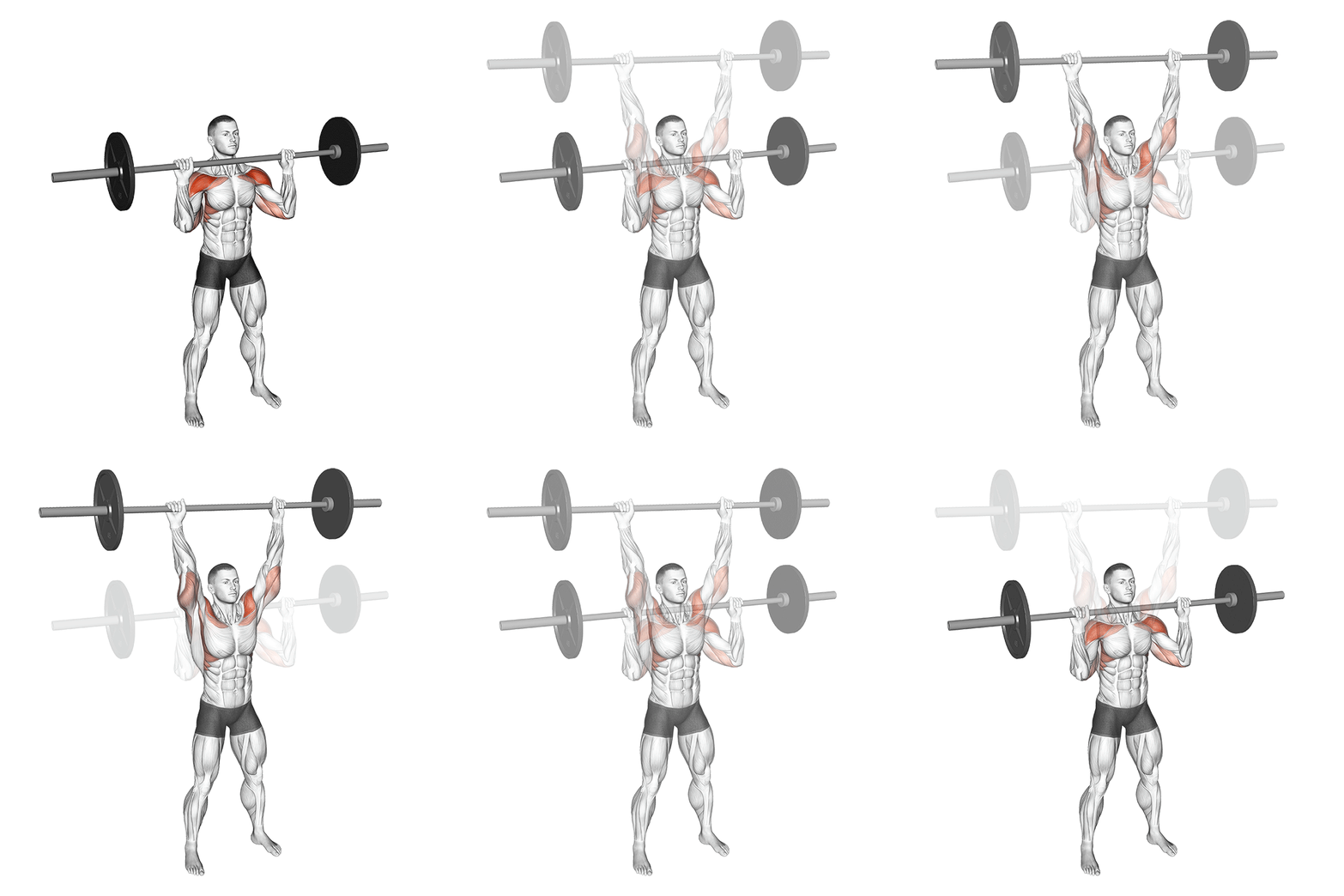
The barbell overhead press is a standing strict press: bar at shoulder level, you drive it overhead to lockout while staying tall, then lower under control. Unlike its push-press cousin, no leg drive is allowed. It builds shoulder strength, triceps power, mid-back stability and a rock-solid trunk, since the whole body has to brace under load. Before bench presses existed, this was the lift that defined a strong man. See the canonical "overhead-press" guide for the full breakdown.
How to do the barbell overhead press
- 1
Rack the bar
Stand with feet hip-width, bar across the front delts and clavicles. Grip slightly outside shoulder width.
- 2
Brace the whole body
Big breath, glutes squeezed, abs braced, ribs down. Wrists stacked over elbows, elbows just in front of the bar.
- 3
Press past the face
Drive the bar straight up. As it clears your forehead, tuck the head slightly forward so the bar finishes over the crown.
- 4
Lockout overhead, then lower
Finish with elbows locked, biceps near the ears, traps shrugged up. Lower the bar slowly back to the front rack.
Pro tip
Squeeze your glutes as hard as you'd squeeze them in a heavy plank. A loose pelvis is the silent reason most overhead presses turn into incline benches.
Common mistakes
Leaning back excessively.
A big arch turns the press into an incline bench and crushes the lumbar spine. Stay vertical, squeeze the glutes.
Pressing in front of the face.
Finishing with the bar in front of you puts the shoulder in a weak position. Tuck the head and finish overhead.
Soft midsection.
Without a braced core the load dumps into the lower back. Big breath, tight ribs, every rep.
Using leg drive.
Any knee dip turns it into a push press. Keep legs locked for a true strict press.
Variations and progressions
Easier
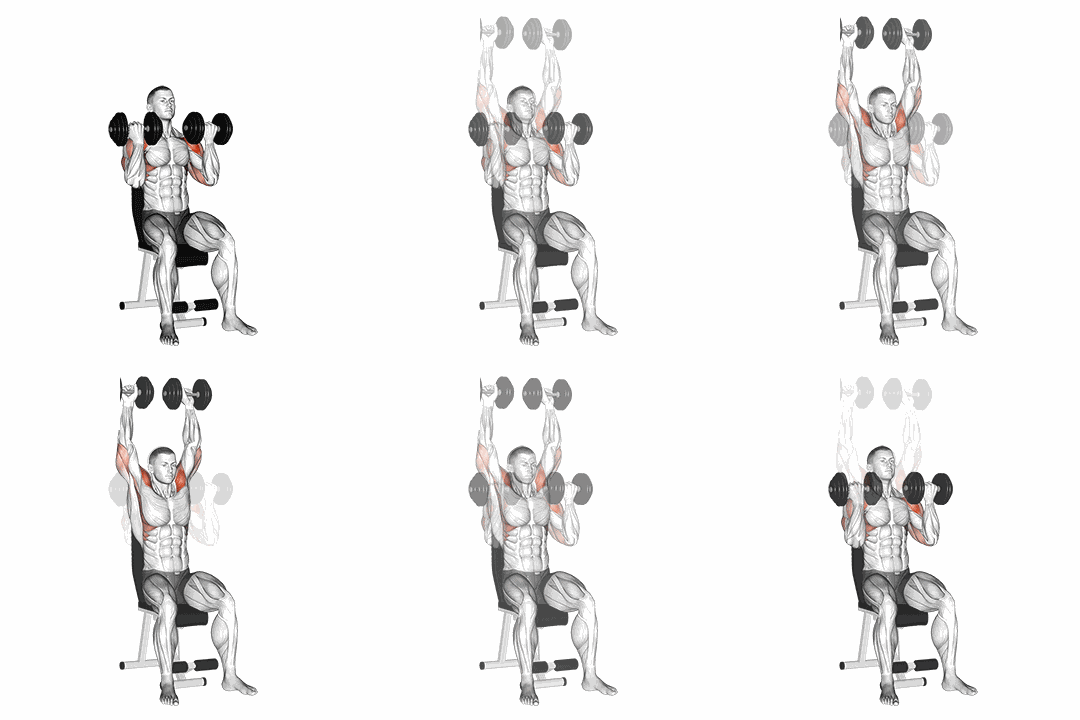
Seated dumbbell press
Sitting removes the core demand and dumbbells let each shoulder move independently.
Harder
Push press
Add a controlled dip and drive from the legs. Lets you load 15-25 percent heavier than a strict press.
No bar?
Landmine press
Pressing one end of a barbell in a landmine attachment is friendlier on the shoulder for limited mobility.
How to program it
Three protocols by goal. Pick one per cycle and aim for progression on load or distance.
| Goal | Sets × distance | Load | Rest |
|---|---|---|---|
| Strength | 5 × 5 | 80-85% 1RM | 2-3 min |
| Hypertrophy | 4 × 8 | 70-75% 1RM | 90 s |
| Peaking | 5 × 2 | 90% 1RM | 3-4 min |
Barbell Overhead Press FAQ
Is the overhead press bad for my shoulders?
Not for healthy shoulders with good mobility. Problems come from poor thoracic extension, weak rotator cuffs, or pressing in front of the face. Build shoulder mobility, finish overhead with the bar above the crown, and the press becomes one of the best shoulder builders available.
How much should I press relative to my bench?
A strong intermediate lifter usually overhead-presses around 60-70 percent of their bench press for a 1RM. If your ratio is below 50 percent, your shoulders are likely lagging and worth direct work. If it's above 75 percent, your bench is the weaker link.
Strict press or push press for size?
Strict press for pure shoulder hypertrophy, the slow controlled tension is what stimulates growth. Push press for top-end strength because you can overload the lockout. Most programs benefit from rotating both: heavy strict press one day, push press for higher loads another.