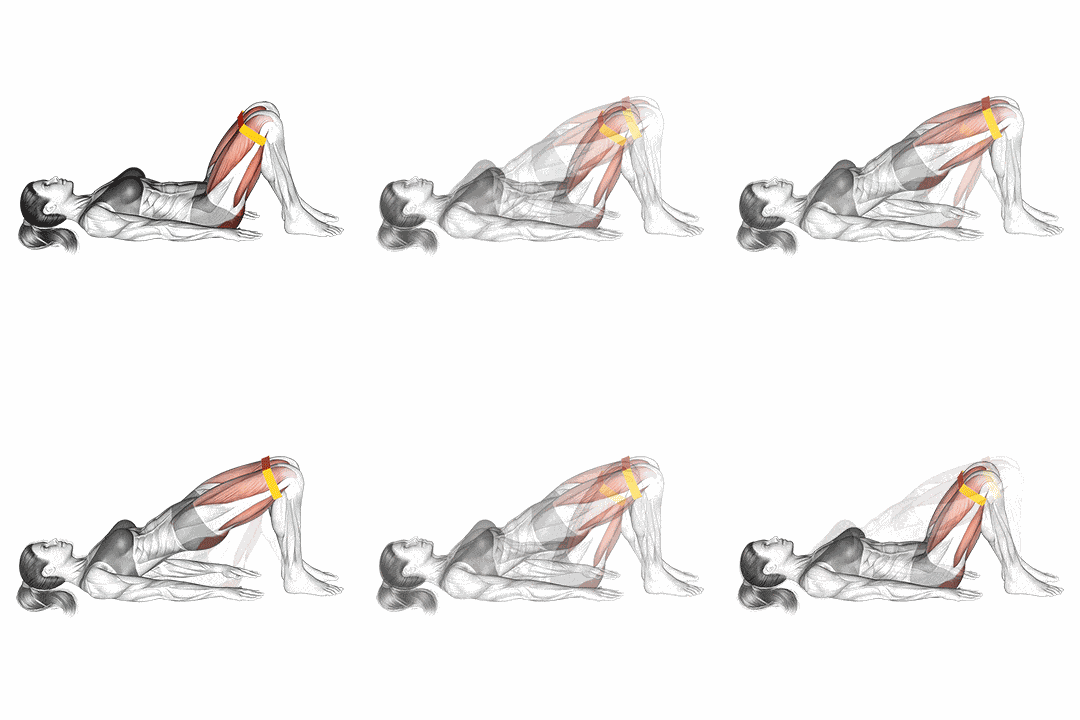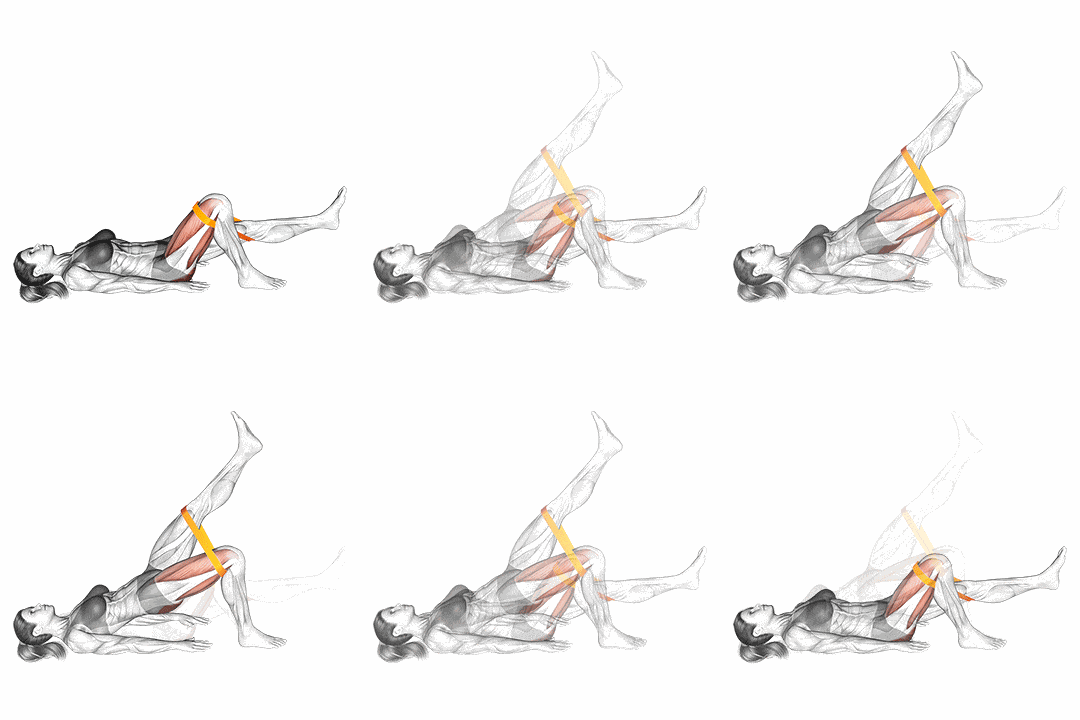
What is the banded single-leg glute bridge?
The banded single-leg glute bridge is a unilateral hip extension performed with a mini-band just above the knees. You bridge up on one foot while the free leg stays lifted, and you push out against the band to keep the working knee tracking. It isolates one glute at a time, exposes side-to-side imbalances, and bulletproofs the hip stabilizers that take a beating during sled push, lunges, and running.
How to do the banded single-leg glute bridge
- 1
Set the position
Lie supine, mini-band above the knees. Plant one foot flat, hip-width from the midline. Lift the other leg off the floor.
- 2
Push out and brace
Press the working knee out against the band. Brace the core so the pelvis stays level, no dropping toward the lifted side.
- 3
Bridge to lockout
Drive through the heel and squeeze the glute to lift the hips. Shoulders, hips, and knee form a straight line.
- 4
Hold then lower
Pause one second at the top with the pelvis level, then lower slowly. Repeat full reps before switching sides.
Pro tip
Always start with your weaker side and match the rep count on the stronger side. Don't reward asymmetry with extra volume on the dominant glute.
Common mistakes
Pelvis dropping.
If the unworked hip sags, the glute medius is failing. Slow down and prioritize a level pelvis over height.
Hyperextending the back.
Don't chase height with your spine. Lock out with glutes, ribs down.
Knee caving inward.
Active push against the band the whole rep, especially on the way down.
Rushing reps.
Quality over speed. Two seconds up, one-second hold, two seconds down.
Variations and progressions
Easier
No band, foot lower
Drop the band and keep the lifted foot resting on the floor with toes only. Learn pelvis control first.
Harder
Shoulders elevated, band + dumbbell
Put your shoulders on a bench and hold a dumbbell on the working hip. Massive range, massive load.
Alternative
Side-lying hip abduction
Lie on your side with a band above the knees and lift the top leg. Same glute medius target, different angle.
How to program it
Three protocols by goal. Pick one per cycle and aim for progression on load or distance.
| Goal | Sets × distance | Load | Rest |
|---|---|---|---|
| Activation | 2 × 10 / side | Light mini-band | 30 s |
| Imbalance correction | 3 × 12 / side | Medium mini-band | 45 s |
| Glute endurance | 3 × 20 / side | Medium mini-band | 60 s |
Banded Single-Leg Glute Bridge FAQ
Why am I way weaker on one side?
It's normal. Most lifters have a clear dominant side from sport history, sitting habits, or carrying patterns. Train both sides equally, prioritize the weaker one with extra rest and focus, and the gap narrows in six to eight weeks.
Should the unworked leg stay straight or bent?
Both work. A bent free leg is easier and lets you focus on the glute. A straight free leg lengthens the lever, increases pelvic control demand, and burns more. Start bent, progress to straight once your pelvis stays level.
Can I superset this with squats or lunges?
Yes, and it's a great use case. Two sets of ten per side between heavy lower-body work keeps the glutes engaged without fatiguing the prime movers. It also helps the knee track properly on subsequent squat reps.