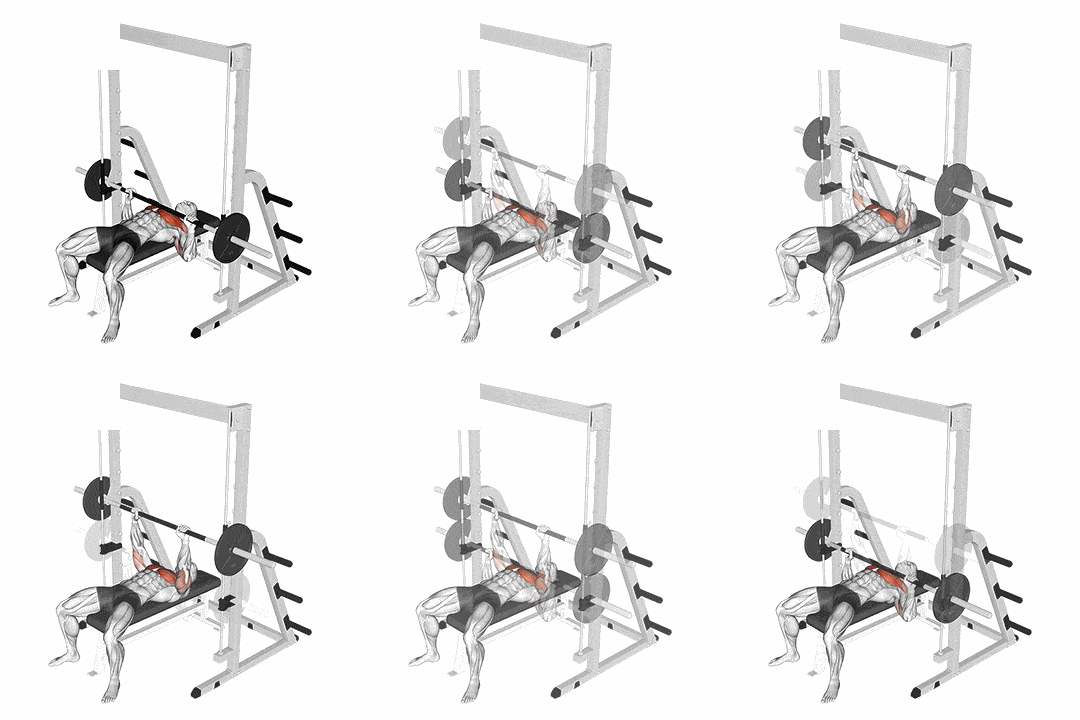
What is the smith machine bench press?
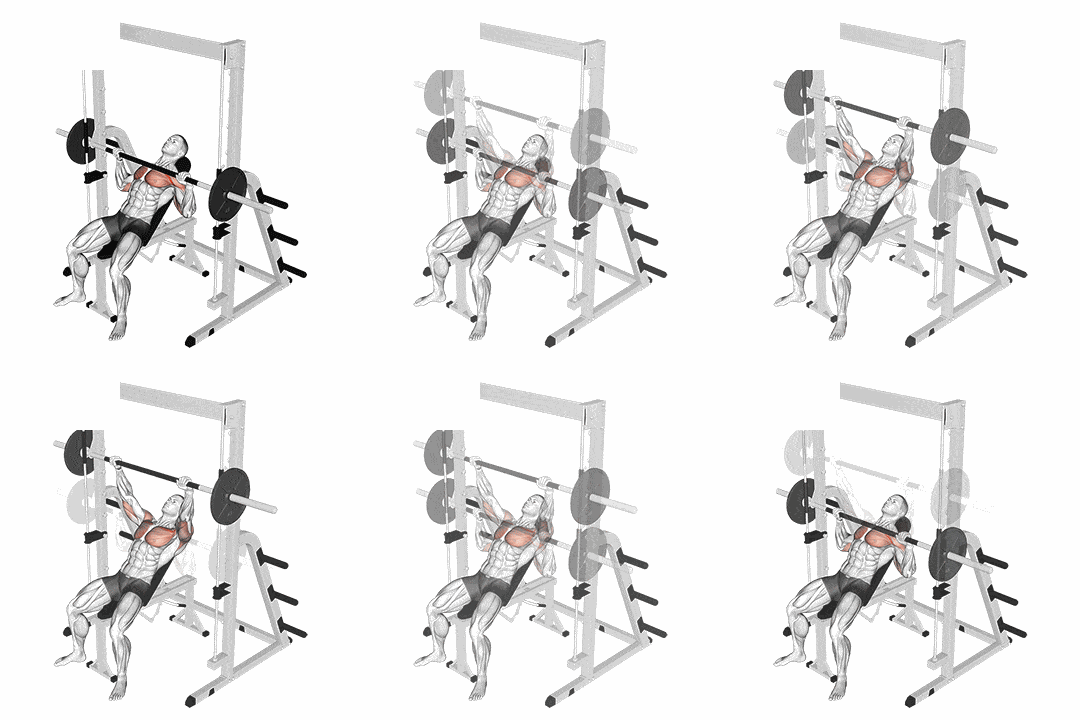
The Smith machine bench press is a bench press performed under a bar that slides on fixed rails, vertical or slightly angled. You drag a flat bench into the machine, line your lower chest up with the bar path, and press with hooks you can rotate to rack the bar at any height. Because the rails do the balancing, pecs, front delts and triceps take nearly all the work, and failing a rep alone is far less scary than under a free bar. Choose it to isolate the pressing muscles, to train close to failure without a spotter, or to rebuild pressing confidence. Placing the bench correctly is the entire skill of the lift.
How to do the smith machine bench press
- 1
Line the bench up with the bar
Lie down under an empty bar and lower it: it must touch your lower sternum, exactly where a free bar would. Move the bench, never your touch point, until the line is right.
- 2
Set the stops and get tight
Set the safety stops just below chest height. Grip a thumb's length wider than shoulder width, squeeze the shoulder blades, plant the feet. The rails don't excuse a loose setup.
- 3
Unrack with a wrist roll, lower in control
Rotate the hooks off the catches and lower the bar in 2-3 s to your lower chest, elbows tucked around 45-60° from your torso. Touch lightly, no bounce.
- 4
Press, finish, re-hook
Exhale and drive the bar up the rails to straight arms. At the end of the set, press to lockout and rotate your wrists to catch the hooks before you relax anything.
Pro tip
On an angled Smith machine, direction matters: set up so the bar sits over your shoulders at the top and reaches your lower chest at the bottom, mirroring the slight diagonal of a free bench. If the drift feels backwards, turn around.
Common mistakes
Bench in the wrong spot.
A few centimetres off and the bar lands on your neck or your belly, forcing the shoulders into angles they hate. Test the path with an empty bar every single session.
Letting the rails switch off your upper back.
Because the machine balances the bar, it's tempting to press with loose, rolled shoulders. Keep the blades squeezed like a free bench or your front delts will pay the bill.
Copying your free-bench numbers.
Bar weight, friction and path all differ, so the kilos don't transfer one for one in either direction. Work from reps in reserve on this machine, not from your barbell PR.
Ignoring the safety stops.
Re-hooking takes a wrist turn you might not have at true failure. Set the stops just under chest height and a failed rep becomes a non-event.
Variations and progressions
Easier
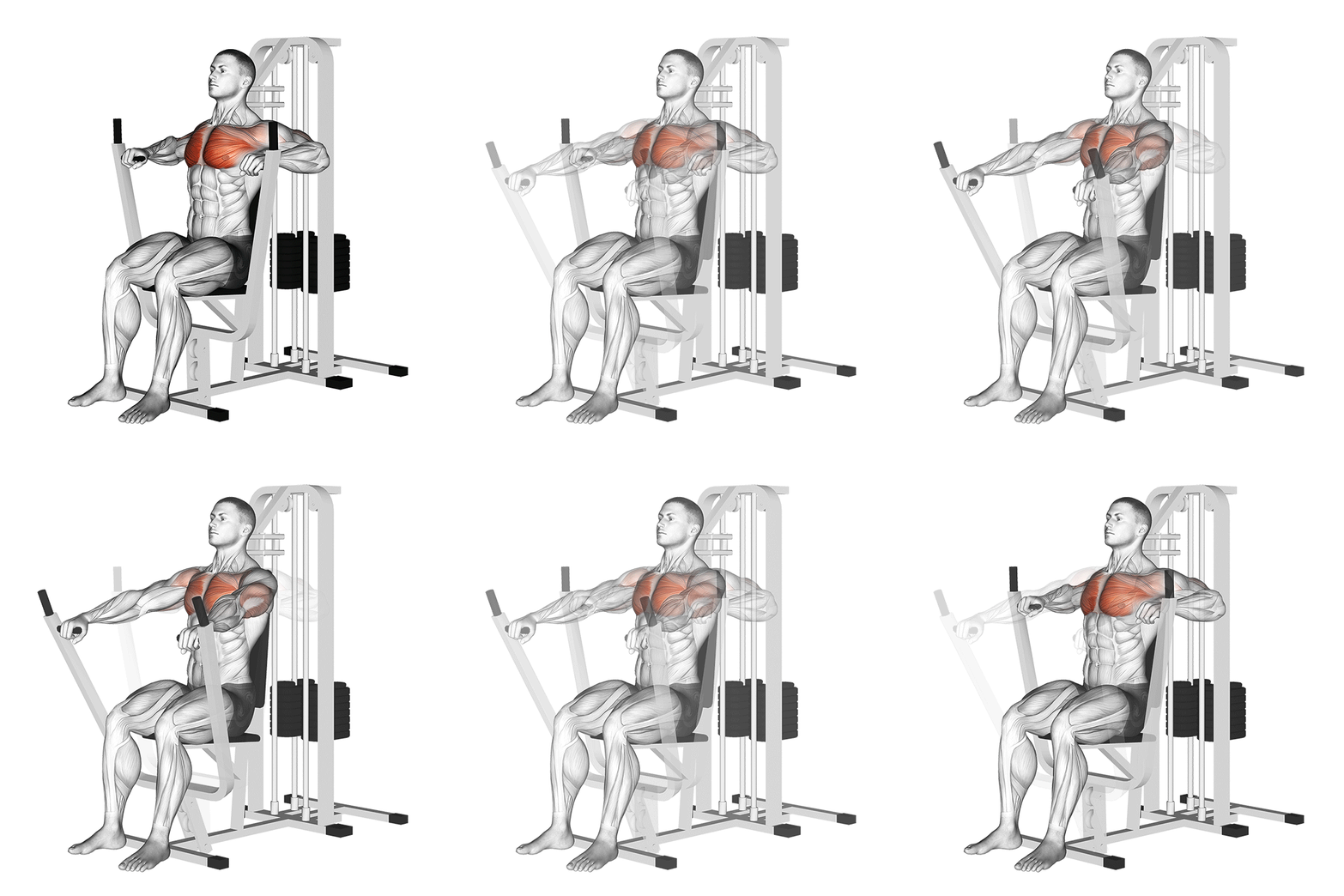
Machine chest press
Seated, fully guided and even simpler to set up. The best place to learn the pressing pattern before lying under a bar.
Harder
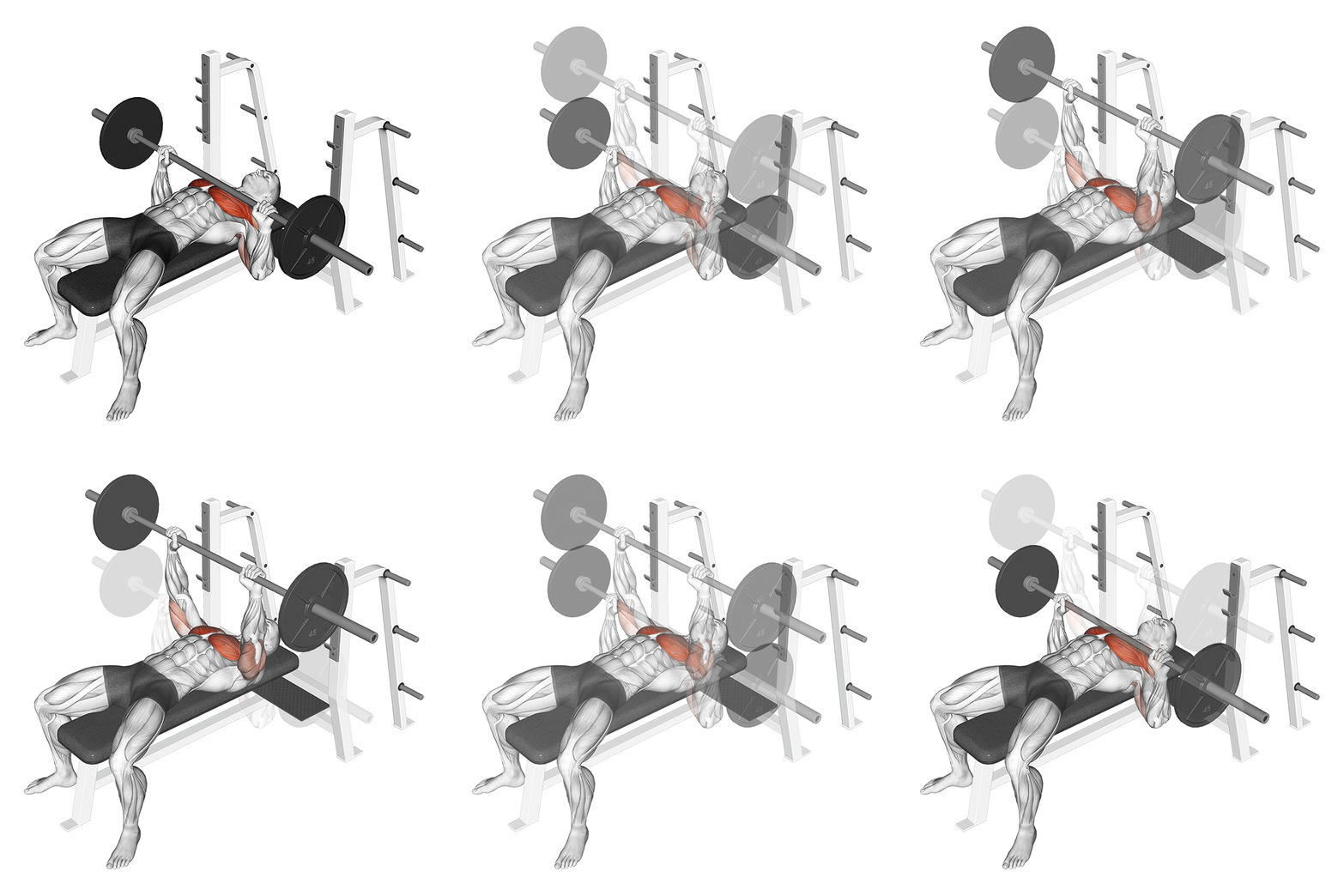
Barbell bench press
The free bar adds the balance and path control the Smith removes. Expect the first sessions to feel lighter in the hands and harder everywhere else.
No Smith machine?
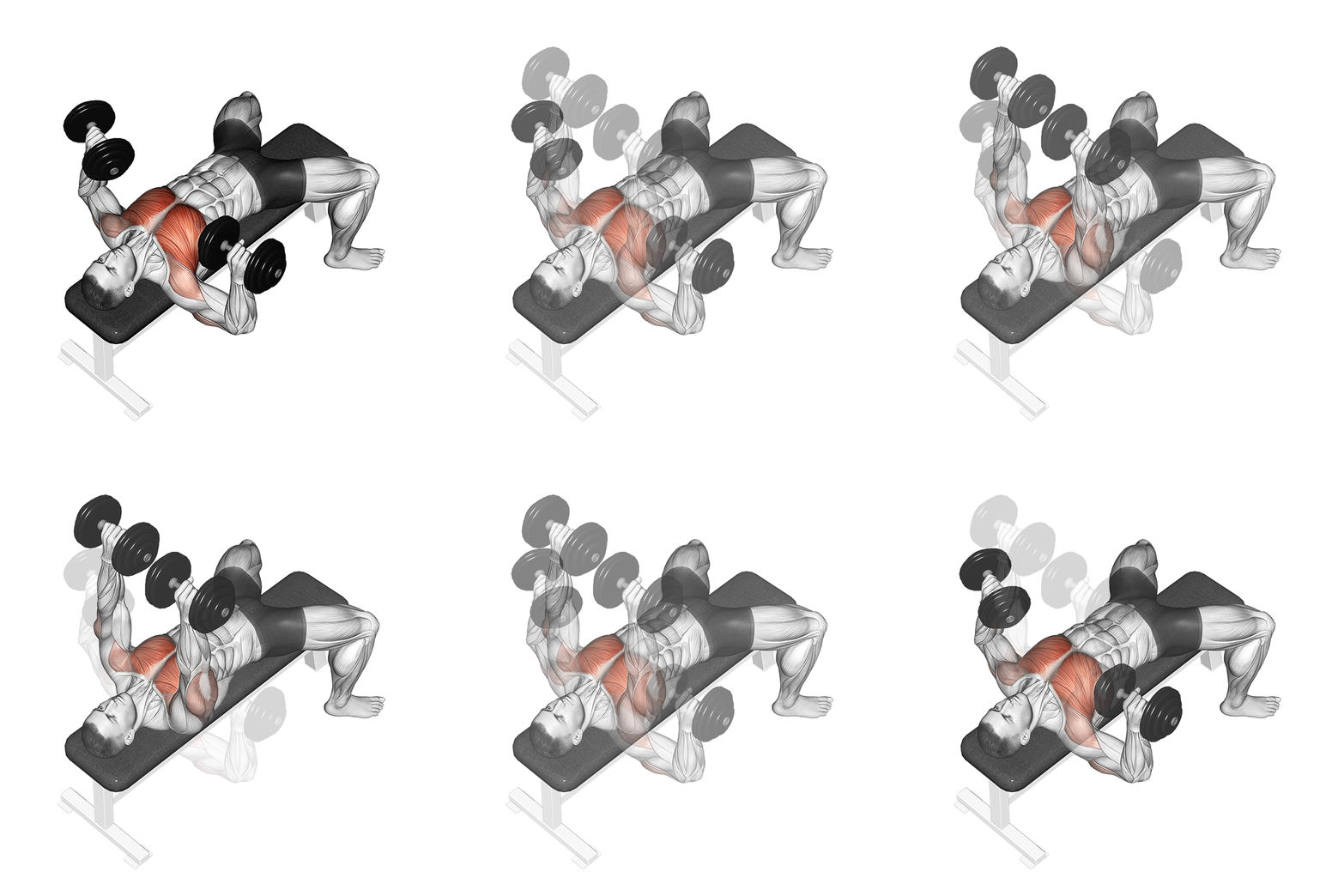
Dumbbell bench press
Dumbbells free the path completely: each arm finds its own line, which many shoulders prefer, and no rails cap the range.
How to program it
Three protocols by goal. Pick one per cycle and aim for progression on load or distance.
| Goal | Sets × distance | Load | Rest |
|---|---|---|---|
| Strength | 5 × 5 | RPE 8 | 2-3 min |
| Hypertrophy | 4 × 8-10 | RPE 8 | 90-120 s |
| Close-to-failure work | 2 × 12-15 | Moderate, to RPE 9-10, stops set | 90 s |
Smith Machine Bench Press FAQ
How much does a Smith machine bar weigh?
It varies more than any other bar in the gym: counterbalanced bars can feel like just a few kilos, non-counterbalanced ones sit closer to a regular bar, and friction changes the feel again. Press a few empty reps, check the sticker if the machine has one, and log your loads on that specific machine.
Does Smith machine benching carry over to the barbell bench?
The muscle you build carries over; the skill only partially. The Smith never trains the stabilizers or the path control a free bar demands, so a big Smith press won't fully show up under a barbell. If the barbell number matters to you, keep at least one free pressing session per week.
Is the Smith machine bad for your shoulders?
Not by itself. Problems start when a fixed path is forced onto a badly placed body: bench too far forward, touch point at the neck, elbows flared wide. Set the bench so the bar meets your natural touch point and the fixed path becomes a feature, not a threat.