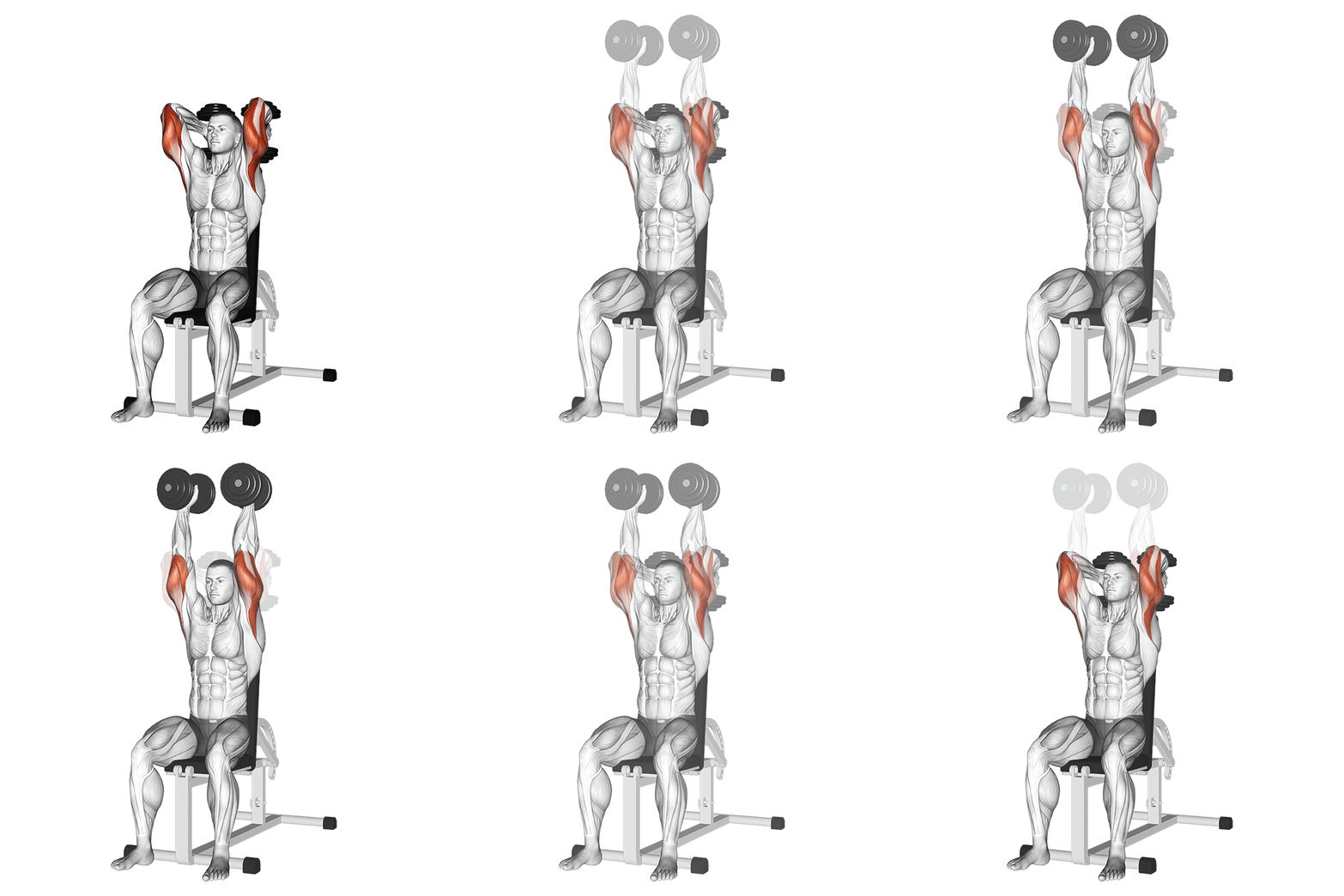
What is the seated dumbbell triceps extension?
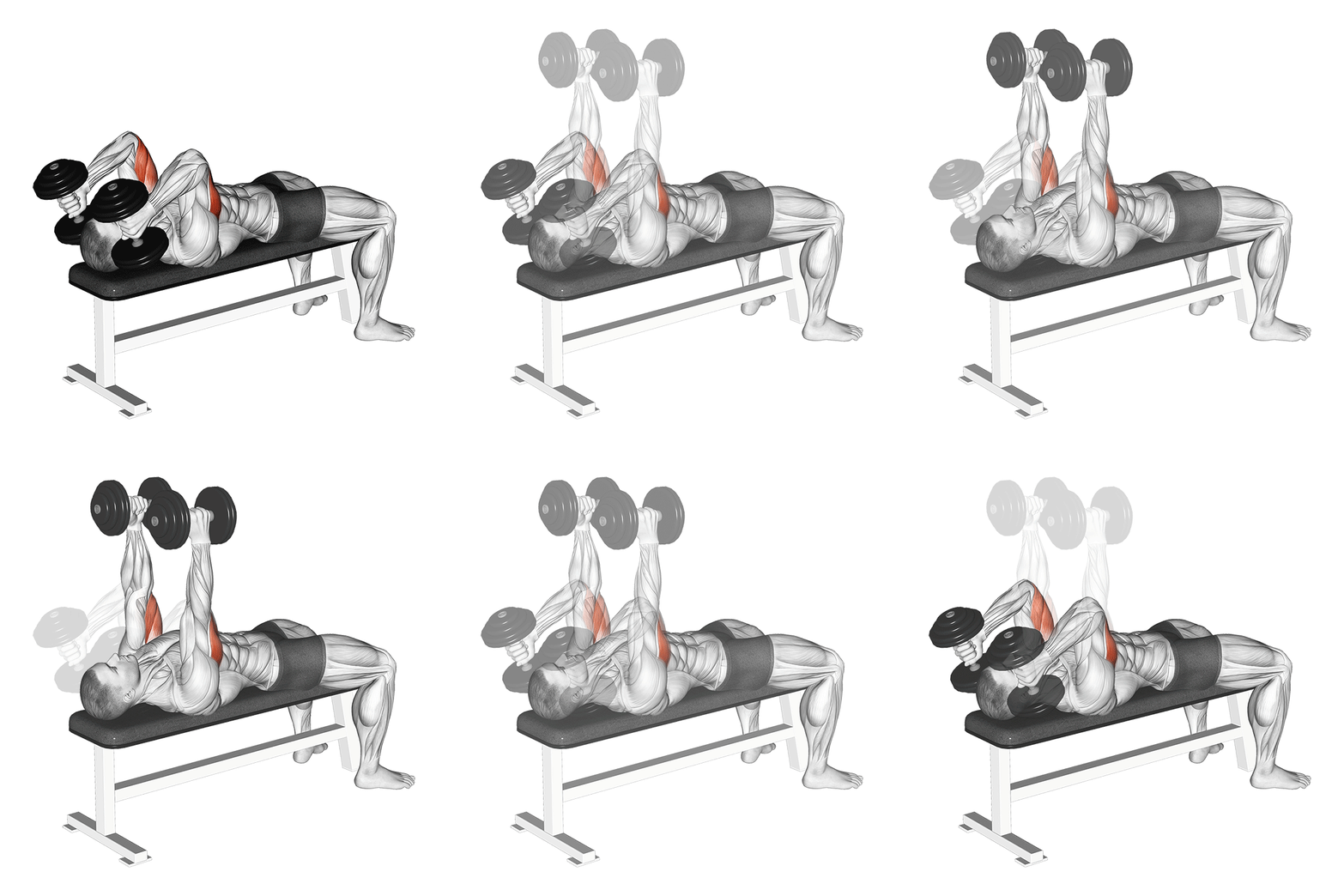
The seated dumbbell triceps extension is a two-hand overhead extension: you sit on a bench, hold a single dumbbell vertically overhead with both palms cupped under the top plates, lower it behind your neck, then press back to straight arms. What separates it from pushdowns and skull crushers is shoulder position: with the arms overhead, the long head of the triceps, the only head that crosses the shoulder joint, starts every rep already lengthened and does its work at long muscle lengths. The seated setup adds a back support and removes leg drive, which makes this the strictest and most accessible way to load that stretch.
How to do the seated dumbbell triceps extension
- 1
Get the dumbbell up safely
Sit on a bench, upright back pad if you have one. Stand the dumbbell on end on one thigh, cup the underside of the top plates with both palms overlapping, thumbs around the handle, then use a knee bump to help carry it up and overhead to straight arms.
- 2
Stack your ribs under the load
Before the first rep, pull the ribs down so they stay over your pelvis, and bring the elbows roughly shoulder width, pointing up and slightly forward. This is the frame every rep happens inside; if it collapses, the lower back starts arching to fake overhead range.
- 3
Lower behind your head
Bend only the elbows and lower the dumbbell behind your neck for 2-3 seconds, until your forearms touch your biceps and you feel a deep stretch down the back of both arms. The upper arms stay as still as pillars the whole way.
- 4
Punch the ceiling
Drive the dumbbell straight up to a full lockout without letting the elbows drift outward or the shoulders shrug toward your ears. Squeeze for a beat at the top, then start the next descent under control.
Pro tip
The set is over when your elbows start winging outward, not when the burn says so. Choose a load that lets you keep both elbows inside shoulder width on every rep, and treat the first flare as your true failure signal: past that point the shoulders and chest are doing the extending for you.
Common mistakes
Elbows flaring into a press.
When the elbows drift wide, the movement morphs into a narrow overhead press: more weight moves, less triceps works. Take 10-20% off the dumbbell and keep the elbows pointing forward and up for the entire set.
Stopping at 90 degrees.
Half-lowering keeps you in the comfortable mid-range and throws away the stretched position, the entire argument for going overhead rather than doing pushdowns. Lower until forearm meets biceps; if you can’t, the dumbbell is too heavy.
Arching through the lower back.
As the load climbs, the ribs flare and the lumbar arch starts providing fake overhead mobility. Use the bench’s back pad, keep the ribs stacked, and accept that honest overhead extensions are humbler than your pushdown numbers.
Bouncing out of the stretch.
Dropping fast and rebounding off the bottom feels productive, and it is the single quickest route to grumpy elbows on this movement. Own the last third of the descent, pause a fraction, then extend.
Variations and progressions
Easier
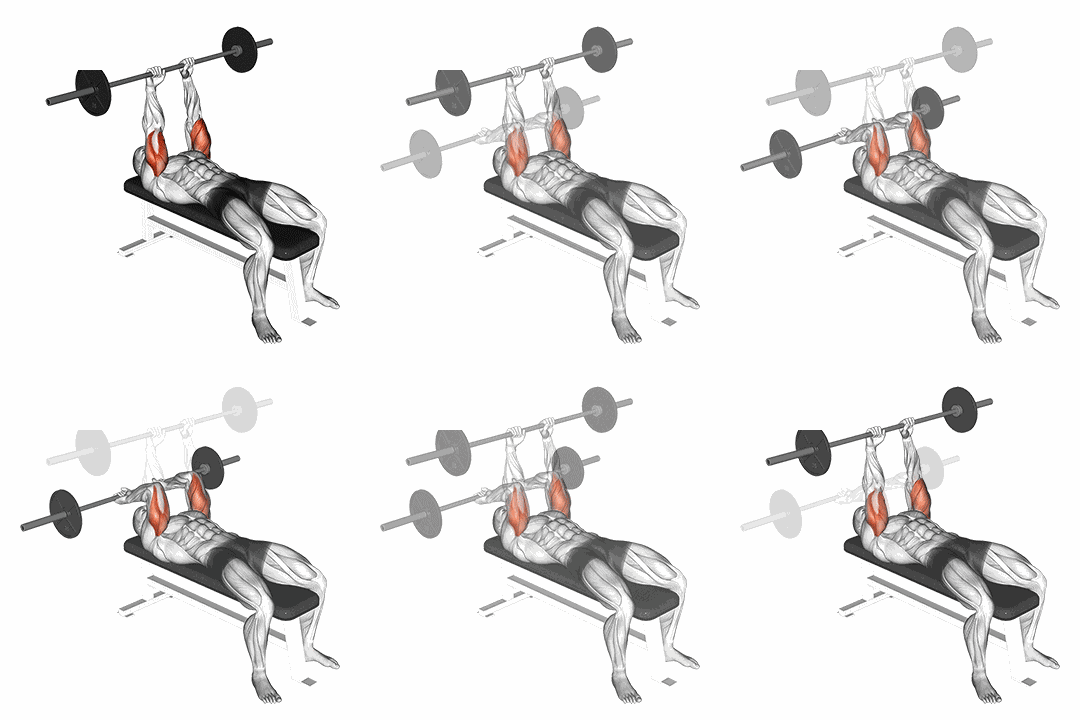
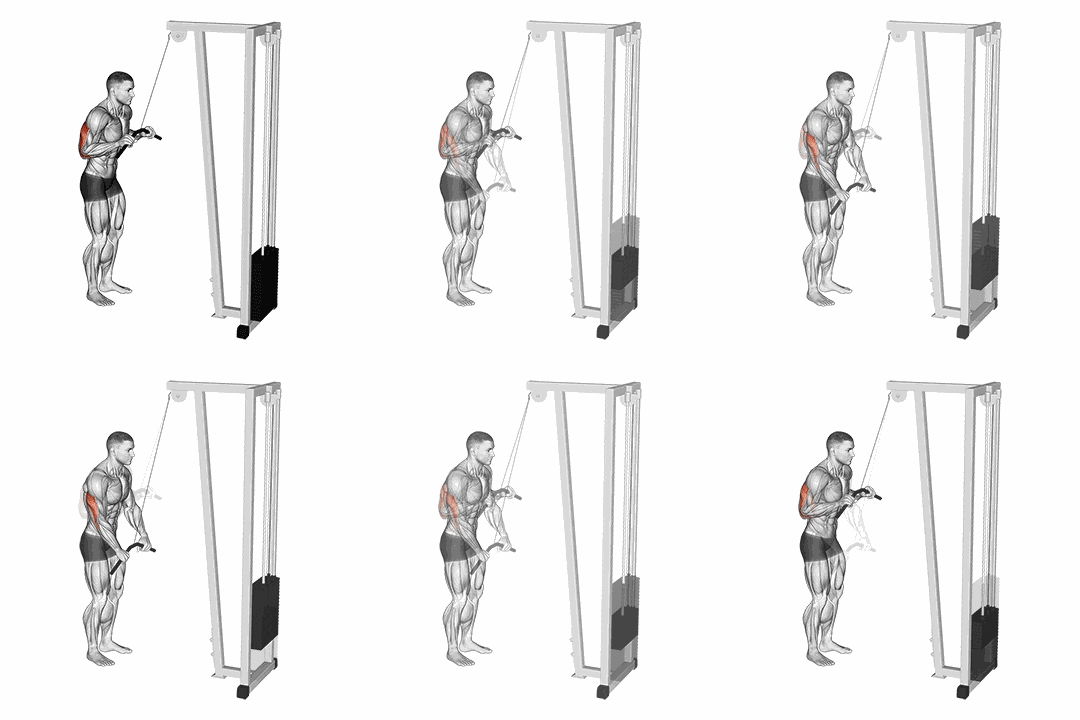
Triceps pushdown
The shoulder stays neutral, the stretch is mild and the elbows complain far less. Build your first blocks of triceps volume here, then bring the arms overhead once the joint is conditioned.
Harder
Single-arm overhead extension
One lighter dumbbell per arm. Each side works alone, the free hand can check the elbow, and the shoulder has to stabilise without help; expect the weaker arm to be exposed on rep one.
Alternative
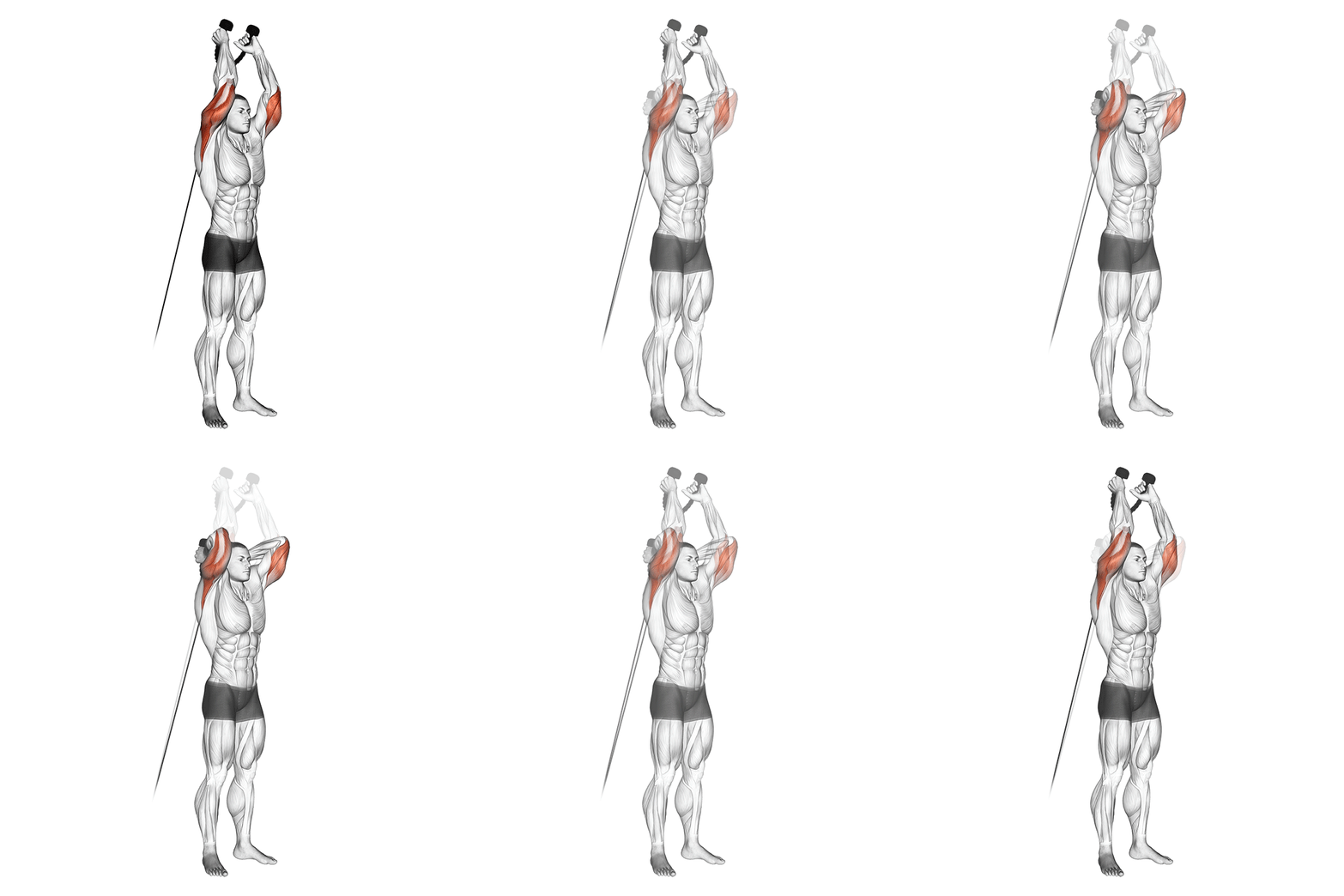
Overhead rope extension
The same long-head stretch on a cable: the tension stays smooth through the bottom and there is no dumbbell to wrestle into position. The best swap once getting the weight overhead becomes the limiting factor.
How to program it
Three protocols by goal. Pick one per cycle and aim for progression on load or distance.
| Goal | Sets × distance | Load | Rest |
|---|---|---|---|
| Hypertrophy | 3-4 × 10-12 | RPE 8 | 90 s |
| Long-head stretch focus | 3 × 8-10, 3 s lowering | Moderate, RPE 8-9 | 90 s |
| Elbow-friendly volume | 2-3 × 15-20 | Light, RPE 8 | 60 s |
Seated Dumbbell Triceps Extension FAQ
Are overhead extensions better than pushdowns?
They are not interchangeable: the overhead position is the only one that trains the long head at a long muscle length, because that head crosses the shoulder. Training muscles in their stretched position has repeatedly come out ahead for growth in recent hypertrophy research, which makes overhead work the higher-value slot if you only keep one. In practice most lifters keep both: pushdowns for comfortable volume, an overhead extension for the long head.
Why do my elbows hurt on overhead extensions?
The movement combines a deep stretch with high tension on the triceps tendon, and most elbows need a ramp. Warm up with two light sets, live in the 12-20 rep range for a few weeks, slow the eccentric, and never bounce out of the bottom. If a session still flares them up, switch to the rope overhead version for a block; the smoother cable resistance is usually enough to keep training the pattern pain-free.
Seated or standing?
Seated with a back pad is the stricter and stronger option: the pad blocks the lumbar arch, removes leg drive and lets you pour everything into the elbows. Standing is fine for lighter sets and recruits more trunk, but as the dumbbell gets heavy the standing version tends to leak into the lower back. Do the main work seated and treat the standing version as a variation, not the default.
How heavy should I go?
Heavier than a kickback, lighter than your ego wants. The two-hand grip lets you hold a serious dumbbell, but the real limit is the weight you can lower to a full stretch and extend without the elbows flaring, and for most lifters that lives in the 10-20 rep range. Getting the dumbbell into position is the other cap: once hoisting it overhead feels riskier than the set itself, move to a cable or have a partner hand it to you.