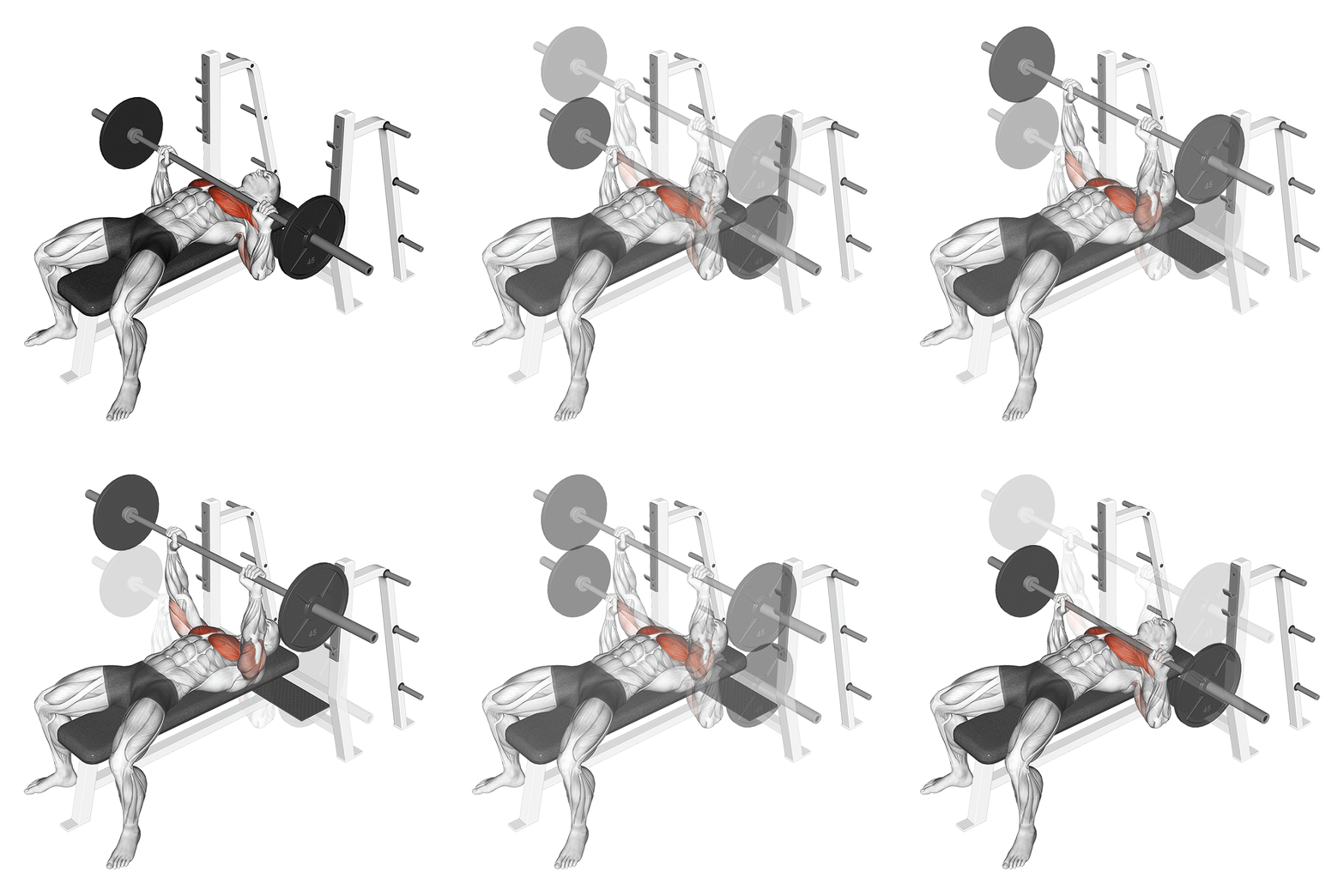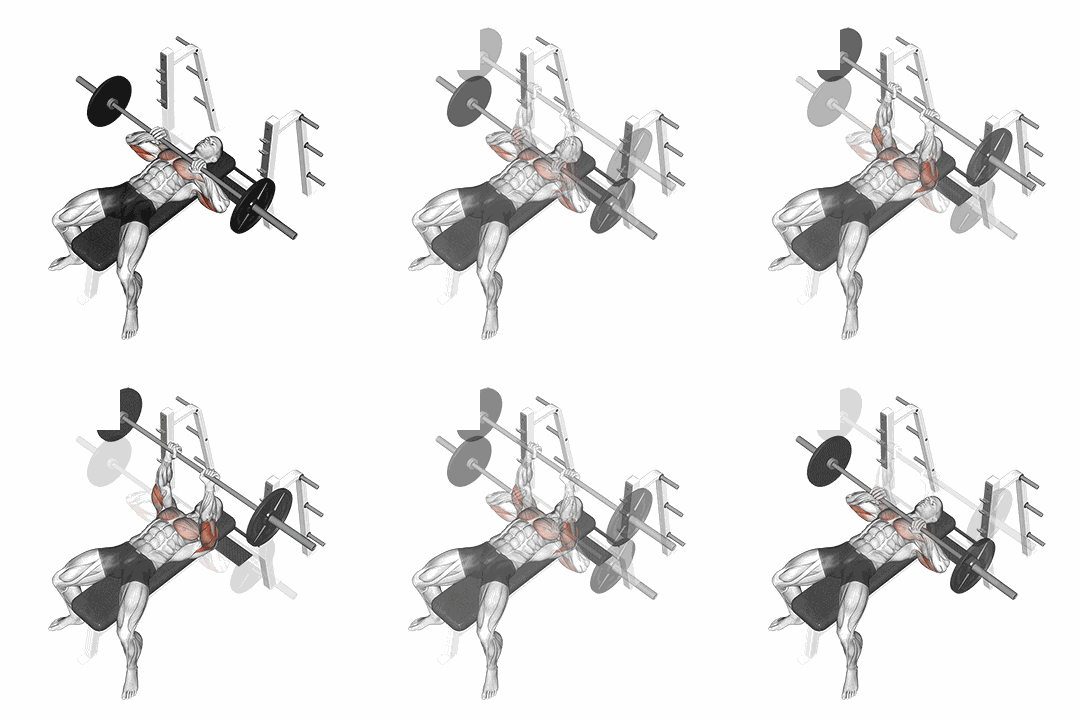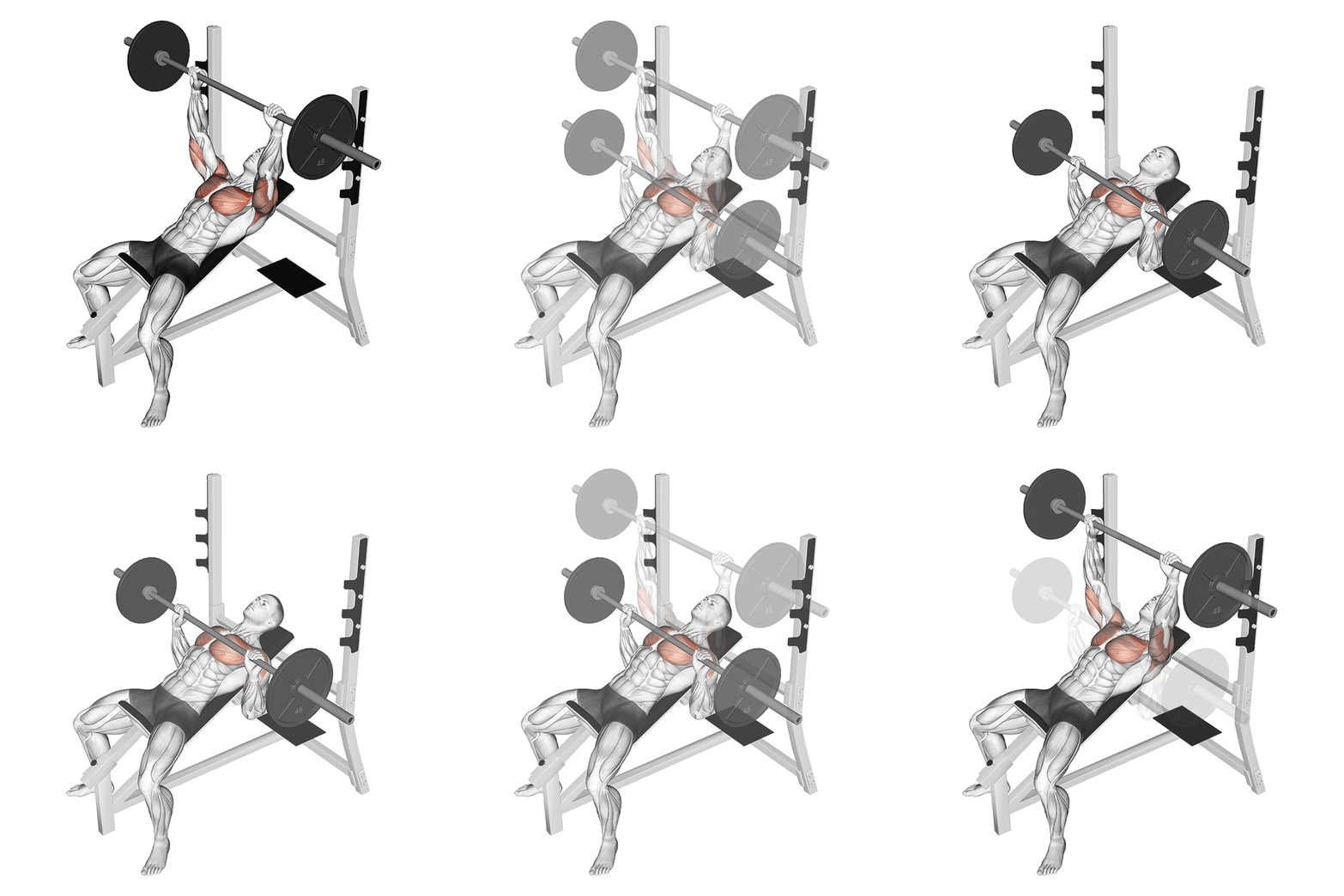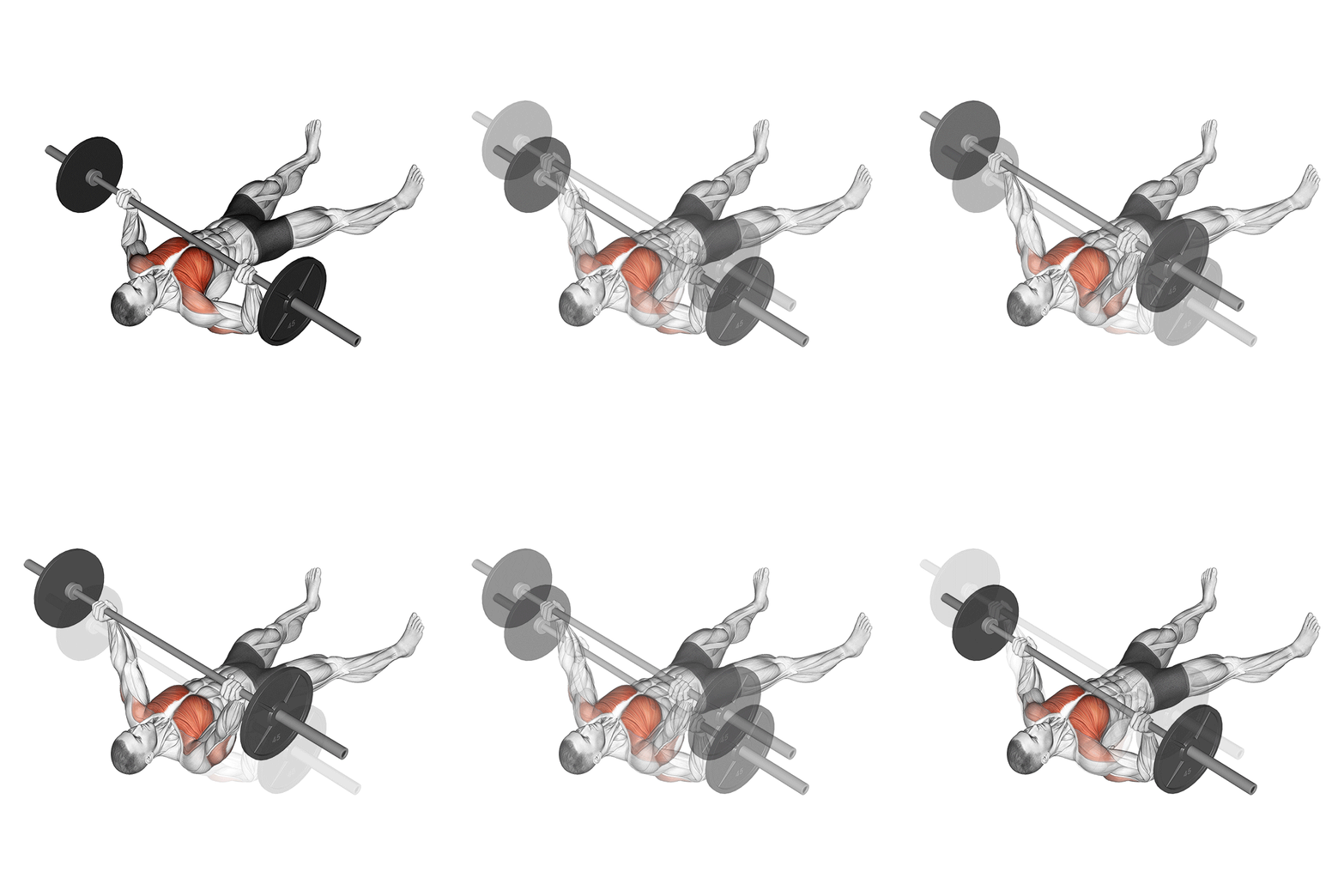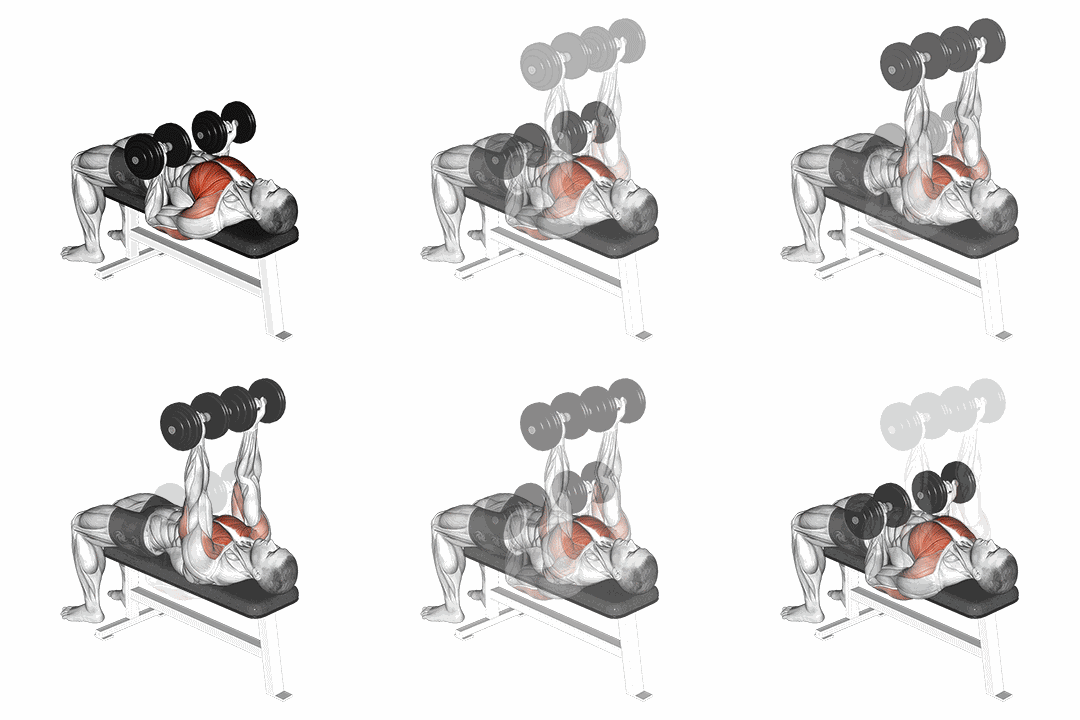
What is the reverse grip bench press?
The reverse grip bench press is a flat barbell bench press taken with an underhand grip, palms facing back toward your face. The flipped grip forces the elbows to tuck along your sides, drops the touch point low on the sternum and shifts the stress toward the clavicular fibres of the chest and the triceps, while sparing the shoulders the internally rotated position many pressers find irritating. The cost is security: a supinated grip gives the bar more chance to roll, so wrapped thumbs and a spotter for the lift-off are not optional. A specialist's variation, worth learning properly rather than improvising.
How to do the reverse grip bench press
- 1
Take the grip under the bar
Lie back, plant your feet and grip the bar supinated, a touch wider than your normal bench grip, thumbs fully wrapped. Set your shoulder blades down and back before the bar ever leaves the hooks.
- 2
Get a spotter lift-off
Ask a spotter to lift the bar off and settle it over your chest with your arms locked. Unracking alone in a supinated grip is the most dangerous moment of the lift; don't improvise it.
- 3
Lower low, elbows tucked
Let the elbows track close to your ribs and bring the bar down in 2-3 s to the lower end of your sternum. Keep the wrists stacked over the forearms and the bar heavy in the heel of your palms.
- 4
Press up and slightly back
Drive the bar off your chest and let it drift back over your shoulders as you lock out. Keep crushing the bar the whole way; grip pressure is what keeps it seated in your hands.
Pro tip
Squeeze the bar harder than you think you need to, from lift-off to re-rack. In a supinated grip the bar sits on a sloped shelf, and the day your grip relaxes at lockout is the day you learn why this lift has its reputation. Chalk helps; a loose grip has no fix.
Common mistakes
Thumbless grip.
A suicide grip on a reverse bench is exactly what the name promises: the bar has a clear path out of your hands and onto your face. Thumbs wrapped, always, no exceptions for warm-up sets.
Unracking it alone.
The supinated unrack puts your wrists and elbows at their weakest angle before the set even starts. Use a spotter's lift-off or, failing that, start light from the pins of a rack, never heavy from the hooks by yourself.
Grip set too narrow.
A supinated grip at your normal width twists the wrists and pinches the inner elbow. Move each hand out two to three finger widths; most lifters find their sweet spot slightly wider than their standard bench.
Touching too high.
Forcing the bar to your usual touch point makes the elbows flare against the grip's natural tuck and loads the wrists sideways. Let the bar land where the tucked elbows send it: the lower sternum, sometimes the top of the abs.
Variations and progressions
Easier
Reverse-grip dumbbell press
Two dumbbells turned palms-up give you the same upper-chest and triceps bias with nothing that can roll out of your hands. The right place to learn the tucked bar path.
Harder
Reverse-grip bench with a chest pause
Sit the bar motionless on your sternum for a strict two count before pressing. The pause removes all bounce and makes the triceps restart the bar from zero.
No spotter?
Smith machine reverse-grip press
The guided bar cannot roll out of your hands and the safety hooks are a wrist-flick away. All of the upper-chest stimulus, almost none of the risk.
How to program it
Three protocols by goal. Pick one per cycle and aim for progression on load or distance.
| Goal | Sets × distance | Load | Rest |
|---|---|---|---|
| Upper-chest hypertrophy | 3 × 8-10 | Moderate, RPE 7-8 | 2 min |
| Triceps and lockout strength | 4 × 5-6 | Heavy, RPE 8, spotter present | 3 min |
| Learning the groove | 3 × 5 | Empty bar to 40% of your bench | 90 s |
Reverse Grip Bench Press FAQ
Does the reverse grip really hit the upper chest?
Yes, and more than most lifters expect. Supinating the grip tucks the elbows and tilts the upper arms' path upward, which puts the clavicular fibres of the pecs in a strong line of pull; EMG work comparing grips on the flat bench has recorded higher upper-chest activity with the reverse grip. It will not replace incline pressing on its own, but among flat-bench variations it is one of the few that genuinely shifts stress upward.
Is the reverse grip bench press dangerous?
The joints like it; the hands are the hazard. Tucked elbows and external rotation make it one of the more shoulder-friendly ways to press heavy. The risk is entirely about bar security: a supinated grip holds the bar on a slope, so it can roll toward your face if your grip softens or the unrack goes wrong. Wrapped thumbs, a spotter for the lift-off and safeties set at chest height turn it from reckless to reasonable.
Reverse grip or close grip for triceps?
Close grip is the simpler tool: same bar security as a normal bench, easy to load, and a proven triceps builder, so it should be the default. The reverse grip brings comparable triceps demand with a bonus for the upper chest and a different wrist and shoulder position, which makes it valuable when standard pressing bothers your shoulders or a long training block needs variety. Many lifters rotate the two across cycles rather than choosing one.