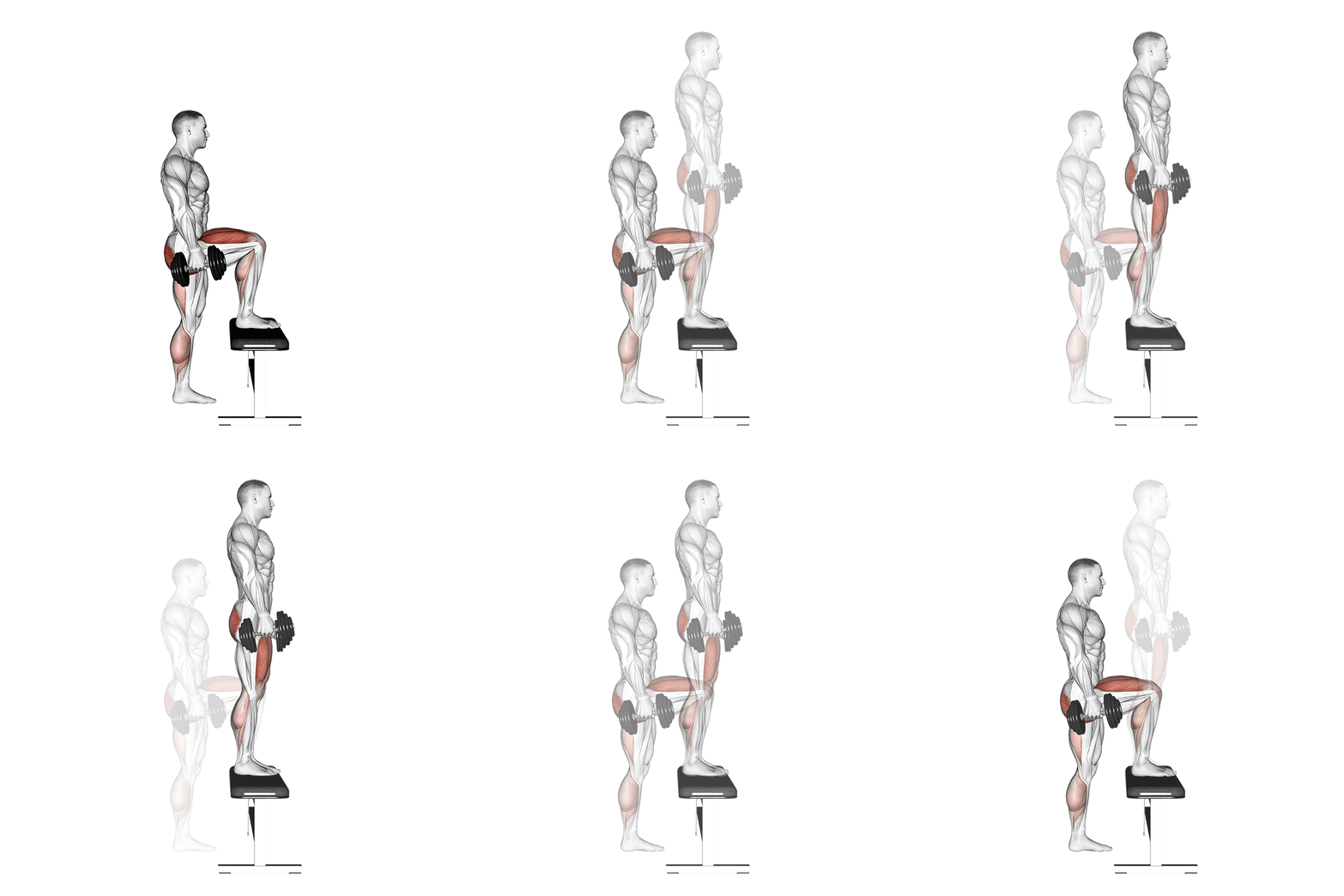
What is the dumbbell step-up?
The dumbbell step-up is a box or bench step-up performed with a dumbbell in each hand, hanging at your sides suitcase-style. Against the bodyweight version it adds real, progressable load; against the barbell version it keeps the weight low and centred, so balance demands drop, your spine carries nothing, and bailing is as simple as opening your hands. The trade-off is grip: forearms and traps work for every second the dumbbells hang. It suits anyone building single-leg strength for running, HYROX or field sports, and lifters who want more squat-pattern volume without another axially loaded exercise in the week.
How to do the dumbbell step-up
- 1
Pick the box height
Use a box or bench that puts your knee at or just below hip height when your foot is on it, around 40-50 cm for most people. Higher is not better; it just invites cheating.
- 2
Plant the whole foot
Dumbbells at your sides, shoulders back, place the full foot on the box, heel included. A hanging heel robs your glutes of leverage from the first centimetre.
- 3
Drive through the top leg only
Push the box away through the planted foot and stand fully upright on it. The bottom leg stays limp; it comes along for the ride, it does not jump.
- 4
Lower in 2-3 seconds
Hinge slightly at the hips and lower the back foot to the floor under control. Touch down softly, then go straight into the next rep; finish all reps on one side before switching.
Pro tip
Pause one full second standing tall on the box before you lower. That pause exposes whether you actually finished the rep with one leg or bounced through it with two, and it doubles as a balance check under load.
Common mistakes
Pushing off the back foot.
A little calf hop from the floor leg can steal a third of the work. Let the trailing leg hang dead and drag the toes up the face of the box if you need a reminder.
Box too high.
Past knee height for your build, the torso collapses forward and the hips shove sideways to get you up. Drop to a height you can own with a vertical shin and a proud chest.
Crashing the descent.
Dropping off the box skips the eccentric, where a large share of the stimulus lives, and pounds the floor-side knee. Lower like you're testing thin ice with your back foot.
Knee diving inward.
Under suitcase load, fatigue pulls the working knee into valgus. Track it over the second toe on every rep; if it keeps caving, the dumbbells are too heavy for today.
Variations and progressions
Easier
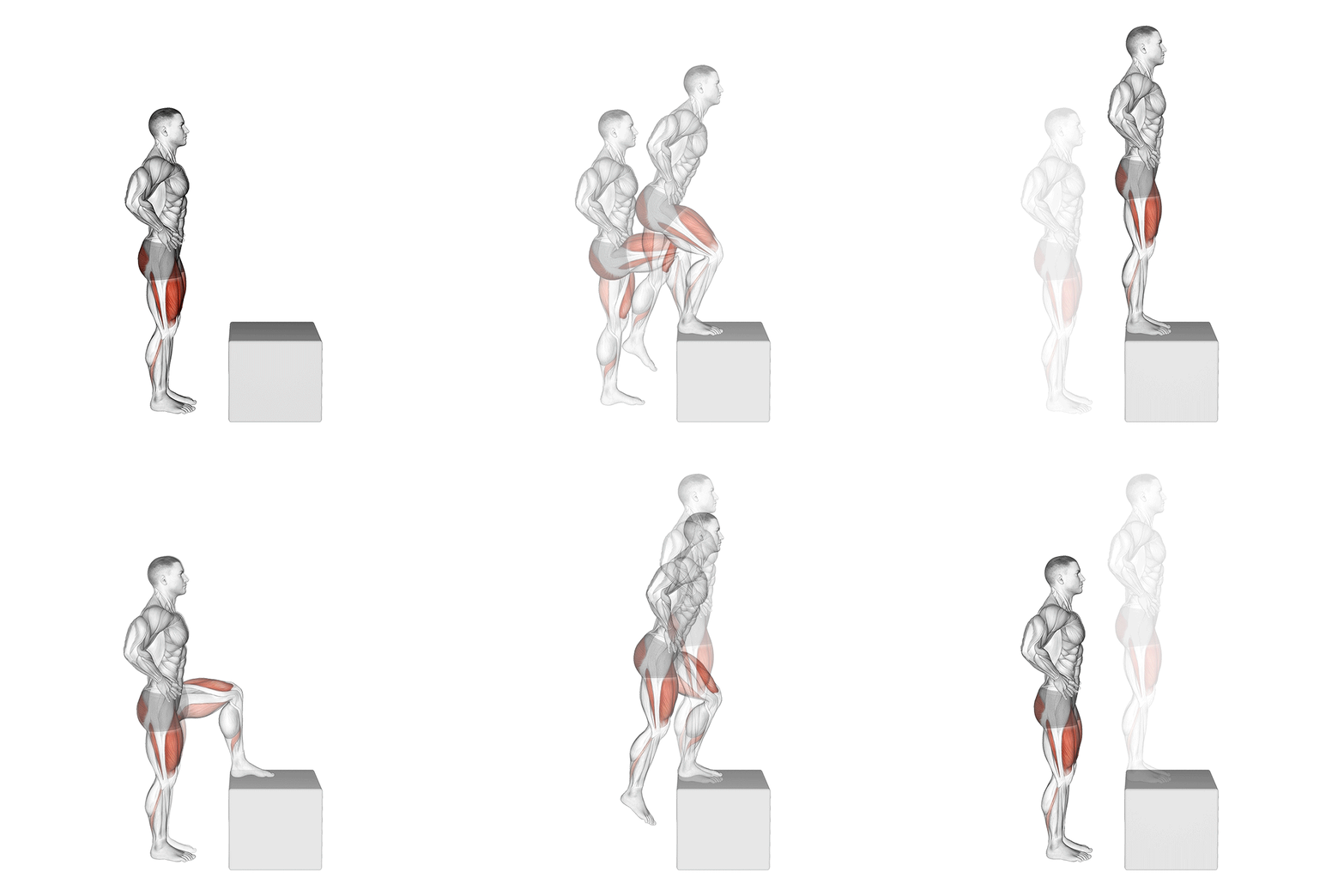
Bodyweight box step-up
Same movement, no dumbbells, hands free for balance. Master strict, push-off-free reps here before you add a single kilo.
Harder
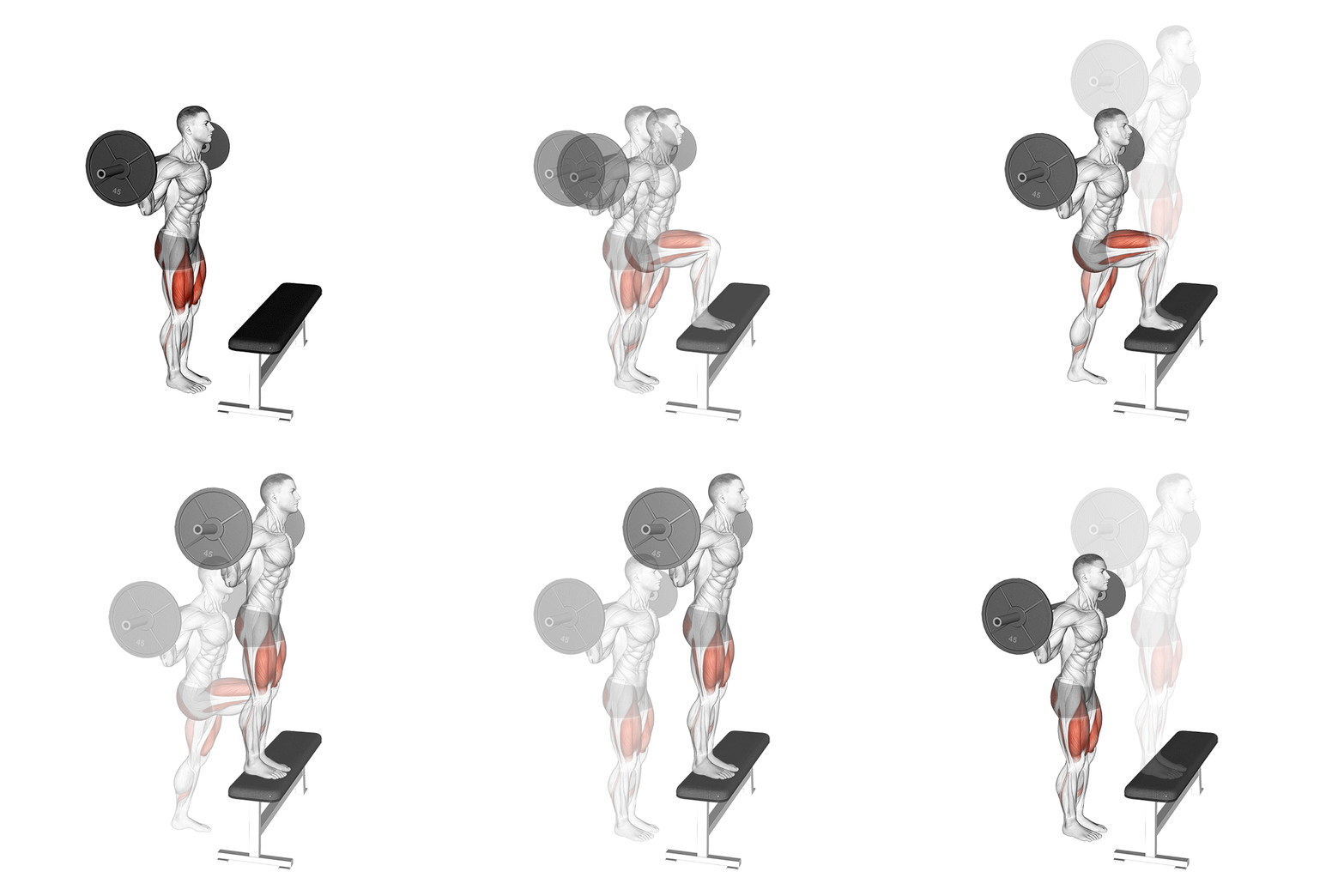
Barbell step-up
The bar on your back removes the grip ceiling so the legs can keep progressing, at the price of a higher centre of mass and a real balance demand. Earn it with heavy dumbbell sets first.
Alternative
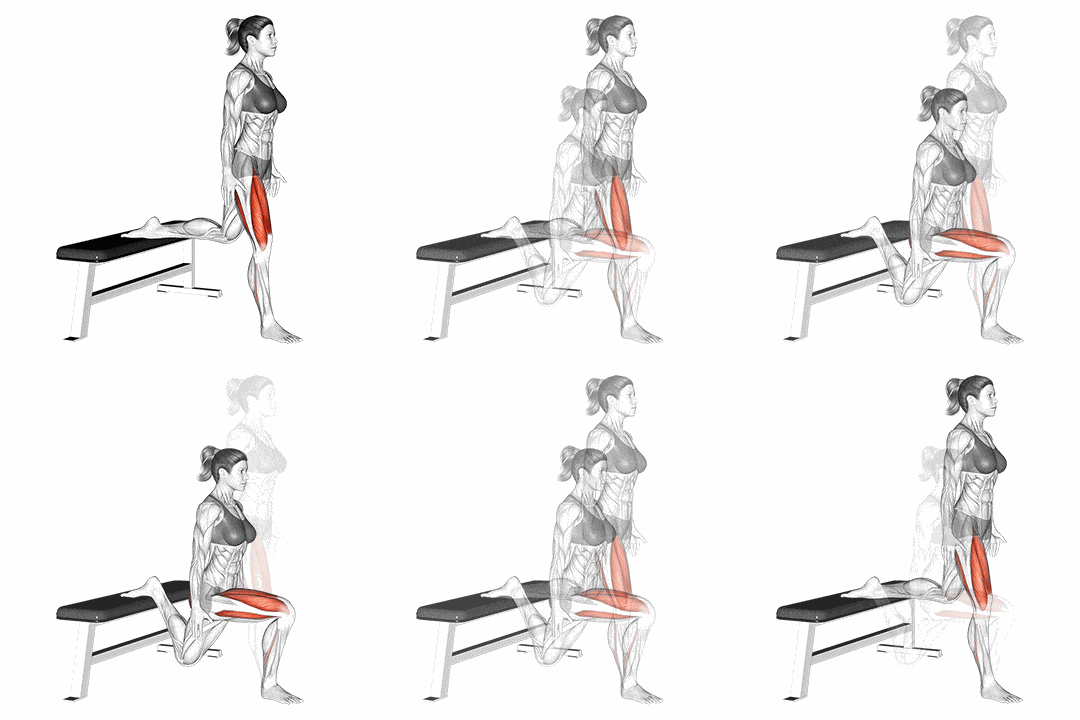
Bulgarian split squat
Rear foot elevated instead of stepping up: more stretch on the front leg, a bigger hypertrophy stimulus, but also more soreness. Step-ups fit better close to hard running days.
How to program it
Three protocols by goal. Pick one per cycle and aim for progression on load or distance.
| Goal | Sets × distance | Load | Rest |
|---|---|---|---|
| Strength | 4 × 6-8 per leg | Heavy, RPE 8 | 2 min |
| Hypertrophy | 3 × 10-12 per leg | Moderate, RPE 7-8 | 90 s |
| Hybrid endurance | 2-3 × 15-20 per leg | Light | 60 s |
Dumbbell Step-Up FAQ
What box height should I use?
Knee height is the sweet spot for loaded work: enough range to train the glutes deep, low enough to keep the rep strict. Go a notch lower when the dumbbells get heavy, and save higher boxes for light or bodyweight sets where you can stay honest.
Dumbbells at the sides or at the shoulders?
By the sides is the default: the lowest centre of mass, the easiest setup, the most load. The front-rack hold, dumbbells on the shoulders, forces a more upright torso and taxes the core, but it caps the weight well below what your legs can handle. Use suitcase for strength, front rack as a variation.
Step-ups or lunges?
Step-ups are concentric-biased: you lift the load more than you brake it, so they generate far less soreness than lunges for similar leg work. That makes them the better pick in weeks with hard running or competition. Lunges earn their place when you want the eccentric stress and the soreness that comes with it.
Should I alternate legs or finish one side first?
For strength and hypertrophy, do all reps on one leg before switching: the working muscles stay under continuous tension and progression is easier to track. Alternating gives each leg a mini-rest between reps, which suits conditioning circuits more than strength work.