What is the dumbbell spider curl?
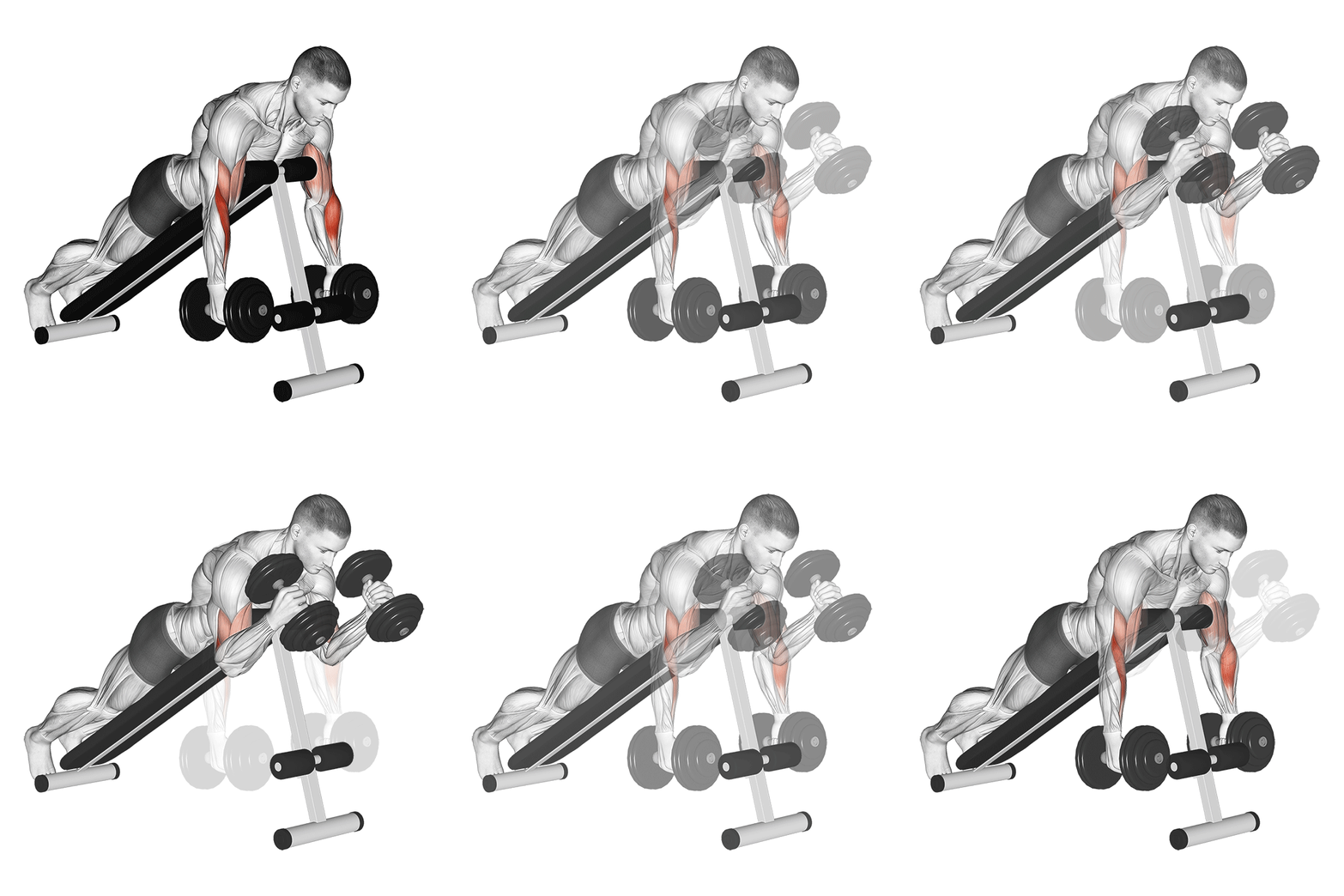
The dumbbell spider curl is performed lying chest-down on an incline bench, arms hanging straight at the floor, palms turned up. From there you simply curl, but the position changes everything: the pad blocks all torso swing, and because your shoulders are flexed in front of your body, the hardest part of the rep arrives near the top, exactly where the biceps are at their shortest. That combination biases the short head and delivers a peak contraction few curls can match. It is the mirror image of the incline curl, which stretches the biceps where the spider curl crushes them. Expect humble dumbbells.
How to do the dumbbell spider curl
- 1
Set the bench at 45 degrees
Set an incline bench around 45 degrees and lie chest-down with the top of the pad under your sternum, feet planted behind you. Your head and shoulders stay above the pad so your arms can hang completely free.
- 2
Hang and supinate
Let both dumbbells hang straight down, palms facing forward, shoulders pulled away from your ears. That vertical hang is your reference: every rep starts and ends there.
- 3
Curl and squeeze at the top
Curl both dumbbells up without letting your elbows travel back toward your hips, and squeeze hard for a full second at the top. The final quarter of the rep is the reason you chose this exercise.
- 4
Lower to a dead hang
Lower in 2-3 s until your elbows are completely straight and the dumbbells hang still. No bouncing out of the bottom: start each rep from a dead stop.
Pro tip
The bench is a built-in lie detector. The first rep where your chest peels off the pad or your elbows sneak backward is the first rep your biceps couldn't do alone: that's your true working weight, usually 30-40% below your standing curl.
Common mistakes
Elbows creeping backward.
Pulling the elbows toward your hips recruits the lats and shortens the arc, turning a curl into a half row. Your upper arms should stay vertical, frozen in the same spot you see at the dead hang.
Curling your standing weight.
With the torso pinned, every kilo of cheat you normally rely on disappears. Lifters who grab their usual dumbbells end up sawing out half reps; start 30-40% lighter and earn it back cleanly.
Chest lifting off the pad.
Pressing down through your feet and arching off the bench is just standing-curl cheat in disguise. If the pad loses contact with your sternum, the rep doesn't count.
No pause at the top.
Rushing through the peak throws away the one zone this setup loads better than any other curl. One deliberate second of squeeze at the top of each rep is the minimum entry fee.
Variations and progressions
Easier
EZ-bar preacher curl
The preacher pad braces your upper arms from the front, so fixed elbows are built into the furniture rather than your discipline. Groove strict curling there first.
Harder
Alternating spider curl with iso-hold
Hold one dumbbell at 90 degrees while the other arm curls its rep, then swap. The static arm accumulates brutal time under tension in the position of highest torque.
No incline bench?
Concentration curl
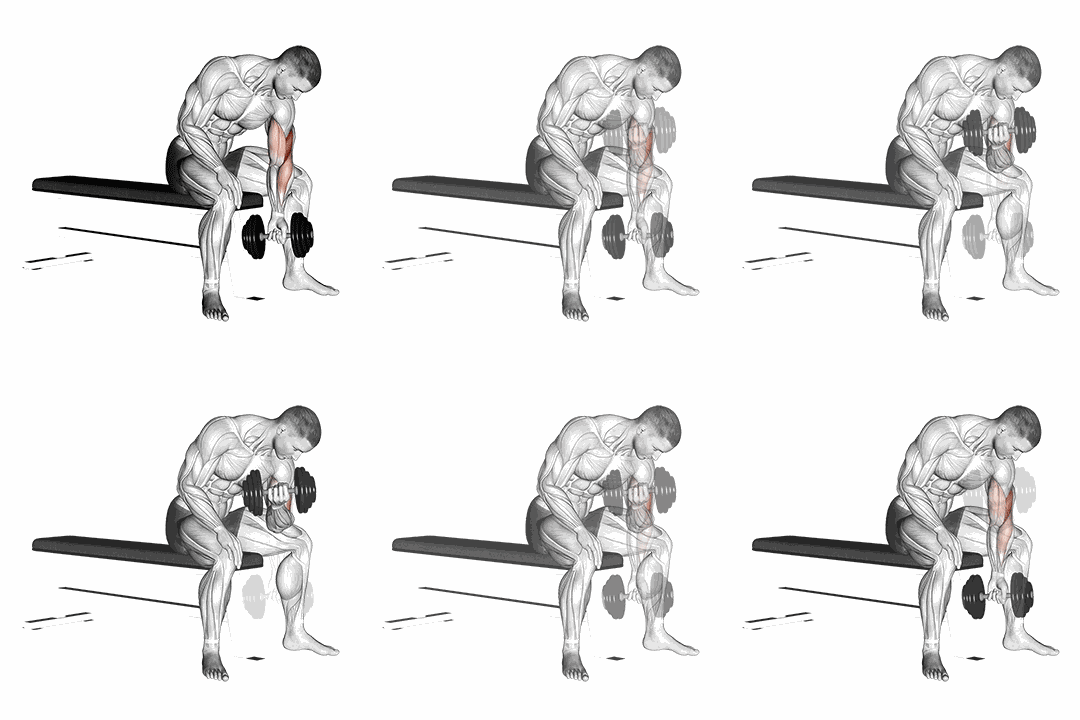
Seated, elbow braced against your inner thigh, same philosophy: an arm in front of the body, zero momentum, all squeeze. The closest free-standing cousin of the spider curl.
How to program it
Three protocols by goal. Pick one per cycle and aim for progression on load or distance.
| Goal | Sets × distance | Load | Rest |
|---|---|---|---|
| Hypertrophy | 3 × 10-12 | Moderate, RPE 8 | 90 s |
| Peak contraction | 3 × 12-15, 1 s squeeze | Light, RPE 9 by the last set | 60 s |
| Finisher after heavy curls | 2 × 15-20 | Very light, to failure | 60 s |
Dumbbell Spider Curl FAQ
Spider curl vs preacher curl: what's the difference?
Both brace the upper arms in front of the torso, but they load opposite ends of the rep. On a preacher the pad angles your arms, so the hardest moment comes low in the curl, near the stretch, and the top turns easy. In the spider position your arms hang plumb vertical, so resistance peaks around 90 degrees, right next to the squeeze. Preacher for strict work near the stretch, spider for the top: rotate them across blocks rather than stacking both in one session.
Spider curl or incline curl for biceps growth?
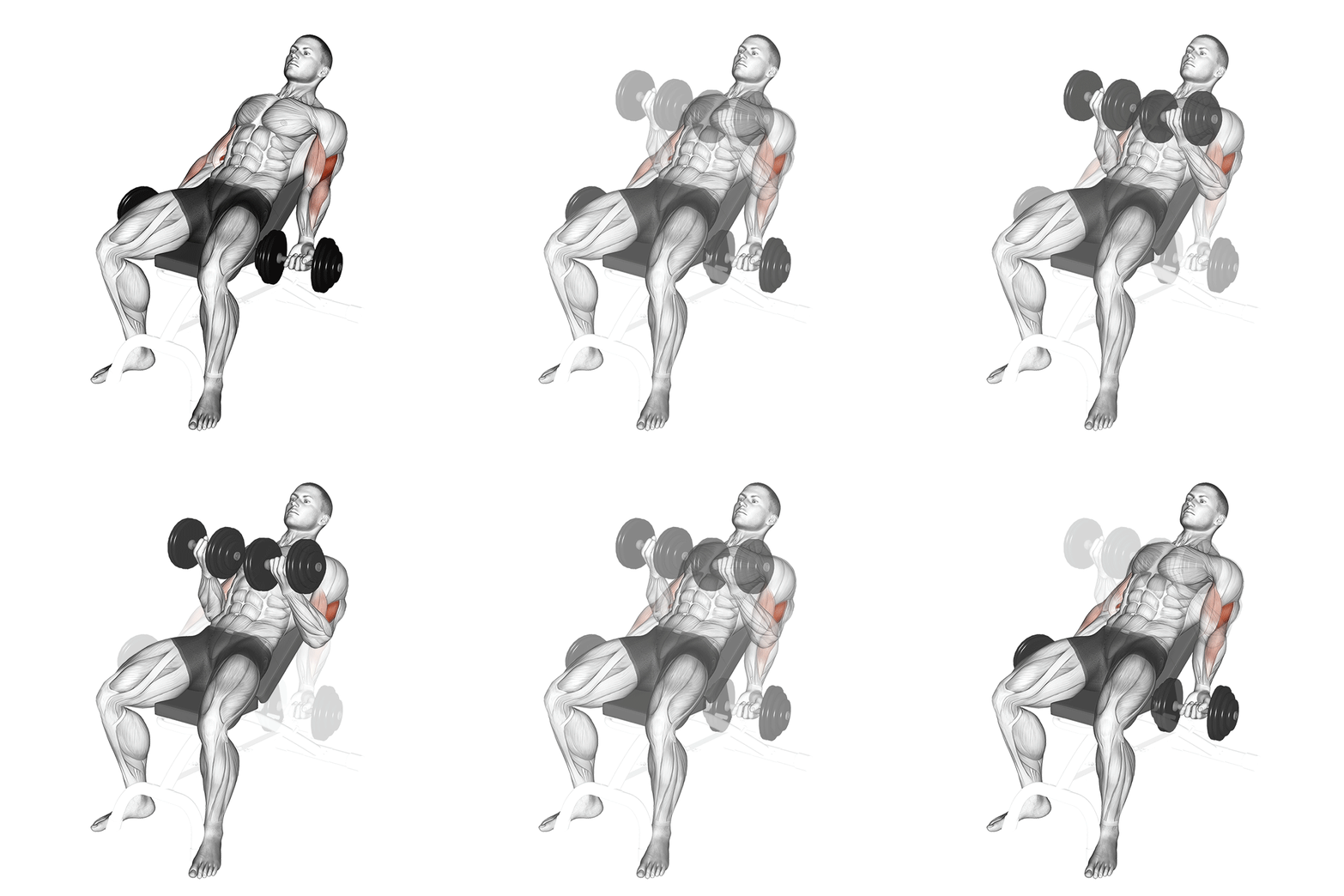
They are the two ends of the same bench. Seated incline curls put your arms behind your torso and train the biceps at long muscle lengths, which current evidence slightly favours for growth; spider curls put the arms in front and hammer the shortened, squeezed position that incline curls never reach. If you only keep one, keep the incline curl. If your session has room for two dumbbell movements, flipping the same bench between them covers the entire length-tension curve.
Supinated or hammer grip on the spider curl?
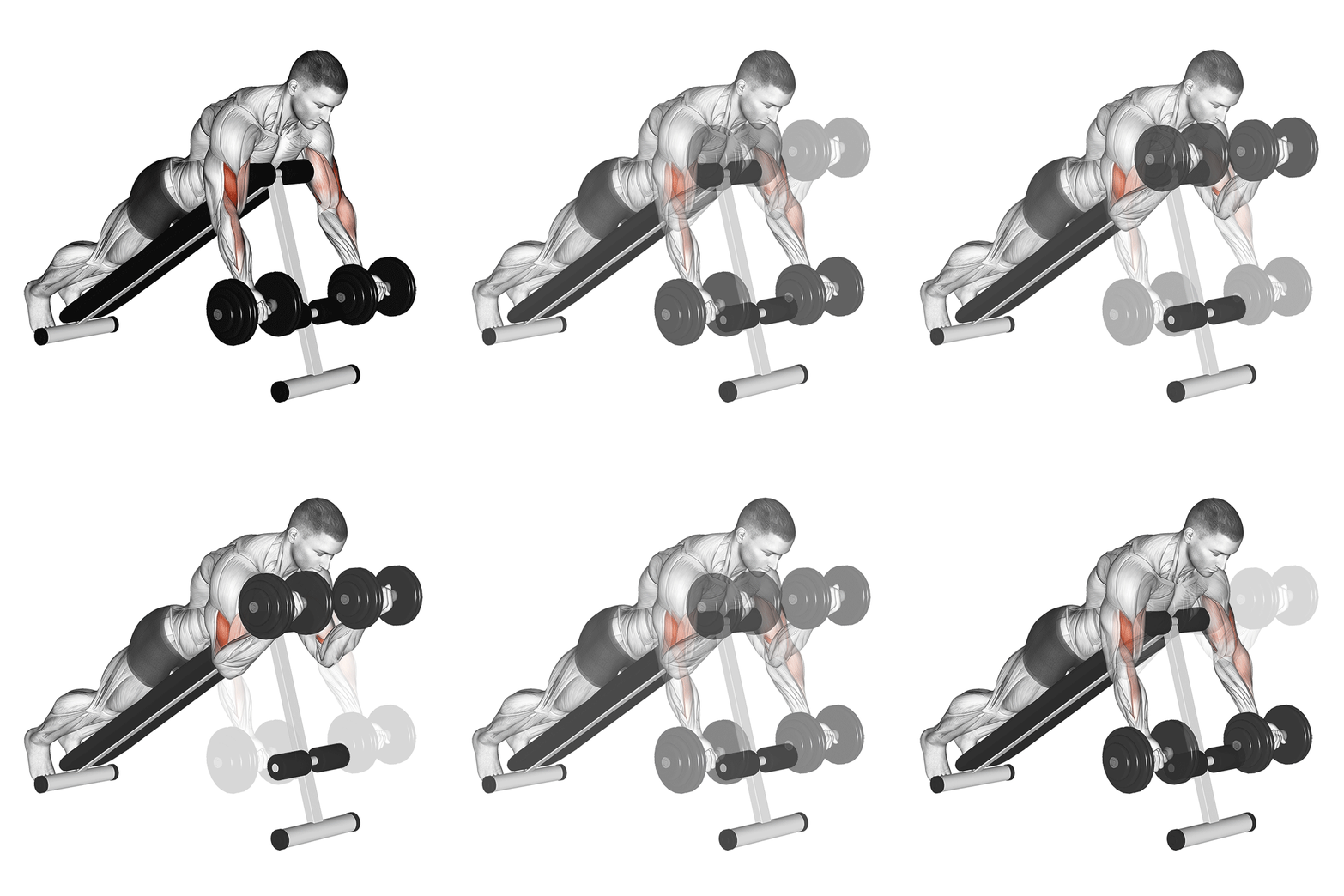
Palms up is the biceps version: full supination keeps the biceps brachii doing the flexing, and the shoulder-flexed position sets up a strong short-head squeeze. A hammer grip hands much of the work to the brachialis and brachioradialis instead, muscles that add arm thickness rather than biceps shape. They are two different exercises sharing one bench: this guide covers the supinated version, and the spider hammer curl has its own. Rotate them across training blocks.