What is the barbell preacher curl?
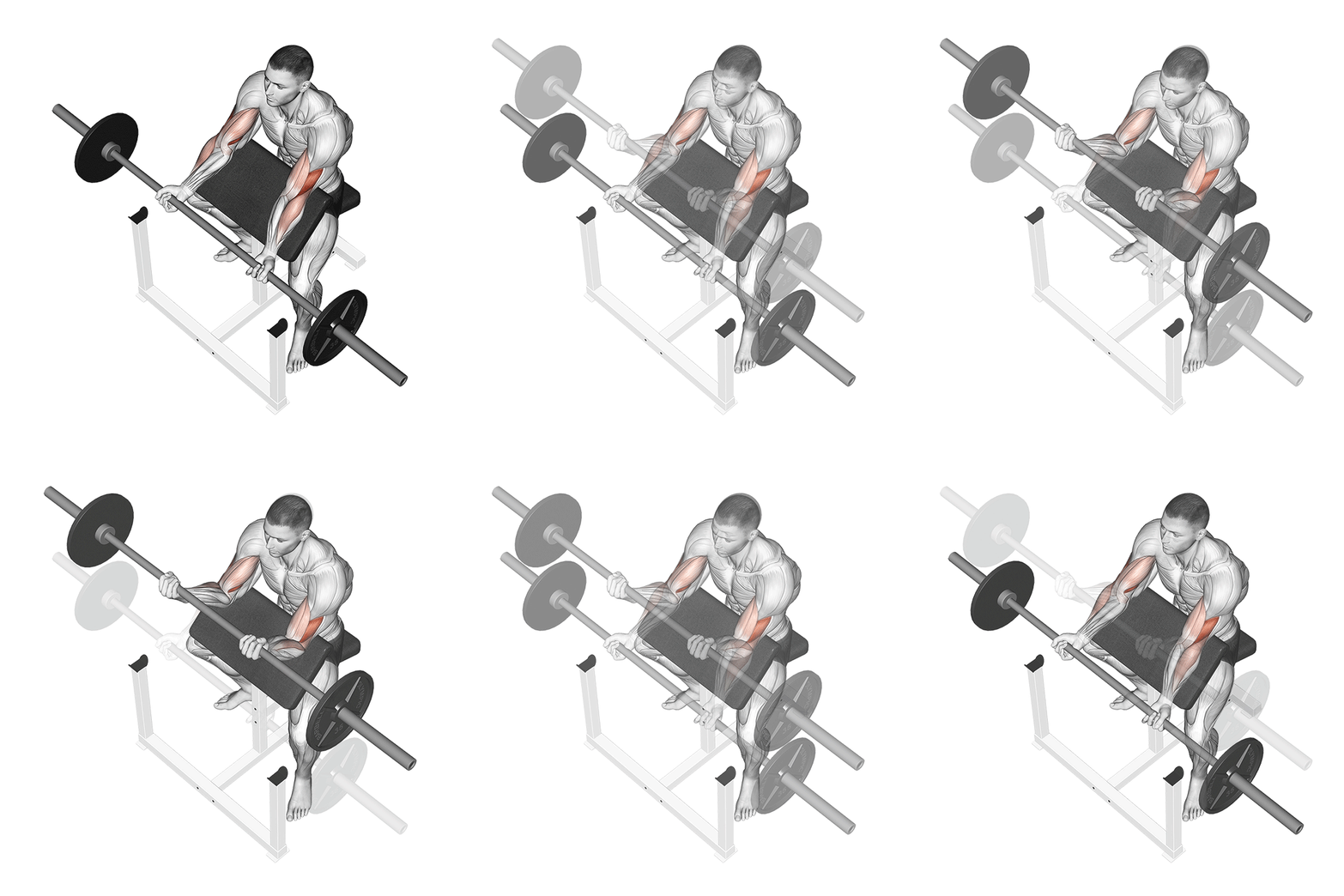
The barbell preacher curl is a biceps isolation exercise performed with the backs of your upper arms braced against the angled pad of a preacher bench. Because the pad blocks the shoulders and torso from contributing, every centimetre of the rep comes from elbow flexion. Compared with a standing barbell curl, the hardest part of the movement shifts toward the bottom, where the biceps is close to fully lengthened, which makes it an excellent strict hypertrophy tool. It suits anyone who cheats standing curls, wants a bigger stretch stimulus, or needs an honest measure of pure biceps strength.
How to do the barbell preacher curl
- 1
Set the pad height
Adjust the seat so your armpits hook over the top edge of the pad and the backs of your upper arms lie flat against it. Feet planted, chest against the pad.
- 2
Take a shoulder-width grip
Grip an EZ or straight bar palms up, hands about shoulder width. Have a partner hand it over or lift it from the rest without letting your elbows leave the pad.
- 3
Curl without lifting off
Flex the elbows to bring the bar up until your forearms are just short of vertical. Upper arms and armpits stay glued to the pad the entire time.
- 4
Lower to a long stretch
Take 2-3 seconds to lower the bar until your elbows are almost straight. Stop just short of a hard lockout and reverse smoothly, never with a bounce.
Pro tip
The bottom of a preacher curl is where biceps get built and where they get hurt. Treat the last 10 degrees of the descent like glass: slow, smooth, never bounced, especially on your heaviest sets.
Common mistakes
Bouncing out of the bottom.
Reversing with a jerk at full stretch puts enormous strain on the distal biceps tendon. Control the last third of the descent and pause a beat before curling back up.
Shrugging the bar up.
When the set gets hard, the shoulders creep up and the elbows lift off the pad. If your armpits leave the top edge, end the set or drop the weight.
Seat set too low.
With the seat too low you hang off the pad, the elbows slide down during the set and the shoulders take over. Set the seat so the armpits sit snug on the top edge before rep one.
Stopping the descent halfway.
Half reps in the top range skip the lengthened position, the main reason to use a preacher bench at all. If you can't control the full descent, the bar is too heavy.
Variations and progressions
Easier
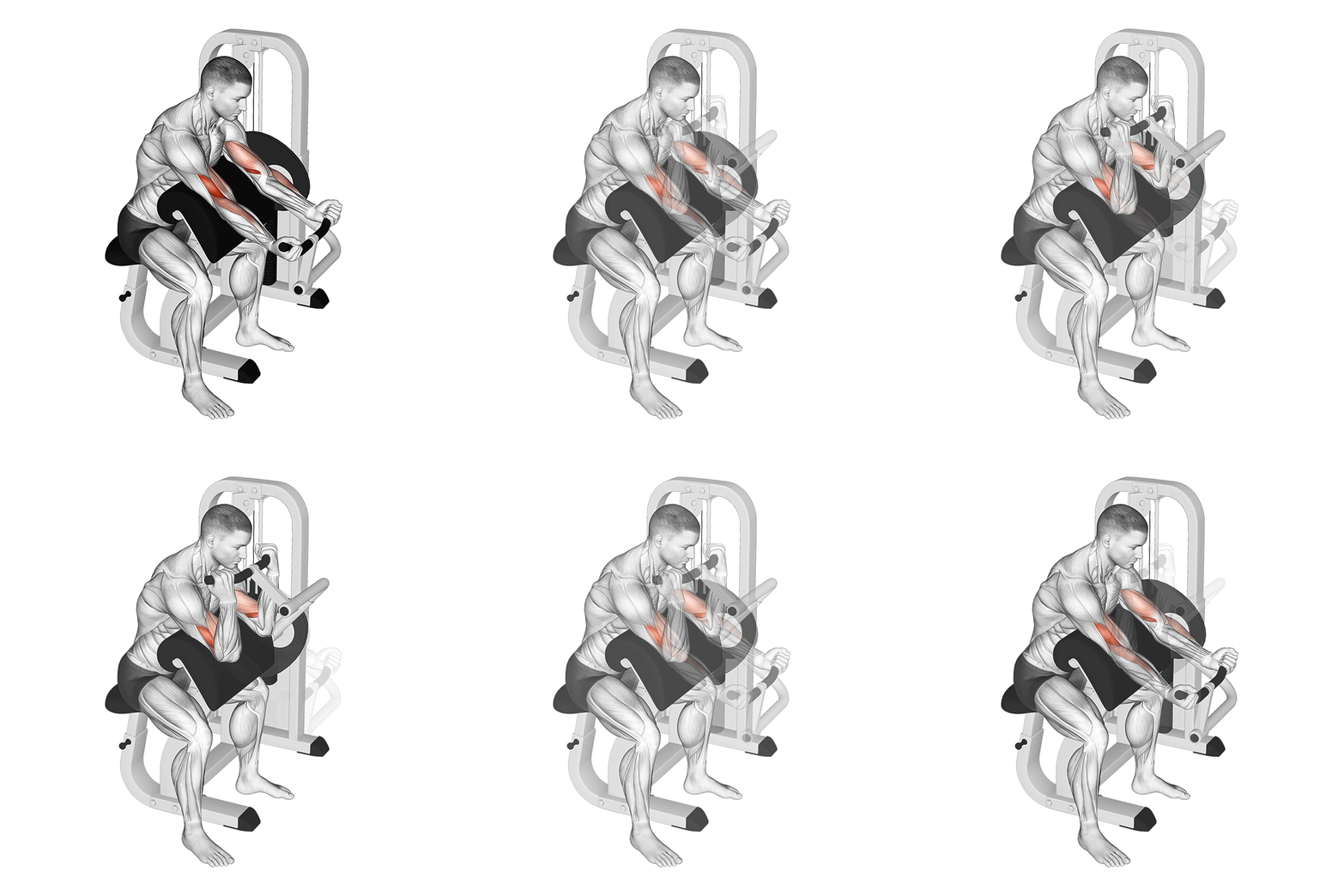
Machine preacher curl
A fixed path and a smooth cam let you train the same strict pattern with zero balance demands, ideal for learning the movement or finishing to failure.
Harder
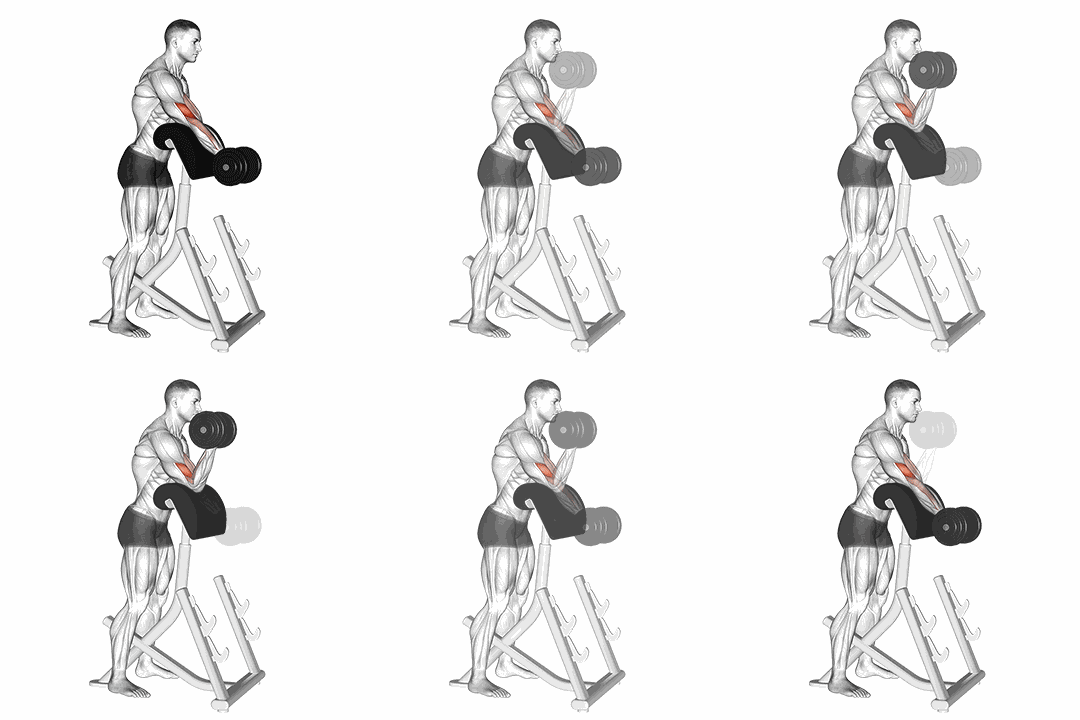
Single-arm dumbbell preacher curl
One arm at a time with a 4-second lowering phase. No stronger arm to hide behind, and the slow eccentric magnifies the stretch.
Alternative
Concentration curl
No preacher bench? Brace the back of your arm against your inner thigh. Same idea: the elbow can't move, so the biceps can't cheat.
How to program it
Three protocols by goal. Pick one per cycle and aim for progression on load or distance.
| Goal | Sets × distance | Load | Rest |
|---|---|---|---|
| Strength | 4 × 6-8 | Heavy, no bounce | 2 min |
| Hypertrophy | 3-4 × 8-12 | Moderate | 90 s |
| Stretch finisher | 2 × 12-15, slow eccentric | Light | 60 s |
Barbell Preacher Curl FAQ
Preacher curl or standing barbell curl?
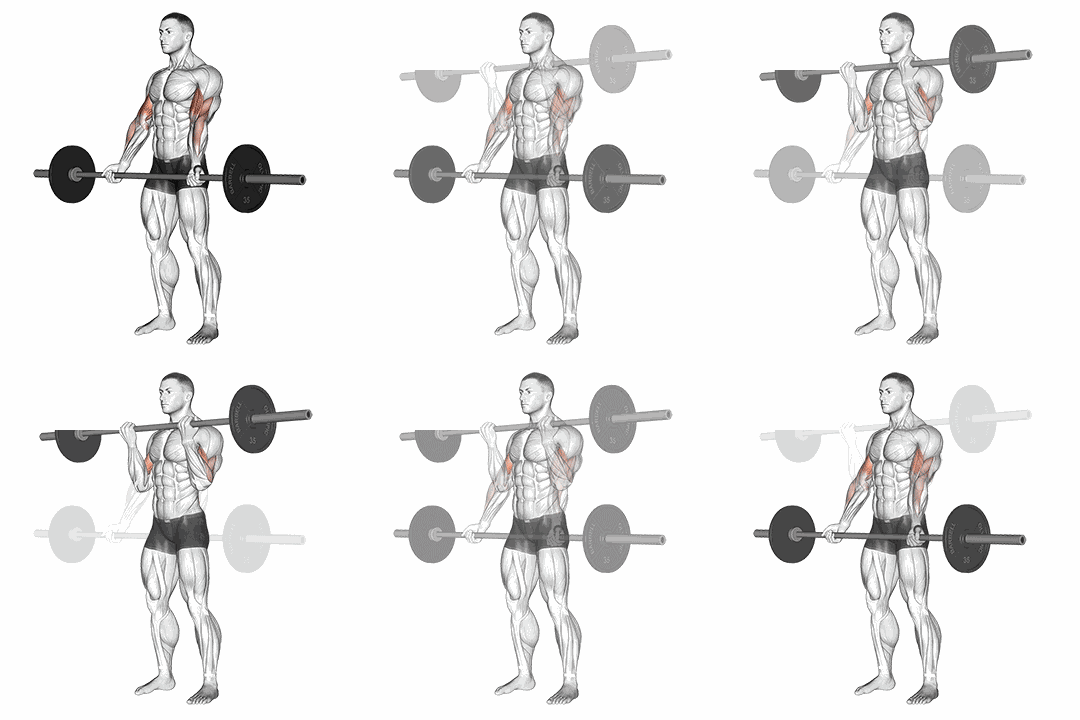
They do different jobs. The standing curl lets you load heavier and overload the squeeze near the top. The preacher curl removes all momentum and shifts the hardest tension to the stretched bottom position. Most good arm programs use both across the week rather than choosing one.
Should I fully straighten my arms at the bottom?
Go close to full extension, since the stretch is the point, but keep the last few degrees smooth and under tension rather than relaxing into a hard lockout. Dumping the weight onto a straight elbow between reps is how preacher curls irritate the biceps tendon.
Why do preacher curls bother my forearms or elbows?
Usually one of three things: a death grip on the bar, wrists bent back under load, or deep stretch positions attacked with too much weight. Soften the grip, keep the wrists neutral, and spend a couple of weeks lighter with slower descents. If a sharp pain sits near the elbow crease, back off; the distal biceps tendon doesn't like surprises.
EZ bar or straight bar on the preacher bench?
On a preacher bench the EZ bar is the sensible default: with the arms fixed on the pad, a fully supinated straight-bar grip cranks the wrists for many lifters. The straight bar gives slightly more supination and a touch more biceps bias, so use it if it stays comfortable. The pad and your tempo matter far more than the bar's shape.