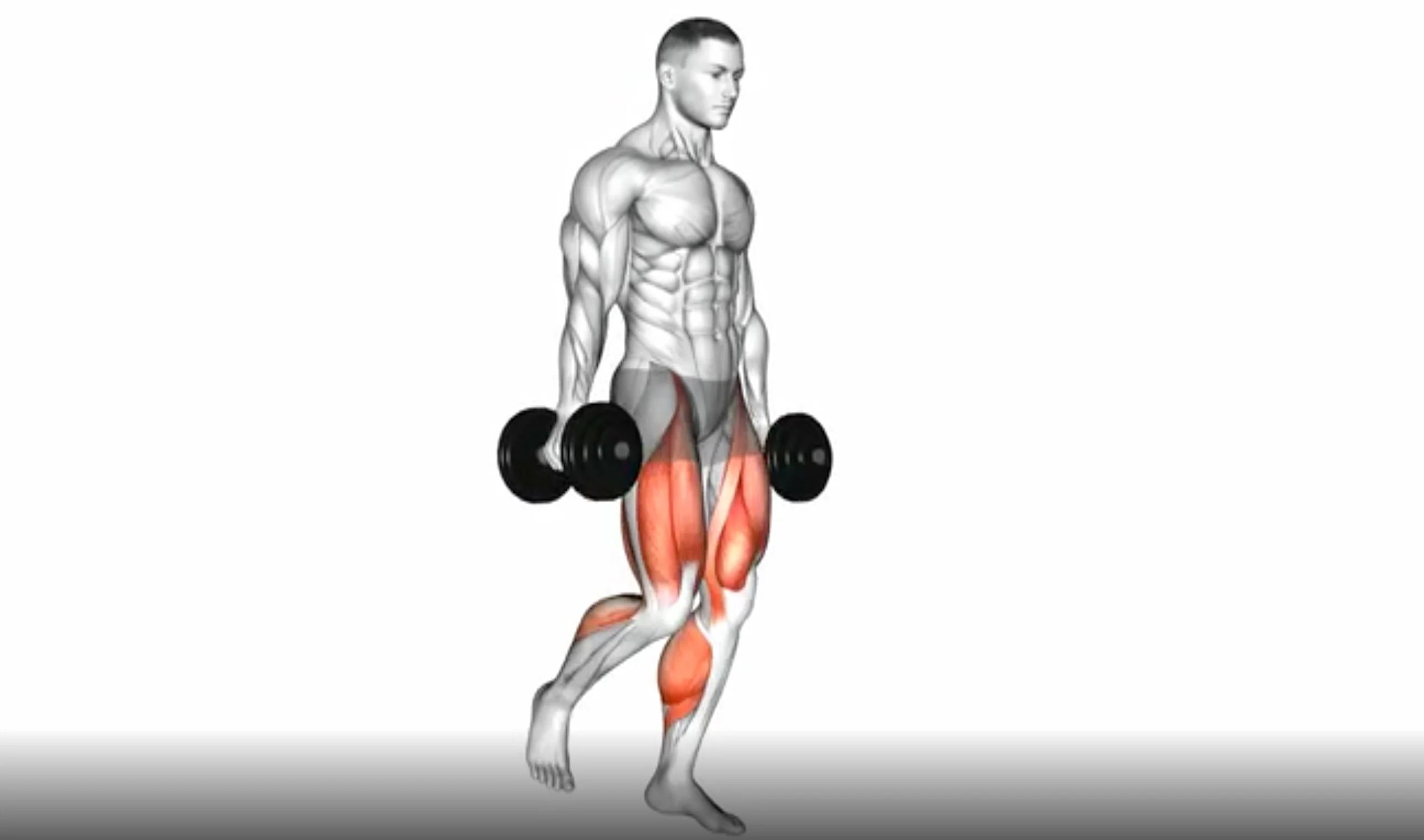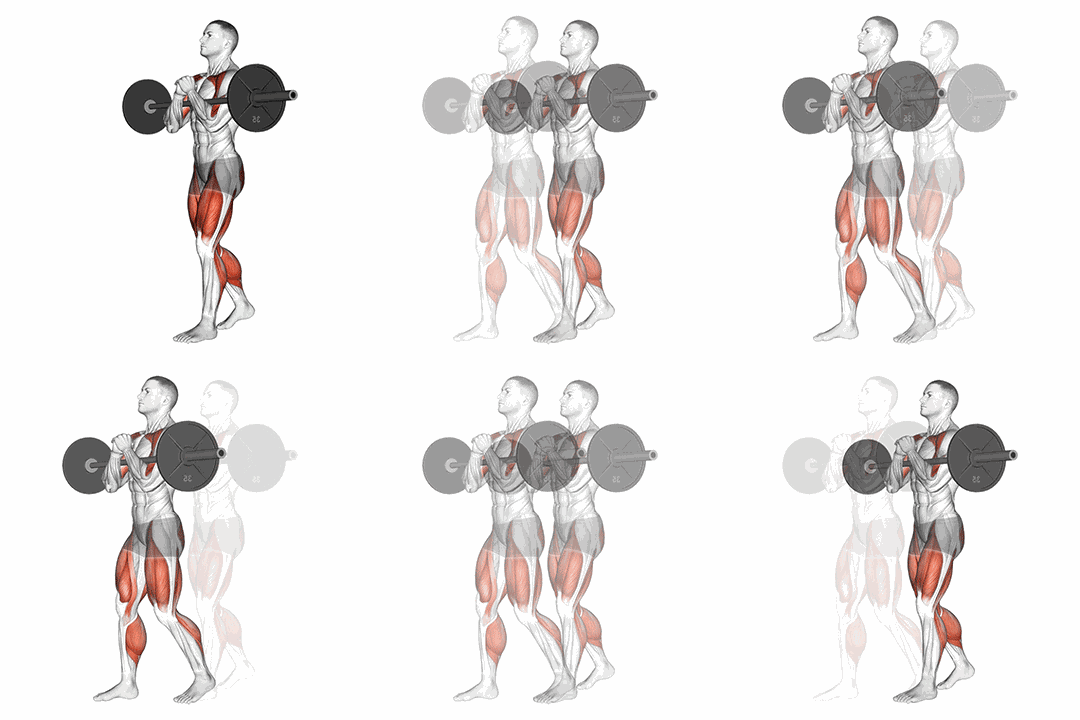
What is the zercher carry?
The Zercher carry is a loaded walk with a barbell held in the crook of the elbows, just below the biceps, against the chest. The front-loaded position forces the entire trunk into maximum tension to resist spinal flexion, hammers the upper back and biceps, and demands hip stability with every step. It's used by strongman athletes, tactical operators and conditioning coaches who want a single move that builds carry strength, midline robustness and grit. Less Instagram-friendly than a farmer's carry, twice as demanding.
How to do the zercher carry
- 1
Load the bar in the elbows
Pick the bar off a rack or squat-clean it to the elbow position: bar nested in the crooks of the elbows, hands clasped, bar pulled tight to the chest.
- 2
Brace like a deadlift
Take a big breath into your belly, brace the core 360°, pull shoulders back and down, lock the lats. Stack ribs over pelvis, no flaring.
- 3
Walk with short steps
Step short and quick, hips under the load. Stay tall, chest up, eyes forward. Don't lean back, the brace holds the bar, not the lumbar arch.
- 4
Set down safely
Either return to the rack, or squat down with the bar still nested in the elbows and place it on the floor. Never just drop a Zercher load.
Pro tip
The hardest part of the Zercher carry isn't the carry, it's the breath. You can't take shallow chest breaths or the brace fails. Diaphragm breaths into the belly only, every 3-4 steps.
Common mistakes
Leaning back.
Counterweighting with the lumbar spine looks easy but loads the discs. Stay vertical and brace harder.
Bar slipping down the forearms.
If the bar drifts to the wrists, you'll lose it fast. Wear long sleeves or wrap a towel around the bar to keep it locked in the elbow crooks.
Long strides.
Big steps under load = wobbly hips = lost brace. Short, controlled steps every time.
Dropping the bar to finish.
Dropping a barbell from chest height onto your feet ends your training week. Squat it down, every set.
Variations and progressions
Easier
Short Zercher hold
Hold the bar in position without walking. Builds brace tolerance and elbow conditioning before adding the locomotion.
Harder
Zercher carry + step-up
Carry the bar across the gym, finish with 5 step-ups onto a box. The combination murders the core and conditioning at once.
No barbell?
Sandbag bear hug carry
A heavy sandbag hugged to the chest delivers the same anti-flexion challenge with zero risk of dropping a loaded barbell on your toes.
How to program it
Three protocols by goal. Pick one per cycle and aim for progression on load or distance.
| Goal | Sets × distance | Load | Rest |
|---|---|---|---|
| Conditioning carry | 4 × 30 m | 30-40% 1RM front squat | 90 s |
| Strength carry | 5 × 20 m | 50-60% 1RM front squat | 2 min |
| Strongman event prep | 3 × 40 m | Event weight | 3 min |
Zercher Carry FAQ
Doesn't the bar hurt the elbows?
Yes, at first. The pressure builds tolerance in the connective tissue and bony surfaces, much like the front-rack position in cleans. Use long sleeves or a folded towel around the bar for the first few sessions. After 3-4 weeks the discomfort fades and most lifters stop using padding entirely.
Farmer's carry or Zercher carry?
Different jobs. Farmer's carries train grip, traps and overall durability under load. Zerchers train anti-flexion core strength, upper-back posture and breathing under brace. Most programs benefit from both: heavy farmers for grip and conditioning, moderate Zerchers for core and structural strength.
How much can I carry?
Solid intermediate lifters carry 40-50% of their front-squat 1RM for 30 m. Advanced lifters can manage 60-70%. The bar position is the limiter, not the legs. Don't chase numbers, chase strict bracing and a tall posture. Heavy with a rounded back is a wasted set.