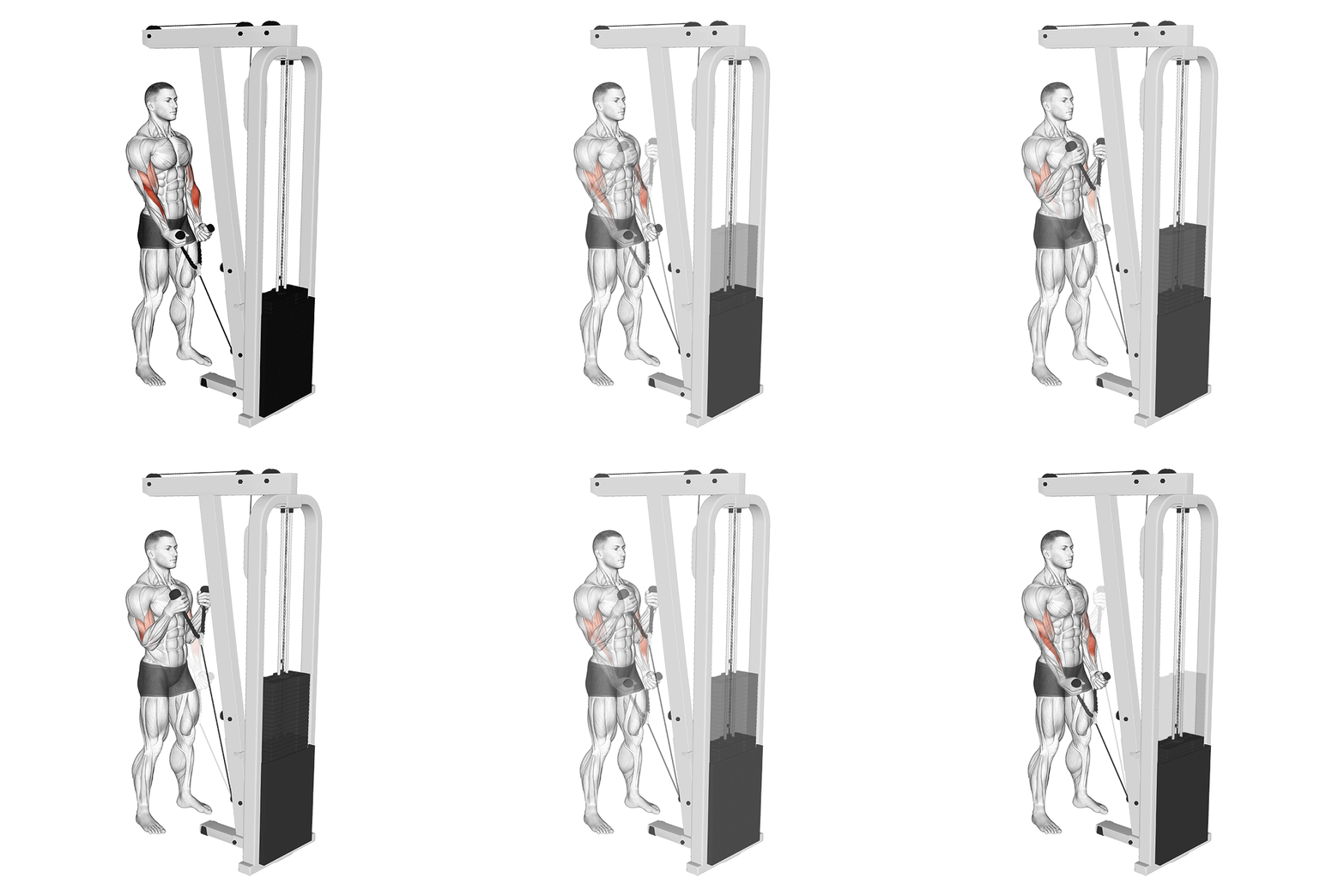
What is the rope cable hammer curl?
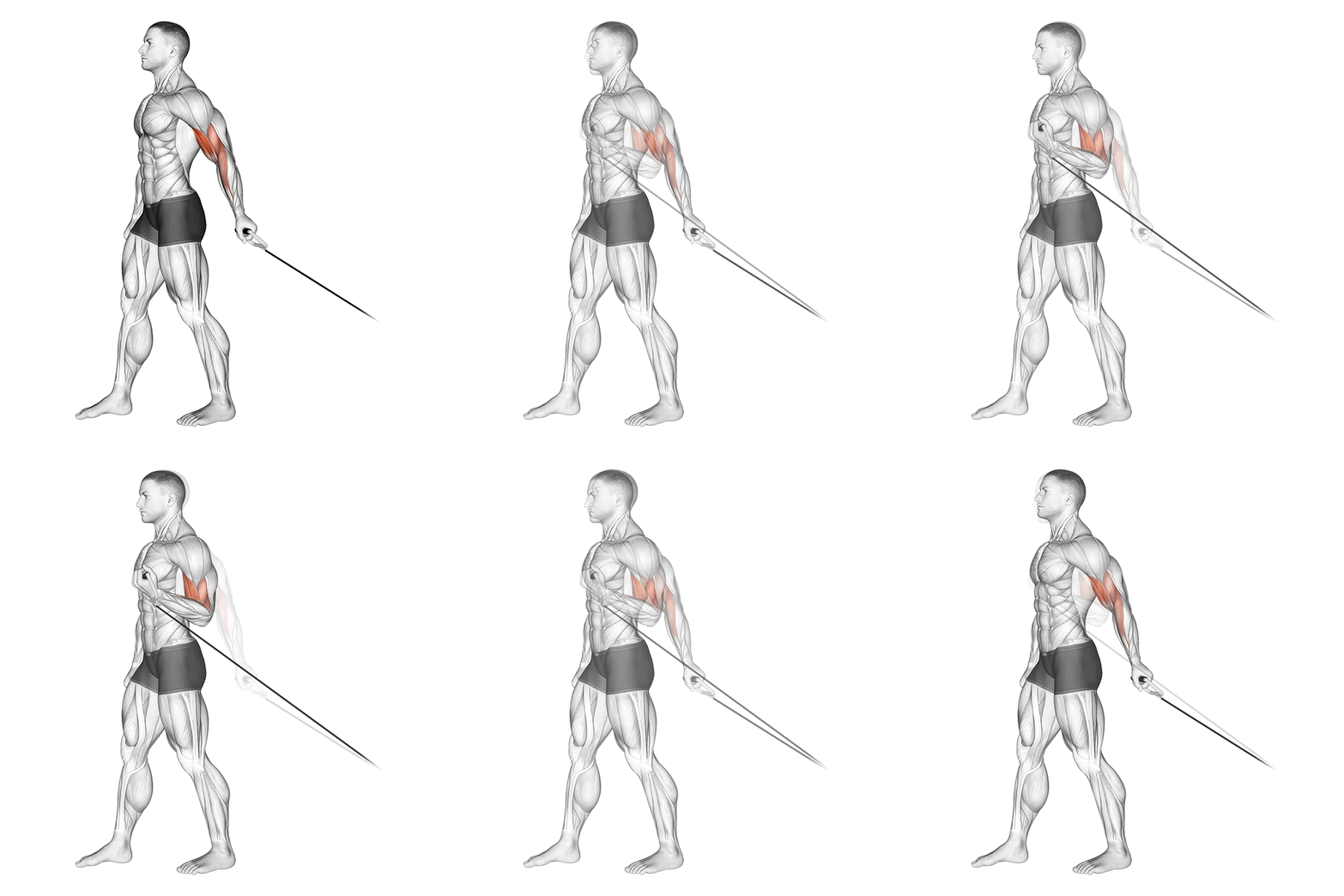
The rope cable hammer curl is an elbow flexion exercise done with a rope attachment on a low pulley, palms facing each other for the entire rep. The neutral grip takes the biceps out of their strongest line and hands a bigger share of the work to the brachialis and brachioradialis, the muscles that add width to the upper arm and size to the forearm. Unlike dumbbells, the cable keeps resistance on at full stretch and at the top, so every centimetre counts. It is wrist-friendly, simple to learn and one of the best arm accessories in any program.
How to do the rope cable hammer curl
- 1
Set the rope low and step back
Rope on the lowest pulley. Grab the ends with a neutral grip, thumbs against the stoppers, and take a half step back so the stack never touches down mid-set.
- 2
Pin your elbows to your ribs
Stand tall, soft knees, a very slight forward lean. Your elbows stay glued to your sides for the whole set; they are a hinge, not a passenger.
- 3
Curl knuckles to shoulders
Drive your fists up, thumbs leading, without rocking your torso. Stop when forearms meet biceps and squeeze for a count.
- 4
Lower slow, to full stretch
Take 2-3 s down until your arms are completely straight. That stretched bottom under cable tension is the money zone; don't skip it.
Pro tip
Treat the stack like it's trying to rip the rope out of your hands at the bottom: fight the last third of every negative. The rep you lock in at full stretch grows more arm than two bounced half reps at the top.
Common mistakes
Elbows drifting forward.
Once the elbows travel, your front delts join the party and the curl becomes a weird front raise. Pin them to your ribs.
Hip swing on every rep.
Rocking your torso turns a biceps exercise into a lower-back exercise. Drop the pin two plates and curl, don't swing.
Top-half reps only.
Pumping the top half feels great and builds little. Full extension at the bottom is where the rope earns its keep.
Wrists breaking back.
Letting the wrists bend back leaks force and irritates the forearm. Keep knuckles in line with the forearm, like punching upward.
Variations and progressions
Easier
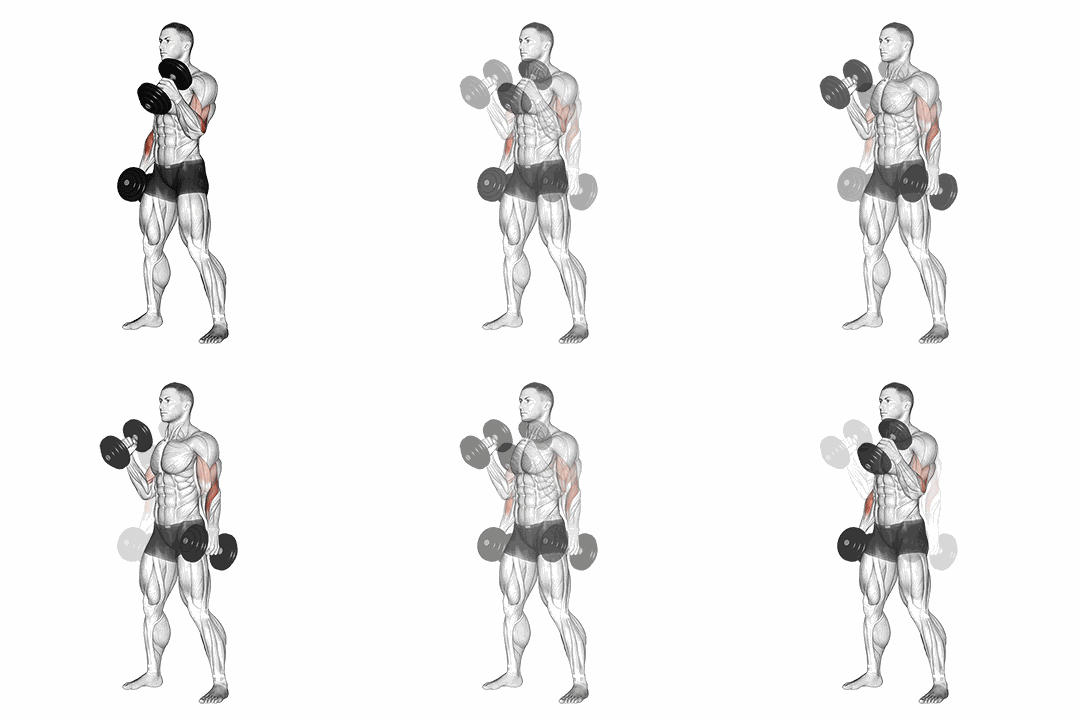
Alternating dumbbell hammer curl
One arm at a time with a dumbbell is easier to control and to load precisely while you groove the strict pattern.
Harder
Bayesian-style hammer curl
Face away from the stack, arm slightly behind your body, one handle in a neutral grip. The loaded stretch is savage and the cheating options are zero.
No cable?
Dumbbell hammer curls
Same grip, same targets. You lose constant tension at the bottom, so squeeze hard at the top and control 3 s negatives to compensate.
How to program it
Three protocols by goal. Pick one per cycle and aim for progression on load or distance.
| Goal | Sets × distance | Load | Rest |
|---|---|---|---|
| Arm thickness | 3 × 6-8 | Heavy, RPE 8 | 2 min |
| Hypertrophy | 4 × 10-12 | Moderate | 60-90 s |
| Finisher | 2 × 15-20 + drop set | Light | 45-60 s |
Rope Cable Hammer Curl FAQ
What do hammer curls work that regular curls don't?
The neutral grip shifts emphasis to the brachialis, a muscle under the biceps that pushes the whole arm outward as it grows, and to the brachioradialis, the big forearm muscle on the thumb side. Supinated curls bias the biceps peak; hammers build width and forearm size. If your arms look thin from the front despite endless curls, hammers are usually the missing piece.
Rope hammer curls or dumbbell hammer curls?
The rope wins on tension profile: resistance stays on at full stretch and at the squeeze, exactly where dumbbells go dead. Dumbbells win on absolute load and availability. A simple split that works: rope as your main arm builder for strict sets, dumbbells when you want to push heavier weight or train away from a cable stack. Alternating blocks of each beats arguing about it.
Should I pull the rope ends apart at the top?
Mostly a gimmick. A slight spread at the top can feel like a stronger squeeze, but the muscle grows from flexing the elbow under load, not from splitting a rope. If spreading forces you to drop the pin three plates, you traded real tension for a party trick. Keep a comfortable neutral width and spend your effort on the negative instead.