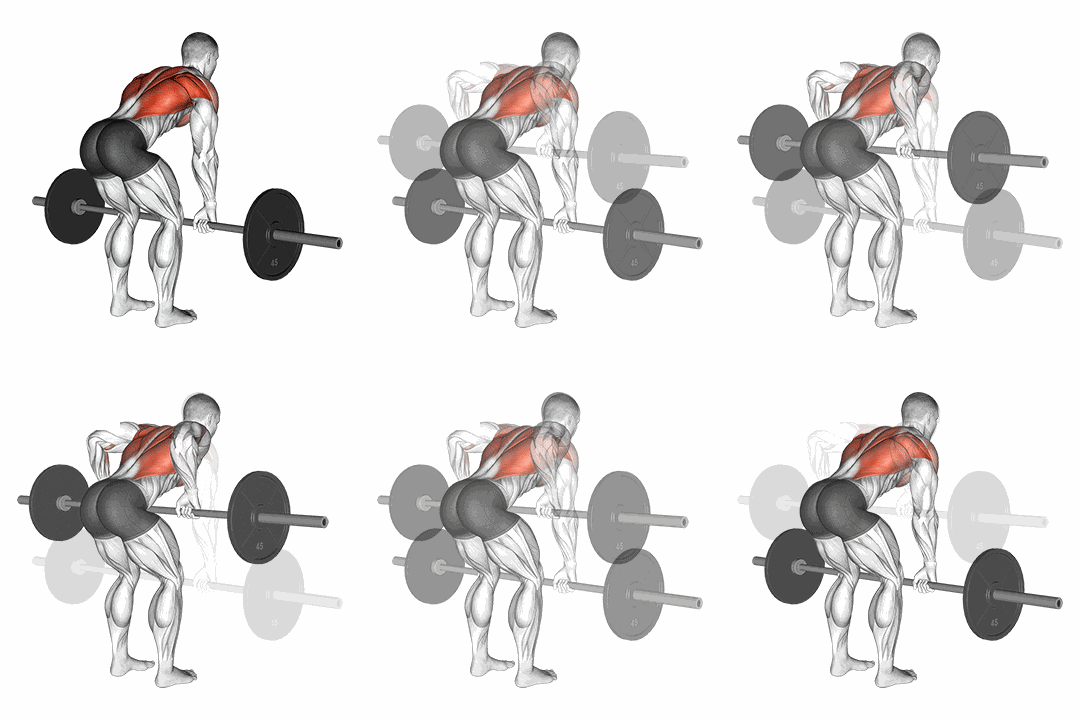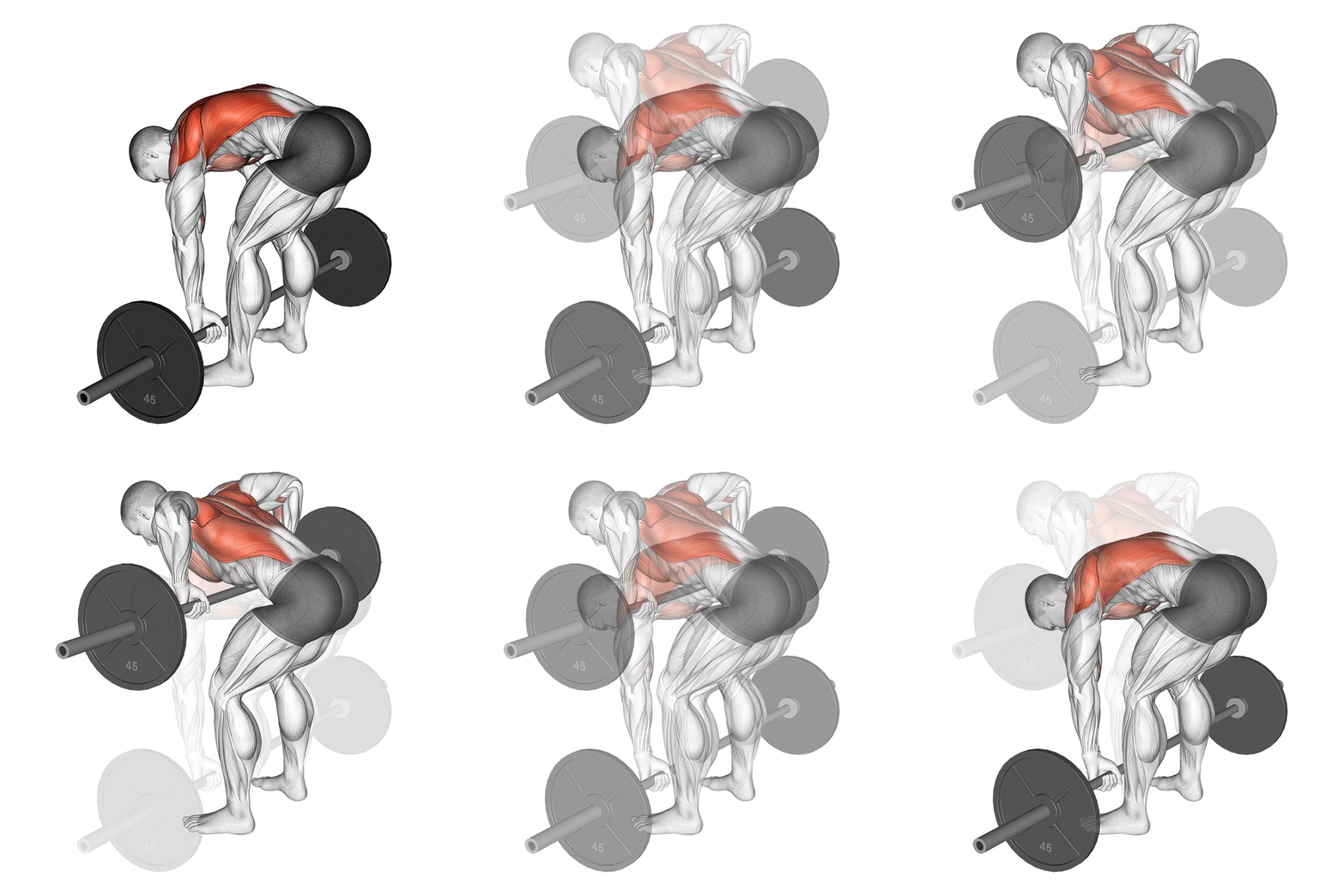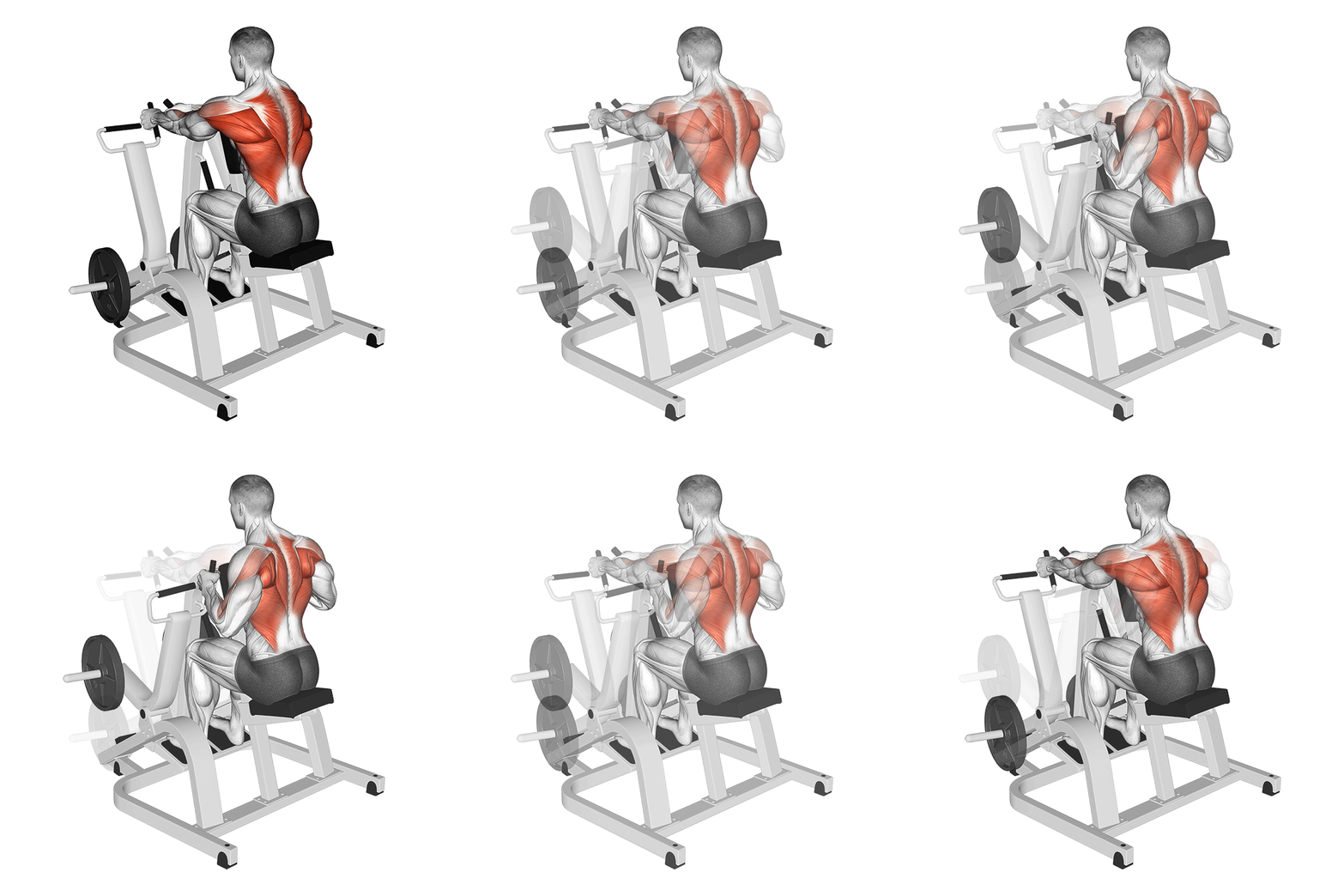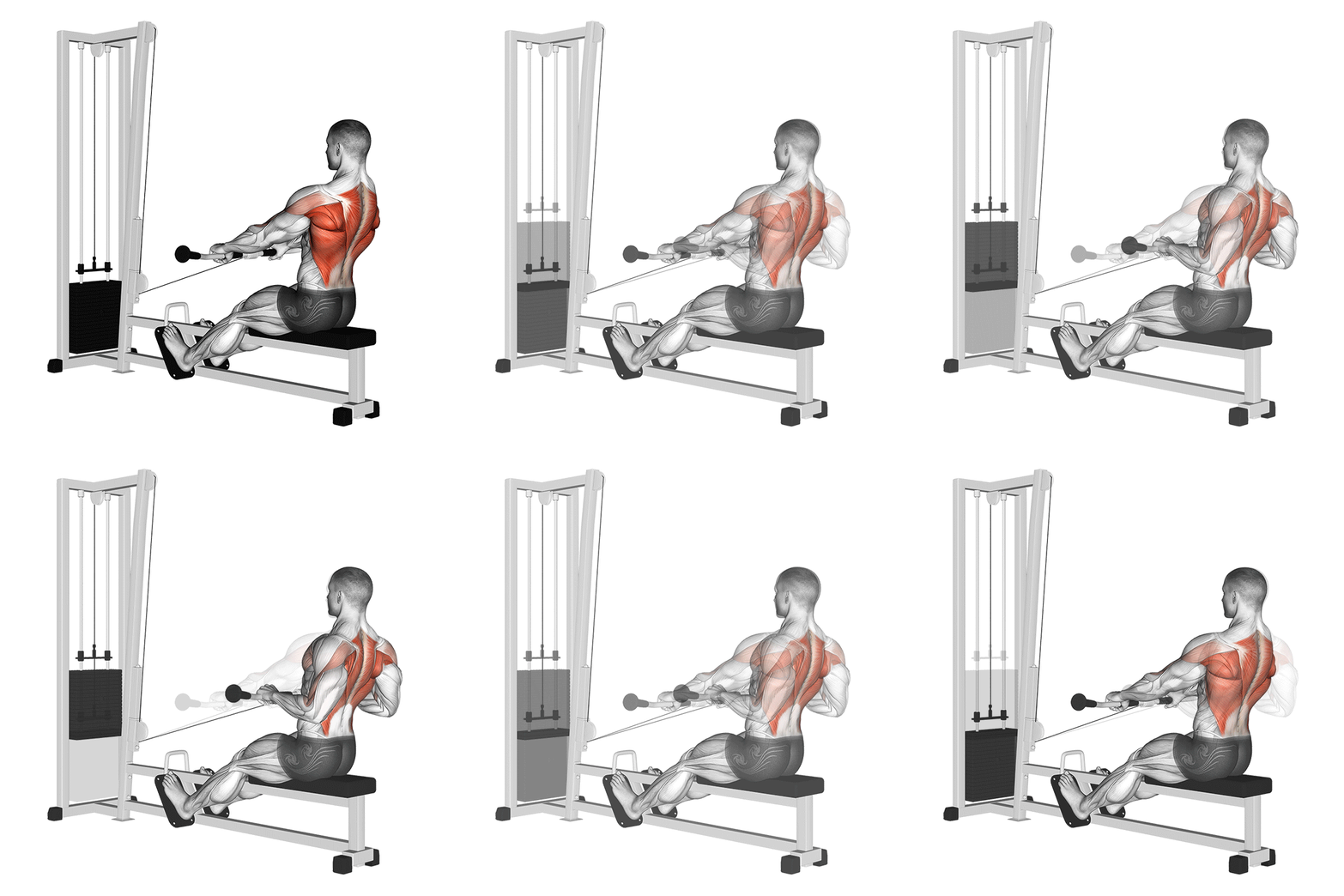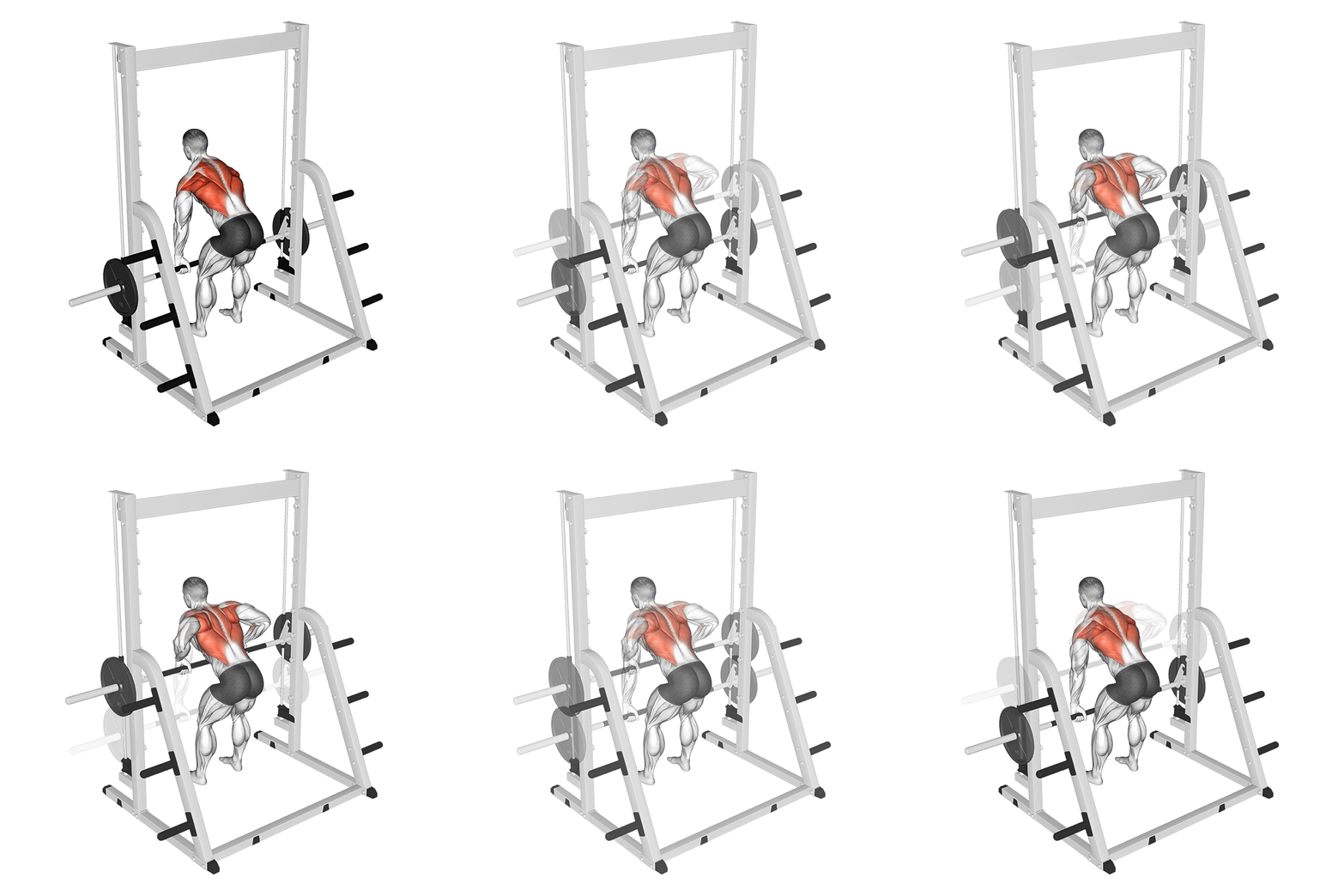
What is the smith machine bent-over row?
The Smith machine bent-over row is a horizontal pull performed with the barbell locked into the machine's rails. You hinge forward to roughly 45°, pull the bar into your lower ribs, then lower it back to a full stretch. Because the path is fixed, you stabilise less and pull more: fatigue hits the lats, rhomboids and rear delts instead of your lower back and grip. That makes it a strong hypertrophy choice late in a session, a safer option when free-weight rows start breaking down, and an easy lift to progress because every rep travels the exact same groove.
How to do the smith machine bent-over row
- 1
Find your spot under the rails
Set the hooks around knee height. Stand so the bar brushes your thighs as it travels: on a Smith machine, your body position does the aiming, not the bar.
- 2
Hinge and set your back
Push the hips back until your torso sits around 45°, knees soft, spine neutral. Grip just outside your thighs, overhand, and unhook the bar with a twist of the wrists.
- 3
Pull to the lower ribs
Drive the elbows back and up at about 45° from your torso until the bar touches between navel and lower ribs. Squeeze the shoulder blades together for a beat.
- 4
Lower to a full stretch
Let the bar travel down in 2-3 s until the arms are long and the shoulder blades glide forward. Torso angle stays frozen: only the arms and scapulae move.
Pro tip
Use the rails to your advantage: pick a torso angle and never let it change. Want more lats? Pull lower, toward the navel. More upper back? Pull higher, toward the sternum. Same machine, two different exercises.
Common mistakes
Standing in the wrong place.
If the bar path runs away from your legs, every rep levers your lower back. Reposition until the bar grazes your thighs the whole way up.
Rising with every rep.
Letting the torso creep upward turns rows into shrugs and lies about your progress. If the angle will not hold, strip plates off the bar.
Yanking with the arms.
A row starts at the shoulder blade, not the elbow. Retract first, then pull, or your biceps and forearms will steal the whole set.
No full stretch at the bottom.
The lengthened position is where most of the growth happens. Let the shoulder blades slide forward at the bottom of every single rep.
Variations and progressions
Easier
Chest-supported machine row
A pad takes the lower back out of the equation entirely. The right starting point if holding the hinge is what limits your sets.
Harder
Dead-stop Pendlay style
Set the safeties low and rest the bar on them between reps, torso near parallel. Every rep starts from zero: brutal starting strength for the upper back.
No Smith machine?
Barbell bent-over row
The free-weight version trains the same pull plus all the stabilisation. Expect to row noticeably less weight for the same reps, and that is normal.
How to program it
Three protocols by goal. Pick one per cycle and aim for progression on load or distance.
| Goal | Sets × distance | Load | Rest |
|---|---|---|---|
| Strength | 4 × 6-8 | Heavy, RPE 8 | 2-3 min |
| Hypertrophy | 4 × 8-12 | 65-75% 1RM | 90 s |
| Back volume | 3 × 12-15 | Moderate, strict tempo | 60-90 s |
Smith Machine Bent-Over Row FAQ
Is the Smith machine row cheating compared to a barbell row?
No. For back growth, the fixed path is a feature: less energy spent balancing means more reps taken close to failure with a stable groove. Your stabilisers still get plenty of work from deadlifts and free rows elsewhere in the week. If you compete in strength sports, keep the barbell version as your main lift and use the Smith row as a volume tool, not a replacement.
Overhand or underhand grip on the Smith row?
Overhand with elbows at 45° spreads the work across lats, rhomboids and rear delts: the default for overall back thickness. Underhand tucks the elbows, shifts emphasis to the lats and lower traps, and brings more biceps. The fixed bar path makes the underhand version feel especially smooth. Run one grip per training block rather than flip-flopping every session.
How low should I bend over?
Around 45° is the sweet spot for most lifters: enough range to load the lats, little enough lean to keep the position sustainable for sets of 8-12. A torso near parallel gives more range and more upper-back work but taxes the erectors hard. More upright than 30° and you are drifting into shrug territory. Whatever you choose, keep it identical every session so your numbers stay comparable.