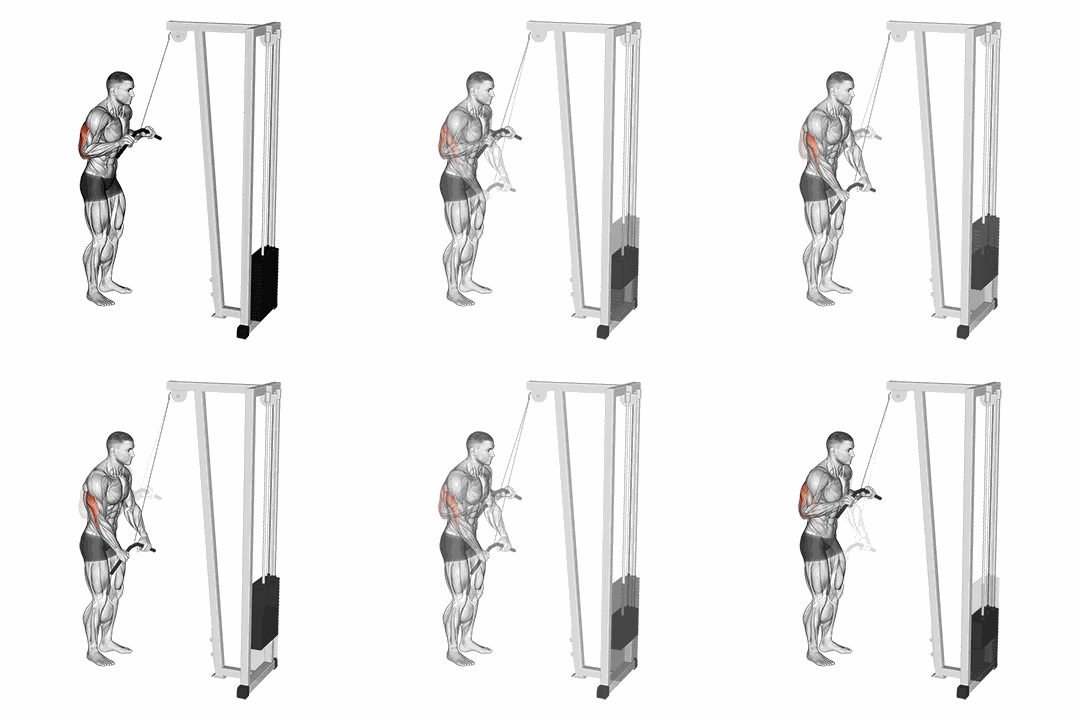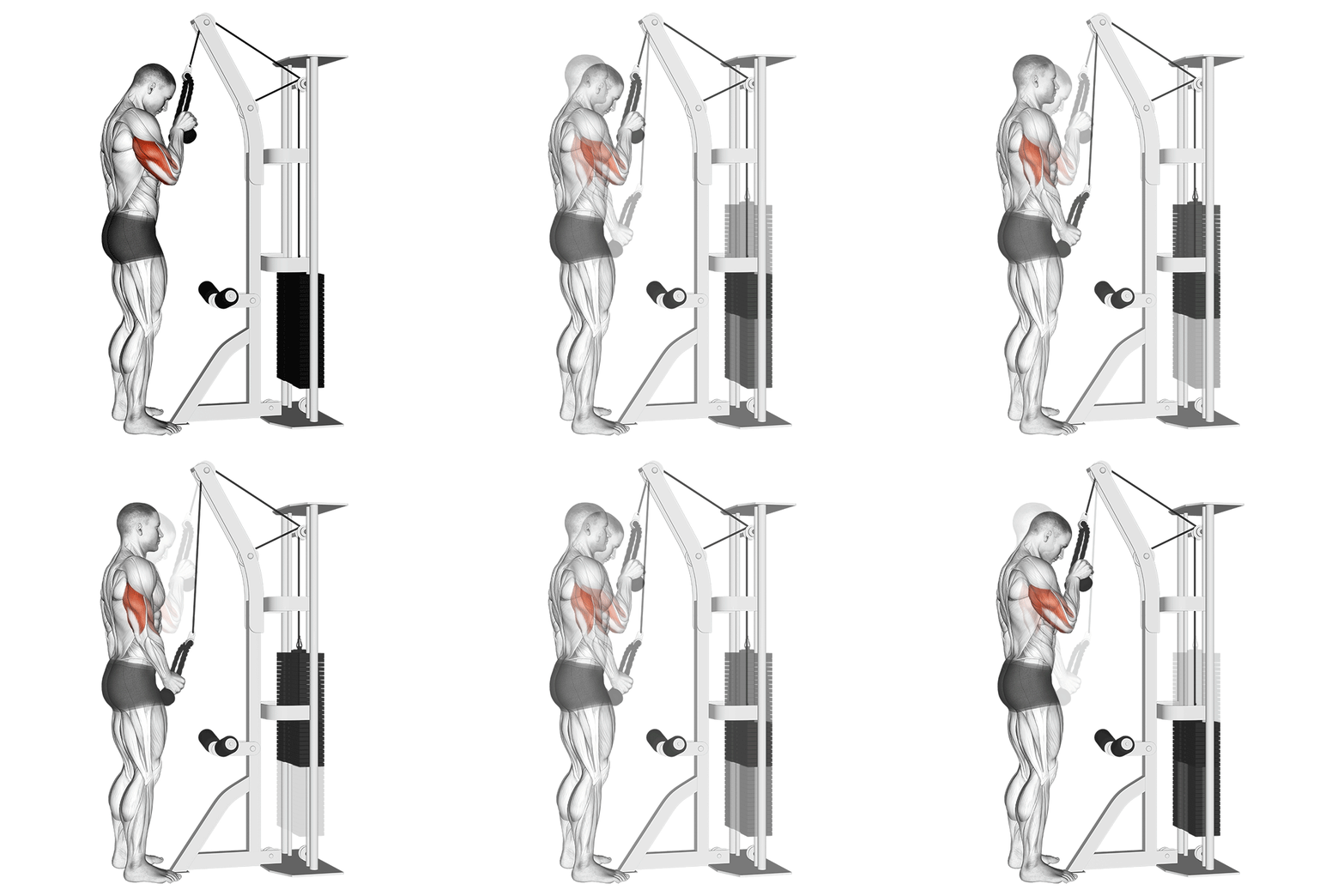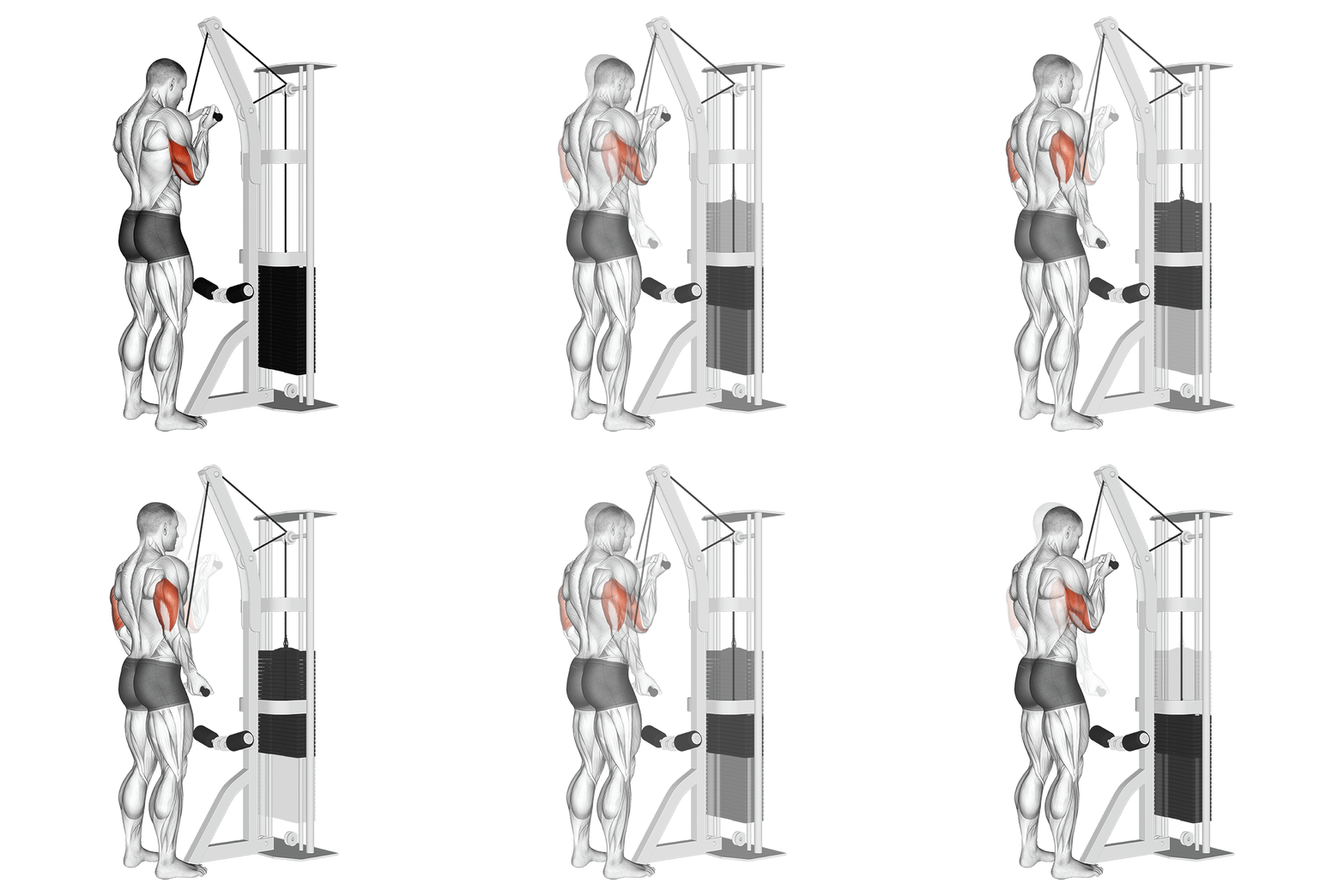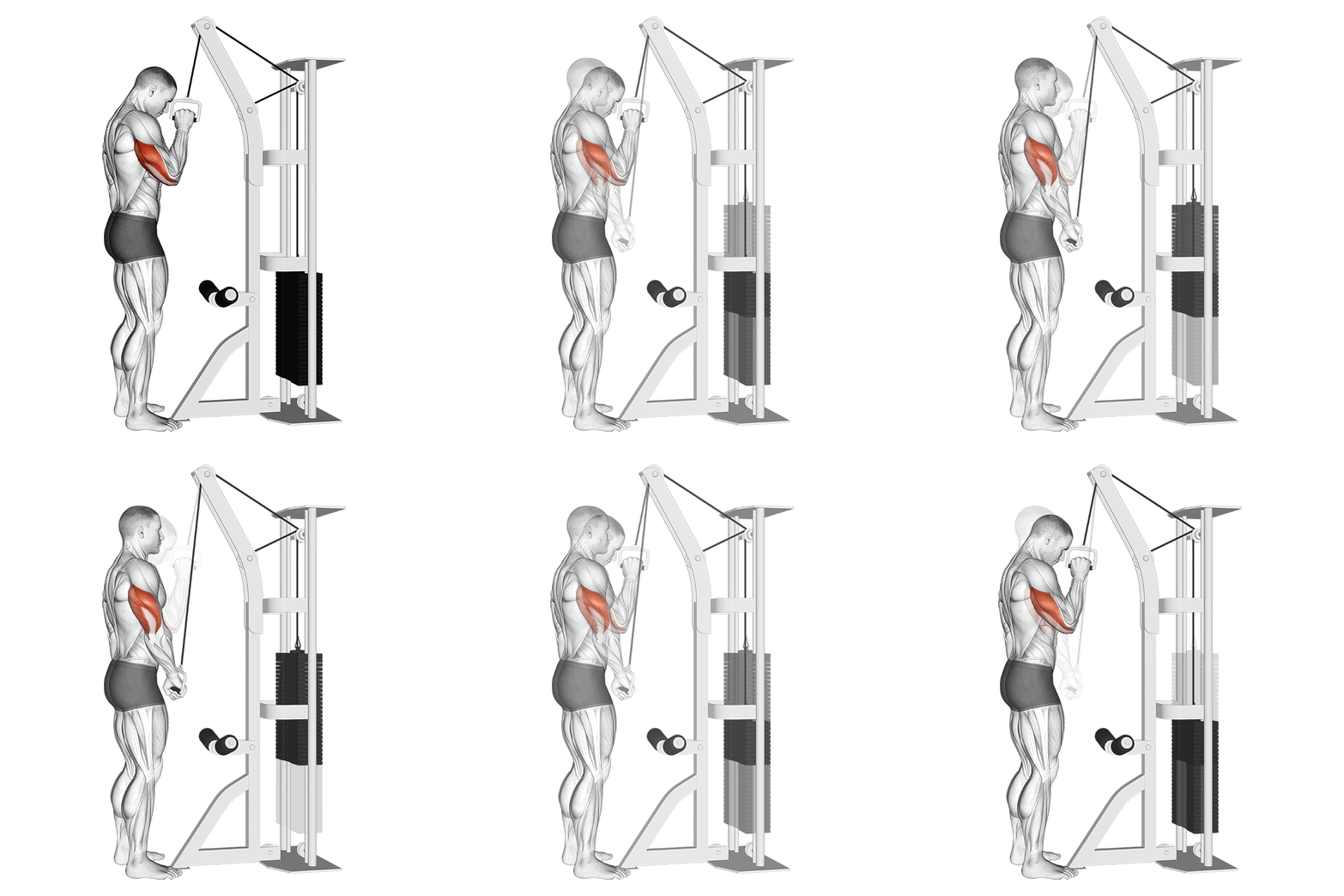
What is the one-arm triceps cable pushdown?
The one-arm triceps cable pushdown is an isolation exercise performed at a high pulley with a single handle. Standing with your elbow pinned to your side, you extend the forearm down until the arm is fully locked out, then control the cable back up. Only the elbow moves, so all the work funnels into the triceps, with constant cable tension through the whole rep. Training one arm at a time exposes strength gaps between sides that a straight bar hides, which makes it a favourite for beginners learning to feel their triceps and for anyone whose arms have drifted out of balance.
How to do the one-arm triceps cable pushdown
- 1
Set up at a high pulley
Clip a single D-handle at the top of the stack. Grip it palm down or neutral, step back half a pace, hinge slightly at the hips and glue your elbow to your side.
- 2
Press down to full lockout
Extend at the elbow only, driving the handle down until your arm is dead straight beside your thigh. The upper arm does not move a millimetre.
- 3
Squeeze at the bottom
Hold the lockout for a full second and squeeze the triceps hard, wrist neutral. This is the part most people skip and the part that pays.
- 4
Control the way back up
Let the forearm rise over 2-3 seconds until the elbow passes 90°, keeping tension on the cable. No jerk at the top, no rest between reps.
Pro tip
Start every session with your weak arm and let it set the rep count. The strong arm only ever matches it, never beats it. That is how the gap closes instead of growing.
Common mistakes
Elbow drifting forward.
Once the elbow leaves your side, the shoulder and lat join in and the triceps gets a discount. Imagine your upper arm is set in a cast.
Leaning on the cable.
Dropping your bodyweight onto the handle to grind out reps means the stack is too heavy. Take two plates off and let the triceps do the pressing.
Stopping short of lockout.
The triceps works hardest in the final degrees of extension. Half reps skip exactly the zone the exercise exists for.
Rushing the negative.
Letting the cable snap your arm back up wastes half the rep. Fight it for 2-3 seconds, the eccentric is where cables shine.
Variations and progressions
Easier
Two-hand bar pushdown
The straight bar splits the load between both arms and is more stable, so you can learn the elbow-pin without balance stealing your focus.
Harder
Reverse-grip single-arm pushdown
Flip the palm up. The grip is weaker so the load drops, but cheating becomes impossible and the lockout squeeze gets vicious.
No gym?
Band pushdown or dumbbell kickback
Loop a band over a door anchor or pull-up bar for the same motion. The dumbbell kickback hits the same lockout zone with just one dumbbell.
How to program it
Three protocols by goal. Pick one per cycle and aim for progression on load or distance.
| Goal | Sets × distance | Load | Rest |
|---|---|---|---|
| Hypertrophy | 3 × 10-12 per arm | Moderate, RPE 8 | 60 s |
| Fixing an imbalance | 3 × 12-15, weak arm first | Light to moderate, RPE 7 | 45-60 s |
| Pump finisher | 2 × 20 per arm | Light, drop set on the last set | 30-45 s |
One-Arm Triceps Cable Pushdown FAQ
Overhand, underhand or neutral grip: which is best?
All three heads of the triceps extend the elbow no matter how you hold the handle, so the differences are smaller than the internet claims. Neutral grip is the strongest and most comfortable, make it your default. Underhand enforces stricter form but your grip gives out early. Rotate them across blocks if you enjoy the variety, not because one is magic.
Why is one of my arms noticeably weaker?
Almost everyone has a dominant arm that quietly does more work on barbells and machines, and the gap compounds over years. A difference under 10 percent is normal and not worth obsessing over. Beyond that, give the weak arm the first set of every session and never let the strong arm do more reps. Expect the gap to close over 2-3 months, not 2-3 weeks.
Is the single-arm version better than the bar pushdown?
Better is the wrong word: it is a different tool. Per fibre, the stimulus is the same; what you gain is focus, a guaranteed equal workload per arm, and a slightly longer range because the hand can travel past your hip. What you lose is time, since every set is doubled. Use the bar for heavy volume and the single-arm version to polish balance and mind-muscle connection.