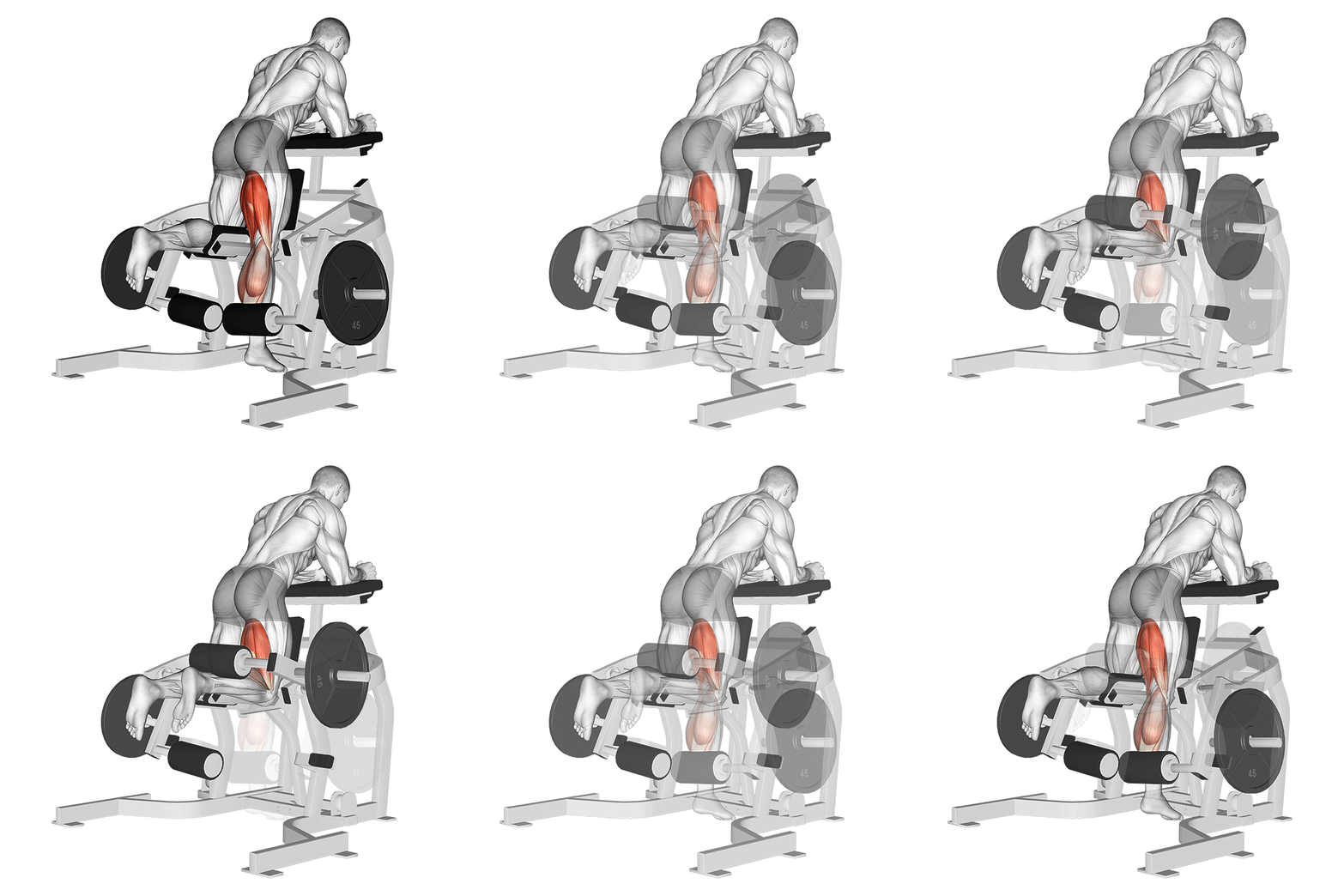
What is the standing leg curl?
The standing leg curl is a machine isolation that bends one knee against a padded lever while the other leg supports your bodyweight. You hold the handle in front, place the heel-pad behind the working ankle, then curl the heel toward the glute. Because it's unilateral, it exposes side-to-side differences in hamstring strength and forces the weaker leg to do its own work. It complements lying or seated curls by training the hamstring's knee-flexion role from a standing posture, closer to running mechanics.
How to do the standing leg curl
- 1
Set the pad height
Position the heel-pad so it sits just above the Achilles, not on the calf. Hip pad against the working hip.
- 2
Stand tall and brace
Grip the front handles, weight on the supporting leg, torso upright. Brace abs to prevent the lower back from arching.
- 3
Curl the heel toward the glute
Drive the heel up and back as if kicking your own glute. Two seconds up, hold one count at full contraction.
- 4
Lower with control
Take three seconds to lower to a straight leg, without letting the weight stack rest. Repeat all reps, switch legs.
Pro tip
Point the toe down and pull it up to bias different parts of the hamstring. Toe pointed pulls in the gastroc; toe flexed isolates the hamstring more.
Common mistakes
Hyperextending the lower back.
If the back arches on the curl, the hip flexes and the hamstring shortens at both ends. Keep the pelvis neutral.
Bouncing the weight up.
Momentum hides weakness. Take two seconds up, three down for genuine hamstring work.
Pad on the calf.
Pad too low makes the lever harder and bruises the calf. Set it just above the Achilles.
Skipping the weaker leg's full work.
People rush the weak side. Match reps and tempo exactly, no shortcuts.
Variations and progressions
Easier
Seated leg curl
Sit on the machine, both legs together. More stable position, easier to learn the squeeze.
Harder
Nordic hamstring curl
Kneel with feet anchored, lower the torso forward under control resisting with the hamstrings. Brutal eccentric, gold standard for injury prevention.
No machine?
Stability ball leg curl
Lie on the floor, heels on a swiss ball, hips up. Roll the ball in by bending the knees. Pure hamstring isolation, no equipment besides a ball.
How to program it
Three protocols by goal. Pick one per cycle and aim for progression on load or distance.
| Goal | Sets × distance | Load | Rest |
|---|---|---|---|
| Hypertrophy | 4 × 10-12 each leg | RPE 8 | 60-90 s |
| Strength | 5 × 6 each leg | Heavy, slow eccentric | 90 s |
| Imbalance correction | 3 × 15 on weak side, match on strong | Moderate | 45 s |
Standing Leg Curl FAQ
Should I train hamstrings on leg day or back day?
Both work. Hamstrings extend the hip and flex the knee, so they can sit with squats or with deadlifts. Many coaches split: heavy hip-hinge work (Romanian deadlift) on pull day, leg-curl knee-flexion work on leg day. Two sessions per week is the sweet spot for hypertrophy.
Why does one side feel so much weaker?
Asymmetry is normal and almost universal. Past sport, dominant leg use, even sitting habits create the gap. Unilateral work like the standing curl is the cure. Start each set with the weak side, match reps on the strong, and most people close 70% of the gap inside two months.
Can leg curls replace Romanian deadlifts?
No. They train two different jobs: the hamstring extends the hip (RDL) and flexes the knee (leg curl). You need both for complete hamstring development and to bulletproof the joint against pulls. Pair them in every leg or pull session for the strongest, healthiest hamstrings.