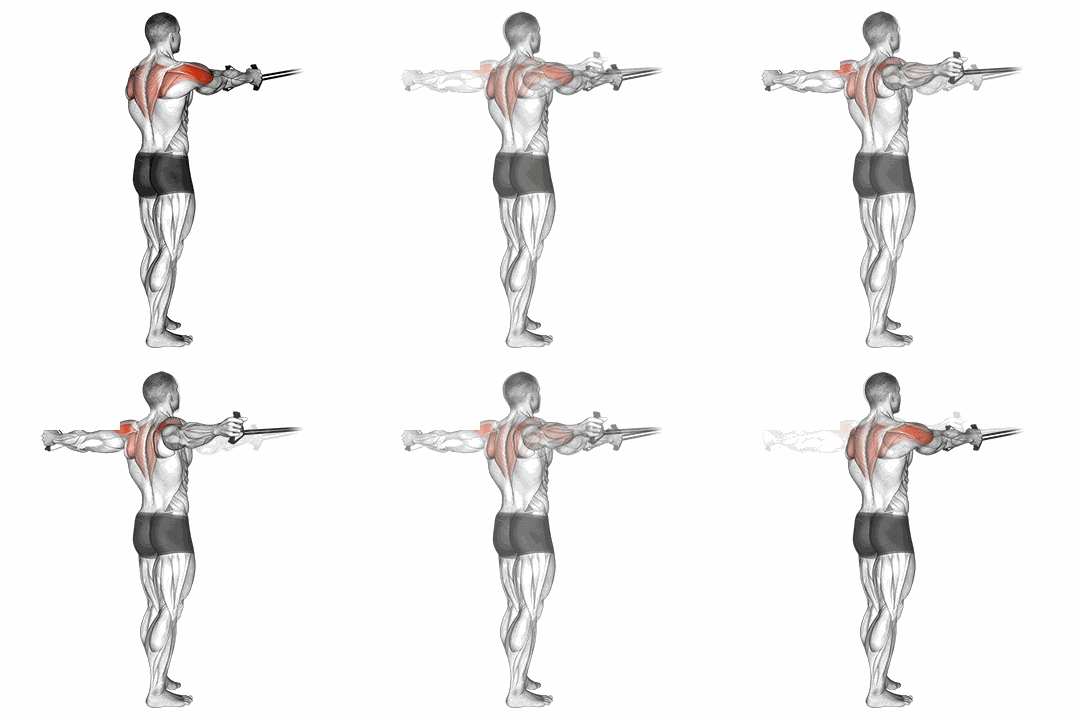
What is the rear delt fly?
The rear delt fly is a bent-over isolation where you raise two light dumbbells out to the sides in a horizontal arc, finishing with the arms perpendicular to your torso. The movement isolates the posterior deltoid, the often-neglected head that balances out heavy pressing volume and pulls the shoulders back into a strong posture. It's also one of the few exercises that meaningfully strengthens the lower and middle traps and rhomboids, the muscles that keep the shoulder blades stuck to the rib cage.
How to do the rear delt fly
- 1
Hinge to roughly 45°
Hinge at the hips with a flat back, dumbbells hanging below your shoulders. Chest proud, slight knee bend.
- 2
Slight elbow bend, lock it
Bend the elbows 15° and keep that angle frozen the whole set. The arc happens at the shoulder.
- 3
Raise to a T
Sweep the dumbbells out and up until your arms form a T with your torso. Lead with the pinky, not the thumb.
- 4
Lower under control
Take 2-3 s back down. Don't let the dumbbells swing or your torso bob, the rear delts don't get a rest if the form holds.
Pro tip
Go painfully light. Most lifters pick a dumbbell two sizes too heavy and end up swinging with the lower back. 5-7 kg, clean reps, is gold.
Common mistakes
Using momentum from the torso.
If the torso bobs to launch the dumbbells, the rear delt isn't doing the work. Lighter weight, frozen torso.
Shrugging at the top.
If the upper traps shrug, the load shifts off the rear delt. Keep the shoulder blades down.
Raising the dumbbells too high.
Going past the T-line involves the upper traps, not the rear delt. Stop when the arms are level with the shoulders.
Rounded lower back.
If the lumbar rounds, the hinge is broken. Flat back, hinge from the hips, chest proud.
Variations and progressions
Easier
Chest-supported rear delt fly
Lie chest-down on a 30° incline bench. Removes the lower back from the equation and isolates the rear delts perfectly.
Harder
Cable rear delt fly
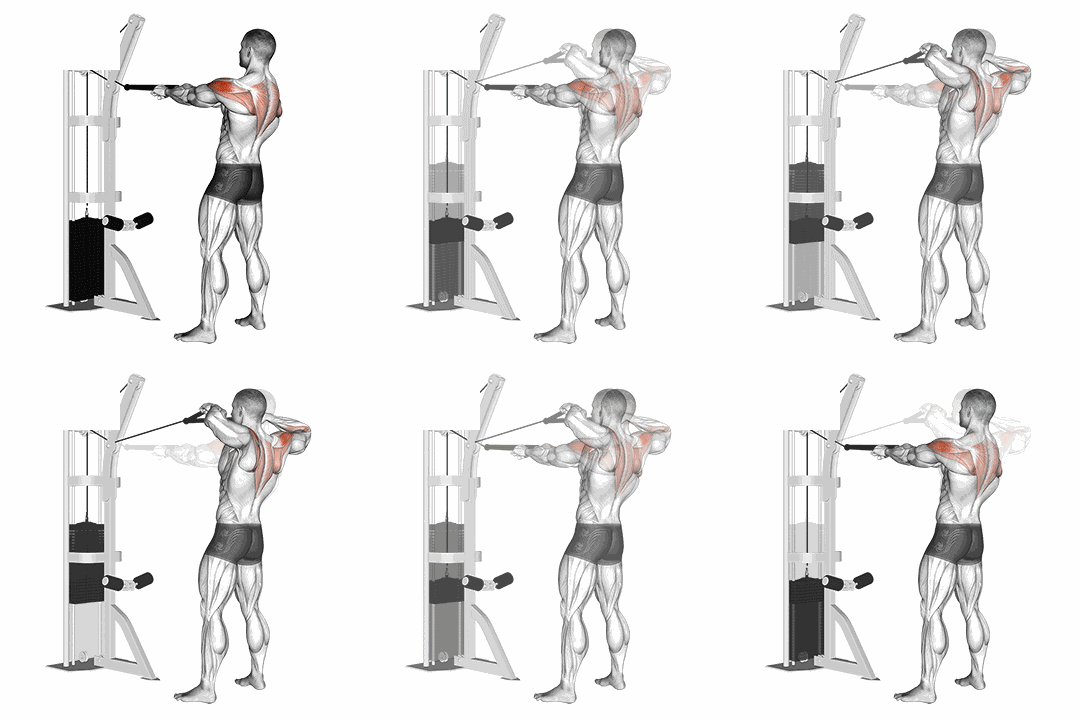
Cross two cables in front of you and pull apart. Constant tension across the full arc, no drop-off at the top.
No dumbbells?
Band pull-apart
Hold a band at shoulder height and pull it apart. Hits the same muscles with zero equipment cost.
How to program it
Three protocols by goal. Pick one per cycle and aim for progression on load or distance.
| Goal | Sets × distance | Load | Rest |
|---|---|---|---|
| Hypertrophy | 4 × 12-15 | Light | 45-60 s |
| Posture / pre-hab | 3 × 20 | Very light | 45 s |
| Shoulder finisher | 2 × 15-20 | Light | 30-45 s |
Rear Delt Fly FAQ
How often should I train rear delts?
2-4 times a week is the sweet spot. Rear delts recover fast, tolerate high frequency, and most lifters are massively underdosed there compared to their front-delt volume from pressing. Add a set of rear delt flys at the end of every upper-body day. Within 4-6 weeks the posture difference is visible.
Why does my upper back ache, not my rear delts?
Two likely causes. First, the weight is too heavy and the upper traps and rhomboids take over. Second, you're squeezing the shoulder blades together instead of letting the arms move at the shoulder. Drop the load, focus on lifting the dumbbells out at the arm, not retracting the scapulae, and the burn will move to the right spot.
Do face pulls replace rear delt flys?
Not really, they complement each other. Face pulls combine rear delt work with external rotation and trap activation in one move, useful for shoulder health. Rear delt flys isolate the posterior head more cleanly and build muscle. Best plan: one face pull set and one rear delt fly set per upper-body session, alternating which leads.