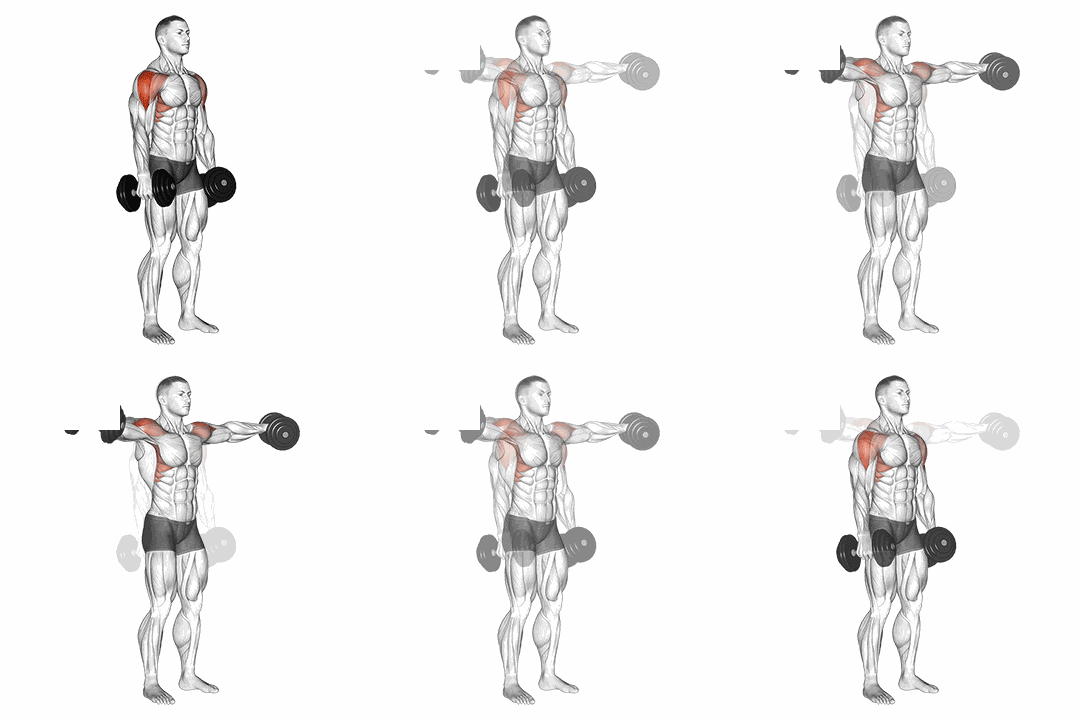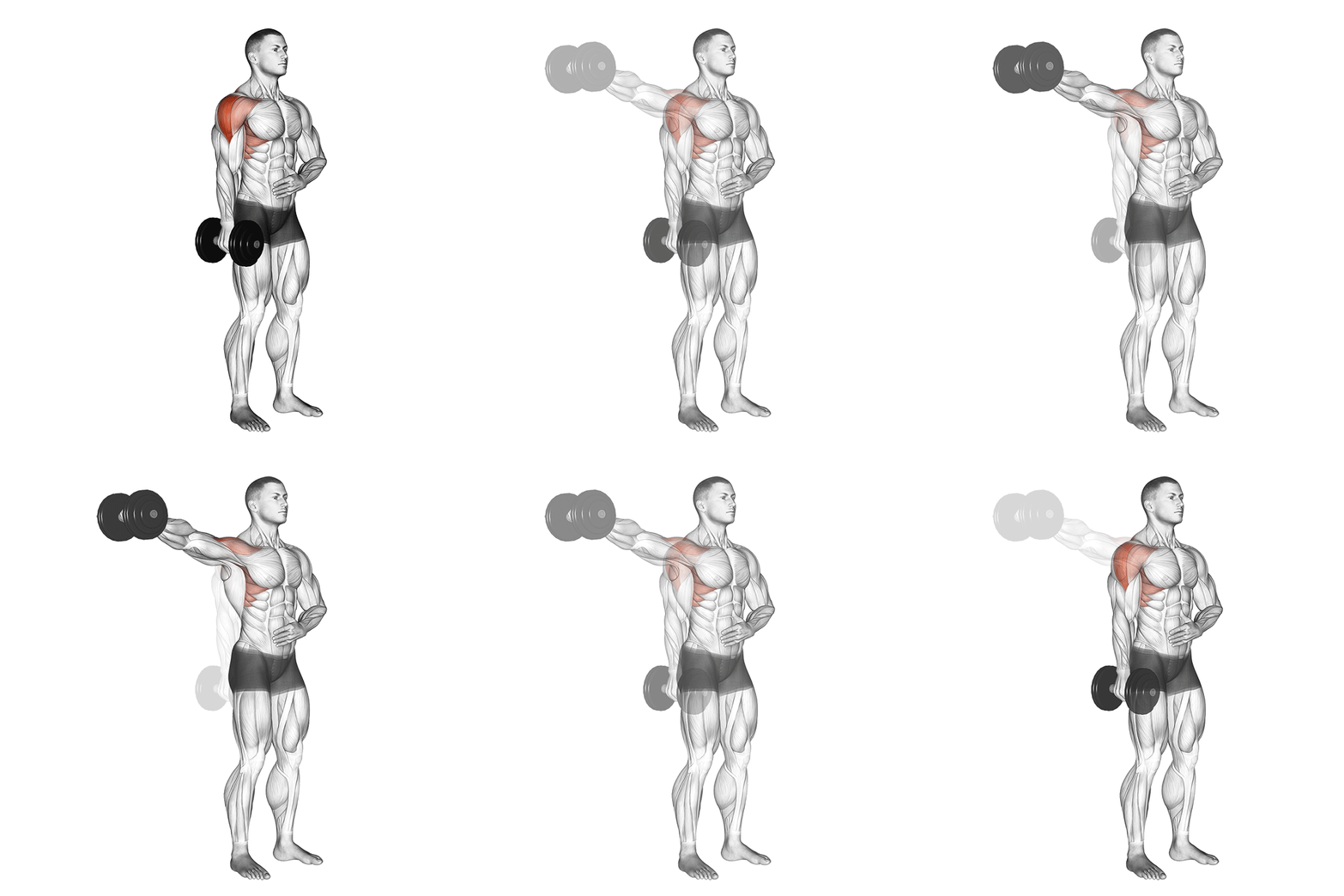
What is the one-arm dumbbell lateral raise?
The one-arm lateral raise isolates the medial deltoid by training one side at a time. You hold a dumbbell in one hand, brace the other on a rack or post for stability, and raise the dumbbell out to the side until the arm is roughly parallel with the floor. Unilateral work removes the temptation to swing both arms together, exposes side-to-side asymmetries, and lets you focus on cleaner tension per rep. The single best builder of shoulder width.
How to do the one-arm dumbbell lateral raise
- 1
Anchor your free hand
Hold a rack upright with the non-working hand. Lean slightly away from the rack to put the working delt under stretch.
- 2
Start with a slight bend
Hold the dumbbell at hip level with a slight bend in the elbow. Lock that elbow angle, it doesn't change during the rep.
- 3
Raise to parallel
Raise the dumbbell out to the side until the upper arm is parallel to the floor. Lead with the elbow, not the hand.
- 4
Lower slowly, full stretch
Lower over 3 seconds back to the hip. Let the delt fully stretch at the bottom before the next rep.
Pro tip
Lateral raises grow side delts with tension, not load. Pick a weight you can lower over 3 seconds without swinging. If you can throw 15 kg up but barely lower 8 kg, switch to 8.
Common mistakes
Swinging the body.
Hip drive or torso lean catapults the dumbbell up and skips the delt. Brace hard against the rack to prevent it.
Going too high.
Above parallel, the upper trap takes over. Stop when the upper arm is horizontal.
Leading with the wrist.
Tipping the pinky up first internally rotates the shoulder and risks impingement. Lead with the elbow.
No tempo control.
Fast-up, fast-down reps use momentum and grow nothing. Slow eccentric is non-negotiable on this lift.
Variations and progressions
Easier
Cable lateral raise
A low cable provides constant tension through the full range, easier to feel the delt with light load.
Harder
Lengthened partial lateral
After hitting failure in full reps, finish with partials in the bottom third where the delt is stretched. Brutal hypertrophy stimulus.
Bilateral instead?
Standard dumbbell lateral raise
Both arms at once is faster and equally effective if your form holds. Switch to it when time is tight.
How to program it
Three protocols by goal. Pick one per cycle and aim for progression on load or distance.
| Goal | Sets × distance | Load | Rest |
|---|---|---|---|
| Hypertrophy | 4 × 12-15 per side | 6-12 kg | 45-60 s |
| Shoulder width focus | 5 × 10 per side, slow eccentric | 8-14 kg | 60 s |
| Finisher / metabolic | 3 × 20 per side | 4-8 kg | 30 s |
One-Arm Dumbbell Lateral Raise FAQ
Should I go heavier or focus on form?
Form, always. The medial deltoid is a small muscle and only responds to controlled tension, not load. A clean 8 kg set with 3-second eccentric beats a sloppy 14 kg set every single time. Stop adding weight the moment you start using momentum.
Why one arm at a time?
Bracing on a rack removes whole-body sway, which is the main cheat on bilateral laterals. You also catch left-right asymmetries fast, and you can focus mental attention on a single working delt. The trade-off is double the session time. Use unilateral on hypertrophy phases, bilateral when time-crunched.
How often can I train lateral raises?
Three to five times per week. The medial delt recovers fast and responds best to high frequency with moderate volume per session. Sprinkle 2 to 3 sets after every upper-body day rather than hammering 8 sets in one. Frequency beats intensity on shoulder isolation.