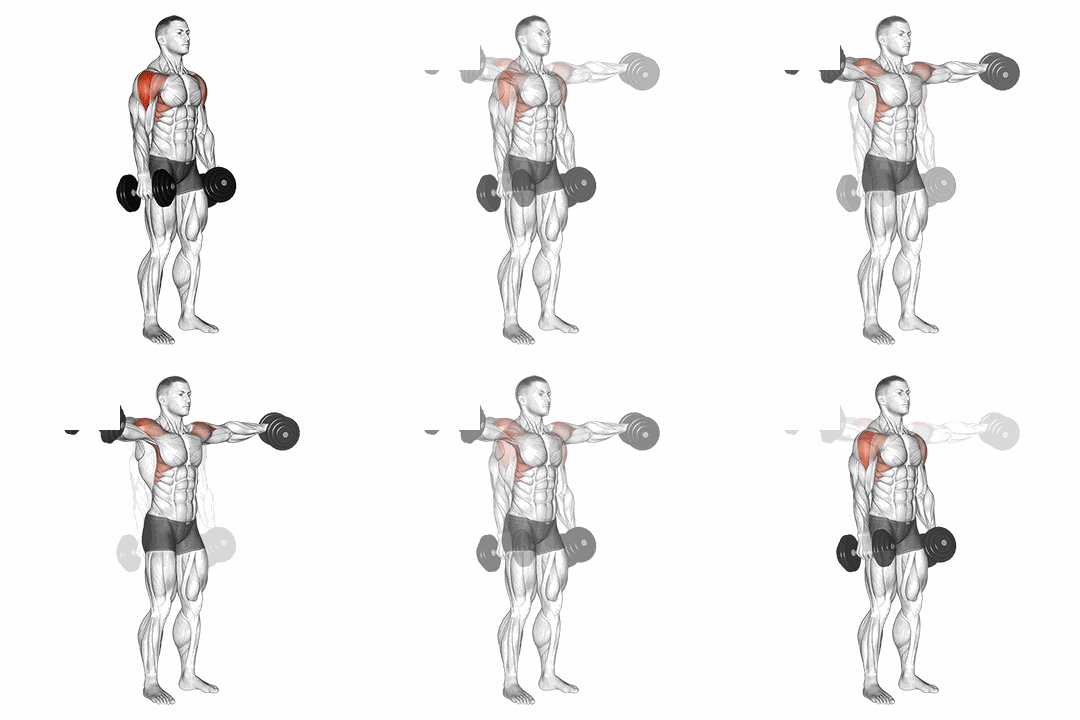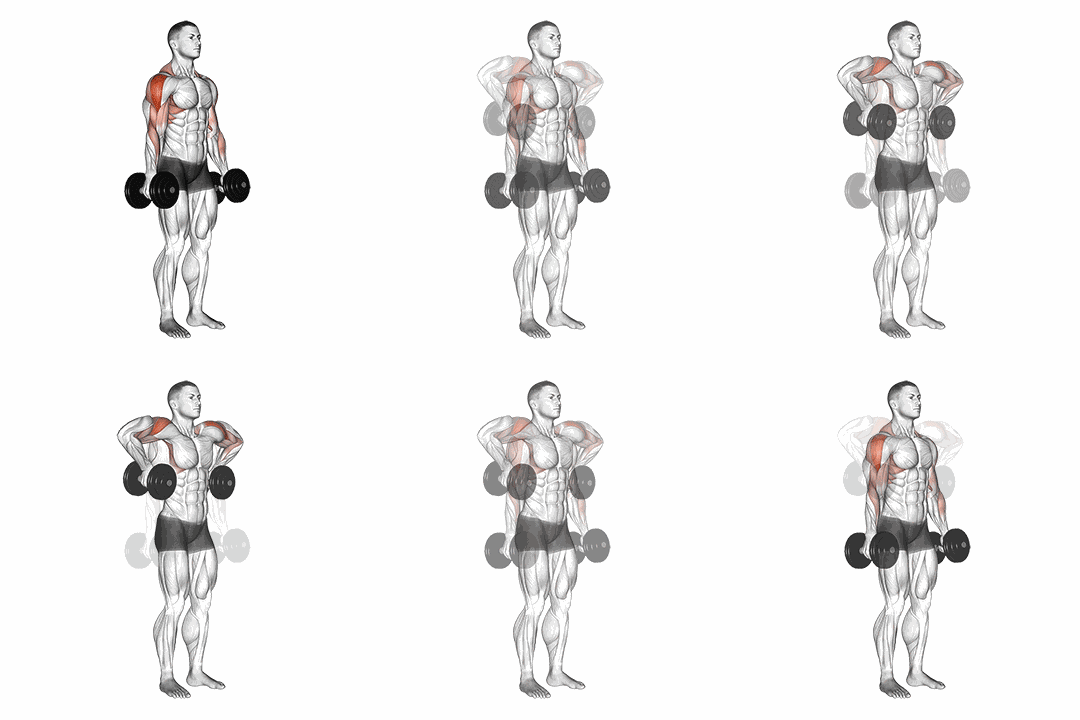
What is the dumbbell front raise?
The dumbbell front raise is a standing isolation where you lift a dumbbell from your thigh up to roughly shoulder height in front of you. The movement isolates the anterior (front) deltoid and overlaps slightly with the upper chest. Because pressing already trains the front delt heavily, the front raise is best used as a targeted finisher when you want extra shoulder volume without taxing the triceps or chest. It also teaches scapular control: done correctly, the shoulder blade stays down while the arm rises cleanly.
How to do the dumbbell front raise
- 1
Stand tall, dumbbells in front
Feet hip-width, dumbbells held at the front of the thighs, palms facing the body. Chest up, abs braced.
- 2
Lock the elbows soft
Keep a slight bend in the elbows the whole rep. Frozen angle, the shoulder does the work, not the elbow.
- 3
Raise to shoulder height
Lift the dumbbells out in front in 1-2 s until your arms are parallel to the floor. Don't swing.
- 4
Lower slow
Take 2-3 s back down with control. Stop just before the dumbbells touch the thighs to keep tension on the delts.
Pro tip
Don't chase weight. 5-8 kg dumbbells lifted cleanly with a 3 s eccentric grow the front delt faster than 12-15 kg swung up with the hips.
Common mistakes
Swinging the hips.
If the body rocks to launch the weight, the front delt isn't doing the work. Lighter dumbbells, frozen torso.
Lifting above shoulder height.
Going past shoulder level brings the upper trap in. Stop at parallel.
Locking the elbow straight.
Fully straight elbows put stress on the joint and bias the biceps. Keep a small, frozen bend.
Bouncing off the thighs.
Letting the dumbbells crash and bounce uses momentum. Stop short, pause, then raise.
Variations and progressions
Easier
Alternating front raise
Raise one arm at a time. Lighter total load on the spine and easier to focus on form.
Harder
Plate front raise to overhead
Hold a single plate and raise it from the thighs all the way overhead. Doubles the range and the difficulty.
No dumbbells?
Cable front raise
Attach a handle to a low pulley behind you and raise forward. Constant tension, especially at the bottom of the rep.
How to program it
Three protocols by goal. Pick one per cycle and aim for progression on load or distance.
| Goal | Sets × distance | Load | Rest |
|---|---|---|---|
| Hypertrophy / finisher | 3 × 12-15 | Light-moderate | 45-60 s |
| Strength accessory | 4 × 8-10 | Moderate | 60-75 s |
| Volume burnout | 2 × 20 with 4 s eccentric | Light | 45 s |
Dumbbell Front Raise FAQ
Do I need front raises if I already bench and overhead press?
For most lifters, no. Bench presses and overhead presses already deliver enough front-delt volume to grow, often too much. Adding front raises on top can create imbalance with the side and rear delts. Use them sparingly, only if your front delt is genuinely a weak point or if your pressing volume is low.
Palms down or palms in?
Palms in (neutral, hammer grip) tends to be friendlier on the shoulder and slightly more anterior-delt focused. Palms down (pronated) brings the upper chest in more. Try both, pick the one your shoulder prefers, and don't overthink it. The grip difference is small compared to load, range and tempo.
How high should I lift the dumbbells?
Stop when your arms are parallel to the floor, shoulder height. Going higher recruits the upper traps and shifts load away from the front delt, which defeats the point of the exercise. If you want a full overhead range, switch to an overhead press, that's a different lift entirely.