
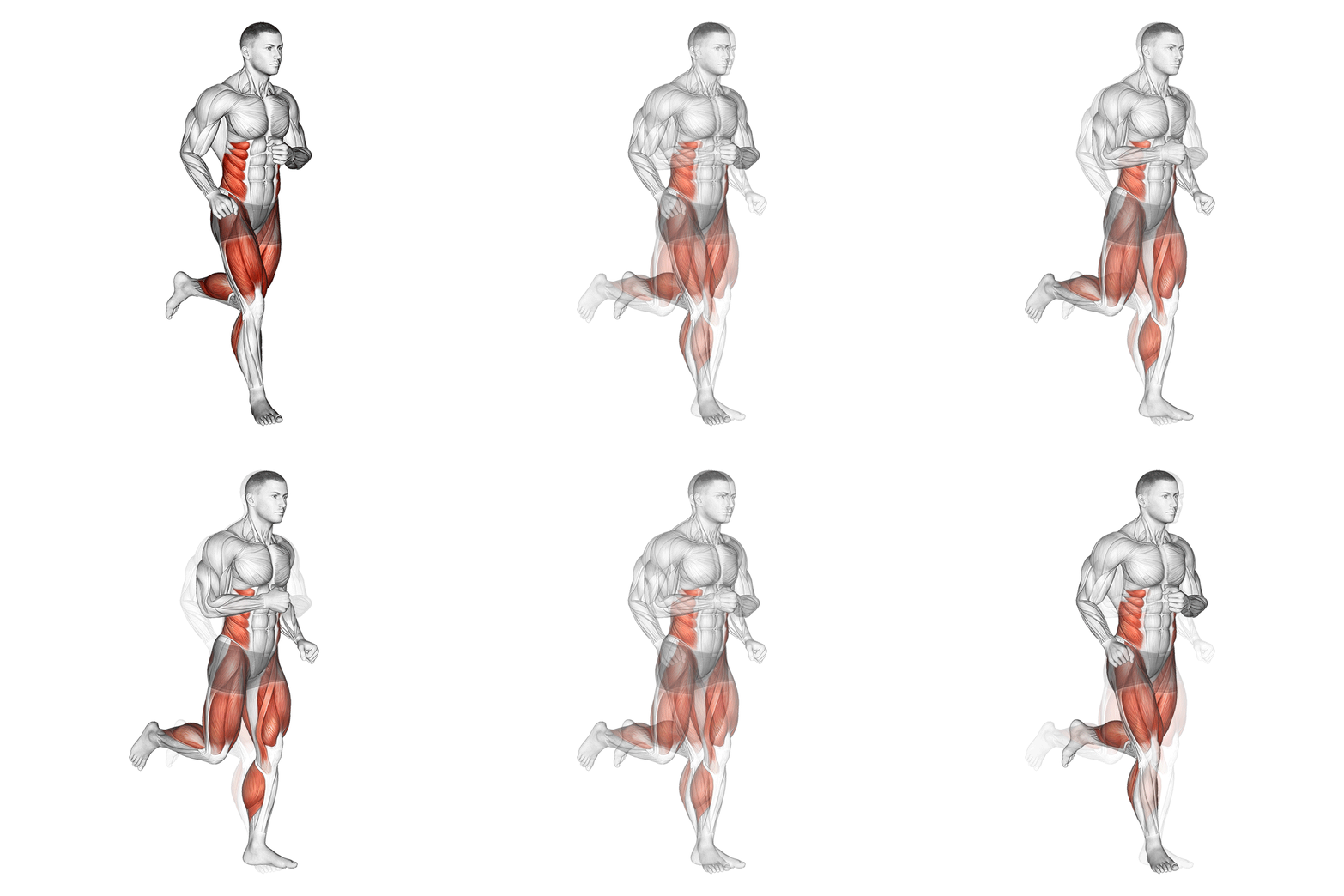
What is the running?
Running is the foundation of every endurance plan. It develops the aerobic system, capillary density, mitochondrial output and lactate clearance better than any other modality. For Hyrox specifically, running makes up roughly 50% of race time, so it has to be the priority. Done right it covers a mix of easy aerobic miles, tempo work at the lactate threshold, and short hard intervals. Done wrong, with every run too hard, it builds nothing and produces injuries fast.
How to do the running
- 1
Build the base with easy miles
80% of weekly running should be at conversational pace, heart rate under 75% max. This builds the aerobic engine and is non-negotiable.
- 2
Pick the right shoes
Get fitted at a running shop. Rotate two pairs if you run more than 30 km a week. Replace every 600-800 km, mileage matters more than how they look.
- 3
Progress mileage slowly
Add no more than 10% to your weekly volume per week. Every 4th week, deload by 20-30%. Doing more, faster, is the fast track to a stress fracture.
- 4
Choose surfaces wisely
Mix asphalt, trail and track. Soft surfaces save the joints; firm surfaces transfer best to race day. Avoid concrete sidewalks when possible, they're the harshest.
Pro tip
Most runners run easy days too hard and hard days too soft, ending up mediocre at both. Be honest: easy means truly easy, hard means hard. The grey zone in the middle builds nothing.
Common mistakes
Every run at the same pace.
Grey-zone running builds little. Polarise: 80% easy, 20% hard, almost nothing in between.
Ramping volume too fast.
Tendons and bones adapt slower than muscles. 10% rule, deload every 4 weeks, no shortcuts.
Ignoring strength training.
Two strength sessions a week halve injury risk and improve economy. Squats, deadlifts, single-leg work.
Wrong shoes.
Running in worn-out or wrong-category shoes is the top cause of overuse injury. Replace at 600-800 km.
Variations and progressions
Easier
Run-walk method
Alternate 2 min running with 1 min walking. Perfect for beginners, returning from injury, or extending long-run duration safely.
Harder
Hill repeats
60-90 s hard uphill efforts with full walking recovery. Builds power, leg stiffness and VO2 max with low impact.
Can't run?
Bike, row or SkiErg
Substitute equal-duration aerobic work on the bike, rower or SkiErg. Lower impact, similar aerobic stimulus when intensity is matched.
How to program it
Three protocols by goal. Pick one per cycle and aim for progression on load or distance.
| Goal | Sets × distance | Load | Rest |
|---|---|---|---|
| Aerobic base | 4 × 45-60 min easy | Zone 2, conversational | 1 day between |
| Threshold / tempo | 1 × 4 × 8 min | Threshold pace | 2 min jog |
| VO2 / speed | 1 × 6 × 3 min hard | 5k race pace | 2 min jog |
Running FAQ
How many days a week should I run?
Beginners: 3 days, building to 4. Intermediates: 4 to 5. Advanced: 5 to 6 with one cross-training day. More than 6 days a week needs serious recovery infrastructure and rarely produces better results than 5 quality runs plus strength work.
Should I run on an empty stomach?
For easy runs under 75 minutes, fasted training is fine and may boost fat oxidation. For hard sessions or runs over 90 minutes, eat 60-90 min before with 30-60 g of carbs. Hard work fasted burns muscle and crushes intensity. Save fasted runs for true easy days.
Treadmill or outside?
Outside is better for proprioception, varied terrain and mental engagement. Treadmills win for controlled intervals, bad weather, and precise pacing. Best plan: do long runs and easy runs outside, do hard intervals on the treadmill when you need exact pace control. Set treadmill incline to 1% to better mimic outdoor effort.
