What is the stepmill?
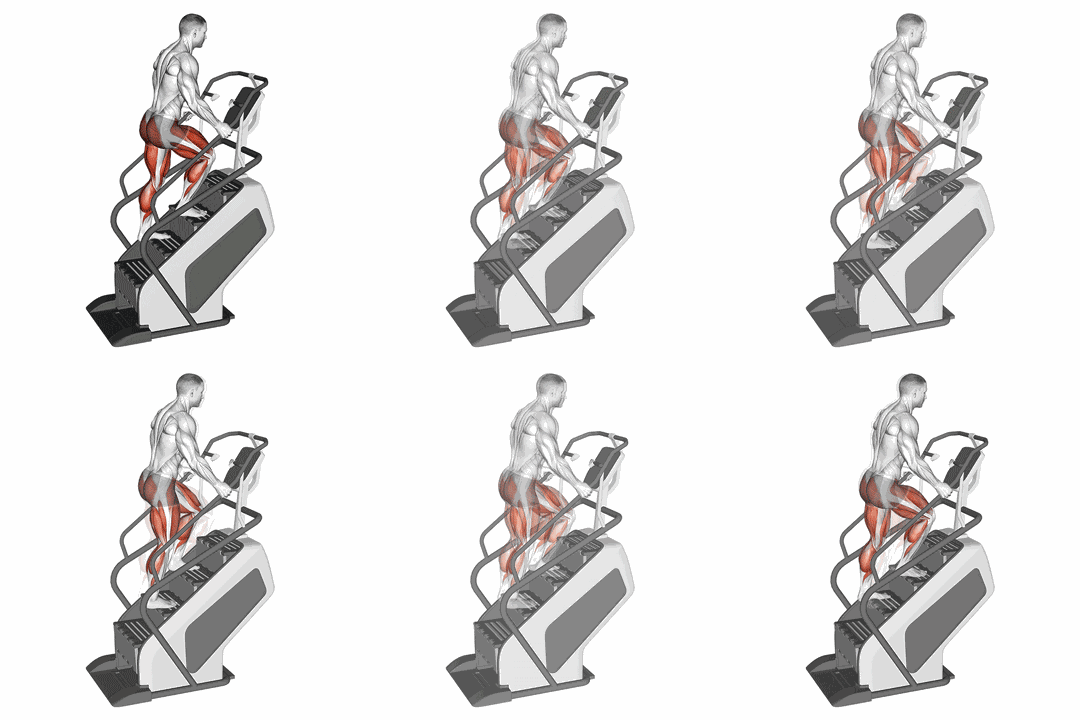
The stepmill (StairMaster, Jacobs Ladder cousin) is a motorised revolving staircase. Unlike a step machine that pushes pedals up and down, true steps appear and disappear under your feet, forcing real eccentric and concentric work each rep. It punishes the glutes, quads and calves while keeping spinal compression low. It is one of the best zone-2 to zone-3 cardio tools for lifters who hate jogging but need conditioning.
How to do the stepmill
- 1
Set a sustainable speed
Start around level 6-8 on a standard StairMaster. You should be able to talk in short phrases at zone 2, not full sentences.
- 2
Step with the whole foot
Plant the entire foot on each step, not just the ball. Full foot contact loads the glutes; toes-only quickly burns out the calves.
- 3
Stand tall, light hands
Stand upright, light fingertips on the rails for balance only. Leaning on the rails offloads the legs and cuts the calorie cost in half.
- 4
Vary stride and direction
Mix single steps, double steps (every other), and sideways climbs to hit glutes, quads and adductors differently across the session.
Pro tip
If you can grip the handrails like a magazine while reading a book, you are too light. You should sweat through the shirt in 20 minutes.
Common mistakes
Death-gripping the rails.
Hanging on the rails transfers load to the arms and erases most of the leg work. Fingertips only.
Tipping forward.
Forward lean is usually a sign of speed too high or fatigue. Drop a level and reset upright posture.
Toe-only steps.
Climbing only on the balls of the feet skips glute engagement and overloads the calves. Drive through the whole foot.
Same speed every session.
Adaptation requires variation. Rotate steady-state, interval, and weighted-vest sessions across the week.
Variations and progressions
Easier
Slow steady climb
Level 5-6 for 20 to 30 minutes, conversational. Builds the aerobic base with minimal soreness.
Harder
Weighted-vest intervals
Wear a 10-20 kg vest, alternate 1 minute hard / 1 minute easy for 20 minutes. Brutal on glutes and lungs.
No stepmill?
Stairs or hill walk
Real stairs or a treadmill at 12-15 percent incline give 80 percent of the same stimulus.
How to program it
Three protocols by goal. Pick one per cycle and aim for progression on load or distance.
| Goal | Sets × distance | Load | Rest |
|---|---|---|---|
| Zone 2 base | 30-45 min | Level 6-8, conversational | N/A |
| Intervals | 10 × 1 min on / 1 min off | Level 12-15 on / 6 off | Active 1 min |
| Tempo finisher | 15 min steady | Level 9-11, hard but sustainable | N/A |
Stepmill FAQ
Stepmill or treadmill incline?
Both work the posterior chain hard. The stepmill produces slightly more eccentric loading per step, which is great for glute development but also slower to recover from. Treadmill incline is easier on the knees for high-volume zone 2. Rotate them across the week for variety.
How long should a stepmill session be?
For zone 2 cardio, 30 to 45 minutes is the sweet spot. For interval work, 20 to 25 minutes including warm-up and cool-down is plenty. Going past 60 minutes is usually a sign you are too light a level. Increase intensity instead of duration once the legs adapt.
Why are my calves cramping?
Almost always because you are stepping on the balls of the feet only. Drive through the heel and full foot. Also check hydration and sodium intake; dehydration is the second most common cause of calf cramping on long climbs.