
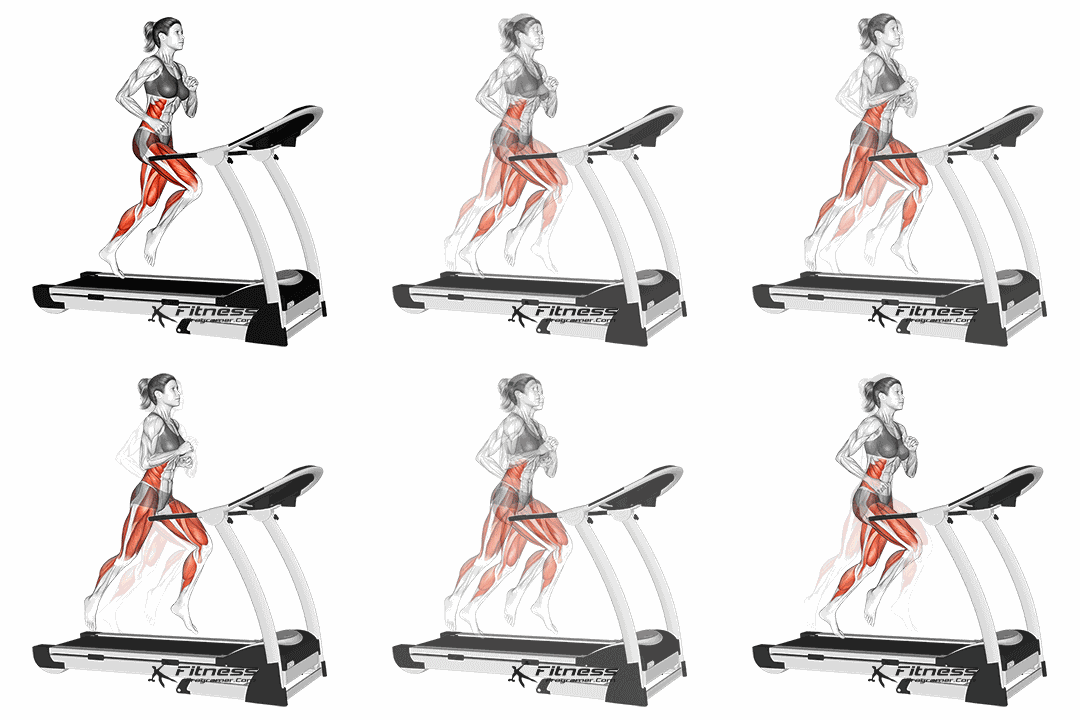
What is the treadmill running?
Treadmill running is running on a motorised belt at a chosen pace and incline. Compared to outdoor running, it removes wind resistance and uneven terrain, which makes it slightly easier metabolically (typical compensation: 1 to 2 percent incline). The trade-off is total control: you can hold an exact pace for hours, run hill repeats in any weather and pause at any moment. Ideal for beginners learning pace, and for advanced runners doing precise tempo or interval work.
How to do the treadmill running
- 1
Set incline before pace
Start with 1 percent incline to mimic outdoor air resistance. Then dial in your pace from a slow warm-up jog.
- 2
Run in the middle of the belt
Stay centred; drifting forward or back changes your gait and risks tripping. Eyes ahead, not down at the display.
- 3
Land under your hip
Treadmill tends to encourage overstriding because the belt pulls the foot back. Cue short, quick steps landing under the hip.
- 4
Hands off the rails
Use the rails only for safety when stepping on or off. Holding them while running ruins your gait and cuts effort in half.
Pro tip
Cover the display with a towel for half your session. Without watching the clock, you learn to run by feel, the single biggest skill upgrade for most runners.
Common mistakes
Zero incline.
A 0 percent treadmill is slightly easier than flat outdoor. Use 1 percent minimum to match outdoor effort.
Holding the rails.
Hanging on the side rails skews your stride and offloads your legs. Hands swing naturally at your sides.
Overstriding.
Letting the belt pull your foot back encourages a heel-first reach. Cue cadence 170-180 steps per minute.
Eyes on the screen.
Staring at the display drops your gaze, rounds the spine, kills the cadence. Eyes ahead, like outdoor running.
Variations and progressions
Easier
Incline walk
5-6 km/h at 8-12 percent incline. Same heart-rate stimulus as easy jogging, zero impact on joints.
Harder
Treadmill hill repeats
8 to 10 × 90 seconds at 10 percent incline, 5 km/h race pace. Brutal posterior chain stimulus.
Outdoor option
Easy outdoor run
Same duration outside on flat ground. Adds wind, terrain and proprioceptive challenge.
How to program it
Three protocols by goal. Pick one per cycle and aim for progression on load or distance.
| Goal | Sets × distance | Load | Rest |
|---|---|---|---|
| Zone 2 base | 40-60 min | Conversational pace, 1% incline | N/A |
| Tempo | 20 min steady | Half-marathon pace, 1% incline | N/A |
| Intervals | 6 × 800 m at 5K pace | 5K pace, 1% incline | 90 s walking |
Treadmill Running FAQ
Why should I set 1 percent incline?
Indoor running lacks wind resistance, which makes a 0 percent treadmill slightly easier metabolically than equivalent outdoor pace. Setting 1 percent compensates for this and matches the actual physiological cost of outdoor running, especially above 12 km/h. Below that pace, the compensation is negligible.
Is treadmill running worse than outdoor?
Not for cardiovascular adaptation. The belt mechanics are slightly different (the surface comes toward you), and you miss the proprioceptive variation of real terrain. For pure zone 2 base, tempo and interval work, treadmills are excellent and weather-proof. Pair them with one or two weekly outdoor runs for skill transfer.
Should I run faster or longer on the treadmill?
Depends on your goal. For aerobic base, prioritise duration at conversational pace. For 5 K or 10 K race performance, mix one tempo session and one interval session weekly with longer easy runs. Avoid running every treadmill session at the same moderate pace; that grey zone produces grey results.
