What is the saw plank?
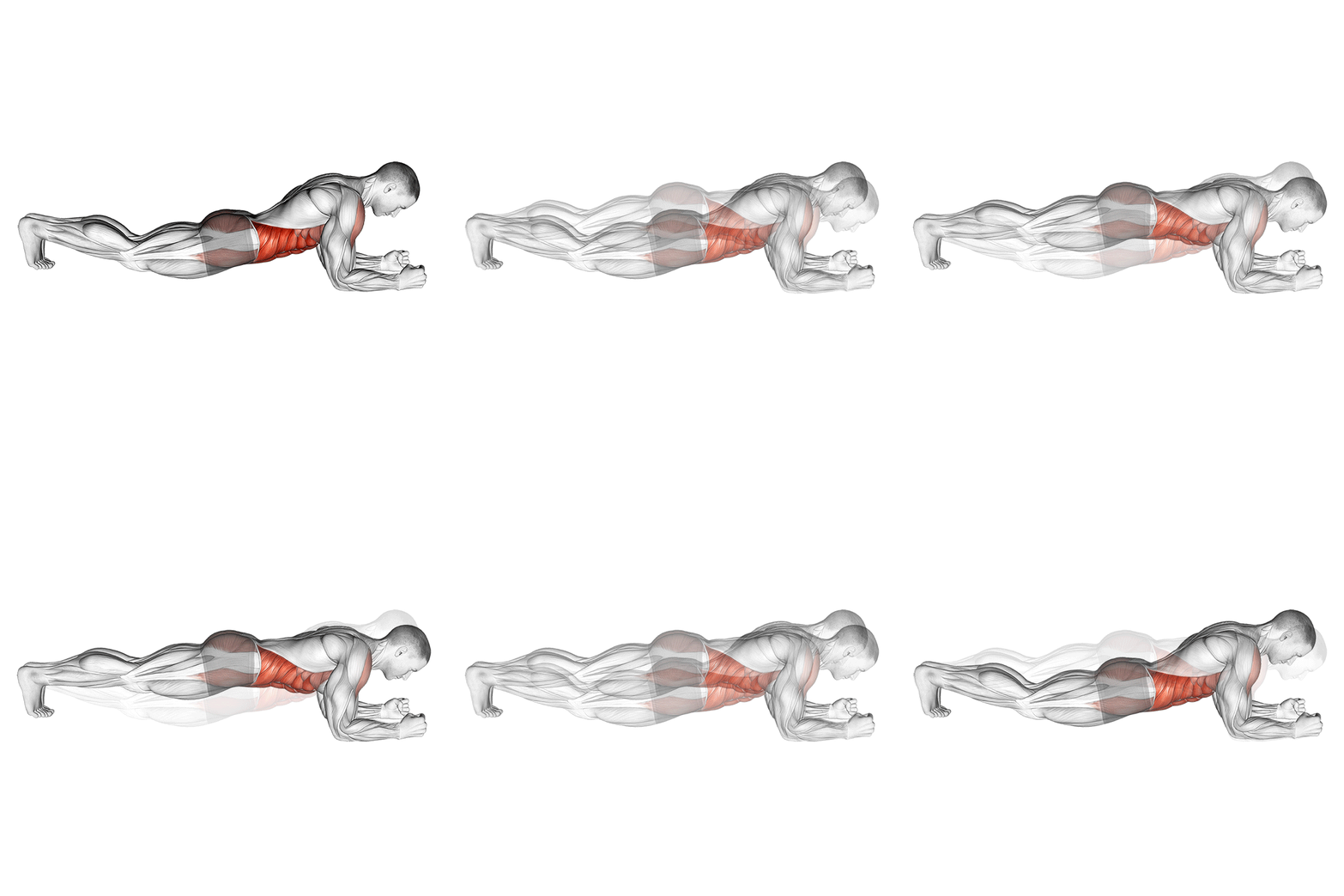
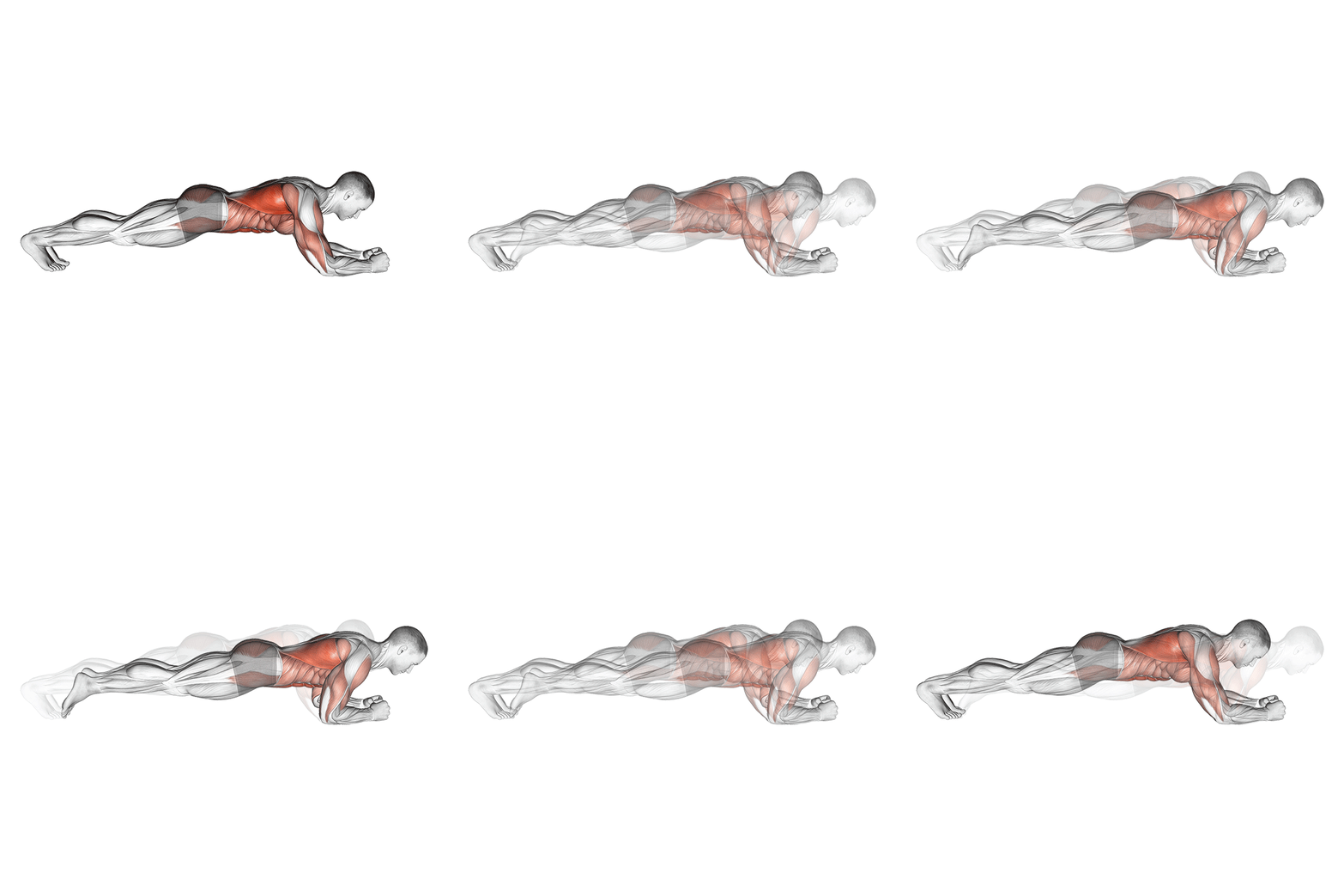
The saw plank is performed in a standard forearm plank position, then you actively shift the whole body forward (nose past hands) and back (heels stretching long) in a smooth sawing motion. The dynamic load makes the lumbar spine want to sag; resisting that sag is exactly what trains the anti-extension capacity that protects your back under heavy carries, sled work and overhead pressing.
How to do the saw plank
- 1
Set a tight plank
Forearms on the floor, elbows under shoulders, hips level, glutes squeezed, ribs pulled down to the pelvis.
- 2
Push the body forward
Press through your forearms and shift the entire body forward as one rigid unit, until your nose passes your hands.
- 3
Pull back to long position
Reverse the motion smoothly, sliding back until heels stretch long behind you. Hips never sag, never pike up.
- 4
Keep breathing through it
Short, sharp exhales each direction. Holding your breath kills your brace and turns the saw into a back-aggravator.
Pro tip
Imagine a glass of water balanced on your lower back. If it would spill at any point in the saw, your hips are moving instead of your shoulders.
Common mistakes
Hips sagging at the forward end.
When you shift forward, lever arm increases on the lumbar. Squeeze glutes harder and shorten range.
Piking the hips up to rest.
Hiking the butt up cheats the anti-extension demand. Keep the body a straight line from head to heels.
Rocking only the upper body.
The saw is full-body. Feet stay planted, but the whole rigid unit slides forward and back together.
Holding breath.
Apnea trades brace for static pressure and exhausts you in 20 seconds. Breathe behind the brace.
Variations and progressions
Easier
Short-range saw
Reduce the forward-back range by half until you can keep hips perfectly level.
Harder
Slider saw plank
Put sliders under your feet on a smooth floor. Removes friction and triples the anti-extension demand.
Static option
RKC plank
Static maximal-tension forearm plank for 10 to 20 seconds. Same anti-extension stimulus, no dynamic component.
How to program it
Three protocols by goal. Pick one per cycle and aim for progression on load or distance.
| Goal | Sets × distance | Load | Rest |
|---|---|---|---|
| Core endurance | 3 × 30 s | Bodyweight | 45 s |
| Strength quality | 4 × 8 slow reps | Bodyweight | 60 s |
| Warm-up activation | 2 × 20 s | Bodyweight | 30 s |
Saw Plank FAQ
How is the saw plank better than a regular plank?
A regular plank teaches you to hold one tight position. The saw forces the anti-extension demand to scale dynamically as your lever arm changes through the range. It transfers far better to real strength tasks like deadlifts, overhead pressing and loaded carries where your spine never stays in one position.
Why does my lower back hurt during this?
Almost always because your hips are sagging at the forward end of the saw, putting shear on the lumbar spine. Cut your range in half, focus on glute and rib-down cueing, and only extend the range once you can keep hips locked at every position.
How long should I hold each saw?
Quality is non-negotiable. 30 seconds of perfect saws beats 90 seconds of saggy ones every time. Stop the set the instant your hips drift, rest, and try another quality set. Most athletes peak the useful stimulus around 30 to 45 seconds.