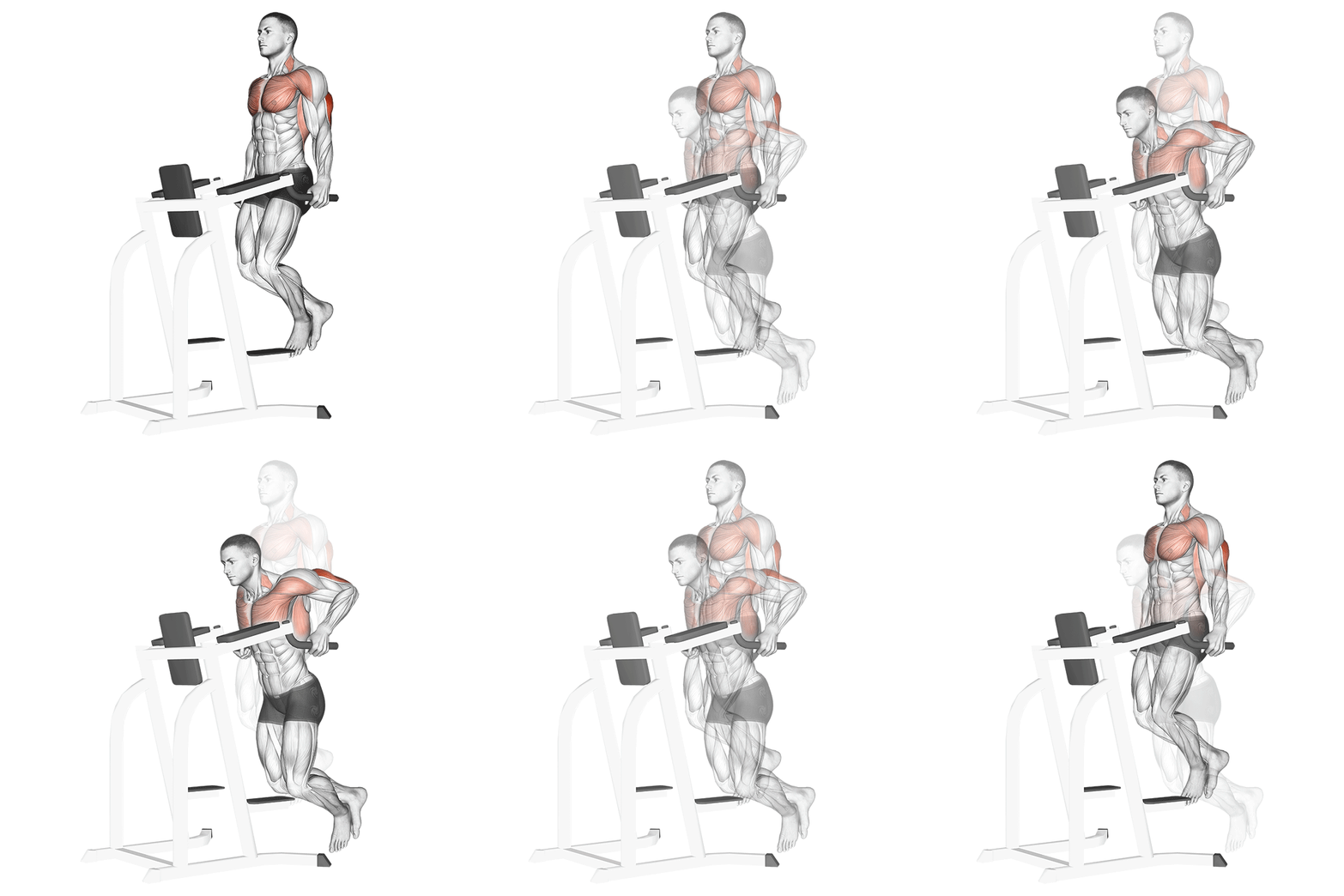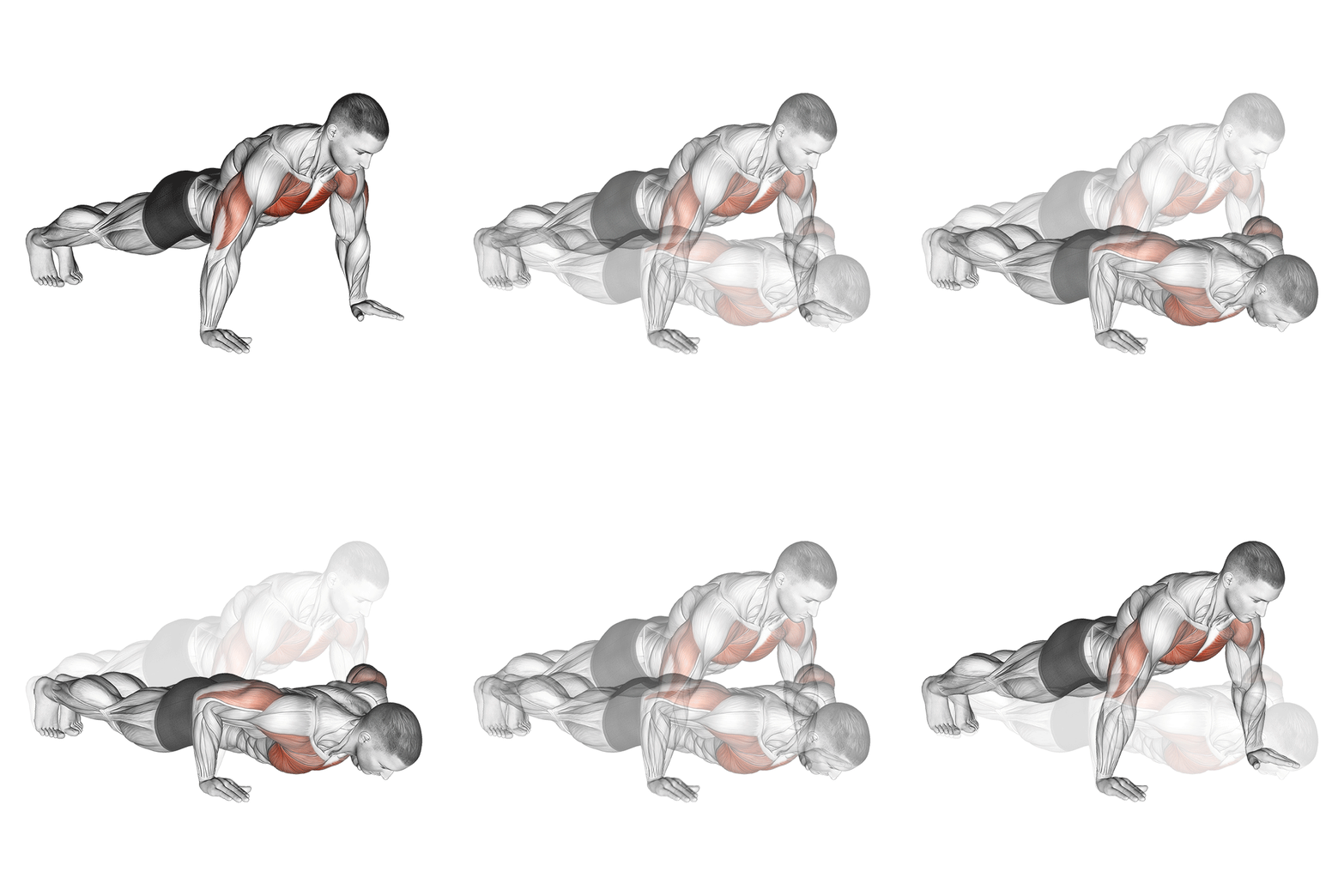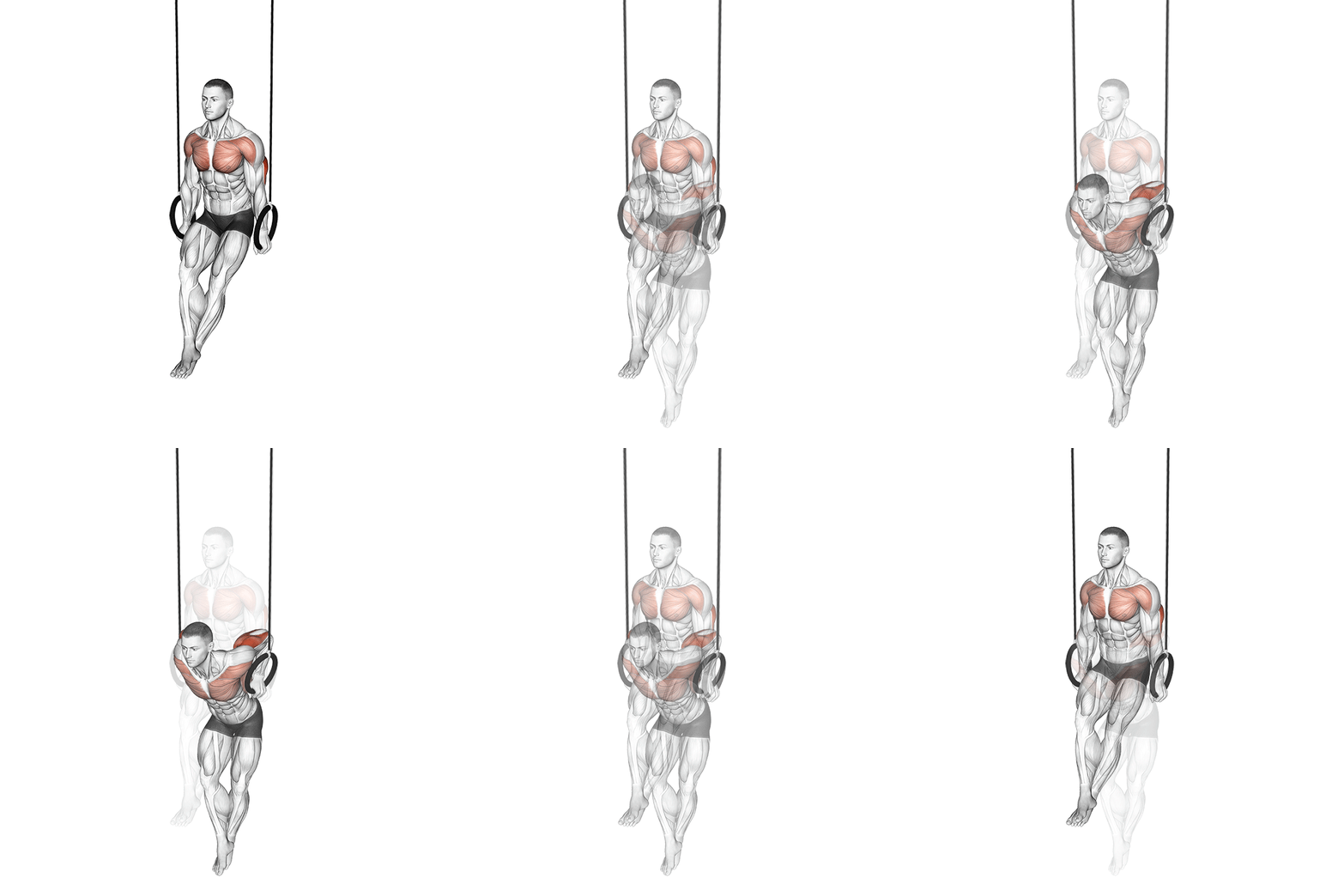
What is the ring dips?
Ring dips are dips performed on gymnastics rings instead of fixed bars. The rings rotate freely, forcing every stabilising muscle around the shoulder and elbow to work overtime. Gymnasts build their iconic upper-body density largely from ring dip variants. They demand significantly more strength than bar dips because of the instability tax, and they expose any shoulder weakness instantly.
How to do the ring dips
- 1
Set the rings at the right height
Rings should be set so your feet just clear the floor at the bottom. Too high and you cannot mount cleanly.
- 2
Support hold with rings turned out
Press to lockout, arms straight, rings rotated slightly outward (knuckles facing out). This loads the shoulders correctly and protects the elbow.
- 3
Descend under control
Lower slowly, keep elbows tracking close to the ribs (not flared), shoulders away from ears. Stop when the shoulder reaches elbow height or just below.
- 4
Press up and re-rotate the rings
Drive up, squeeze triceps and chest, finish by turning the rings back out at the top. Never lock out with rings parallel.
Pro tip
Earn 15 strict bar dips before attempting ring dips. The instability tax is roughly 30 percent, and shaky reps are how shoulders get injured.
Common mistakes
Rings parallel at lockout.
Locking out with rings facing each other shortens the lever for stabilisers. Turn rings out hard at the top, every rep.
Flaring elbows.
Elbows out makes the shoulder do work the chest and triceps should handle. Keep elbows close to the ribs.
Shrugging at the bottom.
Letting the shoulders ride up to the ears compresses the joint. Actively depress the scapulae throughout.
Half-depth reps.
Stopping above parallel skips the hardest, most growth-stimulating range. Go to shoulder-below-elbow or call it a fail.
Variations and progressions
Easier
Banded ring dip
Loop a band across the rings, place knees in it. The band offloads 10 to 25 kg depending on tension.
Harder
Weighted ring dip
Add a dip belt with plates once you can do 10 strict bodyweight reps. Add weight in 2.5 kg jumps.
No rings?
Bar dips
Standard parallel bars build the same patterns with less stability demand. Excellent stepping stone.
How to program it
Three protocols by goal. Pick one per cycle and aim for progression on load or distance.
| Goal | Sets × distance | Load | Rest |
|---|---|---|---|
| Strength | 5 × 5 | Bodyweight or +10-20 kg | 2-3 min |
| Hypertrophy | 4 × 8-10 | Bodyweight | 90 s |
| Stability/skill | 5 × 3 with 3 s eccentric | Bodyweight | 2 min |
Ring Dips FAQ
Should I do ring dips if I have shoulder issues?
Generally no until the issue is resolved. The instability and deep range stress an already compromised joint. Build pain-free pressing with push-ups and bar dips first, address the underlying mobility or strength deficit, then return to rings.
How deep should I go?
Ideally until the rear delt is just below the elbow, around 90 degrees or slightly past. Going significantly past that range adds stretch on the biceps tendon and front shoulder with diminishing return. If a deep dip causes pinching, stop short and build mobility separately.
Ring dips or bar dips for growth?
Bar dips let you load more weight more safely and accumulate higher volume, which is what grows muscle. Ring dips add a unique stability stimulus and look impressive but are less efficient pound-for-pound. Use bar dips as the main driver, ring dips as a finisher or skill piece.