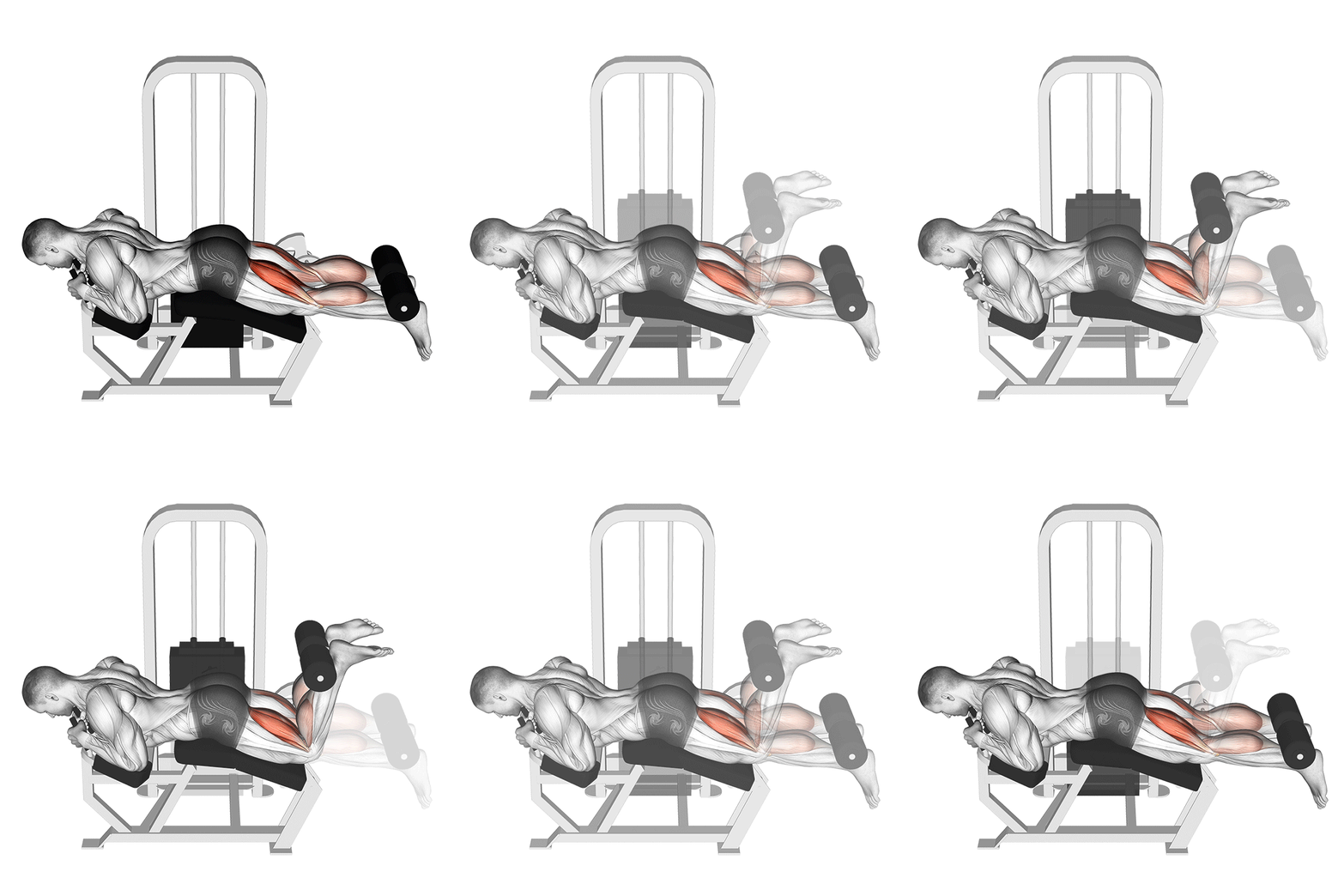
What is the prone lying leg curl?
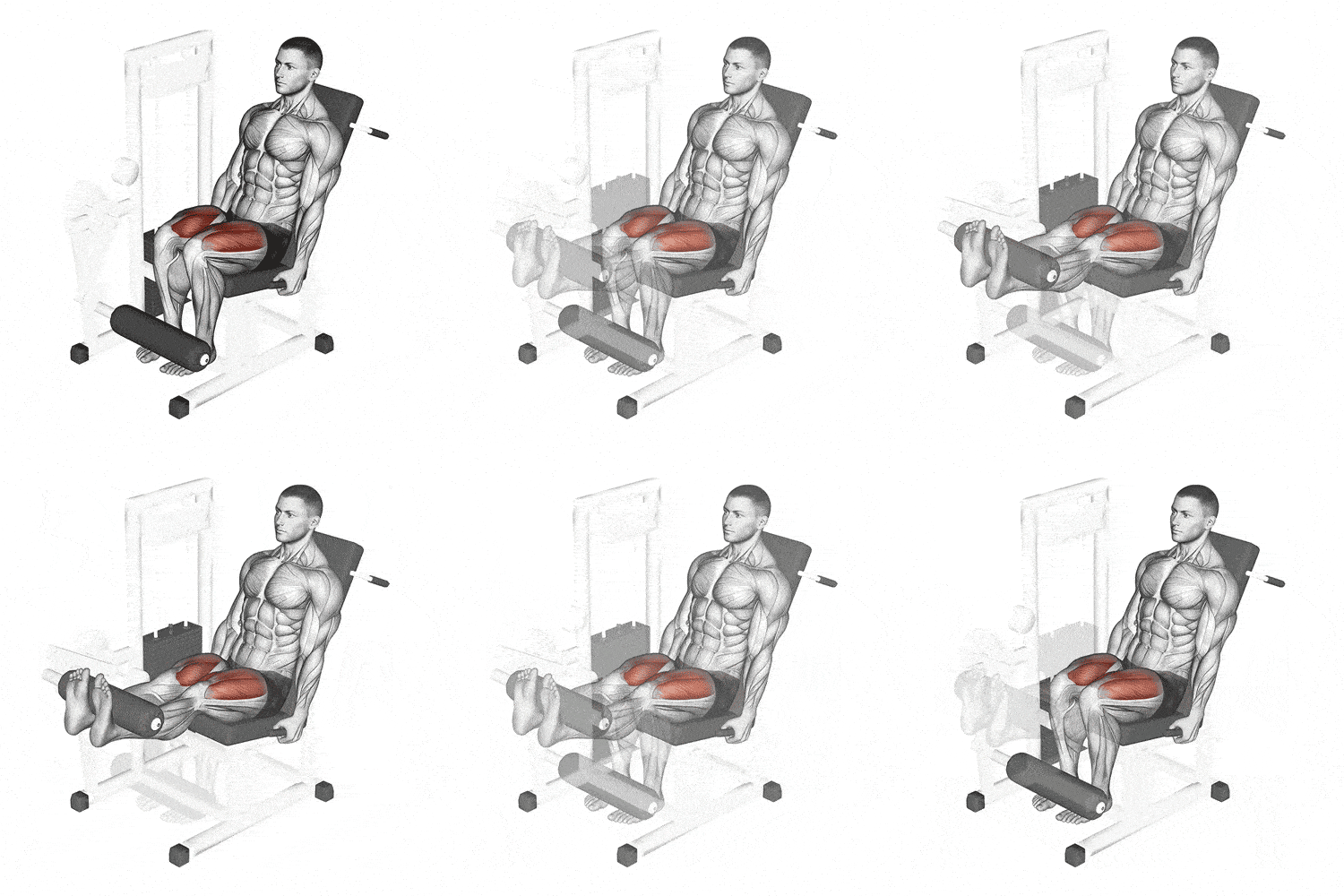
The prone leg curl is performed lying face-down on a machine with the ankles hooked under a roller pad. You flex the knees to bring the heels toward the glutes against resistance. Unlike Romanian deadlifts which train the hamstrings as hip extensors, the leg curl trains them as knee flexors. The short head of the biceps femoris only crosses the knee, so without this movement it gets very little stimulus. Critical accessory for sprinters and any athlete who wants balanced legs.
How to do the prone lying leg curl
- 1
Set the pad position
Knees just past the bench edge so the pivot aligns with your knee joint. Roller pad sits on the achilles, not the calf.
- 2
Lock the hips down
Press hips into the bench. If your bum rises off the pad mid-rep, you're using too much weight.
- 3
Curl heels to glutes
Drive the heels up by flexing the knees. Squeeze the hamstrings hard for 1 second at the top.
- 4
Lower on 3 seconds
Resist the weight back to near-full extension on a slow eccentric. Don't let the stack drop.
Pro tip
Point the toes (plantarflexion) to take the calves out and bias the hamstrings harder. If your calves cramp mid-set, this is the fix.
Common mistakes
Hips lifting off the bench.
If the hips rise to help, the load is too heavy or the form just broke. Drop the weight.
Pad on the calf, not the achilles.
Too high on the calf shortens the lever and hurts. Roller on the achilles, just above the heel.
Half reps.
Stopping at 90 degrees misses the peak contraction. Curl all the way to the glutes.
Banging the eccentric.
Letting the stack crash kills 50% of the growth stimulus. Slow descent.
Variations and progressions
Easier
Seated leg curl
Same knee-flexion pattern but seated. Easier to brace, often heavier loads possible, smaller stretch.
Harder
Single-leg lying curl
One leg at a time with half the load. Exposes side imbalances, common in athletes with a previous hamstring strain.
No machine?
Nordic curl or stability-ball curl
Nordic curl loads the hamstring eccentrically with bodyweight. Stability-ball curl trains the same knee flexion lying on the floor.
How to program it
Three protocols by goal. Pick one per cycle and aim for progression on load or distance.
| Goal | Sets × distance | Load | Rest |
|---|---|---|---|
| Hypertrophy | 4 × 10-12 | 65-75% 1RM | 75 s |
| Sprint / injury prevention | 4 × 6 with 4 s eccentric | 70% 1RM | 2 min |
| Finisher | 3 × 15-20 | 50-60% 1RM | 60 s |
Prone Lying Leg Curl FAQ
Does it prevent hamstring strains?
Indirectly yes, especially with slow eccentrics. But Nordic curls have stronger research behind them for hamstring strain prevention because they load the muscle in a long-lengthened position under high force. Use the prone leg curl for volume and the Nordic for the strongest protective effect.
Lying or seated leg curl, which to pick?
Both work, the seated version often slightly more for hypertrophy because of the deeper stretch on the long head. The lying version is more available, more comfortable for tall lifters, and pairs naturally with hip-extension work. Use both across the week if you can.
Toes pointed or toes flexed?
Toes pointed (plantarflexion) takes the gastrocnemius out and concentrates the work on the hamstrings. Toes flexed back (dorsiflexion) lets the calves help and lets you lift more weight but with less hamstring stimulus. For pure hamstring growth, point the toes.