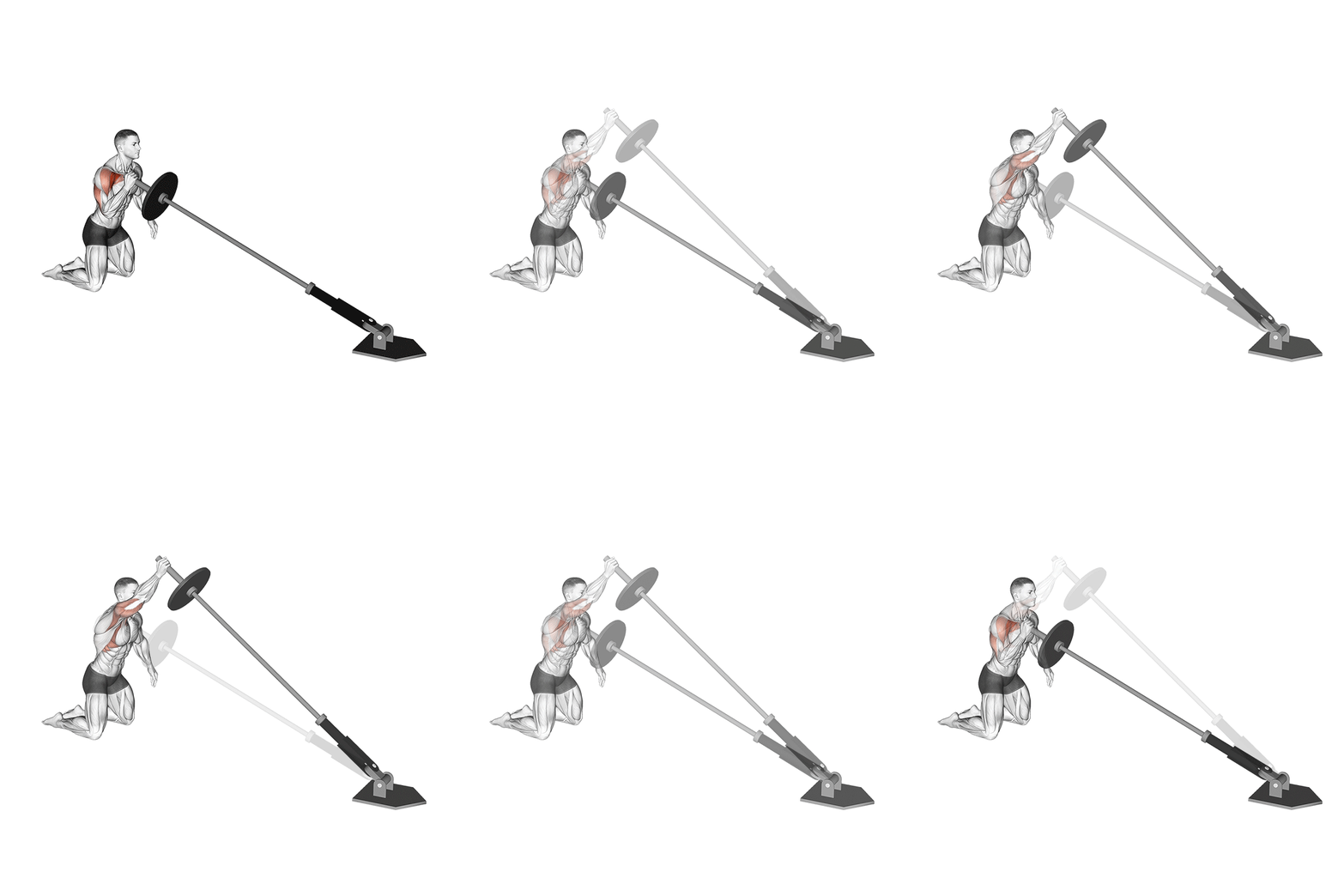
What is the landmine press?
The landmine press is a vertical-ish press performed with one end of a barbell anchored in a landmine attachment. You drive the free end from the shoulder up and forward in a diagonal arc. Because the bar travels at roughly 45 degrees instead of straight up, the shoulder doesn't have to externally rotate as much, making it ideal for lifters with overhead pain. It also reinforces full-body stability: anti-rotation core, lat tension, and rib position all earn their pay.
How to do the landmine press
- 1
Set the anchor
Wedge the barbell into a landmine attachment or corner. Load plates on the free end. Stand in a half-kneel or standing stance facing the bar.
- 2
Rack the end at the shoulder
Pick up the free end and hold it at the front of the shoulder, palm facing in. Stand tall, ribs down, core braced.
- 3
Press up and forward
Drive the bar in a clean diagonal line toward the ceiling and slightly forward, finishing with the arm fully extended.
- 4
Lower under control
Lower the end back to the shoulder over 2 seconds. Don't let the ribs flare or the lower back arch as it comes down.
Pro tip
If overhead press hurts but you still want to train the press pattern, this is your lift. The 45-degree path lets you load near-vertical shoulder work without the joint cost.
Common mistakes
Flaring the ribs.
When the lower back arches to extend the arm, the shoulder takes the impingement risk. Keep the ribs stacked over the pelvis.
Pressing only with the arm.
Without core and lat tension, the press leaks force. Glue the off-arm to the side and brace before every rep.
Half range.
Stopping short of lockout cuts the upper-shoulder work. Finish each rep with the elbow fully extended.
Going too heavy too soon.
Form unravels fast as load climbs. Master the pattern with one 15 to 20 kg plate before stacking more.
Variations and progressions
Easier
Half-kneeling landmine press
From a half-kneel position. Removes the lower-body stability demand so the press itself is the focus.
Harder
Standing single-arm with rotation
Standing, single arm, with a hip and torso rotation into each press. Trains rotational power and full-body coordination.
No landmine?
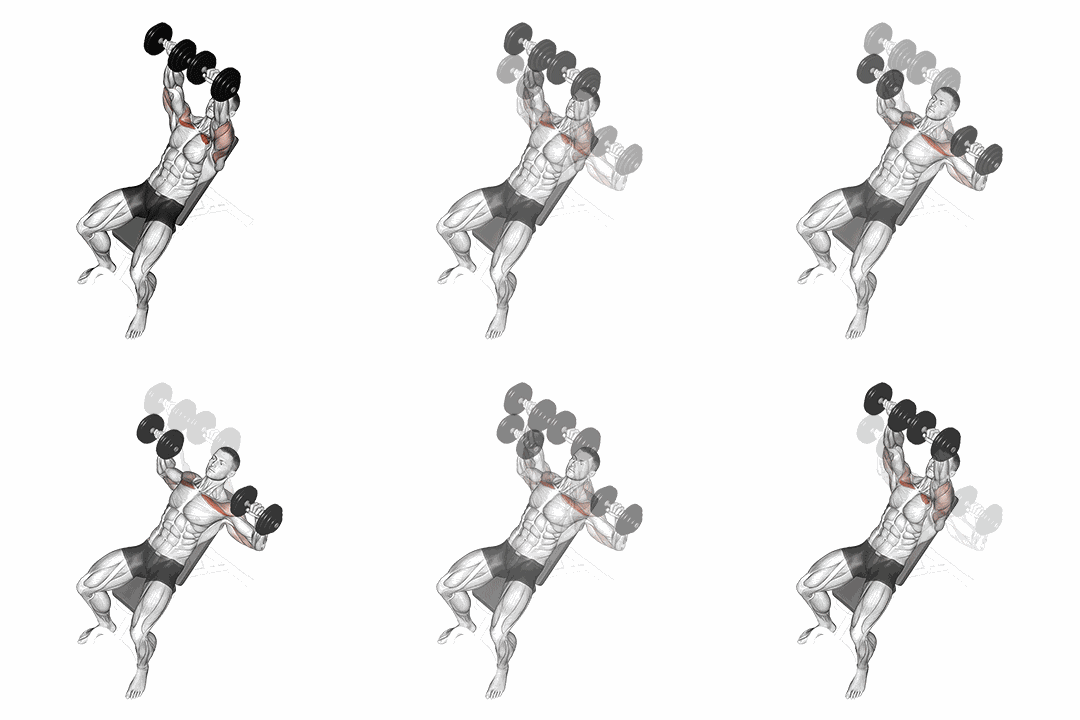
Incline dumbbell press
An incline dumbbell press hits a similar pressing angle and is friendlier to most shoulders than strict overhead work.
How to program it
Three protocols by goal. Pick one per cycle and aim for progression on load or distance.
| Goal | Sets × distance | Load | Rest |
|---|---|---|---|
| Technique | 4 × 8 per side | 15-20 kg + bar | 60 s |
| Hypertrophy | 4 × 10-12 per side | 20-30 kg + bar | 75-90 s |
| Strength | 5 × 5 per side | 30-45 kg + bar | 2 min |
Landmine Press FAQ
Is the landmine press a real overhead replacement?
It's not a full replacement. The strict overhead press still trains true vertical force production better than anything else. But for lifters with shoulder limitations, the landmine press gives 80 percent of the stimulus with a fraction of the joint stress. Use it as your primary press when overhead hurts, switch back when the shoulder is healthy.
Single arm or double arm?
Single arm is the default. It trains anti-rotation, balances left-right strength asymmetries, and lets you focus on the working side. Double arm is useful for absolute load progression with athletes who already have clean unilateral form. Default to single arm 80 percent of the time.
Should I press standing or half-kneeling?
Half-kneeling teaches strict positioning and is the cleanest starting variant. Once form is dialed, standing adds full-body integration and lets you load heavier. Cycle between the two: half-kneeling on technique days, standing on heavy days.